How Does a Steel Coil Storage Rack Improve Warehouse Space Utilization?
A steel coil storage rack is a custom-made industrial storage system that changes how warehouses deal with heavy, cylindrical metal coils. These racks let facilities build up instead of outward by changing flat floor stacking with engineered saddle-cradle support structures. This frees up floor space that would have been used for something else. When set up correctly, coil rack systems can greatly increase the amount of space that can be used for storage while still keeping all of the coils available, stable, and safe from damage by water or moisture. For procurement teams in charge of large steel operations, the best return on investment is when safety and space efficiency work together.
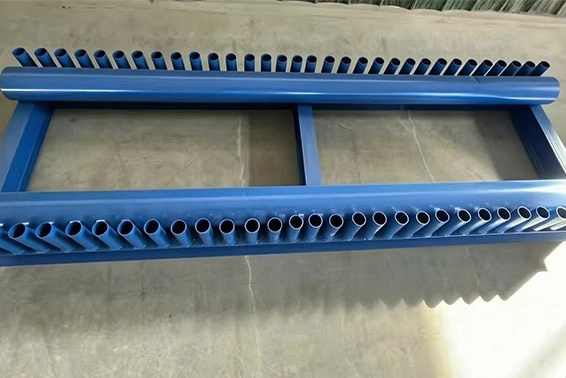
Understanding Steel Coil Storage Racks and Their Role in Space Utilization
Before you look at other options or place an order, you should know what these systems do and why regular pallet racks can't be used instead.
What Makes Coil Racks Different from Standard Racking?
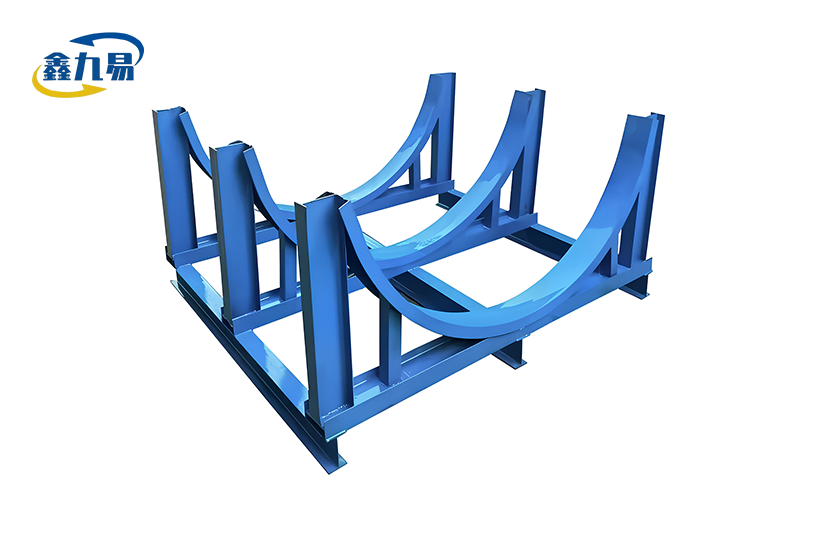
Steel coils are round, thick, and very heavy. Each unit weighs between 5 and 15 metric tonnes. It's not safe for a normal flat beam shelf to hold a cylinder; point-contact loads hurt both the coil and the frame. This can be fixed with special coil racks. There are saddle- or V-shaped bearings on these racks that spread the weight evenly around the circle of the coil. This keeps things from getting too heavy in one spot and stops them from "egg-shaping" when they are stored on the floor.
Key Rack Types and Their Functions
In steel logistics centers and mill warehouses, horizontal saddle racks are the standard choice. They work well with forklifts and overhead cranes and can hold coils on their sides.A-frame racks that are vertical store coils on their sides. They are better for rooms with low ceilings because they take up less floor space.
Some modular stacking cradles, like those made by Xinjiuyi, have raised sides that keep them from tipping over. They can also be stacked on top of each other in high-bay pallet racks to make more vertical storage room.
How Dedicated Storage Addresses Common Pain Points?
When warehouses use floor stacking, they often have three problems: coils that roll and hurt workers, corrosion at the point of contact from water, and lost hallway space because coils are too big to control. All three are taken away by a steel coil storage rack that is set up correctly. The standard plan for Xinjiuyi has a 1,000 mm ground clearance, which keeps the coils from getting wet. The raised anti-roll ends that are 0.8 m long also keep the coils from moving side to side, even when forklifts are nearby.
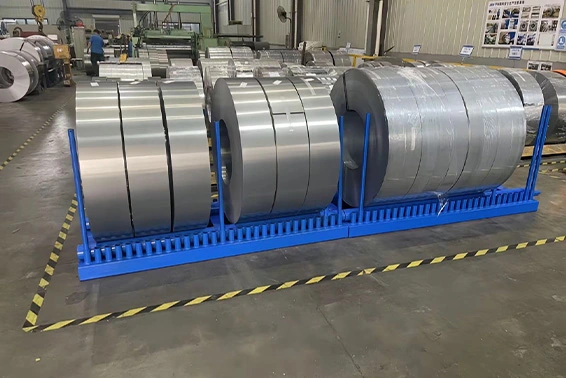
How Steel Coil Storage Racks Improve Space Utilization: A Performance Optimization Approach
You don't just do one thing to optimise space; you make a series of choices that begin with a real assessment of the present situation.
Assessing Current Storage Gaps
Steel warehouses are very inefficient. For example, coils are strewn across floor lanes that should be clear paths; inventory teams can't find certain grades of stock without moving it; and insurance auditors are quick to point out loads that aren't protected. There isn't any gear made for flat loads, so these mistakes happen. It's not the fault of management. First, you should find the incident frequency and the current storage density, which is the number of coils per square metre. This will help things get better. After that, you need to set goals.
Vertical Storage and Modular Scaling
Building taller is the best way to get more people to live in a place. Heavy-duty beam rack systems can be used with Xinjiuyi steel coil racks. This makes it possible to store coils at different heights on the same floor area. There used to be 200 square meters of space on the factory floor for 40 coils. It is now possible to fit a lot more coils into the same place with stacked rack integration. Each unit is still easy to reach. Usually, frames are 2,000 mm long, 800 mm wide, and 1,000 mm high, but you can change these sizes to fit your needs. But layouts can be made to fit perfectly around columns and paths for moving things around.
Measuring Improvement with Clear KPIs
This is something that the people who buy things and run stores should keep an eye on both before and after installation. How many coils are kept in a square metre? How long does it usually take to get a coil? How often do events that happen when coils are handled get recorded? These three signs are the most important. Most of the time, switching from floor stacking to tiered coil rack systems makes it faster to fill orders. This is possible because stock can be seen and picked without having to move other stock.
Comparing Steel Coil Storage Racks with Other Storage Solutions: A Rational Choice Approach
There are different kinds of storage that are better for different jobs. Teams that are buying things can make decisions that can be defended if they know where coil racks work best.
Coil Racks vs. Pallets and Floor Stacking
Round loads that are rolling won't be protected by pallets, and the weight will be spread out unevenly across the deck boards. When coils are stacked on the floor, they are not raised. This means that they are open to ground moisture and make it hard for trucks to move them. Neither option lets you safely stack things vertically. A heavy-duty coil rack, on the other hand, can hold 5, 10, or 15 metric tons per tier and has certified load reports to back them up. This means that it meets the requirements for both insurance underwriting and regulatory inspection, which pallets and floor storage can't.
Heavy-Duty vs. Light-Duty Configurations
Based on how heavy the coil is and how often it turns, the right load-rated design will be chosen. When making a choice, these are the most important things to keep in mind:
- Static load capacity: Xinjiuyi offers tiered ratings at 5, 10, and 15 metric tons per rack, covering most cold-rolled and hot-rolled coil weights from 1.0 to 2.0 m outer diameter.
- Surface treatment grade: Hot-dip galvanizing provides longer protection in humid or outdoor yards; rust removal plus anti-rust paint suits controlled indoor environments with lower moisture exposure.
- Frame material thickness: Thickened H-beam and channel steel construction resists saddle deformation over years of repeated loading—a known failure point in lower-cost alternatives that use undersized wall thickness.
Flexibility Through Customization
There is a straight link between these things and the total cost of ownership of a steel coil storage rack. When you buy something, it costs more if it breaks after six months than if it works as stated and was bought for more money in the first place.
Best Practices for Warehouse Managers: Installation, Safety, and Maintenance
To get the most out of coil storage infrastructure, structured steps must be taken at every stage of the rack's life.
Installation Guidelines for Safe, Dense Storage
Use the right-rated bolts to connect all of the base frames to the floor of the warehouse. Check to see how much weight the floor slab can hold before you decide where to put the racks. Set the racks up so that they line up with the trucks' pre-set tracks. This will keep the loading angles the same and make it less likely that frames will be hit from the side. When you add high-bay beam racking, make sure that the beams' strengths are right for the weight of the coil and racks on each level of storage.
Safety Protocols During Operation
People who move things should be shown how to use a rack properly and told how much weight it can hold before it is used. Every time you load the coil, check the safety pins and anti-roll end blocks. They are the last thing that can stop the coil from moving. OSHA 29 CFR 1910.176 general materials handling rules say that each rack bay must have a sign that says how much weight it can hold.
Preventive Maintenance Schedule
Check the coating on all horizontal bearing surfaces, the strength of the bolts at the base anchor points, and the saddle profiles for any big changes in shape every six months. Be sure that the welds are stable at the main load joints. It is best to write down all inspections. Damage claims can be backed up by repair records, and officials can see that the right care was taken. When places don't use certified racks, this often goes wrong.
Procurement and Selection Guide for Steel Coil Storage Racks
To buy the right rack system, you need to match the technical specs to how it will be used, not just pick the one with the lowest price.
Key Selection Criteria
Four things that must be considered in any serious procurement evaluation are the load capacity certification, the saddle radius tolerance, the surface treatment specification, and the ability to work with current handling equipment. Before placing an order, make sure that all potential suppliers give you information on their static load tests and material thickness inspections.
Why Xinjiuyi Stands Apart as a Manufacturer?
The thickened H-beam and channel steel used by Hebei Xinjiuyi Construction Technology Co., Ltd. is used in ISO 9001, ISO 45001, and ISO 14001-certified processes to make coil storage systems. Standard units ship at 190 kg when they are fully assembled and have dimensions of 2,000 x 800 x 1,000 mm. They can be fully customised to fit your needs. Hot-dip galvanising and anti-rust paint can be used in both controlled outdoor and indoor settings. From their location in Cangzhou, Hebei, the engineering team helps with design, makes custom dimension drawings, and works directly with production.
Conclusion
A good way to store coils with a steel coil storage rack does more than just keep the floor clean. It saves space in storage, keeps workers safer, improves data accuracy, and makes it easier to follow the rules. For steel logistics centers, mill warehouses, furniture factories, and construction yards, a purpose-built coil rack is the best choice. It has anti-roll ends, saddle-curvature bearing surfaces, is hot-dip galvanized for protection, and works with high-bay racking systems. It is always better for a facility to buy properly rated and well-kept coil racks than to use standard pallet infrastructure or stack things on the floor.
FAQ
What coil sizes does a standard rack accommodate?
Xinjiuyi's standard steel coil storage rack handles outer diameters from 1.0 to 2.0 m and coil widths from 1.0 to 1.5 m. Custom saddle dimensions are available for non-standard specifications.
What load capacity tiers are available?
Three static load ratings are offered: 5, 10, and 15 metric tons per rack. Each tier suits different coil weights, from light-gauge cold-rolled stock to heavy hot-rolled industrial coils.
Does the rack work with forklifts and overhead cranes?
Yes. The design includes both forklift entry interfaces and overhead crane lifting points, supporting whichever material handling method your facility operates.
How does hot-dip galvanizing protect the rack long-term?
Hot-dip galvanizing bonds a zinc layer to the steel substrate, blocking moisture and corrosive agents. This treatment is particularly effective in outdoor yards and humid warehouse environments where painted surfaces alone may deteriorate within a few years.
What maintenance does the rack require?
A semi-annual inspection covering weld joints, coating condition, anchor bolts, and saddle surface deflection keeps the rack performing reliably. Written records of each inspection support insurance documentation requirements.
Ready to Improve Your Warehouse Storage Capacity? Contact Xinjiuyi Today
The team at Xinjiuyi that makes steel coil storage racks is ready to help you make a storage system that fits your coils, floor plan, and load needs. From the first question to the last delivery, our ISO-certified production, hot-dip galvanizing options, and service that lets buying teams make any changes they want give them peace of mind. If you need technical help, email global@xjy8.com or visit xjy8.com to get specs and a project review.
References
1. Rack Manufacturers Institute (RMI). Specification for the Design, Testing and Utilization of Industrial Steel Storage Racks. Material Handling Industry of America, 2012.
2. Occupational Safety and Health Administration (OSHA). Materials Handling and Storage: OSHA 2236. U.S. Department of Labor, 2002.
3. European Federation of Materials Handling (FEM). FEM 10.2.02: The Design of Steel Static Storage Systems. FEM Racking and Shelving Product Group, 2011.
4. British Standards Institution. EN 15512: Steel Static Storage Systems – Adjustable Pallet Racking Systems – Principles for Structural Design. BSI Standards, 2020.
5. Mujumdar, A. S., ed. Industrial Storage and Handling Systems: Engineering Principles and Applications. CRC Press, 2006.
6. Warehouse Education and Research Council (WERC). DC Measures: Annual Warehouse and Distribution Center Metrics Study. WERC, 2019.