Rebar Coil Storage Rack Load Capacity: What Should Buyers Check?
The load capacity is the most important thing to check when looking for a rebar coil storage cradle rack. A rack that is rated for less than your true coil weight puts you at risk of falling and getting hurt. Before making an order, buyers should ask for static load test reports, confirm the grade of the structural steel, check the quality of the weld and look for anti-roll features. Xinjiuyi's steel coil storage racks are made from 100# channel steel and fully welded, so they can hold up to 5 tonnes of coils per cradle. This gives procurement managers a documented, verifiable starting point from which to work.
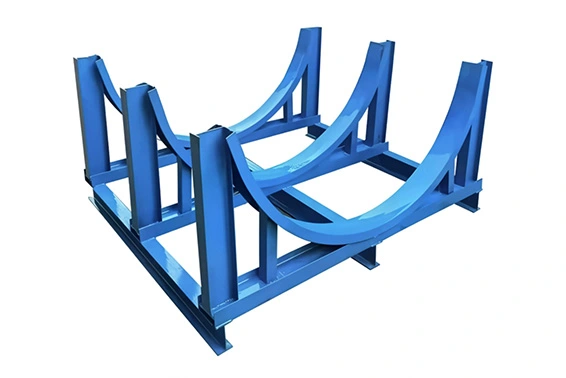
Understanding Rebar Coil Storage Rack Load Capacity
The maximum weight that a rack can hold without permanently deforming or breaking is called its load capacity. That number is more than just a specification for procurement managers in charge of big building projects; it's also a limit on their liability.
What Drives Load Capacity?
How much weight a rack can safely hold depends on three things: the type of steel used, the thickness of the section, and the continuity of the welds. A frame made of Q235B or Q345B structural steel and thickened channel sections can hold more weight with less bowing than one made of thin-wall profiles. Xinjiuyi uses 100# channel steel with a web thickness of about 3.2 mm, which gives it measurable rigidity even when heavy loads are applied for a long time.
Why Static Load Reports Matter
A static load test report shows how well a rack works when it is loaded to 1.5 times its rated capacity, before it starts to deform permanently. Buyers will accept a verbal claim without this paper. According to the Rack Manufacturers Institute (RMI) standards, the industry must have a minimum 3:1 safety factor against structural failure. This means that a 3-ton rack must be able to hold at least 9 tonnes before it falls apart.
Common Load Capacity Mistakes Buyers Make
Many buyers only look at the price per unit and don't think about how thick the walls are. Thin-wall frames made from low-quality profiles often pass eye inspection, but they bend when they're put under real site loads. To make sure the steel grade fits the specification sheet, you should always ask for mill test certificates along with load reports.

Essential Design Features of Steel Coil Cradle Racks
The shape of a rebar coil storage cradle rack affects how the weight is spread across its frame. The cradle should be shaped correctly so that stress builds up at one point of contact. This makes wear happen faster and increases the chance of deformation.
The Arc-Shaped Saddle
The base is shaped like an arc and is made stronger with 50 mm × 50 mm square and rectangular tube parts. The weight of a coil is spread out over a large contact area instead of just one edge. There is a contact angle between 120° and 150° that stops the coil's sidewalls from "egg-shaping" when it is stored flat.
Anti-Roll and Slot Features
Slot-style anti-roll limiters keep coils from moving when a forklift comes up behind them, a crane lifts them, or the ground moves. This feature is very important in areas where tower cranes work and loads hanging in the air cause the crane to move to the side. If it doesn't have a strong stop, even a good rack can be dangerous.
Corrosion-Resistant Surface Treatment
Racks that are kept outside or in wet storage sheds need more than just paint. All of the frame's sides are coated by Xinjiuyi so that they don't rust. This stops the steel from rusting in places with a lot of moisture, like near the ocean. If someone wants to store things outside, they should find out how thick the coating is in microns and if it has been checked for salt spray.
How to Evaluate and Choose the Right Load Capacity for Your Needs?
To choose the right rack, you need true weight data, not guesses. Most rebar coils used in construction weigh between 1,000 kg and 3,000 kg per unit. However, larger wire rod coils can weigh up to 5 tons. Before choosing a rated capacity, you should always figure out how much your largest coil weighs and then add at least 25% to that as a safety cushion.
Before choosing a supplier, procurement teams should use these four main criteria to judge them:
- Request a verified static load test report. The report should state the tested load, measurement method, and observed deflection. A 3-ton rated rack tested to 4.5 tons with no permanent deformation meets the 1.5× standard.
- Confirm steel section dimensions. Ask for the channel steel size and web thickness. Xinjiuyi's 100# channel steel at 3.2 mm web thickness provides a verifiable cross-reference point against thinner-wall alternatives.
- Check forklift interface compatibility. Racks without proper forklift entry channels create awkward lifts that overload one side of the frame. Xinjiuyi's design includes a standard forklift handling interface for balanced, safe relocation.
- Assess disassembly speed. For multi-site operations, racks that require no special tools to break down and reassemble reduce idle time between project phases.
These factors make it easy for buyers to compare rebar coil storage cradle rack suppliers based on technical quality instead of just price. By using this process before the first order, you greatly lower the chance of getting equipment that isn't marked properly and breaks down in real-world situations.
Maintenance and Safety Practices to Maximize Load Capacity Lifespan
Without regular checks, even a well-built rack breaks down over time. The actual load capacity drops below the rated figure because of weld fatigue, surface corrosion, and impact damage from forklift contact.
Routine Inspection Schedule
Visual checks should be done on all load-bearing welds every three months, and high-cycle racks should have ultrasonic testing (UT) or magnetic particle inspection (MPI) once a year. Pay close attention to the saddle-to-frame joints, as they are the ones that experience the most stress when the machine is loaded.
Operator Training Requirements
Material flaws don't cause as many rack breakdowns as loading mistakes. Teach operators to place the forklift so that the coils are in the middle of the saddle and that they never go over the rated capacity or side-load the frame. Handling mistakes are much less likely to happen when there is a short written protocol posted at each storage station.
Corrosion Monitoring for Outdoor Units
Racks that are used in yards or near water should have their coatings checked every three months. Any rust that can be seen going through structural members needs to be looked at right away, not just surface discolouration. Re-coating uncovered parts with an approved rust inhibitor can make them last longer without having to be replaced completely.
Top Market Solutions for Reliable Steel Coil Storage Racks
There are a number of well-known companies that sell heavy-duty coil storage equipment. When looking at their choices, buyers should look for manufacturers that post verified load data, offer different pricing levels based on volume, and keep production stock on hand so they can ship quickly.
Xinjiuyi stands out in this group because its products are designed to work well on construction sites. The standard 1500 mm x 1500 mm x 650 mm footprint can be used for temporary yards, rebar processing sheds, and lift zones for tower cranes without having to change the site. The unit can be used in all three settings thanks to full-seam welding, burr-free edge finishing, and a base that can be used with a forklift.
Xinjiuyi has different pricing levels for bulk orders ranging from a single unit to a full container. Xinjiuyi aims to ship orders within 7 to 15 days of receiving confirmation. For processing facilities with special workflow needs, custom designs are available. These can include changed saddle diameters and different surface treatments.
Conclusion
It's not enough to just read a number on a product page to check a steel coil storage rack's load capacity. Buyers who ask for static test reports, check the grades of the steel, look at the continuity of the welds, and make sure the anti-roll features are present protect both their workers and the materials they buy. These standards are met by Xinjiuyi's rebar coil storage cradle racks, which are made with 100# channel steel, full-seam welding, and a design that is ready for forklifts. They can be used in processing sheds, crane zones, and temporary yards with equal reliability. When making a choice, putting documentation ahead of price always leads to better long-term results.
FAQ
What is the standard load capacity for a rebar coil storage rack?
Most standard cradle racks are rated between 3 and 5 tons per unit. Xinjiuyi's model supports up to 5 tons per cradle. Custom-engineered configurations can exceed this for specialized industrial applications. Always confirm the rating with a static load test report.
Does the rack need to be bolted to the floor?
For single-level floor units, bolting is optional but recommended in high-traffic areas. For multi-tier configurations or crane-served zones, anchoring to the floor with heavy-duty chemical anchors is mandatory for operational stability.
Can these racks be used outdoors?
Yes. Racks with rust prevention coating perform well in outdoor yards. For long-term coastal or high-humidity exposure, request additional salt-spray test data or inquire about hot-dip galvanizing options.
How quickly can one person assemble a unit?
Xinjiuyi's modular design requires no specialist tools. A two-person team can assemble or disassemble a unit within a standard shift, making it practical for multi-phase project sites.
What coil diameters does the saddle accommodate?
The 1.5 m inner diameter saddle is compatible with rebar coils ranging from 8 mm to 32 mm wire diameter, covering the most common specifications used in structural and civil construction.
Get a Direct Quote from Xinjiuyi — Rebar Coil Storage Cradle Rack Manufacturer
Heavy-duty steel coil storage options from Xinjiuyi are sold to building wholesalers, processing plants, and project teams all over the world. Our rebar coil storage cradle rack ships in 7–15 days, and we offer bulk discounts for rebar coils from a single unit to a full container load. You can email our team at global@xjy8.com or go to xjy8.com to get product specifications, static load documentation, and a quote that fits the needs of your project.
References
1. Rack Manufacturers Institute (RMI). Specification for the Design, Testing and Utilization of Industrial Steel Storage Racks. MHI, 2012.
2. Steel Construction Institute. Design of Steel Structures for Storage and Material Handling. SCI Publication P365, 2013.
3. European Committee for Standardization. EN 15512: Steel Static Storage Systems — Adjustable Pallet Racking Systems — Principles for Structural Design. CEN, 2020.
4. Occupational Safety and Health Administration (OSHA). Material Handling and Storage: Safety and Health Regulations for Construction. U.S. Department of Labor, 2015.
5. American Institute of Steel Construction (AISC). Steel Construction Manual, 16th Edition. AISC, 2022.
6. International Organization for Standardization. ISO 22986: Cranes — Stiffness — Bridge and Gantry Cranes. ISO, 2007.