5 Key Factors to Consider When Buying a Stainless Steel Slot Drain Cover
Picking the correct stainless steel slot drain cover might seem like an easy choice, but it can have big effects on your project's budget, safety on the job site, and even the cost of repairs over time. Whether you are buying drainage for a Texas public plaza, a Jakarta hotel entrance, or a Warsaw commercial parking deck, there are five main things that will determine whether it works well for decades or starts giving you problems right away. This book goes over each factor in the level of technical depth that project engineers and procurement directors need.
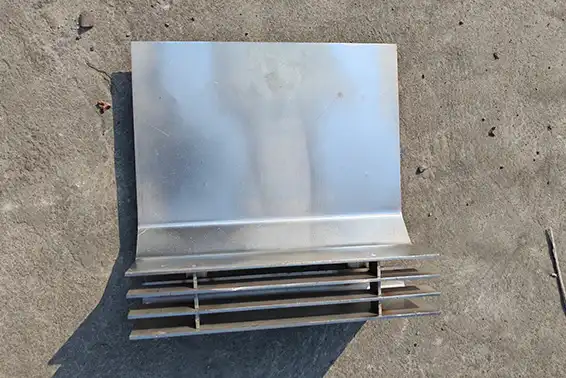
Factor 1: Material Grade — SUS 304 vs. SUS 316
The grade of stainless steel you pick determines how long something will last, how well it will fight rust, and how strong it is.
Why Grade Selection Matters More Than You Think?
Chrome makes up about 18% of SUS 304, and nickel makes up 8%. When these two metals come together, they form a passive oxide layer that keeps rust away in most garden and factory settings. Plus, it works great for pedestrian plazas, private entrances, and standard road drainage. The pitting resistance equivalent number (PREN) goes up above 24 when about 2–3% molybdenum is added to SUS 316. In places that will be near the ocean or where de-icing salts and industrial chemicals will be present, this makes it the best choice.
Plate Thickness and Load Capacity
The thickness of the plates has a direct effect on how well a structure works. A15 (pedestrian-only) to C250 (light car traffic) are the EN 1433 load classes that Xinjiuyi experts can make the cover fit. The thicknesses can range from 2 mm to 8 mm. Thick plates spread out point loads more evenly, and they don't bend permanently when the wheel goes over them many times. People who work in buying often make the mistake of giving the wrong thickness. Once you've placed your order, always check the expected load class again.
Corrosion Resistance Verified by Testing
Ask for a salt spray test record along with the material mill certificate. The test should be done for 500 to
1,000 hours, according to ASTM B117. If you get a certified spectrometer analysis that confirms the nickel and chromium content, you can avoid getting alloys from suppliers that aren't as good. At Xinjiuyi, each batch comes with paperwork that can be used to keep track of the goods if needed.
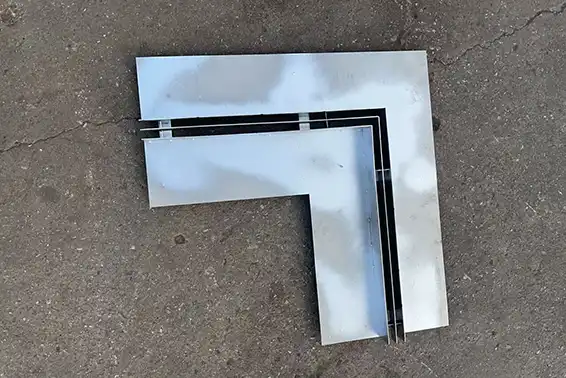
Factor 2: Slot Design and Drainage Performance
Two needs must be met at the same time: a linear drainage cover must be able to hold water and keep people safe. The shape of its slots affects both of these qualities.
Slot Width and Hydraulic Flow Rate
Standard slot widths of 10 to 15 mm are wide enough to catch surface runoff and stop it. They also keep debris from getting into the sub-channel. Where there is a lot of leaf litter in the ground because of landscaping, slots that are closer to 8 mm wide screen water more fully. In areas where heavy loads are common, slots that are up to 20 mm bigger can handle stronger storms. You can change the slot width very precisely in Xinjiuyi to match the amount of rain that you expect at your site. In this way, you get the hydraulic flow you need instead of a standard one.
ADA Compliance and Heel-Safe Design
In order to follow the Americans with Disabilities Act (ADA), walking surface holes must not be bigger than a 13-mm (½-inch) sphere moving in the same direction. This need can be met by a well-made stainless steel slot drain cover with longitudinal holes that are lined up with the way people walk. This keeps people who wear heels or use movement aids from getting hurt by heel traps.
Modular Length and Installation Compatibility
There is less need to cut covers in the field when they come in standard lengths of 1,000 mm and can be linked together with splices. This also keeps the alignment of the slots the same over long runs. Contractors can choose between pre-cast concrete channels and cast-in-place resin channels because the modular design works with both. This doesn't change the way the end surface looks.
Factor 3: Operational Performance Under Real Conditions
It's not enough to just buy based on specs. The real return on investment is based on how well a cover works over years of use in your particular setting.
Load Rating Verification Against EN 1433
EN 1433 is the European standard that classifies drainage channel covers from Class A15 (1.5-tonne maximum load) through Class F900 (90-tonne maximum). In the US, municipal projects are using EN 1433 standards along with AASHTO standards more and more because it offers a consistent test protocol. Always ask your supplier for the actual report from a third party, not just what they say in the catalogue. It has been shown that mixing up A15 covers for pedestrians with C250 covers for vehicles in the same specification document can lead to rejections on-site and expensive replacements.
Self-Cleaning Hydraulic Profile
The slot drain's internal duct radius affects whether small particles build up or flush out on their own. A smooth stainless steel inside with a curved base cross-section speeds up flow speed during rain, which automatically moves sediment out of the way. Integrated inspection access units are placed at regular intervals along the run. These allow high-pressure jetting to be used for routine maintenance without taking apart the whole cover length.
Chemical and Temperature Resistance
Fuel residues, detergents and hot wastewater can get on drain covers in food processing plants, gas station canopies and car wash bays. These conditions won't damage the surface of SUS 316 stainless steel. Biofilm doesn't stick to the non-porous finish either, which is useful in places like pharmacies and food-grade areas where cleanliness is important.
Factor 4: Supplier Certification and Documentation
Even a well-designed product creates procurement risk if the supplier cannot provide the documentation your clients or end-user authorities require.
Certifications That Protect Your Project
Here are the core documents you should request before placing a bulk order:
- EN 1433 load test report — confirms the cover meets the stated load class under standardized testing conditions.
- Material mill certificate with spectrometer data — verifies alloy composition for SUS 304 or SUS 316.
- Salt spray test report (ASTM B117) — provides evidence of corrosion resistance duration.
- ISO 9001 quality management certification — confirms the manufacturer operates under a documented quality system.
- Manufacturer authorization letter — essential for customs clearance and distributor credibility reviews in regulated markets.
These documents are not optional for municipal or commercial stainless steel slot drain cover projects in the United States or European Union. Missing a single certificate has caused project delays and full shipment rejections — a risk that experienced procurement directors will not accept twice.
Packaging and Dimensional Consistency
Linear drainage has a problem with slot width tolerances that aren't always the same. Covers that come with slots of different widths make field-cutting more expensive and installation take longer. During production, Xinjiuyi uses digital callipers to make sure that the slot width error stays within ±0.5 mm. Covers that are finished are shipped in bubble wrap and a wooden crate to protect the brushed or electropolished finish you chose from scratches during shipping.
Factor 5: Total Cost of Ownership, Not Just Unit Price
The price per metre is shown on the quote. The number that shows up on your budget for the next five years is the total cost of the car.
Breaking Down the Real Numbers
At first, stainless steel linear drain covers cost more than options made of cast iron or polymer. When you think about the following over a 10- to 20-year work period, that gap gets a lot smaller:
When it gets wet, cast iron rusts and needs to be replaced or coated every 8–10 years. While stainless steel, on the other hand, never changes shape or surface under normal conditions.
- Cast iron corrodes and typically requires replacement or coating within 8–10 years in wet environments. Stainless steel, by contrast, maintains structural and surface integrity indefinitely under normal conditions.
- Polymer covers rated below C250 are not suitable for vehicle traffic areas and present warranty liability when misapplied.
- Reduced maintenance frequency — enabled by the self-cleaning hydraulic profile — directly lowers labor costs across the service life of the installation.
If a project chooses a cheaper cover and then has to replace it in the field, it will almost always cost more than if it had gone with a properly graded stainless steel product from the start.
Volume Pricing and Delivery Lead Times
Suppliers who buy in bulk from a company that keeps all standard SKUs in stock may be able to get their goods in 25 to 35 days after the purchase order is approved. Xinjiuyi can be used to send full container loads. Any width (150 mm, 200 mm, 250 mm), height (30 mm, 50 mm, 60 mm), or grade can be used for these loads. Full container loads have much lower freight costs per unit than partial loads.
Conclusion
When picking a stainless steel slot drain cover, you should think about the material quality, the design of the slots, the load capacity, the paperwork from the supplier, and the total cost of ownership. SUS 304 is great for most outdoor conditions, but SUS 316 is better at protecting against corrosion from salt water and chemicals. Verified load ratings and slot dimensions make sure that the drainage works well, that pedestrians are safe, and that the system works reliably in real-world situations. Full certifications, consistent production tolerances, and protective packaging all lower the risks of buying and installing things. Covers made of stainless steel may cost more at first, but they may be better in the long run because they last longer and require less upkeep. By thinking about these five things before buying, project engineers and procurement teams can find site-specific drainage solutions that work better and cost less over time.
FAQ
Should I specify SUS 304 or SUS 316 for an outdoor plaza project?
SUS 304 is appropriate for most standard outdoor commercial plazas in non-coastal regions. Specify SUS 316 if the site is within 5 km of the ocean, regularly exposed to de-icing salt, or subject to chemical cleaning agents.
What load class do I need for a parking structure?
Parking decks with light passenger vehicle traffic typically require B125 or C250 per EN 1433. Confirm the maximum axle load with your structural engineer before specifying.
How do I verify the slot width tolerance before shipment?
Request a pre-shipment inspection report with digital caliper measurements across multiple samples from the production batch. A tolerance of ±0.5 mm is an acceptable standard for quality-controlled manufacturing.
Can slot width be customized for non-standard drainage calculations?
Yes. Xinjiuyi offers slot widths between 8 mm and 20 mm, precision-adjusted to match your hydraulic flow rate requirements.
What certifications should a municipal project supplier provide?
At minimum: EN 1433 third-party load test report, material mill certificate, salt spray test report, ISO 9001 certification, and a manufacturer authorization letter.
Upgrade Your Drainage Projects with Xinjiuyi's Precision-Engineered Solutions
Looking for a reliable stainless steel slot drain cover that delivers lasting durability, efficient drainage, and dependable load performance? Hebei Xinjiuyi Construction Technology Co., Ltd. provides customizable drainage solutions for municipal projects, commercial facilities, parking decks, and industrial environments. Choose SUS 304 for general outdoor applications or SUS 316 for coastal areas and chemical exposure. Our covers feature adjustable slot widths from 8 mm to 20 mm, plate thicknesses from 2 mm to 8 mm, and modular 1,000 mm lengths to support installation flexibility and site-specific drainage requirements. With precision manufacturing, ±0.5 mm slot-width tolerance, traceable material documentation, and protective export packaging, we help reduce installation issues and long-term maintenance costs. Ready to find the right drainage solution for your project? Contact us at global@xjy8.com or visit xjy8.com to discuss your specifications and request a customized quote.
References
1. European Committee for Standardization. EN 1433: Drainage Channels for Vehicular and Pedestrian Areas — Classification, Design and Testing Requirements. CEN, 2002.
2. ASTM International. ASTM B117: Standard Practice for Operating Salt Spray (Fog) Apparatus. ASTM, 2019.
3. American Institute of Steel Construction. Steel Construction Manual, 16th ed. AISC, 2023.
4. U.S. Access Board. ADA Standards for Accessible Design: Section 302 — Floor or Ground Surfaces. United States Access Board, 2010.
5. International Organization for Standardization. ISO 9001:2015 — Quality Management Systems: Requirements. ISO, 2015.
6. Outokumpu Stainless. Corrosion Handbook: Stainless Steel Grades 304 and 316 in Atmospheric and Immersion Service. Outokumpu, 2020.