Stainless Steel Slot Drain Cover: A Complete Guide for Commercial Projects
A stainless steel slot drain cover is a high-performance linear drainage part with a narrow longitudinal opening that effectively handles surface water while keeping the look of a smooth paved surface. Unlike most bar grating, it sits flush with the elements around it, so from ground level, it's almost impossible to see. It is made from Grade 304 or 316L stainless steel and solves three problems that keep coming up in the field: not enough hydraulic capacity, heel-trap dangers for pedestrians and bacterial growth in areas that need to be kept clean. This guide tells procurement managers, engineers, and distributors everything they need to know to properly choose, buy, and maintain these systems.
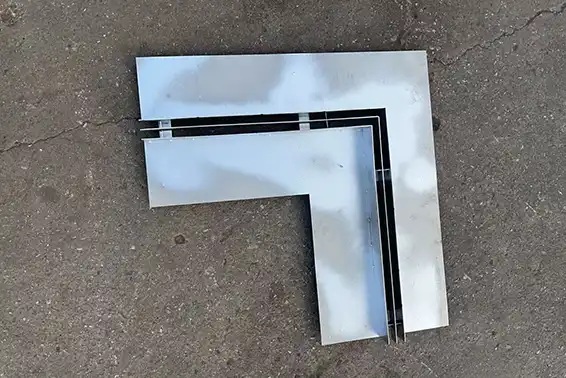
Understanding Stainless Steel Slot Drain Covers
Before you buy something, find out what makes a slot drain cover different from other draining gear. Also, know why the material's grade is more important than most buyers think.
Core Design and Material Composition
This is a drain cover with slots. The plate on top has a long, thin hole about 10–15 mm wide that is linked to a straight tube. Big things can't get through the small hole, but water can. This cover is made by Hebei Xinjiuyi out of SUS 304 and is meant to be used outside. So they can be used near the coast or in chemical plants where salt is a real risk, they are made of SUS 316L. So the Pitting Resistance Equivalent Number (PREN) is greater than 24 because 316L has molybdenum in it. This much rust is more than what most European cities allow.
Types and Load Classifications
There are three main kinds on the market. This type of cover looks good in places where looks are important, like in public plazas and hotel front yards. Things don't get stuck in the channel because V-channel slot caps speed up the flow. Hybrids with mesh and slots hold things in place better in tree pits and gardens. For places where there aren't any cars, they say A15 is best, C250 is best for parking spots and light vehicles, and D400 is best for places with a lot of cars. Plates that are 2 mm to 8 mm thick are used at Xinjiuyi, and the support frame is shaped to fit the load class.
Surface Finishes and Their Practical Value
The finish on something changes how clean it is and how smooth it is to walk on. After a 240-grit brushed finish, the surface is rougher (Ra < 0.8 µm). In food facilities, FDA rules say that this must happen so that bacteria don't stick. Chemical drain tubes get even smoother, almost like a mirror, after being electropolished. Because they don't show as many scratches in places where people walk a lot, brushed finishes also keep the work looking clean over time.
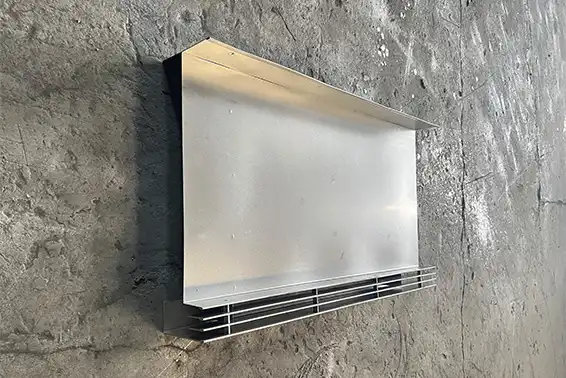
Choosing the Right Slot Drain Cover for Your Project
When you use a consistent screening method, it's easy to choose what to buy. These are the most important things you should check before you place your order.
- Load class vs. real site use: Make sure you know what the heaviest vehicle or piece of equipment is that can cross the cover. For delivery cars to park in a garage, you need C250 or D400 certification, not A15. One of the most common and expensive mistakes in the field is ratings that don't match up.
- Grade selection by environment: Projects within 5 km of a coastline or in chemical processing facilities must specify 316L. Standard 304 is good for business and residential sites in the middle of the country.
- Slot width compared to how hard it rains: slots that are wider (up to 20 mm) move more stormwater but let smaller trash into the channel. Slots that are 10 mm narrower are better for areas where people walk, where heel-safe compliance and garbage retention are both important.
- Documentation needs: For European municipal tenders, you must have EN 1433 test reports, material mill certificates, and salt-spray test results. Before you order samples, make sure that your supplier can give them to you.
Use of load class vs. real site: You need to find out which car or tool can carry the most weight over the stainless steel slot drain cover. You can't park delivery cars in a garage without permission from A15. You need permission from C250 or D400. Still, scores that don't match up are a very common and expensive field error.
The right grade will depend on the circumstances. You have to use 316L for projects that are less than 5 km from the coast or in chemical plants. For business and home use in the middle of the country, standard 304 works well.
Installation and Maintenance Best Practices
The structural warranty from the maker is protected when the parts are properly fitted. This also keeps repairs from having to be done in the field, which drives up the cost of the project.
Site Preparation and Alignment
Before the cover is put on, the channel has to be poured to the same depth and width. Check the back slope with a laser level. There should be at least a 0.5% slope so that water doesn't pool. Every Xinjiuyi cover is made up of several different pieces that are all the same length of 1,000 mm. They are joined at each end by brackets that were carefully cut out of metal. They don't have to do time-consuming field cutting because the gaps are even this way.
Inspection and Cleaning Protocols
Built-in access units let high-pressure water be sprayed into the underground channel at different points along the run without having to lift the whole cover. Most business sites only need to be checked every three months. As you do these checks, look for silt buildup in low-lying areas, make sure the cover plates fit snugly, and see if any of the hardware for fastenings has signs of galvanic rusting from metals that are not the same. Food safety rules called HACCP say that places that deal with food should be checked and cleaned once a week with CIP jetting.
Troubleshooting Common Field Issues
Slot width drift is what happens when covers come in with holes that are not all the same size. It can lead to heel-traps and doesn't pass ADA checks. You should use a digital calliper to make sure that all of the slot widths are the same when you get the parts. Leaks in the weld seam are another known weak spot. To make sure the weld is strong before it is shipped, ask your provider for reports on non-destructive testing (NDT) and pickling/passivation certificates.
Trusted Brands and Suppliers for Stainless Steel Slot Drain Covers
There are well-known European brands that sell linear drainage hardware, as well as a growing number of factory-direct manufacturers in China. When it comes to municipal contracts, factory-direct sourcing from a certified Chinese manufacturer usually gives distributors a big price edge without sacrificing certification compliance, as long as they carefully check the paperwork.
What to Look for in a Manufacturer?
A reliable company that makes stainless steel slot drain covers should give you EN 1433 load test results, material spectrometer analyses that prove the Ni and Cr contents, and salt-spray test certificates (minimum 500 hours per ASTM B117). An ISO 9001 certification means that the quality management system is well-documented. The factory that Xinjiuyi works in is certified by ISO 9001, ISO 45001, and ISO 14001, and it makes things in Cangzhou, Hebei. It can ship full containers to North America, Europe, and Southeast Asia.
Evaluating Samples and Negotiating Bulk Terms
Before committing to a container order, ask for samples to be sent to you. Check the consistency of the slot width, the finish of the welds, and the roughness of the surface against the project requirements. Talk about regional supply agreements and lead times with distributors who do a lot of business with cities. Xinjiuyi's standard production-to-shipment window is 25–35 days for stocked specifications, but it takes longer for custom dimensions.
After-Sales Support
A provider is useful for more than just making things. With technical drawings, installation guides, and on-call engineering help, contractors don't have to ask as many questions, and projects get approved faster. Xinjiuyi gives project-specific CAD files and material documentation packages that meet the requirements of the city inspector when the goods are delivered.
Strategic Benefits of Stainless Steel Slot Drain Covers in Commercial Projects
Field data makes it clear that, from a financial point of view, steel linear drainage is the better choice than cheaper options. A 2019 study in the Journal of Infrastructure Systems looked at the total cost of ownership over 25 years for different types of drainage systems. It found that coated carbon steel systems were 30% to 40% more expensive than stainless steel ones. These were mostly chosen because they didn't need to be re-coated or changed out as often.
Aside from price, there are three other things that buying teams gain from more than others.
For starters, getting EN 1433 and ADA paperwork in order speeds up the project approval process. Cities and towns want load test results that can be checked more and more when plans are turned in. It takes a few weeks longer to get approval if they are not already put together. The invisible design profile also lets builders keep the paving plans clean in public areas like hotel foyers, walking streets, and transit plazas, without having to worry about the drains. Third, the hydraulic geometry that cleans itself lowers long-term labor costs. This is important in places where human upkeep costs a lot per hour.
Conclusion
Get the right linear drainage product for your business or city project by making sure it has three things: the right material grade for the site, a seller who can give you the right paperwork, and a load rating that matches the type of traffic. A stainless steel slot drain cover from Xinjiuyi takes care of all three. You can choose from SUS 304 and 316L in this product range. It has load rates that are in line with EN 1433 and slot sizes that range from 10 to 20 mm, so it can be used for most projects. You can avoid having to do extra work on the job site by getting in touch early on in the design process.
FAQ
Can the slot width be adjusted for ADA or heel-safe compliance?
Yes. Long holes, according to the ADA, must be straight across from the way people move and be kept small enough so that crutch tips or high heels don't get stuck. These needs can be met by standard slot sizes of 10–15 mm. You can get sizes that are made just for you up to 20 mm for high-flow situations where heel-trap is less likely to happen.
How does a slot drain cover handle heavy vehicle traffic?
To meet the C250 or D400 rating under EN 1433, the cover plate has been made thicker and the side bars have been made stronger. The cover plate is not the only thing that moves the weight to the channel walls. The support frame does too. When you place your order, be sure to clearly say the expected load class. This will help the manufacturer build the correct cross-section.
What documentation should I request before shipment?
You should look for EN 1433 load test reports, ASTM B117 salt-spray test certificates, and ISO 9001 scope certificates. These will show that the materials were made according to the right standards. Many times, people in the EU and the US need these papers to turn in projects and have them inspected.
Partner with Xinjiuyi for Your Next Drainage Project
A company called Hebei Xinjiuyi Construction Technology Co., Ltd. sells certified linear slot drain covers to dealers, landscapers, and city buying teams all over the world. Our products are made from SUS 304 and SUS 316L and meet EN 1433 standards for load classes A15 to D400. In 25 to 35 days, they ship in full containers. When you buy stainless steel slot drain covers from us, you can be sure that you'll get full paperwork packages, custom sizes, and the best customer service possible. Send an email to global@xjy8.com or visit xjy8.com to get project prices and samples right away.
References
1. American Society of Civil Engineers. Infrastructure Report Card: Stormwater. ASCE, 2021.
2. European Committee for Standardization. EN 1433: Drainage Channels for Vehicular and Pedestrian Areas. CEN, 2002.
3. ASTM International. ASTM B117: Standard Practice for Operating Salt Spray (Fog) Apparatus. ASTM, 2019.
4. Brockenbrough, R. L., & Merritt, F. S. Structural Steel Designer's Handbook. McGraw-Hill, 2011.
5. Griggs, F. E. Journal of Infrastructure Systems: Life-Cycle Cost Analysis of Drainage Materials in Urban Settings. ASCE, 2019.
6. U.S. Access Board. ADA Standards for Accessible Design: Floor and Ground Surfaces. U.S. Access Board, 2010.


