Hoist Cage Safety Guide: Key Features Buyers Should Check
Safety must be a top priority for procurement managers when they look for a hoist cage for high-rise construction, bridge projects, or large venue maintenance. A building lift cage is the main load-bearing enclosure that moves people and things up and down. If one of the structures fails, it can kill someone, shut down a project, and leave the company with a lot of legal problems. This guide talks about the safety standards, design requirements, cage types, upkeep needs, and buying standards that all serious B2B buyers should check before making an order.
Understanding Hoist Cage Safety Standards and Regulations
Safety rules are in place all over the world for a reason. This is how almost 36% of construction deaths in the US each year happen: people are hit by or caught between two things. When the building lift cage doesn't follow the rules, that risk is a lot bigger.
OSHA, ANSI A10.4, and EN 12159 Requirements
On U.S. job sites, OSHA 29 CFR 1926 Subpart N says that material hoists must have rated load marks, locking gates, and overspeed safety devices. ANSI A10.4 tightens the rules for how well both material and people hoists should work. EN 12159 is the rule for builder's hoists in the world, including Europe. It goes over things like making sure the electricity is safe, guard houses and building loads.
Mandatory Safety Features Under These Regulations
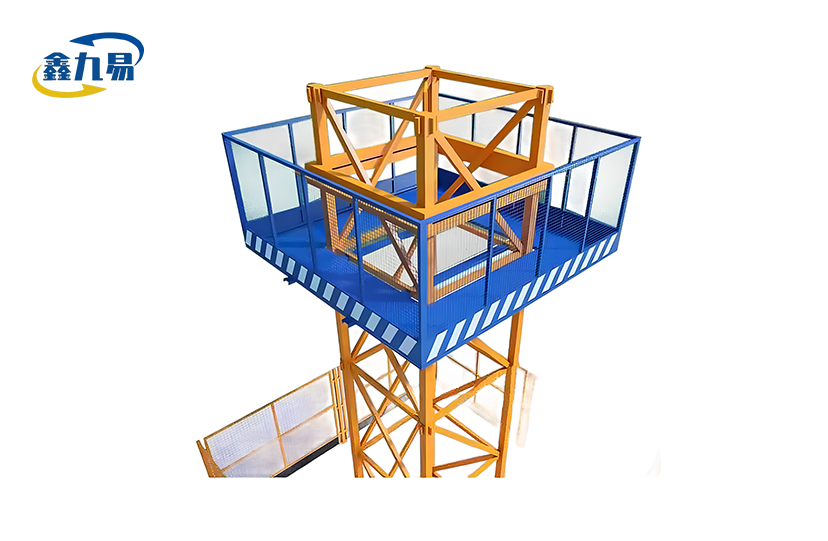
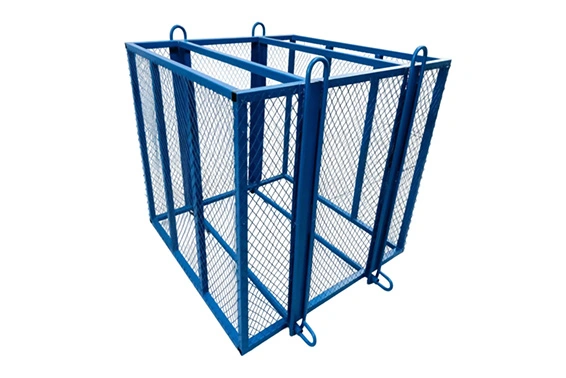
Four things are required by some rules: an automatic gate barrier that stops movement when the door is open; a load capacity that is written out clearly; side mesh or panel cages with small openings to prevent falls; and an emergency stop that can be reached from inside the cage.
Consequences of Non-Compliance
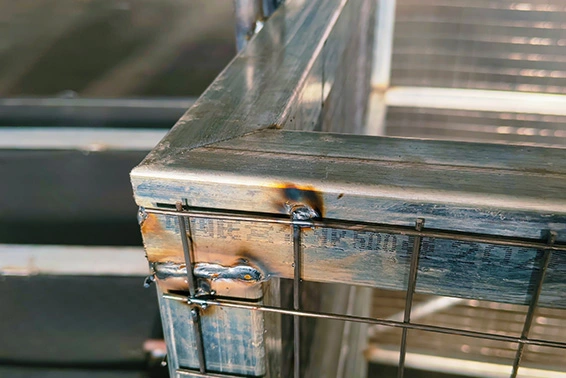
Safety inspectors and site managers will not accept a hoist cage that doesn't have NDT (non-destructive testing) records of the welds that can be checked or proof that the doors lock themselves when they are shipped. The company that buys the equipment might get fined by OSHA, have third parties sue them, or even have their contract terminated if they don't follow the rules. There are much bigger costs here than any short-term savings on equipment.
Key Design Specifications That Ensure Hoist Cage Safety
The things that buildings are made of and how they are put together make them strong. This is possible when buying teams understand the difference between a good cage and a high-performance one.
Dimensional Standards and Load Capacity
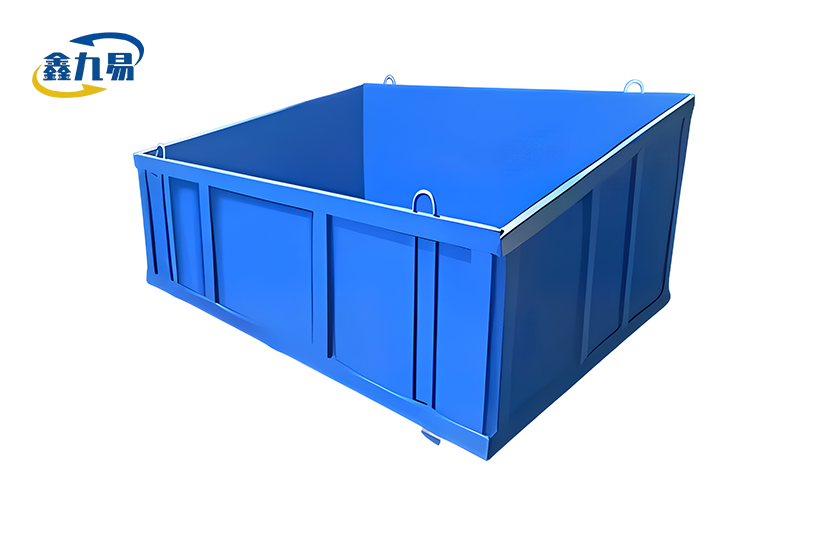
Most lift cages are 1,400 mm long, 1,400 mm wide and 1,400 mm high. They can be made to fit set-ups with two or one SC200/200 cages that can hold up to two metric tonnes each. The parts of the frame should be made of channel steel and I-beams that have been strengthened. In order for flaws inside to stay hidden, key stress nodes need full-penetration welds that treat for flaws.
Steel vs. Aluminum: Material Performance
The building can hold more weight and keep its shape over time thanks to heavy-duty Q235 or Q345B steel rectangular tube pieces that have been galvanised. When steel is under a lot of stress, it needs to stay straight. This is important for bridge pylons and tall buildings. Even though aluminium is lighter, it loses its ability to hold together when loaded and unloaded a lot of times. It's not as good for moving people because of this.
Gate and Locking Mechanism Designs
If you want something that you can count on, automatic door locks are better than latches. People can't mess this up because the hoist can't move until the gate is shut all the way. When you use a manual system, you need to be careful and add a place to check things. Auto locking systems are highly recommended by project managers when it comes to safety acceptance and proof. ANSI A10.4 says that these methods are up to par.
Comparing Different Types of Hoist Cages for Safety and Performance
There are different levels of risk for each vertical transport option. The application, load type, and site rules will help you choose the right type.
Construction Hoist Cage vs. Man Basket
A special construction hoist cage is made to move people and things quickly and over and over again inside a permanent mast structure. A man basket, on the other hand, is a temporary lifting tool that is attached to a crane hook. OSHA makes it clear that workers can only use man bags when they have no other option. If you need to move things up and down regularly on a construction site, you should use a dedicated hoist cage.
Electric vs. Manual Hoist Systems
Electric rack-and-pinion hoist systems with a Variable Frequency Drive (VFD) can speed up and slow down on command, which greatly reduces load-shift accidents. Manual ways don't work well for moving big things and can't control the speed needed to keep people and things safe. When you use a VFD, the drive pinion and mast rack don't wear out as quickly, which lowers the cost of long-term maintenance.
Single-Cage vs. Twin-Cage Configurations
With a twin-cage setup, two separate cages are mounted on a single mast. This doubles the amount of vertical transport that can be done without making the site bigger. This set-up is common in high-rise projects that are higher than 100 meters, where moving workers down and delivering materials up at the same time causes traffic jams. Single-cage setups work best for smaller jobs where the amount of transport can be handled in one unit's cycle time.
Maintenance Best Practices to Ensure Long-Term Safety
If you don't keep up with the cage, it can become dangerous even if it was built well. Damage from rust and normal wear and tear are two of the main reasons why building hoists break down in the middle of a job.
Routine Inspection Checklist
When you write down these important safety checks at the times given, you should make sure they are done on time:
- Weld strength and structural joints: visually check every month; use NDT (ultrasonic or magnetic particle) once a year or after any impact to find cracks below the surface.
- Door mechanism and gate interlock: Make sure the automatic interlock works every day before the first operation cycle to make sure the cage won't move with the gate open.
- Lifting lugs and suspension points: Check once a week for deformation, cracks or corrosion around the lifting point supports; these nodes carry the full cage load during every lift cycle.
- Load marks and safety signs: Make sure that rated load plates can still be read and are firmly attached; markings that are faded or missing are a direct way to get an OSHA citation.
It's important to do these checks so that inspectors and site leaders can look over the work. They put you at greater risk and give you more work to do if you skip them.
Addressing Corrosion and Material Fatigue
Surface corrosion happens faster on a hoist cage near the coast or when bridges are being built because of the high humidity. If you treat cages with high-temperature baking paint and offer hot-dip galvanization, they last longer before they need to be fixed. An expert should be called right away if surface rust gets to a structural weld area. It should not be touched up just for looks.
After-Sales Support as a Safety Factor
A good way to make sure your safety is to buy from a company that stands behind their products with warranties, replacement parts, and technical support. Having quick access to replacement parts that are the same as the originals stops changes in the field that hurt the compatibility of the structure. If a seller has ISO 9001, ISO 45001, and ISO 14001 certification, their quality management chain can be checked and will help them stay in compliance over the long term.
Procurement Considerations: How to Choose a Safe and Reliable Hoist Cage?
If you plan your purchases well, you're less likely to get non-compliant equipment that fails inspection or causes delays on the job site.
Define Project Requirements Before Supplier Contact
Start by writing down the cage's size, mast compatibility (SC200/200 or an equivalent), rated load, operating environment (corrosive, high altitude, confined space), and the safety rules that apply to the site where the project will be done. A fair way to compare seller offers will be to use this specification sheet as a guide.
Certifications and Documentation to Request
Before you choose one, you should ask each provider to do the following:
—Records of NDT weld inspections for weight-bearing parts —Acceptance forms for automatic door locks and overload alarmsA certificate for ISO 9001 quality management was used in the load test. 125% of the maximum capacity was used.
- NDT weld inspection reports for load-bearing joints
- Automatic door interlock and overload alarm acceptance documentation
- ISO 9001 quality management certificate
- Load test results at 125% of rated capacity
Any seller who can't give you these papers is a safety risk, no matter how much they cost per unit.
Evaluating Supplier Reliability and Customization Capacity
You can tell how well a supplier can match the cage sizes to your specific mast design by how well they can do that. Having the cage and the hoist main unit not lined up right is one of the main reasons for field rejection. Make sure that the company you're buying from carefully cuts and checks their parts for any errors. They should also offer technical help for special shapes needed for bridge pylons, tight areas, or mast connections that aren't standard.
Conclusion
You should not look at a bunch of separate checkboxes when choosing a safe construction elevator hoist cage. Instead, you should look at the supplier's reputation, structural requirements, the right type of cage, maintenance records, and regulatory compliance as a whole. Being able to get NDT weld reports, automatic gate interlocks, overload alarms, or certified load testing is not an extra cost. These are the main points. This guide will help procurement teams build relationships with providers that will help the project run easily for a long time. It will also lower the risk of site rejection.
FAQ
How often should the safety device on a construction hoist cage be tested?
Industry standards require a drop test every three months to confirm that the overspeed governor engages correctly. The safety brake mechanism should also receive lubrication checks at the same interval.
Can a hoist cage be customized for oversized materials?
Yes. Modular designs allow extra-long or extra-wide configurations. These modifications require recalibrating the drive motor torque and adjusting mast tie-in intervals to maintain structural performance.
What wind speed limits apply to hoist cage operation?
Most construction hoist cages are rated for operation in wind speeds up to 20 m/s. Beyond this threshold, the cage must be lowered to ground level and powered down.
What does NDT testing verify on a hoist cage?
Non-destructive testing — typically ultrasonic or magnetic particle inspection — examines load-bearing weld joints for internal defects that are invisible to the naked eye, confirming structural soundness before the unit ships.
What is the difference between a single-cage and twin-cage hoist system?
A twin-cage system mounts two independent cages on a single mast, doubling transport capacity without increasing the mast footprint. Single-cage systems suit lower-volume sites where one transport cycle at a time is sufficient.
Get a Custom Hoist Cage Quote from Xinjiuyi
I-beams that have been thickened, channel steel, and galvanized rectangular tubes are used by Xinjiuyi to make industrial-grade construction elevator cages. There is proof that the automatic door interlock works and a full NDT weld inspection of the cages. We have ISO 9001, ISO 45001, and ISO 14001 certifications, which means we know how to make hoist cages in the right sizes for SC200/200 and other mast systems that are similar. You can talk to our expert team about your project and get a personalized quote by getting in touch with them.
Global@xjy8.com is the email address and the website address is xjy8.com.
References
1. Occupational Safety and Health Administration (OSHA). OSHA 29 CFR 1926 Subpart N — Cranes, Derricks, Hoists, Elevators, and Conveyors. U.S. Department of Labor, 2022.
2. American National Standards Institute (ANSI). ANSI A10.4 — Safety Requirements for Personnel Hoists and Employee Elevators on Construction and Demolition Sites. ANSI, 2020.
3. European Committee for Standardization (CEN). EN 12159 — Builder's Hoists for Persons and Materials with Vertically Guided Cages. CEN, 2012.
4. National Institute for Occupational Safety and Health (NIOSH). Fatal Occupational Injuries in the Construction Industry. CDC/NIOSH, 2021.
5. American Society of Civil Engineers (ASCE). Construction Site Safety: Structural Integrity and Equipment Standards. ASCE Press, 2019.
6. International Organization for Standardization (ISO). ISO 9001:2015 — Quality Management Systems Requirements. ISO, 2015.