Circular Column Steel Formwork Thickness and Stiffener Parameters Guide
When you're managing infrastructure projects that involve bridge piers, high-rise building cores, or specialized curved concrete structures, understanding the technical specifications of your Circular Column Steel Formwork system becomes non-negotiable. Steel formwork for cylindrical columns relies on two fundamental engineering parameters: panel thickness and stiffener configuration. Panel thickness—typically ranging from 5 mm to 8 mm in Q235 cold-rolled steel—determines the formwork's resistance to lateral concrete pressure, which can exceed 80 kN/m² during rapid pours. Stiffeners, meanwhile, are longitudinal and circumferential reinforcements welded to the main panels that prevent buckling and maintain dimensional accuracy throughout the curing cycle. Together, these parameters ensure your concrete columns achieve the structural integrity and surface finish required by modern construction standards, while maximizing the formwork's reuse potential beyond 300 cycles.
Understanding Circular Column Steel Formwork Thickness
It's not enough to just follow rules when picking the right panel width for your steel column forms. You need to make sure that the qualities of the material match the load conditions and project lifecycles that will happen in real life.
How Thickness Affects Structural Performance
Panel thickness affects how formwork reacts to fresh concrete hydrostatic pressure. Wet concrete exerts side forces that increase with height and speed during a regular pour. For columns under 2 meters tall and controlled pour rates, a 5 mm panel may work. For higher buildings or high-slump concrete mixes, bigger panels prevent column bowing.
For most commercial usage, 6 mm is the optimal thickness—it provides enough stiffness without adding weight that makes moving and handling tougher. At our Cangzhou factory, we use Q235 steel with 235 MPa yield strength. This makes it suitable for -20°C to 100°C temperatures. Filling in Southeast Asian hot climates and dry Middle Eastern climates requires thermal stability.
For columns over 1200 mm in diameter or 2500 mm tall, use 7 mm to 8 mm thick parts. Extra mass resists vibrations when concrete sets, reducing surface defects like honeycombing and particle segregation.
Industry Thickness Standards and Compliance
International building standards give guidelines for choosing the right thickness, but they usually focus on performance results instead of exact measurements. Our ISO 9001 certification makes sure that the panels we make are always within ±0.2 mm of each other. This is important when putting together multi-segment formwork because even small differences can cause gaps.
The American Concrete Institute (ACI) and the European Standard EN 12812 both stress how important it is for formwork to be able to hold design loads without deforming too much. In our testing procedures, we put each panel setup thru pressure tests that are based on real pour conditions. This makes sure that the bending stays below 1/400 of the span length. Because we pay close attention to compliance, you can be sure that our systems will work on projects that need to follow OSHA rules or get approval from the local building authority.
Real-World Application: Bridge Pier Project
For a new bridge project in the Philippines, 47 spherical piers with a diameter of 900 mm and a height of 3000 mm had to be cast. At first, the engineering team thot about using 5 mm panels to save money on shipping, but load studies showed that the panels might bend during the planned 4-hour continuous pour.
By using 6 mm panels with strengthened circular stiffeners spaced 400 mm apart, the formwork was able to keep its measurements within 2 mm of accuracy across all piers. The extra money spent on the right width paid off: the finished concrete didn't need to be ground down, which saved about 12 hours of work per pier. The formwork has been used 87 times in different stages of the project, showing how the choice of materials at the beginning affects the long-term cost of the project.
Key Stiffener Parameters in Circular Column Steel Formwork
Thickness of the panel gives it basic strength, but stiffeners turn flat steel into a strong three-dimensional framework that can keep its shape even when it's under a lot of stress.
Stiffener Types and Dimensional Specifications
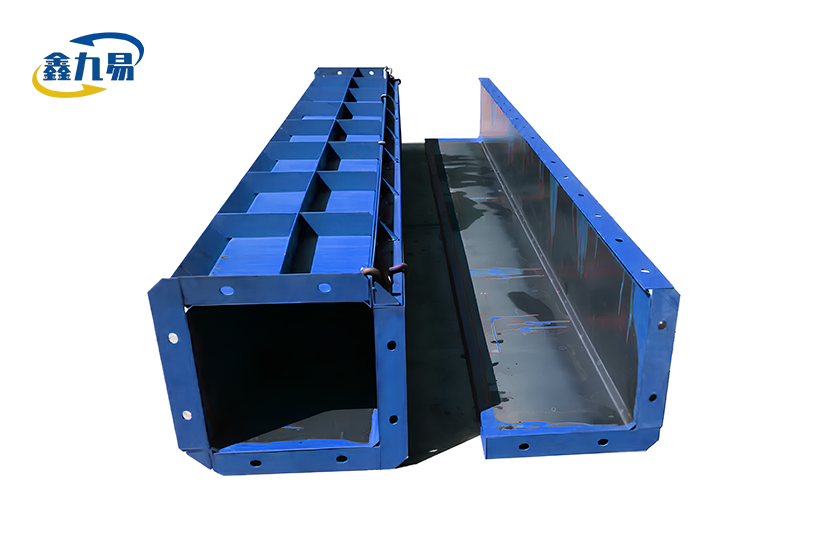
Vertical longitudinal stiffeners go along the Circular Column Steel Formwork. They are commonly formed of channel or angle steel and range from 50 mm x 30 mm to 100 mm x 50 mm, depending on column width. These vertical supports prevent cylinders from becoming oval when pressure is unequal.
External stiffeners are wrapped around the formwork at regular intervals. In this scenario, space matters. more columns with more pressure require 300 mm to 500 mm spacing, whereas shorter buildings need 600 mm to 800 mm. We use angle steel combinations to provide torsional stiffness while keeping weight low for hand-assembly. Frequency isn't everything.
How well stiffeners are soldered to base sections affects system longevity. Full-penetration welds that are polished smooth to remove stress concentrators provide robust structures that properly distribute loads. Unlike poorly built formwork, this talent prevents stress breaking after 50 to 80 applications.
Design Principles for Load Distribution
Engineers consider static loads like concrete weight and dynamic forces like vibration when designing stiffeners. To work, stiffener shapes must have the same moment of inertia as their expected bending moments.
We make circumferential stiffeners bigger or closer together in the bottom third of tall columns since they bear most of the load near the formwork. This stepwise technique maximises material utilisation by fortifying just the system's weakest points.
Before cutting the steel, we use computer-aided design tools to see stress distribution among stiffener installations. This pre-analysis prevents field issues and ensures that your formwork operates the same regardless of concrete mix or temperature.
Maintenance and Inspection Protocols
Even the best stiffeners need regular checks after hundreds of uses to stay working. Your crew should check weld sites for hairline cracks when stripping, especially where the stiffener and panel connect and stress builds up. Stiffeners don't weaken immediately, but continuous corrosion can reduce their cross-sectional area.
In marine or industrial situations where salt exposure accelerates wear and tear, we recommend corrosion-resistant finishes like hot-dip galvanising or high-quality epoxy paint systems. A minor investment in surface cleaning can quadruple formwork life, lowering cost per pour.
Broken or bent stiffeners should be repaired or replaced before use. Deforming stiffeners causes weak places in the concrete that could fail during the following pour, producing costly damage or safety hazards.
Comparing Circular Column Steel Formwork Thickness and Stiffener Parameters with Alternatives
If you know how steel formwork stacks up against other systems, you can make decisions about what to buy based on term economics instead of just the original purchase amount.
Material Performance Analysis
Round pole forms are commonly made from marine-grade plywood 18–21 mm thick. Even tho plywood systems are cheaper, they only last 15 to 25 uses before water and separation harm them. Our 5 mm to 8 mm steel plates can be used over 300 times with good maintenance, costing about a tenth as much as plywood.
Aluminium formwork systems are 40% lighter than steel ones of the same strength. Work on smaller crane projects is easier with this benefit. To match steel's deflection resistance, you need wider walls or more regular stiffening when you trade stiffness for lower modulus of elasticity. Steel is still the best choice for projects that prioritise reuse and accuracy over handling.
Surface finish varies greatly between materials. Use release agents properly on steel's non-porous surface to make creative fair-faced concrete products. Water from concrete soaks into plywood, affecting its texture and requiring extra polishing.
Modular Versus Traditional Configuration Strategies
Traditional steel formwork has fixed shell diameters, making it difficult to employ on projects with various column sizes. Modular devices with arc parts that adjust to different diameters handle this. Your decision depends on job needs; we make both.
For a tall building with 800 mm core columns throughout, fixed-diameter formwork with optimised stiffener spacing will provide the most rigid structure and fastest assembly. Customisation eliminates unnecessary adjusting mechanisms and adds weight and failure points.
Modular solutions are ideal for general builders and formwork rental companies with many clients. Changing the width from 600 mm to 1200 mm using the same base components reduces inventory costs, but it takes longer to set up and isn't as stiff as custom-built shells.
Cost and Lifecycle Performance Considerations
Maintenance expenses, labour for stripping, concrete finish quality, and formwork reuse are all factors to consider. The correct thickness and stiffness circular column steel formwork costs more initially, but it saves money in the long term since it requires less work to smooth the surface, is replaced less often, and can be poured faster.
A procurement manager at a Gulf Cooperation Council infrastructure company said that switching from plywood to Circular Column Steel Formwork for flyover piers saved 18 hours per column because the fair-faced finish eliminated grinding and fixing. Using over 120 columns saved a lot of money and paid for the first phase's formwork.
Lifetime study includes storage and transportation costs. Circular Column Steel Formwork may be stacked and can withstand rigorous handling that would destroy plywood, making it perfect for overseas projects that use shipping containers.
Installation and Maintenance Best Practices for Thickness and Stiffener Parameters
Technical standards are only useful if they are followed by field teams when putting things together and taking care of them.
Step-by-Step Assembly Guidelines
First, check all the formwork pieces for damage and make sure that the edges that fit together are clean and don't have any concrete buildup or deformation. Apply a release agent evenly to the inside surfaces. We suggest oil-based products made just for steel that stop concrete from sticking without leaving behind dust that makes it harder to reuse.
Use plumb checking to place the first half-circle shell, and then use the flanged connection method to link the other half. Around the outside of our formwork, there are 150 mm to 200 mm of precisely made bolt holes. Tightening the nuts in a cross-pattern pattern will make the tightening force spread out evenly and keep the cylinder's shape from changing. When you undertighten, gaps form that let grout leak out. When you overtighten, panels can warp, especially near corners where stiffeners make rigid zones.
Place the circumferential tension bands or external yokes at the distances shown on the engineering drawings, which are usually the same as where the internal stiffeners are located. These outside supports counteract the outward pressure that happens when concrete is poured. They work with the stiffeners to keep the measurements accurate.
Quality Control Checkpoints
Before letting the concrete come in, use a spirit level to check that the forms are level at different heights and angles. If the difference is more than 3 mm per meter of height, columns can form that need expensive repairs. Check the internal diameter at the top, middle, and bottom. If it stays the same by 2 mm, the assembly is correct.
If your project requirements call for written quality assurance, use a measured torque wrench to check all fixed connections to make sure they are tight. At panel junctions, make sure that the EPDM sealing strips are properly seated and not damaged. These elastomeric gaskets are the last line of defense against grout loss.
Watch how the forms behave while the concrete is being poured. Assign someone on the team to look for bulging, leaks at the joints, or strange sounds that could mean the structure is deflecting too much. Finding problems during the pour lets you fix them before the concrete sets. Finding problems after the fact can lead to expensive repairs or, in the worst cases, the structure being rejected.
Safety Guidelines and Maintenance Scheduling
Use the right pulling gear for the job when working with formwork panels. A 3-meter-tall, 1200 mm-diameter Circular Column Steel Formwork section can weigh between 180 kg and 250 kg. You should never try to lift something by hand that is too heavy for your crew. If the formwork falls, it could hurt someone or damage the precision edges.
As soon as you're done stripping Round Column Steel Formwork, clean the walls while the concrete residue is still usable. High-pressure water systems work well, but don't use pressures higher than 3000 psi because they could damage protective coatings. Sticky adhesions can be broken up with non-metallic scrapers. Stay away from steel tools that scratch the surface and make places where rust can start.
Formwork should be stored undercover and stacked to keep it from twisting. If you have to store things outside, make sure the panels are set up so that water can drain instead of pooling. Plan thorough checks every 50 uses and keep track of panel thickness measurements, stiffener strength, and coating state to figure out what repairs are needed before they happen.
Procurement Considerations for Circular Column Steel Formwork Thickness and Stiffener Parameters
By turning technical requirements into procurement specifications, you can be sure that the formwork you receive will meet the performance standards and delivery deadlines for your project.
Specifying Technical Requirements
In your procurement documents, you should list the column's dimensions (ranging in diameter and height), the expected concrete pressure (which depends on the pour rate and mix design), the number of times it needs to be used, and any standards that apply. As an example, you could say, "6 mm nominal, acceptable range 5.8 mm to 6.5 mm" for panel thickness. This way, manufacturing errors can be taken into account and materials won't be underspecified.
Include information about the stiffener you need, such as its type (channel steel or angle steel), size, spacing, and how it should be welded. Reference standards, such as AWS D1.1 for structural welding, give manufacturers a common language they can use. Include surface treatment needs, like the thickness of the galvanizing, paint system, or powder coating, to make sure the corrosion protection fits the environment your project will be exposed to.
Don't forget about delivery operations; be clear about the packaging needs for foreign shipping, especially if you're planning to send containers to project sites in Southeast Asia or Africa. When compared to shipping completed formwork, nested formwork has much lower freight costs.
Supplier Evaluation Criteria
When you need to buy formwork for big building projects that need to be done quickly, the manufacturing ability is important. Visit the facilities of possible providers or ask for thorough information on their ability. At Xinjiuyi, our production center in Cangzhou has specific lines for making formwork. These lines use CNC cutting tools and robotic welding systems to make sure that high-volume orders are always the same.
Ask for proof of quality management systems. For example, ISO 9001 approval means that there are systematic rules in place to lower the number of defects. Ask for test records that show how the material was tested for performance and its features. Reputable makers try their products under pressure on representative samples, which gives them proof that their products can handle the load they say they can.
Check out the after-sales support options. Professional sellers are different from transactional vendors because they offer technical support during installation, answer questions quickly in the field, and have new parts available. We keep technical support staff who have worked on international projects and know how procurement managers need to communicate when they are working together across time zones.
Cost Factors and Supply Chain Management
When it comes to making steel, savings of scale are reflected in volume prices. The unit costs are usually better when you order formwork for the whole project phase instead of buying it in pieces. For short-term jobs or contractors looking at Circular Column Steel Formwork before deciding to buy it, renting it might be a good choice.
Key times depend on how customized something is and how many of them are ordered. Standard diameter configurations that are in stock could be shipped within two to three weeks. On the other hand, fully customized systems with unique stiffener arrangements or surface treatments need six to eight weeks to be made and checked for quality. Include these dates in your project schedule, especially if you are planning to ship something internationally and need to account for time for transit and customs clearance.
The total cost of your purchase is affected by the terms of payment and the currency used. For returning customers or big sales, providers who have been around for a while are likely to offer open terms. At Xinjiuyi, we make sure that deals are in line with the project's cash flow because we know that payment cycles for building projects are different from those for manufacturing.
Conclusion
When choosing the right width and stiffener options for Circular Column Steel Formwork, you have to weigh the needs of the structure against the costs. With longitudinal and circumferential stiffeners placed at key intervals and panel thicknesses between 5 mm and 8 mm, current building projects can achieve the performance they need. Steel is the best material for contractors who care more about long-term value than short-term cost because it can be reused and has a better finish. Your projects can meet the safety and accuracy standards for professional concrete construction by carefully specifying what they need, choosing the right suppliers, and following field protocols.
FAQ
What thickness should I specify for columns over 2 meters tall?
Columns taller than 2000 mm should have panels that are 6 mm to 8 mm thick to handle the extra water pressure. The exact requirements depend on the slump and pour rate of your concrete mix. Higher slump or faster pours create stronger side forces that need thicker panels. Talk to the engineering team at your formwork supplier about your specific project to get the best advice.
How do stiffener spacing and panel thickness interact?
Tighter stiffener spacing makes up for thinner panels by giving extra support in the middle, which shortens the length of the panel that isn't supported. A 5 mm panel with stiffeners every 300 mm can work just as well as a 6 mm panel with stiffeners every 500 mm. There are trade-offs between the cost of the materials and the difficulty of making them. For example, adding more stiffeners means more welds but fewer steel panels in the base.
Can I modify existing formwork by adding stiffeners?
It is technically possible to add more stiffeners after the fact, but it needs careful engineering analysis and skilled welding to keep the structure's integrity. If stiffeners are put incorrectly, they can cause stress concentrations that weaken the formwork instead of strengthening it. It's usually cheaper to replace old systems with ones that were properly designed than to make changes in the field, which could put safety at risk and cancel maker warranties.
Partner with Xinjiuyi for Engineered Formwork Solutions
Formwork specification can be very technical, but that shouldn't slow down your project. Xinjiuyi has been making things for 30 years and works with infrastructure companies who need both speed and dependability. Our Circular Column Steel Formwork systems are made of precision-welded Q235 steel panels with the best stiffener configurations that can be used over 300 times, meeting OSHA, ISO, and EN standards for your projects. From the first concept meeting to helping with the construction on-site, our technical team makes sure that the parameters of your formwork match the needs of the structure and your budget. As a well-known provider of Circular Column Steel Formwork, we keep common designs in stock and can fully customize our products for unique uses. To talk about how our formwork solutions can help with your next bridge, high-rise, or infrastructure project, email our procurement experts at global@xjy8.com or look at our website for full specs.
References
1. American Concrete Institute. (2019). Guide to Formwork for Concrete (ACI 347-14). Farmington Hills: ACI Committee Publications.
2. British Standards Institution. (2008). Falsework – Performance Requirements and General Design (BS 5975:2008+A1:2011). London: BSI Standards.
3. European Committee for Standardization. (2008). Falsework – Performance Requirements and General Design (EN 12812:2008). Brussels: CEN Publications.
4. Hurd, M.K. (2005). Formwork for Concrete (7th Edition). Farmington Hills: American Concrete Institute.
5. Peurifoy, R.L. & Oberlender, G.D. (2011). Formwork for Concrete Structures (4th Edition). New York: McGraw-Hill Professional.
6. Concrete Society. (2012). Formwork: A Guide to Good Practice (3rd Edition). Camberley: The Concrete Society Technical Report No. 64.