6 of the Best Applications of Stainless Steel Grating
The six best applications of stainless steel grating are industrial walkways and access platforms, stairs and stair treads, drainage channels and trench covers, food and beverage processing plants, wastewater treatment plants, and industrial flooring with removable access panels. Each one relies on the same product: stainless steel bar grating, a load-bearing panel built from parallel bearing bars joined by cross bars. The metal shrugs off water, salt and cleaning chemicals, the open pattern lets liquid fall through, and the surface grips boots in wet or oily spots. Those three traits explain why the material keeps appearing wherever drainage, safety and long life matter at once.
I field questions from engineers, procurement teams, distributors, OEMs and contractors, and they all come down to one: which panel holds up here? Looks rarely answer it. Material grade, load capacity, clear span, finish, panel dimensions and the way a panel seats on its supports decide whether a grating serves twenty years or fails an inspection in two. The sections below walk through the six applications, then the selection steps I use when a drawing lands on my desk.
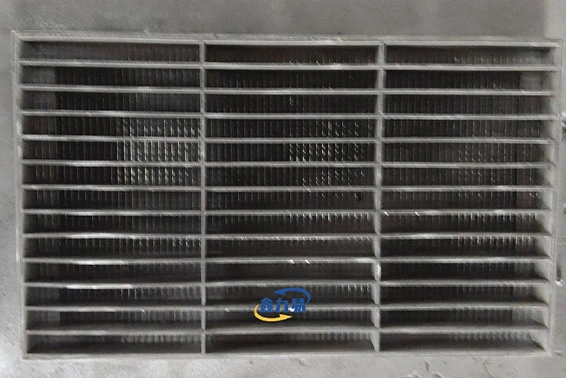
Stainless Steel Bar Grating for Industrial Walkways and Access Platforms
How Open Construction Handles Water, Oil and Debris
Steps and raised platforms make it easier for people, tools, and vehicles to get to and from the equipment. They also collect water.
Bearing Bar Direction, Span and Load Path
When it rains, snows, or oil falls through an open pattern, it doesn't pool on top of it. That changes how a platform works after a spill or a winter storm. Though the water may be still, falls can still happen. But a grating panel can hide them. Things can be broomed out or fall through the holes. The distance between the bars depends on how big the debris is on the job site. Big pieces of trash can be thrown out quickly through wide gaps, while pumps and people below are safe through smaller gaps.
Guardrails, Kick Plates and Fixing Details
Bearing bars hold the weight, so the form is based on which way the bars point. It is best to put a panel where there is less space between the supports, and the bars should go that way. We need to make the bars deeper or closer together so that the clear spans are longer. You should check a live load that stays the same, a load that moves from a cart or truck, and a point load from an equipment foot. It will bend in a different way with each of these. A span table, such as the ones in NAAMM MBG 531, shows how much a certain size of bar can bend.
A platform is more than just that. The guardrail's anchor points must not crush the grates, and the panels must not move when people walk on them. For this, saddle clips or hold-downs with bolts work well. Because of the kick plates, tools can't slide off the edge and into the room below. To protect the panel edges from forklifts running over them, I add edge bars or a bearing frame. The grade of the screws should match the grade of the walls when they are used outside. When carbon steel nuts are used against stainless steel, for instance, rust lines show up at every clip.
Stainless Steel Bar Grating for Stairs and Stair Treads
At a plant site, stairs are the steel area where the most people slip and fall.
Serrated Versus Smooth Tread Surfaces
The bearing bars have a cut on top that lets them bite into the bottom of a boot. If the stairs get dirty, oily, washed down, or wet, this grip is the most important thing. It is better to wipe down smooth bars in dry, clean places than to try to hold on to them. There are both walk-through platforms with grooves and smooth edges on some projects so that hands and clothes can slide along the front edge. I want to know where the water goes before I ask which finish looks better on the stainless steel bar grating.
Nosing, End Plates and Bolt-Down Details
There are times when stair steps come as a whole piece instead of a part that has been cut. It has holes already drilled to fit the stringer and a side plate to cover the ends. The front edge is curved. When making something new, welded or clipped treads are better than bolt-down treads for retrofitting. There is no need to drill in the field, which is a slow and hot process. Instead, set the hole pattern while the drawing is still being made. A difference of 5 mm looks like a wheel that rocks.
Matching Tread Geometry to Standards
How steps are made is based on rules at work. You can find out more about walking-working surfaces in general industry in the United States at 29 CFR 1910 Subpart D. The ADA Rules cover stairs in public places. The rules talk about things like tread depth, rise, uniform geometry, and how well the tire doesn't slip. In some places, there may be even more rules. Before I start making something, I ask the client to tell me what the site's standard is. It costs more to fix a stair that doesn't meet code than to cut the right step just once.
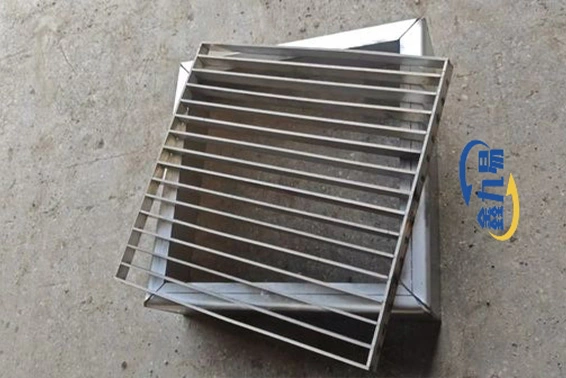
Stainless Steel Bar Grating for Drainage Channels and Trench Covers
They let water flow and hold weight at the same time.
Duty Classes: Pedestrian, Maintenance and Vehicle
The load class is what it all depends on. For people to walk on, the cover over a plaza drain must be stiff and have a clear hole small enough for heels and canes. The ADA says that gaps in the way of movement must be no bigger than 13 mm. A person with tools on their knees must be able to stay on a ground cover. For a car cover over a fire lane or parking bay to work, the bars need to be deeper and closer together. The frame also needs to be able to spread the weight out over the concrete. It doesn't matter what walks on it; what rolls on it too for the stainless steel bar grating.
Why Stainless Steel Holds Up to Water and Chemicals?
Chlorides from sewage, cleaning foam, road salt, and air near the coast all get into drainage water and hurt steel. The molybdenum in Grade 316 is between 2% and 3%. This is a chemistry choice that makes it less likely to split and crack in salty places. Grade 304 is for cheaper work that is done in the interior on roads and gardens. The finish doesn't chip at the cut edge because neither is painted nor galvanized. For trench covers, this is important because each cut and weld makes a new surface.
Removable Panels, Hinges and Frame Tolerances
Cleaning is used to pick out hardware. With lift-out handles, one person can take out a panel to clean it or look at it. It's held in place by hinges, and locking mechanisms keep it from being stolen or opened by accident in public places. Site work on runs that aren't straight is cut down by modular lengths. When frames are too close together, installations fail. If the cover is 4 mm above the ground, it can cause people to trip, and if it rocks in its frame, it can crack the concrete around it.
Stainless Steel Bar Grating for Food and Beverage Processing Plants
In a food business, the floor drain is part of the cleaning process.
Cleanable Surfaces and Drainage in Washdown Zones
Every shift, water, fat, blood, and toxic foam are put on the floors where the food is processed. The grate needs to drain quickly and stay clean. Wet bar water doesn't get spread out on the floor when there are open bars. Instead, it goes down the drain. Steel doesn't have a finish that can come off, and a smooth finish doesn't leave any gunk behind. When you join two cross bars together, soil builds up, so the quality of the weld is just as important as the metal you use.
Choosing Between 304 and 316
Most of the work in the food and drink business is done with grade 304. Chemicals used to clean, organic acids, or normal plant wetness don't bother it. Grade 316 is the next step when chlorides go up. These are places near the coast, places that clean with a lot of hypochlorite, brine rooms, fish lines, and cold shops with salt on the floor. I look at more than just the food. I also look at the cleaning supplies and the flow of water. What came is shown on a material certificate that is linked to the heat number. This is useful in case the customer's inspector asks for records.
Weld Quality, Crevices and Documentation
Spot welds that leave holes are not as good in sanitary design as parts that are smooth and whole. Weld cracks don't show up on some panels because they are press-locked, and the oxide layer is fixed by pickling or passivation after welding. When a customer has to follow a food safety plan, get the proof of materials, weld inspection notes, finish records, and measurement reports as soon as possible. An audit by a third party and parts of the FDA Food Code both check how clean something is. If a provider gives records, the process of approval moves faster.
Stainless Steel Bar Grating for Wastewater Treatment Plants
Metal that is in a treatment plant is always wet, there are chlorides and bacteria there, and time goes by.
Where Grating Sits in a Treatment Plant?
Aeration basins, filters, pump stations, dosing rooms, and service platforms all have grids around them. Each spot has a different load and chemistry. People can use the bars and the pond walk. The pump pull area has a hoist load and a panel that can be taken off. There is also a room for dosing chemical mist. I make a map of the plant by zone before choosing a grade. If I use the same grade for the whole site, I'll either spend too much or get rust in one spot too soon.
Grade, Passivation and Surface Contamination
The metal isn't the whole answer. The chromium on the surface is burned off during welding. To make the steel safe again, passivation or pickling fills in the gaps in the oxide film. When carbon steel dust from a nearby cutting area hits stainless steel panels, it makes rusty spots that make the metal look like it's broken down. It is not a good idea to store panels on wet ground or cover them up while they are still wet. If you are making carbon steel, don't work with stainless steel. Also, keep the panels dry on the job site.
Heavy-Duty Spans and Maintenance Loads
A lot of people are shocked by maintenance loads. Many times, people walk on a path while carrying a portable hoist, a pump, or a cart of dewatered sludge. This puts a lot more weight on the path than it can handle. For long lengths over a basin, you need thicker bearing bars, more supports, or a beam under the panel. It's best to have two people help you lift panels that come off of pumps. Please be careful. Do not only look at the strength, but also the movement. People who use the panel every day will feel dangerous if it bends.
Stainless Steel Bar Grating for Industrial Flooring and Removable Access Panels
They must be simple to move and feel solid when you walk on them since they open and close.
Modular Panels and Shorter Shutdowns
On factory floors, things change. A machine moves, a cable trench gets a new run, and a staircase is added to a mezzanine. With modular grating panels, a crew can make a space bigger without cutting steel, and a plant can move floors around without sending a construction crew. To put up panels, all you have to do is bolt them in place. They come already cut, edged, and drilled to fit. Off-hours on a live plant, which cost more than the panels, show that difference.
Panel Size, Weight and Handling Limits
A panel that two people can safely lift is best for getting to the roof. Something made of stainless steel weighs more than something made of aluminum. I cut the panels so that they fit the opening grid and don't weigh too much. I add lift handles or sections that can be moved to places where the weight is too high. The machine footprints and pipe cutouts determine the form, and the support spacing determines the depth of the bars. The module needs to be smaller than the floor around it so that there are holes for the cables.
Welded, Press-Locked, Bolted and Lift-Out Designs
The way something is built determines its cost and how it acts. Panels that have been welded together can hold a lot of weight and are good for building floors. One way to connect press-locked panels to bars without weld lines is to swage them together. This method works well in clean areas. When bolts hold the frames together, the broken part can be fixed instead of the whole run. You can make access panels and trench covers that hinge or lift out. First I decide on the method, and then I decide on the finish. I can have a flat finish in a clean room or a mill finish in a dirty room where no one takes pictures.
How to Select the Best Stainless Steel Bar Grating for Your Project
Things have to be done in a certain order, and skipping a step generally costs more in the long run.
Read the Operating Environment First
First, I look at things that touch the screen, like water, salt, chemicals, oil, heat, weather, and how often it is cleaned. That list leads to a grade before price is talked about. Grade 201 is good for dry work that needs to be done quickly and cheaply in the middle of nowhere. Grade 304 is good for most city, landscape, and food projects. Grade 316 is good for chloride-heavy sites, coastal air, and chemical rooms. As an extra safety step, customers often ask for 316 everyplace, which makes the work more expensive without taking longer for the stainless steel bar grating.
Confirm Load, Span and Support
It's worse to guess than to load data. To find the project's displacement limit, I need to know the live load that doesn't change, the point load, the rolling load, and the moving load. Then, the bearing bars' depth, thickness, and distance apart are found. One that is 1.2 m long and one that is 600 mm long carry a lot less weight when the bar section is the same. I always ask what will happen on the panel when the picture doesn't show any loads: people walking, a hand cart, a truck, or a hoist?
Lock the Specification Before You Request a Quote
The price is based on what you ask for. Price quotes are fair when the buyer gives three sets of information:
- Product data: the product's use, grade, panel length, width, and height; the size and spacing of the bearing bars; the type of cross bars; and the finish on the outside. There are gaps between plates of grades 201, 304, 316, and 430 that are 20 mm to 100 mm wide and 2 mm to 8 mm thick. Instead of a range that no one can accept, please give one value.
- Project data: these include the type of support, the way it will be fixed, the load class, the open span, the frames, the nosings, the cut-outs, and any standards that the finished work must meet. A panel goes from being in stock to being made to order because of one missing measurement. This takes extra days that the site crew can't handle.
- Commercial data: "Commercial data" includes the weight, where it's going, how it needs to be packed, any licensing, inspection rules, and delivery times. They also check Incoterms and whether panels are shipped in boxes or on pallets to make sure that there is no empty space in a mixed container. Once everyone agrees on a packing list, there are no more arguments before the freight is booked.
You only have to get bids from these three groups once, instead of five times. It's also easy to compare bids because they all price the same scope.
Stainless Steel Bar Grating Compared With Alternative Materials
These four things are the best for most annoying jobs. In different situations, each one works best.
Galvanized Steel Grating
Galvanized steel is the best right away when it's mild and dry. When the steel is scratched or cut, the zinc coat comes off and shows the bare metal. That's when rust starts to form. The layer thins and the panels come off more quickly when the service is wet, salty, or chemical. With this method, you can cover paths inside your home. Any money you saved for a seaside trench cover or a washdown floor is spent on maintenance.
Aluminum Grating
Aluminum weighs about a third as much as steel for the same size piece. This helps with work on the roof and walls that can be taken off. Chemicals won't hurt it, and you don't have to finish it. Aluminum is not as strong as steel when it comes to fire-rated parts and being hit, since it softens at lower temperatures and dents where steel bends. When a plant needs to use heavy carts or a rated assembly, steel is still the safer choice.
Fiberglass Grating
Glass fiber is good for places with live electricity and some chemical plants because it doesn't let electricity flow through it and doesn't rust. It can only bend so much, ages faster in the sun, and turns into something else when it gets hot. Non-conductivity has a place in projects that need it. When working with food or in the city, a metal surface needs to be stiff, strong, and easy to clean. Stainless steel meets more of these needs in a single product.
Conclusion
Stainless steel bar grating is mostly used for six things: walkways and platforms, stairs and steps, drainage channels and trench covers, food and beverage plants, wastewater treatment plants, and industrial floors with panels that can be taken off. All of them need a surface that can drain water, hold weight, and last in the things that they are used for. In the right panel, the environment is shown first, then the grade, then the load and span, and finally the finish and building method. In the middle of the country, Grade 304 is good for most city and garden work, Grade 316 is good for chloride exposure, and Grade 201 is good for dry, low-cost sites. Clear drawings, real load data, and a written standard are used to decide if a panel will fit on delivery day or if it needs to be sent back to the shop.
FAQ
When does grade 316 make more sense than 304?
Choose 316 for places where chlorides build up, like air near the coast, road salt, brine rooms, hypochlorite bathrooms, and areas where chemicals are dosed. Because it has 2 to 3 percent molybdenum, it is less likely to pit or rust in cracks. Since the rise doesn't help dry work in the middle of the country very often, grade 304 is fine for most gardening and city jobs.
Should I specify serrated or smooth walking surfaces?
Serrated bars are good for routes that are wet, greasy, or outside where grip is important. When it's more important to wipe down than to grip, smooth bars work best in dry, clean rooms. Pick walking surfaces with grooves and smooth edges if both are important. This way, your clothes and hands can slide along them.
How is load capacity confirmed?
How far apart the bearing bars are, how much space there is between them, the clear span, and the support state all affect the capacity. The estimate based on span tables that have already been made public is confirmed by testing the load displacement physically. Ask for the project's math instead of just a quick look.
Can panels be made to my own drawing?
Yes. There are stair steps, trench covers, holes of strange shapes, pipe cutouts, and walls that can be taken off that are all custom work. You can get a precise quote from the shop if you send them a drawing that shows the size, grade, loads, finish, quantity, and where the work is going.
Request Stainless Steel Bar Grating Recommendations from Xinjiuyi
After you send Xinjiuyi your drawing, a group of people will look at it and make suggestions. Our team looks at the grade, bar size, spacing, finish, and packing. They then send you a price along with the paperwork you need for the job. As a Hebei-based business that makes stainless steel bar grating, we send custom panels, trench covers, and stair steps to people in the city, the food processing industry, and other countries. To begin, email global@xjy8.com. Let us know what the load is and where it needs to go, and we'll figure out the rest.
References
1. National Association of Architectural Metal Manufacturers, Metal Bar Grating Manual (MBG 531), 2010.
2. ASTM International, ASTM A666: Standard Specification for Annealed or Cold-Worked Austenitic Stainless Steel Sheet, Strip, Plate, and Flat Bar, 2023.
3. ASTM International, ASTM A240: Standard Specification for Chromium and Chromium-Nickel Stainless Steel Plate, Sheet, and Strip, 2023.
4. U.S. Access Board, ADA Standards for Accessible Design, 2010.
5. Occupational Safety and Health Administration, 29 CFR 1910 Subpart D: Walking-Working Surfaces, 2017.
6. ASM International, ASM Specialty Handbook: Stainless Steels, 1994.