How to Choose the Right Stainless Steel Manhole Cover for Your Project
To choose the right stainless steel manhole cover, start with the site, not the catalog. Confirm the corrosion exposure first, then match the grade: 304 for general urban use and 316 for coastal or chemical sites. Next, pick an EN 124 load class that fits the heaviest traffic, check the clear opening and frame fit, and add features such as anti-slip patterns or sealing where the site needs them. Finally, review the supplier's material reports and quality checks. I walk through each step below so you can write a clear specification and avoid early replacements.
Start With the Site and the Stainless Steel Grade
Map the Installation Environment
Every morning, the first thing I do is ask myself, “What does this cover look like?” People walk on a sidewalk cover that becomes wet. A cover at a sewer facility where sewage gas and cleanup chemicals meet. Northern states utilize salt to melt ice and prevent cycles of freezing and thawing. This involves exposure to salt for roadside covers. Sites near the seaside have salt spray thrown in too. Monitor the amount of water, salt, chemicals, temperature fluctuations and lid openings. If you only open your door once a week you need easy access lifting points, if you only open it twice a year you may need a stronger handle. In this short project brief, there are rules that must be observed so that the person who produced it, the person who purchased it and the person who sold it may all operate from the same set of facts.
Choose Between 304 and 316
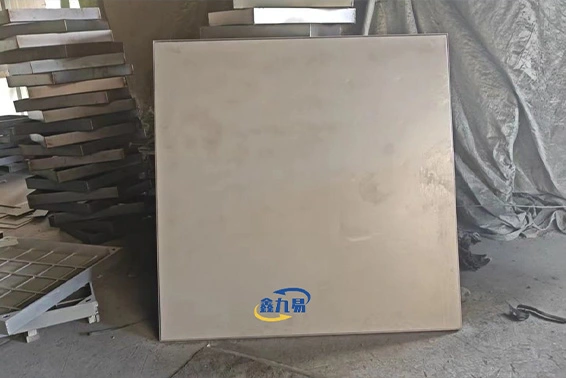
The grade defines the age of rust. 304 contains roughly 18% chromium and 8% nickel. It's suitable for the daily usage in industries and cities. Grade 316 has a little Molybdenum added to it (approximately 2% to 3%) making it less prone to chloride pitting. 316 is appropriate for regions that receive a lot of water, near the ocean, or chemical plants or waste water treatment facilities. I only use Grade 201 in dry, moderate, low-risk situations since it doesn't contain as much nickel as Grade 304 and doesn't combat rust as efficiently. Xinjiuyi offers 201, 304 and 316 grades to choose from for the appropriate grade of cover for each location. Also ensure sure all the screws, hinges and frame are the same kind.
Verify the Material With Certificates
An awful lot of buyers are scared about grade switching, and I can see why. A plate can look like it is either 201 or 304 after it has been polished. The best ways to check are through paperwork and tests. Get a mill test record that lists the chemical make-up, heat number, and grade that is written on your purchase order. Then look at them side by side. A lot of buyers also run positive material identification on a few samples when they get a bunch of them. As a clear guide, ASTM A240 limits what can be put into stainless steel plate. Material testing at Xinjiuyi makes sure that the chemicals meet the requirements for the grade of the stainless steel manhole cover.
Match Load Class, Size, and Frame Fit
Pick the Right EN 124 Load Class
EN 124 sorts covers by how much they are tested. A15 (15 kN) covers places where people walk and ride bikes. As part of B125 (125 kN), there are walkways, walking areas, and parking lots. All roads, pedestrian streets, and parking places for all kinds of cars are included in D400 (400 kN). If you want to pick a class, pick the one with the highest load ever at the start. Specs in the US often talk about AASHTO M 306 or H-20 wheel loads. Talk to your expert to find out if an EN 124 class is what you need. Ask for the class on both the price and the test report. The length, width, ribs, welds, and bearing surfaces of the plate are all important.
Confirm Dimensions and Plate Thickness
Keep the clear opening, cover size, and frame size separate. If you mix them up, it's hard to get the right fit. 40, 50, 60, and 70 mm are the standard cover heights. The standard cover lengths and widths are 600, 700, 800, 900, 1000, and 1200 mm. Plates are made to order and can be any size you want. They are 2 mm to 8 mm thick. How thick it should be depends on the size of the opening, the type of load, the conditions of support, and the amount of bend that is allowed. A big hole that a lot of people walk through needs more support and thickness than a small hole that only people can walk through. Tell the seller what the hole size and load class are, and find out what the thickness is.
Check Frame Compatibility and Flatness
It's not always the lid that's to blame when people say things are shaking and sinking. The frame and covers are also to blame. Make sure you know the frame's width, supporting surface, concrete embedment, and hinge clearance before you place your order. The top should be even with the ground. People can trip over an edge that is too high, and water and grit can build up on an edge that is too low. Before you buy new parts, measure the old frame and cover to see if you just need a new lid or a whole new set. Standard sizes ship faster, but a custom cover can fit holes that aren't the same shape. Our integral molding process gets rid of weak spots in the unit, making the structure strong all the way through.
Pick Features and Compare Materials
Choose Safety, Sealing, and Maintenance Features
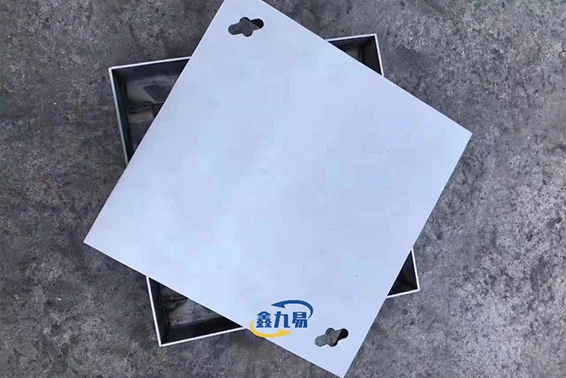
Fit the site's risks to its strengths. Patterns that don't let you slip make it easier to walk on wet sidewalks and plazas. We have finishes that are smooth, mirror, and non-slip. Many times, people ask for locks, seals, and hinges to make doors and windows waterproof or odor-proof. Make a note of them on the picture and ask the provider to confirm what it can build. Crews can use a standard T-bar lifting key to remove the lid for repairs because our stainless steel manhole covers have lifting points built in with threaded attachments. This form makes things easier to handle during tests. For each choice, think about how often workers will have to open the cover and how simple it is to clean.
Compare Stainless Steel With Other Materials
Don't just compare things by when you bought them; compare them by how long they last. Cast iron is strong and can stand up to a lot of weight, but it needs to be covered and can rust where the covering comes off. Iron is light, but it needs to be carefully made to hold heavy things, and it can react with wet concrete. Galvanized steel can be used when the weather isn't too bad, but the zinc layer can come off when it's cut or welded. It doesn't rust because it has a thin film of chromium oxide that grows back when light hits it and there is air around. That means you won't have to paint or re-coat as often. When you compare prices, don't forget to look at setup, downtime, freight, and service life.
Match the Cover Type to the Application
Not every site needs the same mix of things. A city street sidewalk must not slip and be level with the ground. More weight and chemicals used to melt ice need to be able to handle the pavement in industrial parks and parking lots. Business plazas and high-end residential areas sometimes like finishes that look like mirrors or brushed metal to match the floor. Also, make sure you know ahead of time if your plaza needs deep trays to hold stone or tile. Doors that last a long time and are easy for workers to open are needed in civil defense caves and equipment support pits. 316 can be found in sewage and near the water. You should write form, grade, load class, and finish all in one line.
Verify Installation and Supplier Capability
Inspect Installation and Long-Term Performance
The cover is well-made, but it won't work if it's not put on right. If you want to put the cover down right away, check the opening, frame, concrete support, and levels of support. Once the frame is firm and level, make sure the lid closes evenly and doesn't rock back and forth. Grinding dust and carbon-steel tools should not be used on stainless steel surfaces because the iron in them can make spots rust. Not only that, but Euro Inox also says that metals that are wet shouldn't touch each other, so check the fasteners and frame materials. After installation, set up regular checks to look for things like corrosion, distortion, loose fasteners, seals, and stability.
Evaluate the Manufacturer Before You Order
You should compare three to five providers. More than just price, you should also look at what they can do. Find out about the materials, the numbers that were checked, the loads that were tried, the drawings, and how to put them together. Before you place a large order, ask for a sample so that your team can make sure it's okay. How much can be made, how long does it take to make one batch, how will it be packed, what does the insurance cover, and how quickly do the engineers respond? ISO 9001, ISO 45001, and ISO 14001 are all certifications that our company has. Our main office is in Cangzhou, Hebei. The Xian County Development Zone is where we work. Digital tools are used to check the sizes, the strength of the welds, and how well the structure can hold weight.
See What Xinjiuyi Offers
Our stainless steel manhole cover makes it easier to check and fix city pipes. Not only that, but it can also be used as an entrance for civil defense projects and a safety hole for equipment foundation pits. In cities, they often hang out on sidewalks, in shopping malls, in parking lots, in industrial parks, in nice neighborhoods, and in public buildings. We cut and shape each cover from grade 201, 304, or 316 steel based on your needs. A brushed, mirror, or non-slip finish is yours to pick from. We also sell safety gear for building sites, so you can get all the help you need from one team, from planning and providing to giving you advice on the job site.
Build Your Selection Checklist
Questions to Answer About the Project
Think about how you would answer these questions before you ask for quotes. Who is going to walk or drive over the cover? Where is it going? What kinds of things, like chemicals, salt, or sewage gas, make things rust? Is it possible to flood? How often will they open the cover, and what tools will they use? People most often mess up when they order a cover for a normal site instead of the real one. If you answer each question in writing, you can avoid this.
Technical Details to Confirm
Lock down the tech stuff after that. Check the EN 124 load class, the cover and frame, the plate thickness, the grade of stainless steel, and the size of the clear hole. Include the finish on the outside, as well as how it will be locked, sealed, and lifted. If the engineer you hired uses US loading standards, write down what that means in your own language. They can all give you different prices for the same item if you give them all the same drawing and quote request. That makes it easy to compare prices and keeps the big day from coming as a surprise.
Procurement Items to Request
I ask for these things before I accept any order because they affect how quickly it is accepted:
- Documents: Find the test record for the material that has the EN 124 class, the chemical make-up, and the heat number written on it. Also, ask for records of the checks on the sizes. These records speed up the acceptance checks when a batch comes in. That way, if there is a question after the product has been sent out, your testers will have a clear record to use.
- Samples and quantities: First, make sure you like a sample. Then, order a lot of them and compare them to the drawing in terms of size, thickness, finish, and flatness. Then, tell the seller how many things you need for each delivery, where you want them sent, and what time you need them there. So, they can plan their output and make a written promise about the wait time for each batch.
- Packaging, warranty, and support: If there is a problem, read the warranty terms, make sure the edges and finishes are protected during shipping, and find out how to get a new one. Find out what kind of shipping papers the supplier makes for orders going abroad. It might take longer to get through customs if you don't have all the paperwork you need. This could change your project plan. Also, write down the name of someone you can call for technical questions.
With this list, you can look at quotes that are the same and see which one is better.
Conclusion
Locating a stainless steel manhole cover is the first step. Making sure the information is correct is the last step. The grade is based on the climate. A grade of 304 is good for general use in cities and businesses, a grade of 316 is good for exposure to chemicals, wastewater, and the coast, and a grade of 201 is only good for warm, dry places. The EN 124 class is based on how much traffic is expected and how well the opening, plate thickness, and frame stop surfaces are measured to keep them from rattling and being uneven. This cover is made to be used every day. It has closing edges, pulling points, and styles that won't slip. When you look at how long cast iron, aluminum, and galvanized steel last, it's clear that things that don't rust and don't need much upkeep are valuable. There are written checks, records from the supplier, and correct installation to make sure that performance is protected. This means that the cheapest price at the time of buying isn't always the cheapest price over time.
FAQ
What is the difference between 304 and 316?
Grade 304 has about 18% chromium and 8% nickel. When molybdenum is added to Grade 316, it makes it less likely to get chloride pits. I chose 304 for everyday use in cities and 316 for chemical, wastewater, and coastal sites.
How do I find the right load rating?
Find the busiest area and choose the EN 124 class that fits it. For example, A15 is for pedestrians, B125 is for parking lots and footpaths, and D400 is for roads. Check with your expert to make sure the class meets the needs in your area.
Which details belong in a quote request?
Write down the clear opening, cover, and frame sizes, as well as the plate thickness, load class, grade of stainless steel, finish, number, where the item needs to be shipped, and whether it needs to be sealed or locked. When engineers know everything they need to know, they only need to ask once.
Can Xinjiuyi make custom sizes?
Yes. We build from your measures and plans, even if they aren't exact. Plates are 2 mm to 8 mm thick and come in lengths and widths from 600 mm to 1200 mm.
Request a Stainless Steel Manhole Cover Quote From Xinjiuyi
Are you ready to start working on your next project? The company Xinjiuyi makes stainless steel manhole covers in Cangzhou, Hebei. They make grades 201, 304, and 316. They also make covers to order, and ISO 9001, ISO 45001, and ISO 14001 have given them quality marks. Checks of the unit's dimensions, welds, and load are all done on every one. Send your pictures to global@xjy8.com with the load class, grade, and number, and we'll look at them with you.
References
1. CEN, EN 124-1: Gully Tops and Manhole Tops for Vehicular and Pedestrian Areas, 2015
2. ASTM International, ASTM A240/A240M: Standard Specification for Chromium and Chromium-Nickel Stainless Steel Plate, Sheet, and Strip, 2020
3. AASHTO, M 306: Standard Specification for Drainage, Sewer, Utility, and Related Castings, 2018
4. Outokumpu, Corrosion Handbook, 2009
5. Euro Inox, Stainless Steel in Contact with Other Metallic Materials, 2009
6. ASM International, ASM Specialty Handbook: Stainless Steels, 1994