304 vs. 316 Stainless Steel Slot Drain Cover: Which Should You Choose?
One of the most important decisions you'll have to make in any drainage job is whether to use 304 or 316 stainless steel for the stainless steel slot drain cover. The right grade decides how long your system lasts, how often it needs to be serviced, and whether it passes inspection on the first day. In short, 304 is a good choice for most standard municipal, commercial, and residential uses. On the other hand, 316 is the better option for coastal areas, chemical environments, and food processing facilities where chloride exposure is a real risk. Before you place a bulk order, this book walks you through everything you need to think about.

Understanding Stainless Steel Slot Drain Covers
What is a drain cover with a linear slot? It's a drainage piece with a small hole that fits flush with the surface it's attached to. Instead of open grating, it looks like a straight line in the sidewalk. It keeps things easy and quickly moves water from the top to the channel below.
These covers keep people safe, keep water out of the drains, and keep the drains from rusting. The holes are 8 mm to 20 mm wide, which lets water flow through but keeps big things out. The hydraulic profile that cleans itself means that when it rains, the high-speed flow gets rid of the fine particles on its own. This means you don't have to clean the profile by hand as often.
Why Grade Selection Matters?
The grade of the material determines how long it lasts, how much it costs to own, and how much it costs to follow the rules. If you pick the wrong grade, it could pit too soon, fail load tests, or be turned down by a city auditor who wants to see EN 1433 papers.
Common Application Environments
Parking lots, private drives, petrol station booths, shopping malls and hotel foyers are just a few of the places where slot drain covers are used. They are also found on city streets and road edges. The rate of rust and the amount of load needs are different for each setting.
How These Covers Differ from Traditional Grating?
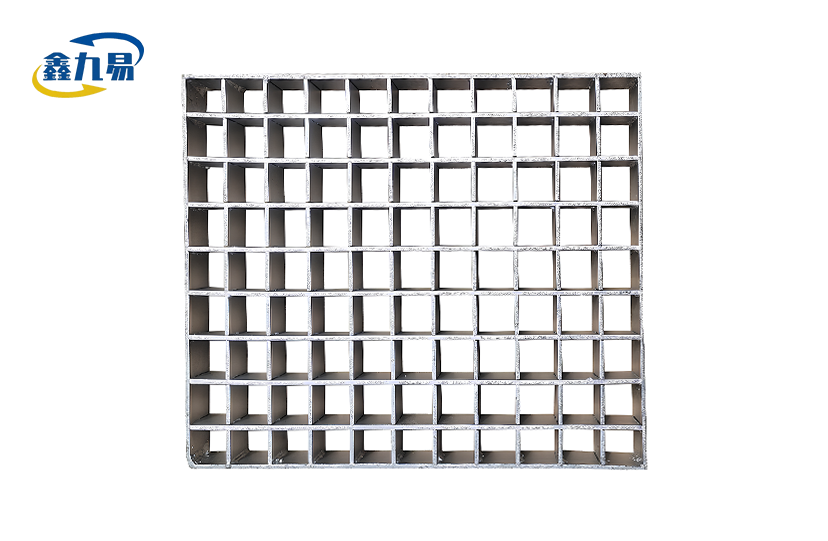
This is a picture of a normal bar grate. The big holes are big enough to catch heels, cane tips, and bike wheels. A version that is heel-safe and has holes 10–15 mm wide can be used with sinks and much bigger grate systems. For any project that people will walk on, this is important.

Comparing 304 and 316 Stainless Steel Slot Drain Covers: Core Differences
Molybdenum is the main thing that makes these two types of stainless steel slot drain cover materials different. Grade 316 has more molybdenum than Grade 304. This steel has a Pitting Resistance Equivalent Number (PREN) of over 24, while Grade 304 only has one between 18 and 20. Adding that one thing changes how the metal works in places where there is a lot of acid or salt.
Chemical Composition and Corrosion Resistance
About 18% of Grade 304 is chrome, and about 8% is nickel. A solid layer of passive oxide is formed, and when it gets scratched, it heals itself. This keeps it from rusting in exterior conditions that are mostly or mostly dry. When molybdenum is added to that base in Grade 316, chemicals like seawater spray, road salt, and industrial cleaners are much less likely to make pits in it.
Load-Bearing Performance
Support frame and plate can hold the same EN 1433 load classes, from A15 (only walkers) to C250 (normal vehicle traffic) and up to D400 (heavy vehicle zones), no matter how thick they are. Plates that are 2 mm to 8 mm thick are used to make covers at Xinjiuyi. In each material grade, this lets the customer choose the load class that works best for them.
Cost and Lead Time Considerations
It costs more to make grade 316 than grade 304 because it has more molybdenum in it. That price difference gets bigger with each square metre that towns buy. The extra money is worth it after ten to twenty years of use when the project calls for 316, like on a beach walkway, the floor of a food processing plant, or the edge of a pool. This is because keeping the floor in good shape will take less time and work.
Choosing Between 304 and 316: Decision-Making Framework for B2B Procurement
Make sure you pick the right grade before you send in your order. It will help you save time and money. This list can help everyone on your team who needs to buy something.
These things will help you decide:
- Distance from the coast: 316 is usually recommended if the installation spot is less than 5 km from saltwater. This is because chloride can settle in the air and cause corrosion.
- Chemical exposure: Detergents and acids that are very strong are often used in car wash bays, food processing floors, and pharmacy facilities. Because it has more molybdenum than 304, 316 is much less likely to pit in these situations.
- Check to see if the specification asks for an A15, B125, C250, or D400 load class. This is more important than material grade when it comes to plate thickness and frame design.
- Documentation for compliance: In the US and EU, EN 1433 test records, mill certificates (with spectrometer-verified nickel and chromium content), and salt spray test results are often needed for municipal and government projects. Make sure that all three can be provided by your supplier.
- Budget and volume: 304 has been shown to work well in commercial plazas and driveways in inland areas where chemicals are not present in large amounts.
After following this plan, most procurement managers find that 304 can be used for many of their SKUs. 316 is only kept for a few very dangerous places. When you use this method, the job stays cheap, and the resources work well for now.
Installation and Maintenance Best Practices
Any stainless steel slot drain cover will keep its structural grade as long as it is installed correctly. Care must be taken when putting covers into channels; a cover that isn't lined up right and rocks when it's loaded will fail its EN 1433 grade much sooner than the material itself would suggest.
Installation Guidelines
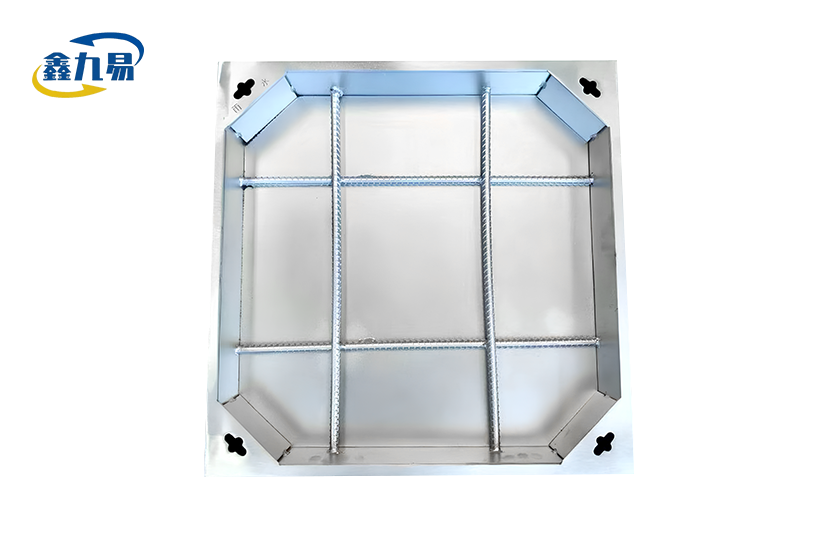
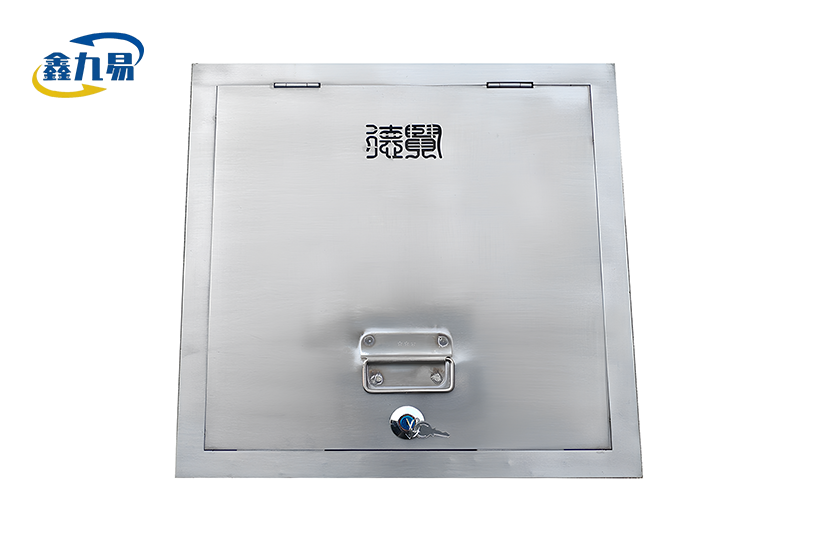
Before delivery, measure the channel opening and cover sizes. Xinjiuyi covers come in standard 1,000 mm lengths and can be joined together to make longer runs. However, to avoid having to cut the slots again in the field, they should be checked for slot width tolerance (precision-adjusted between 10 mm and 15 mm) before installation. According to the project drainage plan, integrated access inspection boxes should be put in certain places at regular intervals.
Routine Maintenance
During rainstorms, the self-cleaning hydraulic profile gets rid of most of the particles. Regular upkeep usually includes a visual check and high-pressure water jetting through the access units every so often. The smooth stainless steel inside makes it easy for buildup to come off without using chemicals.
Corrosion Prevention After Installation
Even 316-grade covers can be cleaned by rinsing them with salt spray every so often to get rid of chloride layers before they build up on the surface. In areas where food is processed, use CIP (Clean-In-Place) methods that are safe for stainless steel. Stay away from bleach solutions that aren't diluted for long periods of time, as they can damage the passive layer on 304.
Case Studies and Industry Applications
A real project backs up the reasons given above for picking grades.
Every paved area outside the hotel lobby had to have 316-grade linear slot covers for a business center project in a city on the US Gulf Coast. There were no holes that could be measured in the records that were looked at after three years of use. This is not the same as another installation on the same land that used 304 and had to be partially replaced after 18 months because chloride was wearing down the surface.
New city pavements were put in across the middle of Illinois. They are made of 304-grade slabs with a B125 load class. It's been three years, and there have been no reports of rust or failed sizes or shapes. All of the EN 1433 site acceptance tests for the project were passed. Because they saved more than $316 on that amount, the project didn't go over its total budget.
Food processing companies always use 316L for floor drains because it contains molybdenum. The molybdenum is worn down over time by cleaners that contain phosphoric and citric acids. Biofilm doesn't stick to the surface because it has been electropolished (Ra < 0.8 μm). This helps meet cleaning rules set by the USDA and FDA.
Conclusion
The 304-grade linear stainless steel slot drain covers are good for most city, business, and home projects that aren't near the coast or chemicals. They don't cost too much either. 316-grade steel should be used for projects that need to be clean enough for food contact, be exposed to salt, or be cleaned with strong chemicals. Once you have a map of the site conditions and the material qualities, it's easy to make the choice. Before you finish an order, you should always ask for mill certificates, EN 1433 test results, and salt spray papers.
FAQ
Should I choose 304 or 316 for an outdoor plaza in a non-coastal city?
304 is appropriate for most non-coastal outdoor commercial applications. It provides solid corrosion resistance in normal atmospheric conditions and meets EN 1433 load requirements when the plate thickness is correctly specified.
What is the price difference between 304 and 316 slot drain covers?
316 consistently costs more per unit due to its molybdenum content. The exact gap varies with raw material markets, but the premium is justifiable in environments where 316's performance characteristics prevent premature replacement.
Can slot widths be customized for ADA compliance?
Yes. Standard slot widths of 10–15 mm satisfy ADA heel-safe requirements. Xinjiuyi can precision-adjust slot width within an 8–20 mm range to match project specifications.
How do I verify the material grade before shipment?
Request a spectrometer (PMI) test report confirming nickel, chromium, and molybdenum percentages. A legitimate manufacturer will provide this alongside mill certificates and EN 1433 load test documentation.
What load class do I need for a vehicle access driveway?
Residential driveways typically require B125 minimum. Areas with regular truck or heavy vehicle access require C250 or D400. Specify your expected axle load to your supplier so they can engineer the appropriate frame and plate thickness.
Get the Right Slot Drain Cover from Xinjiuyi — Request a Quote Today
Steels 304 and 316 are used to make slot drain covers at Xinjiuyi. You can see all of their EN 1433 paperwork, mill licenses, and salt spray test results if you ask. Any size order is possible at our plant in Cangzhou, from a single sample to a full container load. Standard stock for a city sidewalk project and a fully customized linear drainage system for a high-end plaza are both part of this. You can get details, prices, or a sample order by going to xjy8.com or emailing our team at global@xjy8.com. You can trust us to give you stainless steel slot drain covers.
References
1. British Standards Institution. BS EN 1433:2002 — Drainage Channels for Vehicular and Pedestrian Areas. BSI, 2002.
2. ASTM International. ASTM A240/A240M — Standard Specification for Chromium and Chromium-Nickel Stainless Steel Plate, Sheet, and Strip. ASTM International, 2023.
3. Euro Inox. Stainless Steel: The Role of Molybdenum in Corrosion Resistance. Materials and Applications Series, Euro Inox, 2014.
4. Nickel Institute. Guidelines for the Welded Fabrication of Nickel-Containing Stainless Steels for Corrosion Resistant Services. Nickel Institute, 2020.
5. American Society of Civil Engineers. Urban Stormwater Management Manual. ASCE Press, 2017.
6. US Access Board. Accessibility Guidelines for Pedestrian Facilities in the Public Right-of-Way (PROWAG). United States Access Board, 2023.