Stainless Steel Manhole Cover Guide: Features, Benefits, and Applications
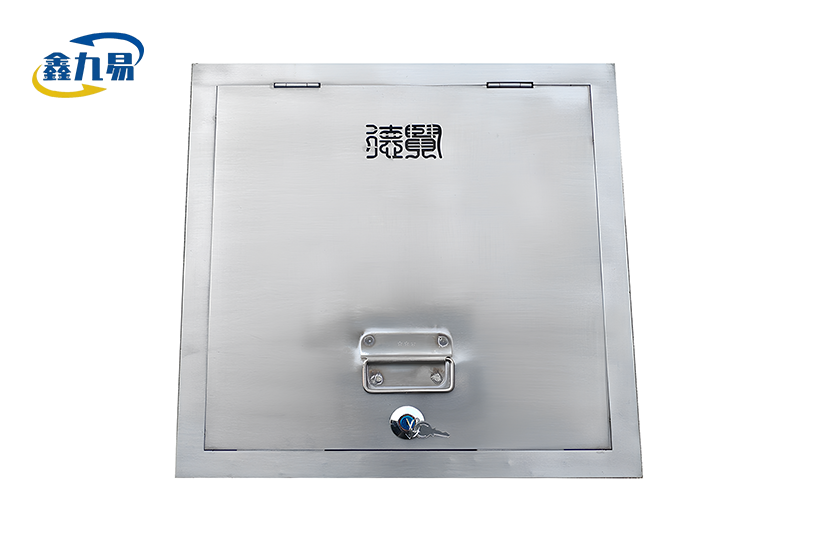
A stainless steel manhole cover is a removable, corrosion-resistant lid that protects underground utility, drainage, and inspection openings while giving crews safe access. Its main features include grade-based corrosion resistance, high structural strength, and a smooth surface that needs little upkeep. Its benefits include a long service life, lighter handling than cast iron, and a clean appearance. Typical applications cover sidewalks, plazas, parking lots, industrial parks, and public facilities. In this guide, I explain the types, materials, specifications, and selection steps so you can buy with confidence.
Stainless Steel Manhole Cover Types and Configurations
Shapes and Opening Sizes
Use the right cover shape to get the best results. Many city teams like round holes for pipe holes because a round cover can't fall through them. Machine pits that are round or square and floors that are level fit better. You can pick lengths and widths of 600, 700, 800, 900, 1000, and 1200 mm. Just send us a picture of the lengths you need, and we'll make them. Measure the space you have before you place your order. Don't just look at the size that's written. For the frame to work well, there needs to be a strong area around the edge.
Visible, Recessed, and Accessory Options
You can hide the cover, open or lock the door, and put tile or stone in the door. This type of unit works best in plazas where the opening should fit in with the sidewalk. Things that are safer or waterproof need more work to be made with hinges, locks, seals, and gas springs. People who want to buy something should send a list of everything they need when they first ask for a price. This is because it takes longer to make things when changes are made after the fact. We'll see if we can make a model that moves, stops, or is set back after you send us your picture.


The Xinjiuyi Product at a Glance
Stainless steel manhole covers are made by Hebei Xinjiuyi Construction Technology Co., Ltd. in the Xian County Development Zone of Cangzhou. Plates can be 40, 50, 60, or 70 mm tall and 2 mm to 8 mm thick. There are no weak spots because each cover is shaped all the way through. To take off the cover, you can use a normal T-bar lifting key, since it has a normal open shape with lifting points and clips. It's often used to check city pipes, build gates for police, and make security holes in the bases of heavy equipment.
Stainless Steel Manhole Cover Materials, Grades, and Benefits
Grades 201, 304, and 316 Compared
As much as 10.5% chromium must be in steel for it to be called stainless steel. About 18% of Grade 304 is chromium and 8% is nickel. This is enough to keep it from rusting for most business uses. Grade 316 gets an extra 2–3% molybdenum. This makes it less likely that chloride pits will form in places with lots of water, chemicals, or chemicals. In Grade 201, some nickel is not used. These days, manganese and nitrogen are used instead. It's less expensive, but it doesn't resist corrosion as well, so I only recommend it for mild, dry weather. The three grades are all the same. Write down the score and ask to see proof that it's correct.
How the Passive Layer Protects the Cover
A thin film of chromium oxide forms on the surface when chromium meets air. So you don't need to paint or cover the cover to keep it from getting scratched. The film can form again anywhere there is air. Steel will rust if the paint or galvanizing layer comes off of it. When salts are used to melt ice and seawater, they can damage lower-grade passive screens. This is why Grade 316 is great for jobs that involve a lot of salt. We learn a lot about this type of rust in Volume 13B of the ASM Handbook.
Benefits Over Cast Iron in Daily Maintenance
Our stainless steel manhole covers are lighter than regular cast iron ones, which means that fewer people are needed to put them on, and the body doesn't have to work as hard. Because you don't have to paint or clean the metal to keep it from rusting, maintenance costs stay low over time. The surface looks good again after being washed with water. You can also reuse stainless steel, which is good for the environment these days. Also, I should say that cast iron is still a good choice for many busy roads. If you care about rust, how something looks, or how big it is, this is the best metal to use. It also helps people plan their spending and figure out when to buy new things.

Stainless Steel Manhole Cover Specifications, Performance, and Manufacturing Quality
Dimensions, Thickness, and Height
The first things that are needed to make a correct specification are the clear opening, the overall frame size, the cover height, and the level of the top floor or pavement. The load changes how thick the plate is. Plates that are only 2 mm thick can hold some weight. Plates that are 8 mm thick can hold more. Based on how thick the road is getting, you can pick a frame height of 40, 50, 60, or 70 mm. Folks might trip or make noise if the cover is even a tiny bit off the ground during busy times. That being said, I think you should send a sketch with all four measures.
Load Classes and Standards
Covers are put into groups by EN 124 based on how much weight they can hold. At the A15 (15 kN) level, only people on foot or bikes are allowed to use certain areas. Trails, walks, and parking lots must follow the rules set by B125 (125 kN). C250 (250 kN) is used for gutter ends that are close to walls. There are 400 kN of D400 on all roads, and there are places to park cars and trucks. EN 124 tells us what kind of load it is. Please send us the standard that your client wants, and we will look it over. Please remember that most U.S. rules come from AASHTO or ASTM documents. What it is made of is not the only thing that affects how well it holds weight. Not only that, but also how it was put together, how strong it is, and how well it holds the frame up.
Surface Finish, Flatness, and Inspection
There are styles and finishes that won't slip, like brushed and mirror. For better grip and to hide wear, use a surface that is brushed or patterned. Paving that is of high quality looks good when it is shiny. The ADA said in 2010 that accessible roads could only have changes in level that were a quarter of an inch in height and a half of an inch in width. Because of this, things need to be flat to make them easier to use. Every weld joint in our shop is checked, as well as the grade's chemical make-up. It's also checked that the load is right and that the sizes are right so the metal doesn't rattle. Our ISO 9001, ISO 45001, and ISO 14001 tags back up this process. You can use the AWS D1.6/D1.6M code to learn how to weld food-grade steel.
Stainless Steel Manhole Cover Applications
Municipal Roads, Sidewalks, and Pipeline Access
They need to be strong enough to handle a lot of people walking on them and bad weather. They still look good and keep their shape after years of use. They also don't rust, which is helpful in drains and pipeline repair sites where water from the ground and the surface can damage metal. Choose the load class based on how busy each site really is, and make sure the grade fits the risk. OSHA's 29 CFR 1910.146 still says that you need a permit to go into a manhole. For the first part of every check, it's better to have a stainless steel manhole cover that is simple to remove with plain T-bar keys.
Commercial Plazas, Parking Lots, and High-End Residential Areas
The covers need to match the style of the buildings in business plazas and high-end neighborhoods. Stainless steel or mirror with a brushed finish is easy to clean. Different things put pressure on the ground, like the chemicals used to melt ice and the weight of cars hitting the ground. These are safer than raw carbon steel and are less likely to break. However, make sure the plates are the right width for the load the vehicle is carrying. We make it based on the picture they give us and the size they need. They won't have to spend a lot of money to change the beginning.
Industrial Parks, Civil Defense Entrances, and Equipment Pits
Industrial parks, places where people go for civil defense, and equipment base pits need to have safe long-term access. Our plugs keep these holes safe, but they still let workers get to the lines below without any trouble. It works well and doesn't cost much over time, so it's good for public places like school grounds and transportation hubs. Please use Grade 316 if the area is chemically or humidly charged. The cover will then fit over the hole you already have. The first thing we do is get your job ideas, measurements, and instructions.
How to Choose a Stainless Steel Manhole Cover and Supplier
Match the Cover to the Site
Start by setting the scene. Find out if the area can handle salt, chemicals, heavy washing, being wet or dry, being used by cars or people on foot, and if it is inside or outside. Next, check that the open space, paved area, and finished surface are all right. Pick the level. Grade 304 is used for everyday use in cities. Sites with chemicals, a lot of moisture, or water use grade 316. Grade 201 is only used on mild, dry sites. Last, pick the finish, load class, and thickness for the stainless steel manhole cover. If you do things this way, you won't make the most common design mistakes.
Understand Price Factors and Prepare Your Inquiry
The price of a plate depends on its grade, size, thickness, load class, finish, number, location, and how it is packed. If two prices are very different, check first to see what grade and width of plates they are. Plates that aren't as good or as big are usually what makes the difference. An in-depth question has many parts, such as drawings, numbers, sizes, grades, needed loads, finishes, important standards, packing needs, the end location, and Incoterms. Lifecycle value is more than just the price you paid for something. It also includes costs like repair and replacement.
Evaluate the Manufacturer and Avoid Common Mistakes
Also read the quote. Check with each business to see how they check the size, grade, and welds. People often make four mistakes: they choose the cheapest choice, they use 304 in a place where it will rust, they order by nominal size, or they forget to check the floor levels after the floor is finished. Look at a sample or picture of something before you make a lot of it. Then, compare each lot to the list that everyone agreed on. Our team is with you from the first plan to delivery and help on-site. In Cangzhou, we have a strong method for getting things.
Conclusion
Stainless steel manhole covers work best when they are custom made. Each grade is more or less resistant to corrosion in its own way. For general building work, 304 is fine. For places with a lot of salt or water, 316 is fine. And for light and dry places, 201 is fine. The load class, plate width, height, and finish must all be based on the real traffic and concrete growth. Things are safe and easy to use when they are flat. This is because the parts, sizes, loads, and welds are always being watched over. Because it's easier to work with and keep in good shape, stainless steel lasts longer and needs less work. There are clear standards, detailed plans, and a sample that has been approved before the whole batch is made. This makes it safer to buy things for business, government, and industry projects.
FAQ
Is stainless steel suitable for outdoor use?
Yes, as long as the site says they are the same grade, load class, and finish. That's why Grade 316 is better for places with chemicals, salt water, and high humidity. For everyday building work outside, grade 304 is fine.
Which load class should I specify?
Get it from real people. Walkways are marked with A15 in EN 124, paved paths and parking lots with B125, and main roads with D400. EN 124 tells us what kind of load it is.
Can the covers be made in custom sizes?
Yes. They come in lengths and widths ranging from 600 mm to 1200 mm and are 2 mm to 8 mm thick. We can also make them in any size you want.
Request a Stainless Steel Manhole Cover Quote from Xinjiuyi
Stainless steel manhole covers are made by the Xinjiuyi company in Cangzhou, Hebei. They make grades 201, 304, and 316. The plates are 600 mm to 1200 mm across and 2 mm to 8 mm thick. The work we do is always the same because it has ISO 9001, ISO 45001, and ISO 14001 marks on it. Send your images, amount, and load class to global@xjy8.com.
References
1. EN 124-1: Gully Tops and Manhole Tops for Vehicular and Pedestrian Areas, 2015
2. ASTM A240/A240M: Standard Specification for Chromium and Chromium-Nickel Stainless Steel Plate, Sheet, and Strip, 2020
3. ASM Handbook, Volume 13B: Corrosion: Materials, 2005
4. 2010 ADA Standards for Accessible Design, 2010
5. OSHA 29 CFR 1910.146: Permit-Required Confined Spaces, 1993
6. AWS D1.6/D1.6M: Structural Welding Code – Stainless Steel, 2017