Cantilever Material Unloading Platform vs Traditional Loading Methods: Which Is Better?
When project managers ask which approach wins between a cantilever material unloading platform and traditional loading methods, the answer becomes clear once you look at the numbers. A properly engineered cantilever platform supports 1,500 kg to 3,000 kg per lift cycle, installs at any floor edge accessible to a tower crane, and transfers directly to the work face. Traditional ground-based staging and manual relay chains cannot match that throughput once a structure rises beyond four or five stories. For high-rise projects where schedule pressure is constant, the cantilever platform is the more practical and safer choice.
Understanding Cantilever Material Unloading Platforms
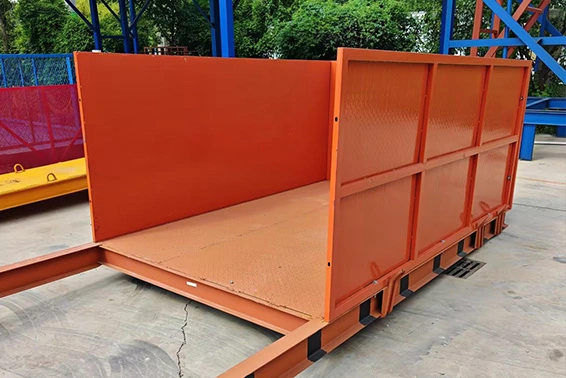
A cantilever material unloading platform is a temporary steel frame that sticks out from the edge of a building's floor to receive building supplies dropped off by a tower crane. It's a floor-level transfer hub that lets crane workers put down rebar packages, formwork panels, or curtain wall parts without having to swing the hook inside the building.
Structural Composition
The main beams of the load-bearing frame are 16# I-beams or channel steel, and they are held up by 5# channel steel secondary members. Covering the deck is a 50 mm thick steel plate with patterns on it. This makes the surface firm and non-slip, even when it's wet outside. All the connection points are fully welded with even penetration, which gets rid of the weld-gap failures that make the platform bend when heavy loads are put on it over and over again.
Load Capacity Range
Normal sets from Hebei Xinjiuyi can move between 1,500 kg and 3,000 kg per run. When structural calculations back up the anchor points, heavy-duty builds can hold up to 5,000 kg. The platform is between 3,000 and 4,000 mm long and 2,000 mm wide. It comes in two height choices, 6,000 mm and 7,000 mm, which weigh about 450 kg and 480 kg, respectively.
Anchoring Systems
There are two main ways to attach the cantilever material unloading platform to the slab. High-strength rods are threaded through the concrete deck by the through-wall tie rod system. This spreads the load across backing plates and into the structural frame. A telescopic jack system creates a compression load path between the upper and lower floor edges where block penetrations are not allowed. This is done without forever changing the structure.
Limitations of Traditional Loading Methods
Before cantilever platforms became common on high-rise sites, project teams used a number of older methods. There are real costs to run each one, and those costs go up as the building gets taller.
Manual Floor-by-Floor Relay
At each floor level, workers carry or stack things by hand. Overwork and heavy lifting are constantly named by the U.S. Bureau of Labor Statistics as the main reasons why building workers get hurt. Aside from the risk to safety, productivity is low. A group of people moving rebar by hand between floors can't keep up with structural or formwork crews working two or three levels above them.
Scaffold-Mounted Temporary Decks
Some sites attach simple wooden platforms to the scaffold frame. These sets-ups don't use engineering calculations, aren't load-tested very often, and depend on scaffold connections that break when the crane hits them over and over again. The International Labor Organization says that a lot of fatal building accidents happen when scaffolding falls down. These decks put too much at risk on busy sites because they don't have certified load ratings or full-penetration welds.
Ground-Level Staging and Multiple Crane Picks
Keeping all the materials at grade level and sending a separate crane to each floor is possible at low heights, but above ten stories, it takes too long for the crane to move the materials. Every extra turn of the crane costs money and takes up space on the tower crane that other trades depend on. It's not possible to use this method in cities where ground space is already limited.
All of these restrictions make the site less productive, cost more to run, and put workers at greater risk. Moving away from them is not a choice; on any project with more than six floors, it is necessary for safety and time reasons.
Comparing Cantilever vs Traditional Unloading Platforms
The following table shows the main differences in success between project managers and procurement teams based on the things that matter most to them.
Here is a direct comparison across four factors that matter for making a decision:
- Load capacity and reliability: Cantilever platforms carry 1,500–3,000 kg per cycle with certified structural calculations and load test documentation. Traditional improvised methods carry unknown or unverified loads, and overloading incidents have caused structural failures on record.
- Safety compliance: Xinjiuyi platforms include 1,200 mm high fully welded guardrails, welded toe boards, and yellow-black high-visibility warning paint, meeting construction safety standards. Improvised decks rarely satisfy OSHA 1926 or equivalent local regulations.
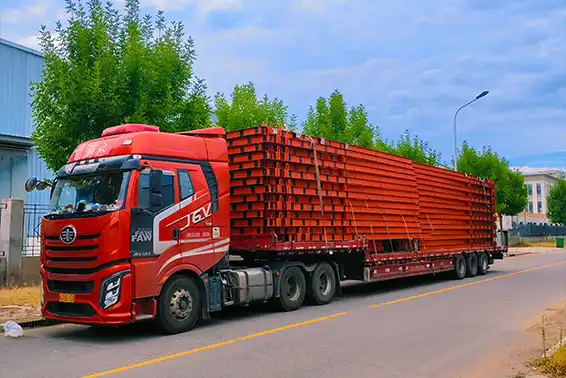
- Installation speed and reuse: The modular design allows relocation floor by floor as the structure rises, with minimal labor. Traditional setups are rebuilt at each level, duplicating material and labor cost on every move.
- Total cost over a project cycle: Higher upfront investment in a certified platform is offset by reuse across multiple projects. A single Xinjiuyi platform used across three or four job sites distributes the acquisition cost per project significantly.
Because of these differences, the cantilever platform is the best way to get materials to any place that needs steady vertical flow above ground level.
Choosing the Right Unloading Platform for Your Business
To choose the right platform, you need to make sure that the product specs meet the conditions of your site. Without changes, a platform that works for one type of project might not work for another.
Match Dimensions to Structural Openings
Which fastening method works for the cantilever material unloading platform depends on the shape of the floor edges, the thickness of the slab, and the layout of the rebar. Check to see if through-wall tie bars can be put in at each planned floor or if the flexible jack system would work better. Most high-rise projects can use standard lengths of 3,000 to 4,000 mm, but projects with odd floor plans may need special lengths.
Verify Load Documentation
Any trustworthy company that sells cantilever platforms should include a structural calculation report with the product. The design load, beam grade, weld standard, and anchor force assumptions must all be written in this report. Every platform from Xinjiuyi comes with full engineering documentation, which is needed for professional plan review in most places.
Plan for Multi-Project Reuse
If you are in charge of several high-rise projects at the same time, choose a platform weight and lifting ring design that your tower cranes can easily handle. The 450 kg and 480 kg platform weights at Xinjiuyi make single-crane transfer possible. The bent shape of the lifting ring lowers the stress on the wire ropes when they are being moved, which increases the life of both the platform and the support.
Future Trends in Construction Material Handling Platforms
Smarter monitoring and longer service life requirements are becoming more common in the vertical transport equipment market. More and more, contractors want the cantilever material unloading platform to give them real-time load data. In response, makers are adding strain gage monitors to main beam assemblies. This means that site managers don't have to rely on visual inspections alone; they can get instant alerts if loads get close to the design limits.
Longer Corrosion Protection Standards
Hot-dip galvanization and extra anti-corrosion coatings are now required as a minimum for projects in coastal towns and humid conditions. Xinjiuyi's normal surface treatment includes both galvanizing and a baked-on anti-corrosion layer. This meets the need for longer service life without having to re-coat the parts in the field between projects.
Modular Component Standardization
Large contractors are pushing suppliers to standardize the sizes of parts so that guardrail sections, toe boards, and deck plates can be used on platforms of different sizes. That lowers the number of extra parts needed and speeds up fixes in the field. In line with this direction, Xinjiuyi's product line is based on modular ideas.
Sustainability in Steel Procurement
Now, procurement teams keep track of how much carbon is built into casual work tools. Using the same platform for eight to ten projects instead of making a new one for each one directly lowers the amount of steel used for each project. This estimate is based on certified reuse platforms with documented service lives.
Conclusion
This passage introduces the cantilever material unloading platform, a temporary steel structure protruding from building floors for tower crane material delivery. It commonly bears 1,500–3,000 kg per lift and adopts two anchoring solutions. Compared with traditional manual relay, scaffold decks and ground staging, it features higher load capacity, better safety compliance, faster installation and reusability. Modern versions integrate real-time load monitoring and anti-corrosion treatments. Xinjiuyi supplies modular, customizable platforms with complete engineering documents for high-rise construction.
FAQ
What industries use cantilever unloading platforms most?
High-rise residential, commercial tower, and mixed-use construction projects use these platforms most frequently. They also appear on industrial facilities and public infrastructure projects where tower cranes deliver bulk materials to elevated work areas.
Can the platform dimensions be customized?
Yes. Xinjiuyi manufactures platforms to project-specific dimensions. Standard lengths run 3,000–4,000 mm with 2,000 mm width, but custom lengths, widths, and anchor configurations are available with full updated structural calculations provided.
What maintenance does the platform require?
Before each use, visually inspect welds, guardrail connections, and anchor hardware. Monthly, a qualified engineer should assess structural condition. After each project, inspect the surface coating and touch up any areas where the galvanized layer has been damaged to prevent corrosion during storage.
How long does a quality platform last?
With proper storage, regular inspection, and timely surface treatment maintenance, a well-manufactured steel platform typically delivers ten or more years of service across multiple job sites.
What documentation should a supplier provide?
Request a structural calculation report, material mill certificates confirming steel grade, weld inspection records, load test results, and installation instructions. Xinjiuyi provides all of these as standard delivery items.
Get a Verified Cantilever Material Unloading Platform Quote from Xinjiuyi
Xinjiuyi sells certified cantilever material unloading platforms that are made to national standards. These platforms come with full weld inspection records, structural formulas, and mill certificates. Our modular designs can be used for more than one project, which means that the cost of the equipment you need for each project stays low. Our engineering team responds quickly, whether you need standard configurations or dimensions that are specific to your project. You can email us at global@xjy8.com to get specs and a price based on your project from a reputable manufacturer of cantilever material unloading platforms.
References
1. United States Bureau of Labor Statistics. Census of Fatal Occupational Injuries Summary. BLS, 2023.
2. International Labour Organization. Safety and Health in Construction: ILO Code of Practice. ILO Publications, 2020.
3. American Society of Civil Engineers. Minimum Design Loads and Associated Criteria for Buildings and Other Structures (ASCE 7-22). ASCE, 2022.
4. Occupational Safety and Health Administration. OSHA Standards for the Construction Industry: 29 CFR Part 1926. U.S. Department of Labor, 2021.
5. Holt, A. S. J. Principles of Construction Safety. Blackwell Science, 2001.
6. European Committee for Standardization. BS EN 12811-1: Temporary Works Equipment — Scaffolds — Performance Requirements and General Design. BSI, 2003.


