What is the difference between a pier cap platform and scaffolding?
When bridge contractors face high-altitude pier cap construction, choosing the right elevated access system directly affects safety, schedule, and cost. A pier cap work platform is a purpose-built, pier-mounted steel system designed exclusively for bridge pier top operations — attaching directly to the pier structure to support rebar fixing, formwork installation, and concrete pouring. Conventional scaffolding, by contrast, rises from the ground and serves a wide range of building types. The two systems differ in structural logic, installation speed, site footprint, load transfer method, and long-term reusability across multi-pier bridge projects.
Understanding Pier Cap Work Platforms and Scaffolding
Before you compare the two systems, it's helpful to know what each one is and where it arrived.
What Is a Pier Cap Work Platform?
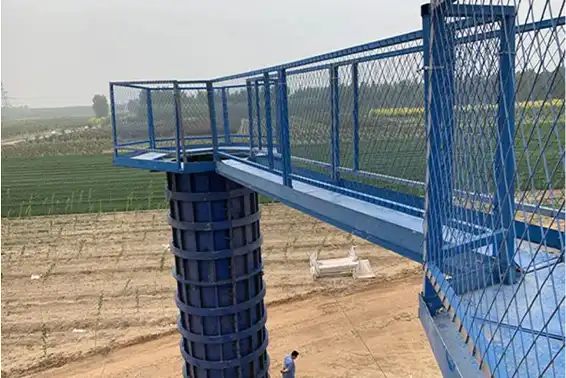
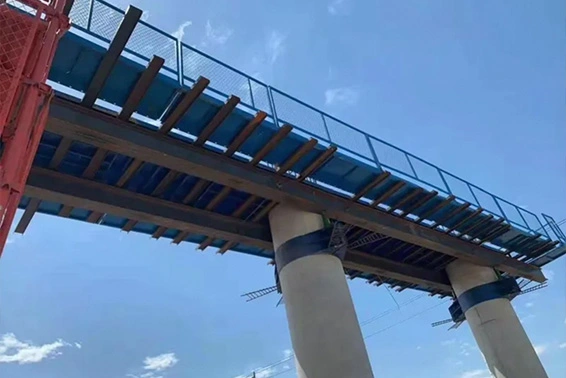
A pier cap work platform is a high-level, modular access structure that was designed to be used for work on bridge pier tops. It is attached directly to the pier body with through-wall bolts or high-strength stakes, so it doesn't need any support from the ground. The platform gives workers a safe place to work at an elevated level, moves building loads into the existing pier structure, and protects them with guardrails and non-slip decking that are built right in. Xinjiuyi's version has a welded steel frame made up of I-beams, channel steel, and thicker galvanized rectangular tubes. The normal deck width is 800 mm and the height is 1,200 mm, but both can be changed to fit any pier shape.
What Is Scaffolding?
A scaffold is a temporary structure that is built up from the ground up. It is usually made up of tube-and-clamp, frame, or system scaffold parts. It helps construction workers with a lot of different jobs, like working on the outside of buildings, remodeling inside, and building bridge abutments, anywhere that a continuous tall structure from ground level to work height is useful. Scaffolding use is regulated by OSHA 29 CFR 1926 Subpart L in the US. It sets rules for access, fall safety, and load capability. Even though scaffolding is very flexible, it can't be used on bridges where the piers are higher than 20 to 40 meters or where the ground is unstable because it depends on the ground.
Applicable Industry Standards
Formal safety rules govern both systems. In the United States, OSHA 1926 Subpart L talks about platforms. For temporary work tools, European projects use the number EN 12811-1. Pier-mounted platforms in foreign bridge projects usually need load estimates, third-party inspection, and quality checks on the welds. Xinjiuyi meets these requirements as a result of its ISO 9001, ISO 45001, and ISO 14001 certification.
Comparing Pier Cap Work Platforms and Scaffolding: Key Dimensions
Looking at the two systems side by side in four important project dimensions makes the differences between them most clear.
Structural Design and Load Transfer
Through its anchor connection, a pier cap work platform moves working loads straight into the pier body, skipping the ground completely. Its main frame is made of 50 × 50 mm square tubes with 1.5 mm wall thickness. Load-bearing joints are reinforced with 50 mm equal angle steel with 4.0 mm thickness. Ground-based structure, on the other hand, has upright supports that carry all the weight down to a base plate on the ground. The combined weight and lateral instability of a full-height scaffold tower make engineering much more difficult for tall bridge piers, where the distance from the ground to the pier can be more than 30 meters. A pier-mounted system, on the other hand, doesn't have these problems at all.
Installation Speed and Labor Cost
Setup time is very important for projects with a lot of sequential pier caps. It takes about two to four hours per pier to move a modular pier cap platform into place and secure it. At the same height, a similar ground-based scaffold system needs a lot more work hours, base plate leveling, and tie-back installation. Observations from the industry show that bridge projects using pier-mounted platforms report cycle times that are 30–50% shorter per pier compared to standard ground scaffold methods. This directly supports tighter building schedules on high-speed rail and highway projects.
Safety and Fall Protection
Both systems must meet fall safety standards, but they have different levels of danger. The pier cap work platform from Xinjiuyi comes with three-dimensional fall protection: 40 × 40 mm outer guardrail tubes, expanded metal mesh with 60 × 100 mm holes to catch tools and other items that are dropped, and fully laid 2.0 mm anti-slip checkered plate decking. Ground scaffolding depends on fence parts and toe boards that are placed separately. The sealed shape of the pier-mounted system cuts down on the number of open parts that workers have to deal with while doing work on the deck.
Advantages and Disadvantages for Construction Applications
Each system has real strengths and real weaknesses. Before agreeing to a specification, procurement managers should honestly weigh both of them.
In real life, these are the main differences between the two systems:
- Pier cap work platform – Stability at height: Because the platform anchors into the pier body itself, it does not sway under wind load the way a tall ground scaffold can. Workers performing rebar positioning and formwork adjustment benefit from a rigid, predictable working surface, which reduces fatigue and improves work quality.
- Pier cap work platform – Reusability across piers: After completing one pier, crews disassemble the modular components and redeploy them at the next location. Xinjiuyi's hot-dip galvanized finish maintains structural integrity through repeated assembly cycles, making the per-pier cost lower over a long viaduct project with 50 or 100 similar piers.
- Scaffolding – Geometric flexibility: Scaffolding adapts readily to irregular structures, curved facades, and mixed-use work zones where a fixed pier bracket would not fit. For approach spans, abutment walls, or retaining structures adjacent to a bridge, conventional scaffolding remains the practical choice.
- Scaffolding – Ground-level access for materials: Ground scaffolding allows workers to carry materials up through the structure at any point, which suits projects where crane access is limited or where multiple trades work at different heights simultaneously.
The pier cap work platform is stable at a height of: As the platform is fixed to the pier, it doesn't move in the wind like a tall ground scaffold would. A rigid, predictable work area keeps workers from getting tired and improves the quality of their work while they place rebar and change formwork.
Decision-Making Guide: Which Platform Is Best for Your Project?
Three useful factors help you make the right choice: the shape of the site, the size of the job, and the total cost of ownership.
Evaluating Site and Geometry Conditions
If your project has piers that are more than 15 meters high, crossings over water, busy traffic lanes below, or unsteady ground, which is common in high-speed rail viaducts, urban overpasses, and cross-sea bridges, a pier cap platform takes away the risks that come with ground-supported systems. Xinjiuyi's platform is directly attached to the pier structure, and its modular bracket parts allow it to be set up for pier heads that are rectangular, circular, or flared. For buildings that aren't very tall or aren't straight, scaffolding is still a good idea.
Assessing Project Scale and Reuse Potential
The fact that a pier-mounted platform can be used again and again saves money on projects with 30 or more similar pier caps. With each deployment, a part of the original funding is returned. Rental companies and project-batch procurement managers both say that steel pier platforms are a better investment than regular scaffolding because regular scaffolding tends to rust and lose parts more quickly in outdoor bridge settings.
Selecting a Supplier with Technical Support
Managers in charge of buying things should ask any possible seller for structural load estimates, material certifications, records of weld inspections, and promises to deliver. Xinjiuyi gives full technical documentation, such as dimensioned drawings and load analysis reports. They also allow custom dimensions to fit the size of the pier caps needed for each project and help site crews install the equipment. With these features, there is less chance of field fit mistakes, which can cause delays when non-standard measurements are used.
Conclusion
A pier cap work platform and regular support are both useful, but they do different things. Structures with low heights and a lot of different shapes work well with scaffolding. A pier-mounted platform moves loads into the existing pier construction, can be used on multiple piers, is easier to install, and includes fall safety by design. This is especially useful for high-speed rail, urban overpass, and marine bridge projects. The safety of the project and how well it stays on schedule are directly affected by the quality of the materials, how much they can be customized, and how well the seller backs up their work.
FAQ
Can a pier cap work platform fully replace scaffolding on a bridge project?
Not all the time. For tall pier cap operations above busy roads, water, or unsteady ground, pier-mounted platforms are the best option. Conventional scaffolding can still be used for low-height abutments, approach spans, or structures that need to be accessed at different heights that are not related to each other. Both methods are used in different areas of most big bridge projects.
What safety measures are required when using a pier cap platform?
Everyone who works on the level must always wear a personal fall stop system. Every time the anchor is put out, the links to the pier must be checked for torque. Before each work shift and after any wind event topping 15 m/s, the welds, deck, and guardrails should all be checked for soundness.
How long does a pier cap platform last across multiple projects?
With a hot-dip galvanized finish, a well-made pier cap platform can last 15 to 20 years in standard bridge building circumstances. ISO-certified quality processes give Xinjiuyi's products a rating for long service life.
Are platforms available for rental rather than purchase?
Yes, companies that give out scaffolding and formwork keep pier cap platforms in stock so that builders can use them on short-term projects.
Can platforms be customized for non-standard pier geometries?
Yes, Xinjiuyi makes pier caps based on drawings sent by customers. They can make caps with different widths, heights, and shapes, such as round and flared pier heads.
Partner with Xinjiuyi — Your Pier Cap Work Platform Supplier for Bridge Projects Worldwide
Xinjiuyi provides bridge-grade pier cap work platforms that are fully customized based on your pier drawings. Their quality processes are ISO-certified, and they provide technical documentation packages that are ready for engineers to review. Our team at global@xjy8.com is ready to help you with any job, whether it's a highway viaduct in the United States or a foreign bridge that needs to load export-ready containers. You can look at product details and get a price from a pier cap work platform maker. This company is known by bridge builders in many markets.
References
1. American Society of Civil Engineers (ASCE). Construction Safety Standards for Bridge Substructure Work. ASCE Press, 2019.
2. Occupational Safety and Health Administration (OSHA). Scaffolding Standards: 29 CFR 1926 Subpart L. U.S. Department of Labor, 2021.
3. European Committee for Standardization (CEN). EN 12811-1: Temporary Works Equipment — Scaffolds. CEN, 2003.
4. Ryall, M.J., Parke, G.A.R., & Harding, J.E. The Manual of Bridge Engineering. Thomas Telford Publishing, 2000.
5. Xanthakos, P.P. Bridge Substructure and Foundation Design. Prentice Hall, 1995.
6. Construction Industry Research and Information Association (CIRIA). Temporary Works: An Introduction to Their Design and Construction. CIRIA Report C789, 2020.


