Steel Mortar Bin Capacity: How Much Mortar Can It Hold?
It depends on the type and configuration you choose, but a steel mortar bin can hold anywhere from 0.5 m³ to 2.0 m³ of material. Hebei Xinjiuyi's basic steel mortar bins come in four sizes: 0.5, 1.0, 1.5, and 2.0 cubic meters. They are all made from thickened, wear-resistant steel plates with lifting points that are fully welded. In real life, a 1.0 m³ bin can hold between 1,400 and 1,600 kg of wet mortar, based on how dense the mix is. That one number can tell you how many tower crane lifts your crew needs each shift, which has a direct effect on how long the project takes and how much it costs to hire workers.
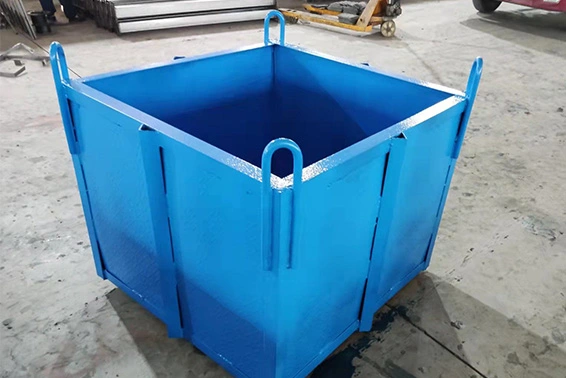
Understanding Steel Mortar Bin Capacity: Key Dimensions and Factors
Size is more than just a number on a sheet of paper. It shows what happened when the wall thickness, steel grade, and internal geometry were all put together. You will not have to do as much work after placing a big order if you do this right away.
How Volume and Weight Are Measured?
It is written in kilograms what the mortar bin can hold, and in cubic meters (m³) or litres what it can hold. When mortar is wet, its density is usually between 1,400 kg/m³ and 2,000 kg/m³. This depends on how much water is mixed with the cement and what kind of aggregate is used. That means a 1.5 m³ bin can lift between 2,100 and 3,000 kg at a time. Always check that these numbers are on the load certification paperwork from the manufacturer before you sign for it.
Standard Size Ranges at Xinjiuyi
There are four different lengths of bins that we sell: 800 mm, 1,000 mm, 1,200 mm, and 1,500 mm. All of them are 600 mm or 800 mm wide and tall. For tough jobs, the printed plate can be as thick as 3.0 mm, but it starts at 1.5 mm. Sizes of lifting rings can be changed to fit your needs. Widths range from 16 mm to 22 mm.
How Steel Grade Affects Usable Capacity?
How much space inside can still be used when the walls are full depends on how thick and what grade of steel it is. Steel Q235B is good for light-duty static storage, while steel Q355 can handle higher dynamic loads without the sides bowing. Because the effective fill volume goes down when the bin is loaded, it's important to choose the right grade at the beginning. This way, the bin will always hold its rated capacity.
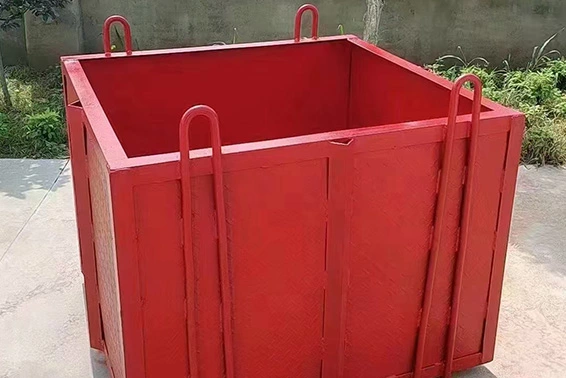
Steel Mortar Bin vs. Other Mortar Container Materials: Capacity and Durability Comparison
Before choosing a material, procurement teams often compare steel to plastic and made concrete. Which one it is will depend on how much weight it can hold, how long it will last, and whether it works with a forklift or a crane.
Steel vs. Plastic Bins
To move plastic bins by hand, you can use your arms, but they can only hold 500 kg. Plastic lift lugs can't be used to move tower cranes because they bend when they are stressed at a single point. In any place where things are lifted more than one floor, plastic is an unacceptable fire risk. It's not possible for plastic bins to hold more than 3,000 kg and 2 m³ of space. Steel bins can.
Steel vs. Concrete Containers
When empty, precast concrete bins weigh more than 800 kg, which makes them too heavy to move around. However, they are good for stable storage right on the ground. People who store things often have to move them because of ongoing work on city bridge projects and water conservation sites. It is much easier to move a steel mortar bin than a similar concrete unit because it is much lighter. A forklift or tower crane can do it without the need for a separate moving frame.
Heavy-Duty Reinforced Steel vs. Standard Models
Standard steel bins can be used for many things on smaller home or construction projects. Heavy-duty models that are stronger, like the ones we make at Xinjiuyi, have gusset plates that are fully welded at all stress and rising points. When cheap bins are used on tower cranes, they usually break when they are loaded and unloaded over and over again. This reinforcement does more than just look good; it also keeps the weld from coming apart. A basic unit lasts about 3 to 5 years, but a properly made reinforced bin will last 10 to 15 years. This is because of the difference in structure.
Practical Considerations: Optimizing Mortar Bin Capacity for Your Business Needs
To choose the right size, you need to do more than just match a number to the amount of liquid you want to pour. Which size bin works best depends on how the space is set up, when the work is done, and the type of goods being stored.
Matching Capacity to Project Scale
Some floors on a high-rise business project don't need as many crane lifts when they have a 2.0 m³ bin. This speeds up the cycle and keeps the operator from getting tired. If you are working on a small home improvement project, a 0.5 m³ or 1.0 m³ bin is easier to move and fill, and you are less likely to order too much mixed mortar that goes bad quickly. If the bin you choose is too big for the stuff you need to store, you will have trash from loads that settle before the bin is cleared.
Safety Features That Protect Effective Capacity
When the system is in use, these are the main structural aspects that protect your estimated fill volume:
- Four-corner top lifting lugs with 18 mm diameter rings (customizable 16–22 mm) distribute crane hook load evenly, preventing bin distortion that would reduce usable internal volume.
- Bottom anti-leak seals stop mortar seepage during transport, ensuring the material that enters the bin reaches its destination without loss.
- Reinforced sidewalls with angle iron frames (50 mm standard, 40–60 mm customizable) resist outward bulging under full load, maintaining the bin's stated geometry and rated capacity.
Maintenance Practices That Preserve Long-Term Capacity
Sticky mortar builds up on the inside walls and where the trash goes if you don't clean your steel mortar bin after every use. The effective fill volume goes down slowly over time, and sometimes it can block the flow completely. Every three months, the welds should be checked, and once a year, the surface coats should be touched up. If these things are done, the unit will work perfectly for more than ten years.
Purchasing Guide: Selecting the Right Steel Mortar Bin Based on Capacity and Features
When businesses buy mortar storage tools from each other, they have to think about more than just the unit price. Total cost of ownership is based on lead time, weld certification, and support after the sale.
Critical Buying Criteria for Bulk Orders
When looking at suppliers for a large-scale or project-scale buy, there are four technical differences that always set trustworthy manufacturers apart from those trying to save money:
- Material certification: Request mill certificates confirming Q235B or Q355 steel grade. Substituting thin-wall Q235 for specified Q355 is a known risk in the market and causes deformation under crane loads.
- Weld inspection records: NDT (non-destructive testing) reports covering load-bearing seams confirm zero porosity and full penetration. This documentation should accompany every batch.
- Dimensional tolerance reports: Laser measurement data verifying verticality under load confirms the bin will perform as specified throughout its service life.
- Load test certification: Proof that each production batch has passed simulated operational stress testing before shipment.
Evaluating Supplier Reliability and Lead Times
Standard stock items at Xinjiuyi ship within 7–25 days for full-pallet or full-container orders, which is in line with when equipment distributors in the region need to restock. Custom sizes take longer to make because engineers have to look over your site plans, but our team makes sure the specs are correct before production starts. Technical support after the sale includes fixing problems with discharge, helping with installation, and planning for capacity growth.
Conclusion
How big of a steel mortar bin you need relies on three things: how much you pour every day, whether you use a crane or a forklift, and how stable the bin is. The size range for most building projects is between 0.5 and 2.0 m³. But the rated capacity will only last for years if the steel grade, the quality of the weld, and the design that stops leaks are all good. Using cheap materials and welds that haven't been certified are the most common reasons why things fail early in the field. That chance is gone before it even gets to your project site if you work with a maker who gives you inspection records and material certificates before they ship.
FAQ
What is the standard capacity range for a steel mortar bin used on construction sites?
Standard sizes range from 0.5 m³ to 2.0 m³. Most of the time, the 1.0 m³ and 1.5 m³ sizes are used on municipal and bridge construction sites. The 0.5 m³ units are better for smaller decorating jobs.
How does bin capacity affect crane lift efficiency?
With a bigger bin, there are fewer pulls per shift, which cuts down on crane working hours and labor costs. But oversizing makes it more likely that there will be half loads and brick waste. For the best balance, match the size of your bin to the amount of batch mixing you do.
Can mortar bins be customized for non-standard dimensions?
Yes, Xinjiuyi lets you change the length, width, height, plate thickness, and size of the lifting ring. Before production starts, our engineering team looks over your site's floor plan and daily data on how much material is used.
What causes mortar bridging at the discharge outlet, and how is it prevented?
When cohesive material arches across the outlet opening, this is called bridging. Our bins have a perfect release angle that keeps the mass flow steady, and they are made so that pneumatic vibrator mounting pieces can be added for places where the mix is especially sticky.
How long does a well-maintained steel mortar bin last?
If you check the welds every three months and touch up the coating once a year, a properly made reinforced steel bin will last 10 to 15 years on a normal construction site.
Request a Capacity Quote from Xinjiuyi — Trusted Steel Mortar Bin Manufacturer
To meet customer needs, Xinjiuyi creates steel mortar bins that come with weld NDT reports, load test records, and full 3D customization. Our team helps with documentation and technical issues at every step, whether you need a single project batch or stock replenishment at the distributor level. Visit xjy8.com or email us at global@xjy8.com to talk about your next order's volume needs, lead times, and bulk prices.
References
1. Construction Equipment Guide — 2023
2. Concrete International (ACI) — 2022
3. Journal of Construction Engineering and Management (ASCE) — 2021
4. Building Materials & Construction Review — 2023
5. International Journal of Civil and Structural Engineering — 2020
6. Structural Steel Design Handbook, AISC — 2022