What is square column steel formwork?
Square column steel formwork is a reusable steel mold system that shapes fresh concrete into square or rectangular columns and holds it in place until the concrete gains strength. Panels, stiffeners, clamps, ties and braces work together to withstand the pressure of the concrete, to retain the dimensions true, and to keep the column plumb. It’s used by contractors, formwork rental businesses and distributors on residential, commercial and infrastructure projects, since it produces predictable results across numerous pours. That’s how the system works, what to look for in the specs and how to acquire it with fewer surprises.
How Square Column Steel Formwork Works
What the Term Means
There are different names for people who do the same job. It's possible to see square column steel formwork, concrete column formwork, column shuttering, or steel square column formwork on plans and quotes. The goal stays the same no matter which provider you choose. It makes the column the right size, cleans the surface, and holds it up while the pour is going on. Xinjiuyi sells this gear for building square columns, walls, beam-column joints, and other things made of concrete. Make sure you know what you want before you ask for it. What kind of system would you like? A fixed system, an adjustable system, or a system made up of separate parts?
Main Components
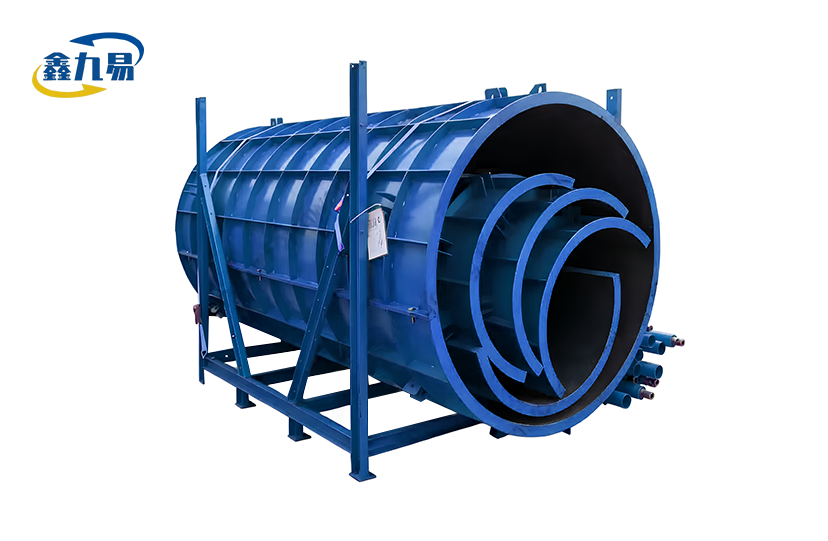
A whole system is made up of many different parts that all work together. Column faces are shaped by panels. Those faces don't bend because of stiffeners like angle steel and channel steel. Each piece is held together by an attachment or a corner clamp. Tie parts and walers keep the joints from moving. Because the braces can be moved, the column stays straight during the pour. Steel plates that have been cold-rolled make up the main body. We put channel steel and angle steel between them to make it stronger. The sheet is cut, bent, and fully welded as a single piece. This keeps the grout inside and the joints shut.
How the System Resists Concrete Pressure
Fresh concrete feels like thick, heavy slime. The panels are pushed outward with more force because of how high and fast the pour is. The American Concrete Institute's ACI 347R formwork guide tells you how to figure this pressure out. It has ties and clamps to hold the corners together, and rigid panels and stiffeners carry the weight. They work well when there are a lot of columns that are all the same. For all kinds of projects, systems that can be changed or put together in various ways work very well. Prices depend on the size of the tower, the height of the pour, and how it will be used again. Always ask the seller if the price is fair before you buy something.
Where Contractors Use It
This item is made for horizontally laid out beam-and-slab buildings, walls, and beam-column joints. It can also be used to make parts for square columns that are already cast. In an apartment building with a column grid used on many floors, one set of panels pays for itself on every pour. Because different parts are often mixed up in factories, having sizes that can be changed is useful. In this area, contractors can rent the system along with their formwork and scaffolding, and wholesalers keep standard lengths on hand for them.


Specifications, Materials, and Quality Checks
Standard Sizes and Custom Options
It has sizes of 300, 400, 500, 600, 700, 900, 1200, 1400, and 1600 mm. We have 300, 1000, 1200, 1800, 2000, 2500, and 3000 mm tall ones in stock. Just let us know if you need a longer height. 300 x 300 mm, 400 x 400 mm, 500 x 500 mm, and 600 x 600 mm are all common square shapes. These lengths work for all of those sizes. The building plans you have can be used to make non-standard panels for column parts. We can also make mixed panel sets for you if your building has columns of different sizes. You can change how thick a panel is based on the project and how much weight it can hold. Square column steel formwork thickness depends on these conditions.
Material and Surface Treatment
The base is made of high-strength cold-rolled pieces and Q235 steel. We clean and tighten the welds so that grout doesn't leak out of the cracks. Usually, paint is used to finish steel because it keeps it safe from dirt and acidic concrete on the job site. Blue and red go together most of the time, but you can ask for other colors to be used instead. A galvanized finish can be asked for on jobs near the coast or in chemical plants. The molds for building concrete that people need to see from afar are powder-coated with baking suits. If you take good care of each panel, you can use it more than 300 times.
Quality Control Before Shipment
We use marked-up tools to make sure that each panel is the right length, width, and shape. When you use straightedges to make sure the surface is flat, you can see that the difference is always less than 2 mm. We make sure that welds that hold weight go all the way through and have a good bead. We also make sure that the places where the ribs meet can handle the force of the vibrator and the ground. There are also pinholes and connection spots that we check for before we ship. The paint must be thick and stick to the surface. We are certified by ISO 9001, ISO 45001, and ISO 14001 for our business. We can use the ACI 117 to find out what ranges of values are okay for finished concrete. You can better follow these rules if you have the right tools.
Installation and Advantages
Step-by-Step Installation
Please look at the plans first to make sure that the building's sizes, levels, supports, and concrete needs are right. After being cleaned, each panel should be given the right way to remove. The pieces that go around the support cage should be put together using corners, clamps, and seals that fit well. Then put the braces in place and make sure the cover is level, has straight edges, and is in the middle. Builders and installers get plans from our expert team to make sure they do it right the first time. As you pour the concrete, keep an eye out for leaks, shakes, and how stable the braces are.
Stripping, Cleaning, and Reuse
Don't take down the forms until the concrete is strong enough. Taking things away too soon can hurt the edges or the structure. In project specifications, which are usually based on ACI 301, the exact needs are spelled out. First, take off the clamps and braces. After that, lift the panels off the ground without putting any pressure on them. Clean the windows right away. Clean up the mess, check the welds and pin holes, and put more release agent on the face before the next pour. By taking the panels off slowly, you can protect the edges and keep the joints grout-tight until the next pour. There are a lot of good things that workers talk about.

Advantages of Steel Square Column Formwork
Here are the core advantages we hear about most from contractors.
- Accuracy and surface quality: The surface is smooth and accurate. When rigid panels with supporting ribs are put up, they don't bend, and columns stay straight and square within ±1 mm. Less honeycombed spots and less extra plastering can be found in fair-faced concrete if the seams are smooth and the grout is tight. That helps when you have to work outside on concrete and follow very strict rules.
- Speed on site: Standard links let modular panels connect to each other, so regular teams can put them together without any extra training. This means that vertical structures can be built faster than with traditional wood systems since it takes less time to strip. Crews don't have to spend as much time on the key path when cycles are faster. This lets them keep up with the floor plan.
- Lower cost per use: Better value for money: Since each panel can be used over 300 times, the money bought for it is spread out over many floors and projects. Since painting steel doesn't break when it's moved around on the job, you won't have to buy as many new ones. It takes less time and costs less money to seal less. Most of the time, square column steel formwork is cheaper per pour than wood when the job is done more than once.
Choosing the Right System
Steel vs. Timber
It saves money and is easier to cut wood on-site when you buy it ahead of time. It breaks easily and needs to be changed often. The outside finish may look different from one pour to the next. Because it stays the same size and is stiff, steel is good for work that needs to be done over and over again. The joints stay tight even after many pours because we polish and weld our panels. Wood is still a good choice if you only need a few odd-shaped columns for your project. You should be able to use the things again the way you want to.
Steel vs. Plastic
It's easy to move vinyl forms, they don't rust, and they can hold light to heavy loads. Steel might be better for tall or wide columns because it doesn't come in as many sizes and can't hold as much weight. How much weight they can hold will tell you how thick Xinjiuyi square column steel formwork panels are. They are 3000 mm tall and 1600 mm wide. You should think about how much it will cost to start, how much work needs to be done, the column size, how long the job will last, how often it will be used, the right tools, the temperature, and where you can store them before making a choice. At the plant, we paint steel so that it doesn't rust. It can also be powder-coated or galvanized.
Questions to Ask Before You Choose
First, choose what you want to buy. Such as the job's size, the range of column sizes, how often and when the equipment will be used, and whether you want to keep it, sell it, or give it away. The next thing you should think about is the strongest point of the concrete, the thickness of the panels, the distance between the stiffeners and ties, the need for bracing, how the structure will be lifted, and how any add-ons will work with it. When shapes change, it's better to have systems that can be changed or put together in different ways. It costs less for set panels to stay in the same place. Pick up the phone and ask each supplier if they have drawings, quality documents, spare parts, technical support, and technical help. Renters should choose sizes that can be used for a lot of different tasks. That means they won't have as much stock left over.
Buying, Troubleshooting, and Maintenance
Buying From a Global Supplier
Asking for quotes in a clear way will help you make a good plan faster. Send the sizes, heights, quantities, how many times they will be used, the state of the concrete, the finish that needs to be put on the surface, the shipping address, the plan, and any packing needs. To get an idea of the form area, multiply the column's height by its width. The base of a column that is 3 m tall and 500 mm square is 2 m wide. In other words, it needs 6 square meters of form face. Packing panels together makes it possible to move them by truck, ship them in containers, or do something else. They are safe while being shipped because of the corner guards, wrapping, and ties. Check out the wait time, the guarantee, and the help you can get for getting extra parts.
Common Problems and How to Prevent Them
A few things are usually to blame for bulging, cracks, columns that aren't straight, and hard stripping. Being stiff is important, but if the pour rate is too fast or not strong enough, they can get swollen. Joints that are too loose leak paste and make honeycombs. If your columns aren't straight, it's because of how and where you put them. It's hard to chip and strip concrete that has broken edges and release agent that isn't spread out evenly. You can keep most of these issues from happening if you plan ahead, use the right pour rate, seal joints well, and double-check measurements and centerlines before the pour. The panels' sides stay safe as long as people are careful and fix things quickly.
Maintenance for Long-Term Performance
Before something is used again, it should be checked for angles, clamps, stiffeners, welds, braces, and connection hardware. It should also be checked to see how smooth it is. Get rid of the concrete that is broken right away. The panels should be kept off the ground, away from water, and away from things that could hit them hard. Reuse numbers, locations, and the supplies that are on hand can help rental companies and workers keep track of things. Don't forget to keep extra bolts, clamps, tie rods, braces, corner pieces, and rubber strips on hand. Make sure they fit your panels first. As long as the square column steel formwork panel is maintained regularly, it will last a long time and keep its measures right.
Conclusion
The different parts that make up square column steel formwork are clamps, ties, panels, and beams. You can use these more than once. Until the concrete hardens, this thing holds beams of concrete in place. Bolts of steel that are joined together can hold concrete. What makes something work well are its width, height, thickness, range, and finish. Things can last longer if they are fitted, cleaned, and cared for carefully. Wood is better for small jobs that aren't even, and plastic is better for medium-duty work. Steel can be used more than once. People who want to buy columns should first say how big they are, how they will be used again, and how they want them delivered. They check to see if there is quality control and technical support before they place an order. Everything will be straight, the surfaces will be clean, and each pour will cost less if it all works together well.
FAQ
What is square column steel formwork used for?
Square column steel formwork shapes and supports round or square concrete columns. It can also be used for walls, already-built beam-column joints, and square column parts.
How many times can the panels be reused?
They can be used more than 300 times if you are careful with them and keep them in good shape after each pour.
Can I order custom sizes or colors?
Yes. You tell us the width, thickness, color, and size you want, and we make it just that way. We really like the color blue and red.
What tolerance do the panels hold?
The panels are all the same size, with a difference of no more than ±1 mm, and their faces are flat.
When can crews remove the formwork?
The teams should take off the concrete once it is strong enough for the job.
Is steel better than timber for columns?
Steel stays the same size and can hold more pours, but wood is cheaper up front and better for small or odd jobs. It depends on the job and the time it needs to be done.
Request a Square Column Steel Formwork Quote
Send your column ideas to global@xjy8.com by email. He will get them to you with a plan that works for your project. We make square column steel formwork in Cangzhou, Hebei. Our goods can be used more than 300 times, come in unique sizes and colors, and are packed in a way that makes them ready to ship abroad. They have a tolerance of ±1 mm. How many columns do you need? What size and height are they? Where do you want them sent?
References
1. American Concrete Institute, Guide to Formwork for Concrete (ACI 347R-14), 2014
2. American Concrete Institute, Formwork for Concrete (SP-4), 2005
3. American Concrete Institute, Specification for Tolerances for Concrete Construction and Materials (ACI 117-10), 2010
4. American Concrete Institute, Specifications for Concrete Construction (ACI 301-20), 2020
5. Portland Cement Association, Design and Control of Concrete Mixtures, 2016
6. International Organization for Standardization, ISO 9001: Quality Management Systems – Requirements, 2015