Composite Drainage Channel Selection Guide: Load Classes, Materials & Applications
A composite drainage channel is chosen by matching four things: the EN 1433 load class, the resin material, the hydraulic section, and the site conditions. For municipal roads, parks, and sponge city work, start with the traffic load, size the channel with Manning's equation, and then confirm the grating and installation details. I wrote this guide for project managers, drainage designers, and inspectors who need clear steps before they specify. It covers load classes, materials, applications, installation, and supplier checks, using the published specifications of Hebei Xinjiuyi Construction Technology Co., Ltd. for its composite resin channels.

What Is a Composite Drainage Channel?
A Linear System, Not a Single Drain
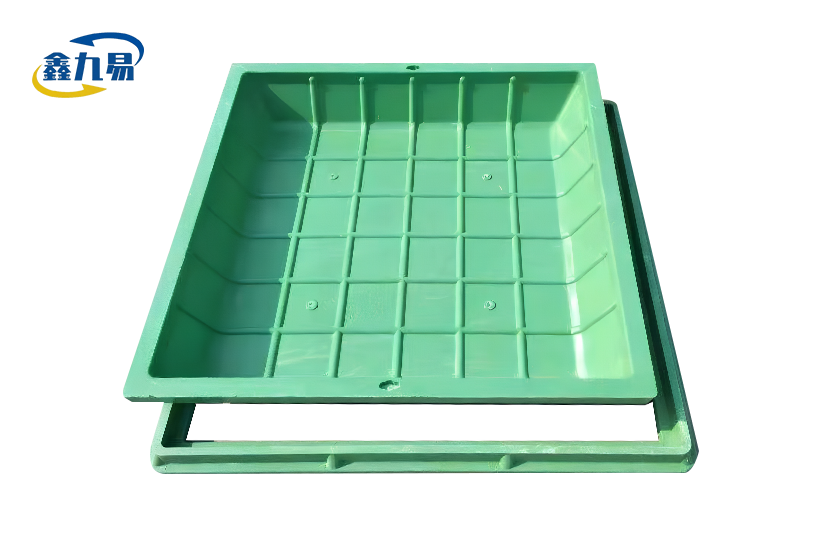
A composite drainage channel is a surface drainage system that runs along a line. Along its whole length, it collects runoff and leads it to a point where it can be dumped. A point drain cannot do this. The channel body, grating, end caps, outlets, connectors, and seals are usually all part of a full system. Each of our lines is 1000 mm long and made of polymer-reinforced composite plastic. How well it works depends on the type of resin used, the design of the grating, how well it was installed, and the site's specific water needs. That is why I always say to look at the whole system instead of just the channel body when rating it.
How It Differs from Concrete and Basic Plastic
Concrete channels are heavy, so they are usually put in place with cranes or forklifts. Simple plastic channels are small and light, but they might not be as stiff or have as many load classes. There is a composite drainage channel in the middle of the two. Our units are 50% lighter than the same-sized pieces of concrete, which means that two workers can move each 1000 mm section by hand. The plastic structure also stops water from absorbing below 0.1%, which stops the ice inside from expanding too much. It still depends on the model and how it's installed, so I suggest that you look at test results for every job.
Where It Fits in Municipal and Sponge City Work
The channels we work with help with greening city projects, roads and sidewalks, campuses, hospitals, public parks, factory green areas, and sponge city projects. In a sponge city layout, water that runs off of paved areas flows along a straight line toward areas with plants or storage buildings. With a Manning's coefficient of about 0.010, the smooth inside helps water flow and lets sediment fall out. That means there will be fewer cleaning reports after the handover. The design is quiet when it's working, and the colors can be changed to match the paving and plants.

Composite Drainage Channel Load Classes and Ratings
Understanding EN 1433 Classes
Here is a list of the load classifications for each composite drainage channel and grating, along with how much weight they can hold. Five groups, A15, B125, C250, D400, E600, and F900, are set by EN 1433. Each group is linked to a different test load in kilonewtons. A15 covers places that people on foot and bikes use. B125 includes sidewalks, pedestrian zones, and parking lots. C250 goes around the edges of roads. D400 is for road shoulders, while E600 and F900 are for docks and airport aprons. In the US, many projects use DOT or AASHTO rules from the area. You should ask your engineer how these rules relate to EN 1433.
Matching the Class to the Site
To get the right class, you should choose the heaviest vehicle that can get through the channel. Most garden paths and sidewalks are A15. Plazas, lanes for light vehicles, and parking lots often need B125 or C250. Some city roads and loading zones might need D400. A lot of airports and large warehouses lead to the F900. The type of pavement, how often it is used, and how strong the turns are all play a role. This is because turning wheels put more weight on the edge of a channel than straight travel. If you install it correctly, our channels list load class support from A15 to F900. When you ask for a model, please share your traffic data.
Judging the Installed Assembly
A class rating is for the whole tested assembly, not just the resin. The grating, locking system, edge support, and concrete surround all fit together and work as a whole. A strong channel with a loose grating will still break when there is a lot of traffic. Our F900 rating is valid when the channel is put in place with stronger haunching. Ask for test records that list the exact channel and grating pair. Check the local rules before you buy, because the engineer of record has the final say on what ratings are acceptable. Early confirmation also stops covers that don't match, which is a common problem with public works bids.
Composite Drainage Channel Dimensions and Specifications
Core Specifications at a Glance
These are the published numbers for our composite drainage channels. Every thing is 1000 mm long. You can choose a width between 150 mm and 500 mm and a height between 150 mm and 400 mm. It can withstand pressures of up to 100 MPa, doesn't absorb water more than 0.1%, and is resistant to chemicals from pH 1 to 10. From -40°C to +80°C is the temperature range for service. It's 50% lighter than the same amount of concrete. It is better to read the internal width and depth than the nominal size, since the wall thickness changes the real flow area.
Sizing the Section with Hydraulics
For hydraulic design to begin, the amount of rain, the catchment area, and the runoff coefficient must be known. The author then uses Manning's equation to check the flow. This equation connects flow to cross-section area, hydraulic radius, slope, and roughness. The Manning's value for our inside surface is about 0.010. At the same slope, a wall that is smoother lets more water flow through it and helps silt move instead of settling. Limits on the final size include the number of outlets, the thickness of the pavement, the curb lines, and any underground services. The FHWA HEC-22 manual explains a method that is often used to figure out how much drainage an area needs. Before you place an order, ask for hydraulic data.
Custom Sections Built from Your Drawings
Unique sizes slow down a lot of bids because plans have to be sent to the plant first. We design based on the site plans and load requirements you send us. You can also send us your own custom widths, heights, and colors. Our engineering team works straight from what you tell them to do. When you make your first request, tell us the cross-section, outlet position, and type of grating. With that information, we can make sure that the channel cover and body match before we start making them. Sharing early can also cut down on the time it takes to review with the design engineer. The design engineer usually has to accept a product before the builder can buy it.
Material Comparison: Composite vs. Concrete, Polymer Concrete, and Plastic
Concrete: Familiar but Heavy
Large building projects work well with concrete, and teams in the area know how to use it. But it's heavy, so installers need tools for moving it and more place to work. In cold places, freeze-thaw cycles can damage or crack concrete because it soaks up water. The ASTM C666 test measures how quickly concrete freezes and thaws, and it shows why this exposure is important. De-icing chemicals and salts make the clothes wear out faster. Our composite drainage channel is 50% lighter than the same-sized piece of concrete and only soaks up 0.1% of the water that it contains. This lowers the risk of the material freezing and thawing.
Polymer Concrete: Rigid but Hard to Move
Resin holds mineral aggregate together in polymer concrete. It is very rigid and can hold a lot of weight. The cost is more work to move and set up because parts can be heavy. You can see that our composite resin matrix also holds mineral aggregates together, so the two materials are similar in some ways. The difference for buyers is the weight and how they are moved, since our units are made to be put together by hand by two workers. Ask each provider what the weight is per 1000 mm piece, what the claimed compressive strength is, and how the freeze-thaw test is done. These three answers make it easy to tell products apart.
Plastic: Light but Limited
Simple plastic channels are cheap and easy to move around in low-traffic areas like patios and walking paths. They might not have a lot of stiffness, impact resistance, or load classes available. When you drop tools on our composite resin, they won't chip or crack the surface like they would with a more brittle material. It can also be used from -40°C to +80°C, and UV protectors keep the color and structure safe in direct sunlight. I would look at these properties side by side before choosing one based on unit cost alone for city projects with moving vehicles or winter exposure.
Choosing the Best Composite Drainage Channel for Different Applications
Municipal Roads, Parks, and Campuses
Most pedestrians and light vehicles can use A15 or B125 on sidewalks, schools, hospital sites, and park trails. Most municipal roads head toward D400. You can change the color of the composite drainage channel to match paving and plants, and the smooth finish looks good with modern styles. Work can be done near occupied buildings as long as there is low noise and vibration during installation. This is important near schools and hospitals. The non-porous material also stops water from getting into the sub-base. Leaking water next to a joint can weaken the base of a road, so pay attention to making sure the link is tight and doesn't let water in.
Industrial, Power, and Food Facilities
Chemical companies and places that make food use strong cleaners to clean the floors. Our channels don't react with acids, bases, or oil, and the sealed surface stops germs from growing in places that are safe for food. In electrical parks and substations, the composite drainage channel naturally keeps electricity from flowing because it doesn't have any conductive paths. That gets rid of one electricity risk near critical gear. The stuff is also not worth much as scrap, so theft is not as big of a problem as it is with metal systems. For these sites, make sure we have the correct list of chemicals because the resistance range is said to be pH 1 to 10.
Coastal, Cold-Climate, and Heavy-Duty Zones
Over time, salt spray hurts systems made of metal and concrete. Our composite resin doesn't rust in seawater or de-icing salts, so it can be used in marinas, on coastal roads, and in areas where winter maintenance is done. In places that get frost, the material doesn't let much water in, so ice doesn't form inside it. Testing showed that after 300+ freeze-thaw cycles, the surface didn't scale or separate. The low thermal expansion coefficient makes it work with both asphalt and concrete, which helps keep the edges of the pavement from coming apart. For F900 service, stronger haunching is needed at airports, transport hubs, and industrial yards.
Installation, Maintenance, and Supplier Selection
Installing Step by Step
Setting up correctly, making sure the level is correct, planning the outlets, and checking the soil and underground services are all important parts of a good installation. Then, the crews dig up the ground, prepare the base, lay the concrete bedding, line up the channels, connect the modules, put in the outlets and gratings, and finish the pavement around the outside. Our precision-molded sliding parts fit together perfectly and don't need any special sealants to keep water out. Installation can be done 40–60% faster than with concrete systems, and the composite drainage channel doesn't need to be cured first. Plan for seals that work with each other, movement joints, and leveling. Do not let anyone drive on it until the concrete around it is strong enough.
Maintenance Over the Years
The work that needs to be done stays light. During flow, the smooth inner walls wash away sediment, and once a year, pressure washing gets rid of buildup. Still, the number of inspections should meet the use: once a season for household areas, every three months for business sites, and more often for industrial plants. First, crews should clean up the dirt, sand, and leaves. Then, they should look for damage in the gratings, locks, seals, outlets, and joints. The water level at the discharge point is confirmed by a flush test. It is best to keep written records of checks and fixes, and having extra gratings and end caps on hand will help save time. These steps keep the hydraulic capacity safe and lower the number of cleaning complaints after handover.
Selecting a Supplier and Writing the RFQ
Ask each supplier for datasheets, dimensional drawings, load-class test reports, material specifications, data on chemical resistance and frost, and instructions on how to install the product. Make sure that the tests cover the whole channel-and-grating assembly. A full RFQ includes the use, location, load class, number, internal measurements, outlet position, grating type, chemical exposure, temperature range, and any extras that are needed. Distributors should add the amount of shipping, packaging, and stuff that goes into the container. We at Xinjiuyi have ISO9001, ISO45001, and ISO14001 certifications, and we offer customization along with technical support and renderings before the sale. Instead of going by unit cost alone, check for compatibility and papers.
Conclusion
When the choices are made in a clear order, a composite drainage channel works well. The minimum strength is set by the EN 1433 load class, which ranges from A15 for foot traffic to F900 for airports. This number is for the full channel, the grating, and the area. Then, the section's design flow is checked by its dimensions and Manning-based hydraulic sizing. When you compare materials, you can see that composite resin is in the middle, between heavy, porous concrete and light-duty plastic. It doesn't absorb water or chemicals as well as being lighter. The model is more specific for parks, roads, factory floors, and places near the coast or that get cold. Careful installation, regular cleaning, and full source papers protect the end result and cut down on mistakes, leaks, and extra work.
FAQ
1. What load class do I need for a municipal road?
For roads, EN 1433 class D400 is what you need. Talk to your tech about it first, because traffic and local rules may change what's needed.
2. Does a composite drainage channel work in freezing climates?
Our composite drainage channels can handle temperatures from -40°C to +80°C, absorb less than 0.1% water, and didn't scale or separate after more than 300 freeze-thaw cycles.
3. Can I order non-standard sizes?
Yes. You can change the widths and heights, and we design to your plans and load needs.
4. Do I need lifting equipment?
No, because each 1000 mm piece weighs half as much as the same amount of concrete, two people can place it by hand.
5. Is the channel suitable near electrical equipment?
Because it doesn't have any conductive paths, the composite resin naturally insulates, making it perfect for use in electrical parks and substations.
Request Composite Drainage Channel Specifications from Xinjiuyi
Xinjiuyi offers custom-made composite drainage channels in different widths, heights, and colors. They also offer expert help before the sale and review of drawings. If you need a maker of composite drainage channels for projects in government, industry, or distribution, email global@xjy8.com with your load class, dimensions, and number. We'll get back to you with options, datasheets, and drawings for your site. You can find more information at xjy8.com.
References
1. EN 1433: Drainage Channels for Vehicular and Pedestrian Areas – Classification, Design and Testing Requirements, Marking and Evaluation of Conformity, European Committee for Standardization, 2002
2. Urban Drainage Design Manual (Hydraulic Engineering Circular No. 22), Federal Highway Administration, 2009
3. Open-Channel Hydraulics, Ven Te Chow, 1959
4. ASTM C666/C666M: Standard Test Method for Resistance of Concrete to Rapid Freezing and Thawing, ASTM International, 2015
5. ASTM D570: Standard Test Method for Water Absorption of Plastics, ASTM International, 2018
6. Design and Construction of Urban Stormwater Management Systems (ASCE Manual of Practice No. 77), American Society of Civil Engineers and Water Environment Federation, 1992