Kitchen Trench Drain Cover: 304 vs 316 Stainless Steel
The simple answer : grade 304 is the practical option for a stainless steel trench cover for kitchen usage in most indoor restaurants, motels, and school cafeterias. It resists grease, food acids and everyday detergents at a reasonable material cost. Grade 316 is rated for salt-water service. Grade 316 has molybdenum added for better resistance to pitting by chlorides, therefore it is suitable for seafood handling, brines, coastal locations and regular wash-downs with chlorine-based chemicals. The grade should be determined by your water quality, cleaning chemicals, traffic load and trench size. Below I evaluate both grades, how to match them to your commercial kitchen trench drain cover job, and what to check before you purchase.
304 vs 316 Stainless Steel: Technical Differences for Kitchen Trench Covers
What Grade 304 Offers a Working Kitchen
ASTM A240 grade 304 is an austenitic stainless steel containing around 18 to 20 percent chromium and 8 to 10.5 percent nickel. The chromium builds a self-healing, thin oxide coating which withstands corrosion, oil and the mild acids found in food residues. In the average interior kitchen the primary dangers are hot water, detergents, and the everyday cart traffic, and 304 holds up well to all three. It also forms and welds readily, so custom lengths and widths remain viable. 304 is the most inexpensive alternative for a commercial stainless steel trench cover for culinary applications in restaurants, hotels, catering halls, and school cafeterias. Xinjiuyi provides grade 201 and 304 of standard.
Why Molybdenum Makes 316 Different
ASTM A240 Grade 316 comprises 2 to 3 percent molybdenum and 10 to 14 percent nickel. Molybdenum improves the passive film's resistance to chlorides, the major reason for pitting and crevice corrosion of stainless steel. Chlorides arise from salt, brine, saltwater and certain sanitizers. Trench covers at oyster bars, seafood processing facilities and seaside restaurants are often exposed to these circumstances, where tiny holes may hold hard-to-rinse waste. In a dry indoor kitchen, using chloride-free cleansers, 316 shows minimal advantage. Xinjiuyi can provide 316 on request and our technical staff will discuss your operating circumstances with you before you choose a grade.
Side-by-Side Comparison of 304 and 316
This table summarizes how the two grades compare in a kitchen setting.
| Factor | Grade 304 | Grade 316 |
|---|---|---|
| Chloride resistance | Good for general use | Higher; suited to salt and brine |
| Typical use | Restaurants, hotels, cafeterias | Seafood, coastal sites, chlorine-heavy washdown |
| Availability at Xinjiuyi | Standard option | On request |
| Fabrication | Forms and welds readily | Forms and welds with standard methods |
| Maintenance | Rinse and dry after cleaning | Same routine, with more margin against chlorides |
| Material cost | Lower | Higher |
201 is a lesser nickel quality and poorer corrosion resistance than 304, so check what grade a supplier quotes. Grade alone does not determine service life. Plate thickness, reinforcement, welds, passivation, quality of installation, cleaning habits all matter equally.
How to Choose Between 304 and 316 for a Kitchen Trench Drain Cover
Step 1: Identify the Operating Environment
Write down what touches the cover each day. Suggests 316 from salt, brine, seafood runoff, seaside air, chlorine-based sanitizers. Grease, steam, hot water, vegetable acids, neutral detergents indicate 304. Just ask your kitchen consultant what cleaning chemicals are used on site and check the labels for chloride content. Also notice the temperature of the wash and the amount of time a trench is wet. The longer the contact time the greater the danger of corrosion. Tell them where your kitchen is, since even if you are not cooking fish the air at the ocean is salty. Before you ask an estimate for a stainless steel trench cover for kitchen project, write down these prerequisites. They decide the grade and they keep the quote comparisons fair.
Step 2: Match Traffic and Load Class
Then see what is rolling or standing on the cover. EN 1433 specifies load classes from A15 (15 kN, for pedestrian areas) to B125 (125 kN) and higher classes for vehicles. You’ll see people and carts in many aisles of a kitchen, but in certain processing areas, pallet jacks or heavy equipment are used. Many projects in the United States also reference ASME A112.6.3 for floor and trench drains. Our regular coverings are suitable for pedestrian to light equipment loads and high duty variants are available. Use a plate thickness of 1 mm or 2 mm for that task and validate the requirements with your local code authority. Ask for load statistics on the specific cover and frame combination.
Step 3: Confirm Cover Style and Trench Fit
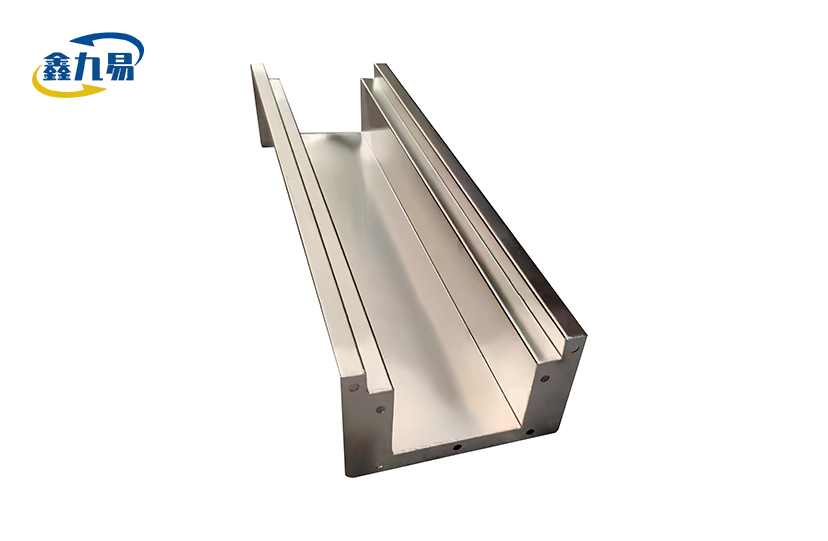
Finally choose a kind of cover and check the trench. Slotted and perforated coverings allow for continuous drainage, whereas solid covers seal a trench for access. Measure the real opening - not the design - length, breadth and the seat where the cover sits. Our basic cover is 580 mm (about 22.8 in) long and 25 mm (about 1 in) high and is available in widths of 200, 250, 300 or 350 mm. If your trench is different, we’ll build to order so workers don’t have to cut coverings in the field. Cutting the field destroys the anti-slip surface and creates sharp, unfinished edges.
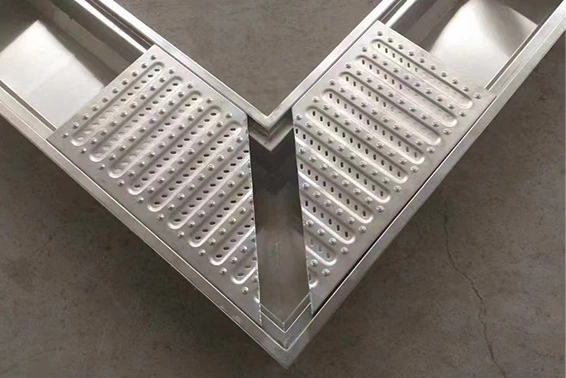
Stainless Steel Trench Cover Design Features That Affect Performance
Anti-Slip Texture and Drainage Openings
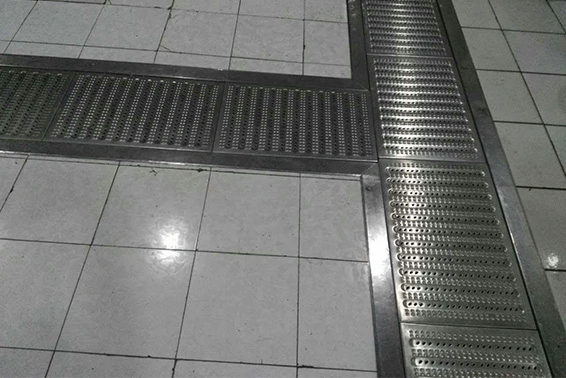
Kitchen floors become moist and oily thus the covering has to grab shoes and let water through. Our covers are anti-slip textured with a hollow design for rapid water evacuation and food particle exclusion from the drain. Slot size is a compromise. Wider holes drain quicker but let in more trash. Narrower openings collect more solids, but need to be cleared more often. The FDA Food Code mandates smooth, readily cleanable floors, except for anti-slip surfaces for safety. Choose a design that the staff can wash clean and ensure cart wheels glide smoothly over it.
Hygienic Geometry, Edges, and Welds
A stainless steel trench cover for kitchen floors aims to save cleaning time by preventing dirt from hiding. Look for smooth surfaces, rounded or worked edges, and welds ground flat. Rough seams and sharp corners trap grease and cut hands. Our covers are edge finished to reduce the harsh edges and we can provide a polished finish for a smoother face. Passivation is performed after manufacturing to reestablish the protective oxide covering on cut and welded surfaces. The slope of the floor is also important. A trench that drains entirely will leave less standing water, which means less smells and less areas for residue to accumulate. Our coverings remove so workers can pull them out and clean the trench underneath.”
Thickness, Reinforcement, and Load Behavior
Thin plate might dip under heavy cart. evaluate thickness, reinforcement, support gap, bearing breadth combined. A 2 mm plate with supported edges will usually carry more than a 1 mm plate across the same span. A broader trench will need more support than a narrow one. Our typical plates are 1mm (about 0.04in) and 2mm (approx 0.08in) with different thicknesses and high duty alternatives available. Calipers to measure delivered plate and compare to specified value. The cover is integrally molded, so that it has a uniform shape and stable bearing capacity. The flat seat on the edge of the trench is not easy to swing.
304 vs 316 Stainless Steel Trench Covers: Cost, Maintenance, and Long-Term Value
What Drives the Cost of a Trench Cover
Cost is not solely a function of material quality. quote will depend on plate thickness, cover length and breadth, reinforcement, surface pattern, special holes, quantity, packing and shipping 316 , however , includes more nickel and molybdenum , and hence usually costs more per unit of material than 304 . That cost may pay off in a salt or chlorine environment where a cover that pits early requires replaced and the kitchen may need to cease work. In a dry indoor kitchen, the same premium may provide little value. Compare the quotes line by line using similar quality, thickness and dimension for each stainless steel trench cover for kitchen so the discrepancies are evident.
Cleaning Routine That Protects Both Grades
Stainless steel is not maintenance free. Lift off the covers, remove any food particles and rinse with clean water. Clean with mild detergent and a gentle brush or plastic scraper, rinse again and dry the surface. During the same visit, check each cover for dents, loose welds and stains. Do not use carbon-steel brushes or steel wool, since they leave particles of iron that will rust and discolor the cover. Avoid or limit exposure to chlorine bleach and other chloride based chemicals and rinse well. Only use powerful acids under the direction of the chemical manufacturer. Even 316 will pit if chlorides sit and dry on the surface, thus careful cleaning protects both grades.
Stainless Steel Versus Cast Iron and Other Options
Some high duty or budget driven works may use cast iron covers when approved by the project engineer, however they are heavier to lift for cleaning and require protection against rust. Heat and chemicals may cause deterioration of plastic and coated coverings. A kitchen-grade stainless steel trench cover resists corrosion, is easy to clean and stands up to hot wash downs without peeling coatings. Solid covers are for a different purpose than grates. They seal a trench for access or temporary protection, whereas grates allow continuous drainage. Standard sizes are faster to purchase and made-to-measure coverings suit odd ditches or replacement projects without field cutting. So Xinjiuyi does both. That way you can match each trench with the correct product.
Specification Checklist, Selection Scenarios, and Supplier Support
Specification Checklist for Your RFQ
A full quote for a stainless steel kitchen trench cover avoids quotation gaps. Specify the grade (201, 304, 316). Specify the standard it has to fulfill (ASTM A240, for example). Add Thickness of Plate Length Width Height Cover type Anti-slip pattern Finish Explain the load requirement . Trench and frame sizes . Weld and edge treatment . Indicate how much, where it is to go and the timetable. Ask for a material test report and have a positive material identification test done on arrival. Note the finish of the floor, the slope and how the workers will raise the coverings. Provide photographs of existing trench on replacement works. “The clear data enables a supplier to identify issues before production starts.”
Where Each Grade Fits and Mistakes to Avoid
304 is for general indoor restaurants, hotels, catering kitchens and school or hospital cafeterias when exposure to chlorides is minimized. Use 316 for seafood restaurants, saline regions, seaside places and rooms with regular vigorous sanitizers. If you have forklifts, large spans, or specific certification needs, request a technical evaluation. Four common errors are: 1. Specifying 316 without examining the actual environment 2. Specifying coverings by thickness only 3. Ordering from nominal sizes and not site measurements 4. Accepting an undetermined grade Write the grade into the order . Grade 201 contains less nickel and is less resistant to corrosion than 304 . Any grade of stainless steel requires periodic cleaning and inspection.
What a Qualified Supplier Provides
A competent provider will need to assess your environment, load and dimensions before proposing a product. Xian County Development Zone Cangzhou, Hebei province, ISO 9001, ISO 45001 and ISO 14001 certified manufacturing Xinjiuyi with pre-sales technical team. We provide regular covers as well as unique non-standard requests. We can do drawings for your approval. Edge processing and anti-slip surface are features of our hollow-structure coverings. Available in 201 and 304. 316 on request. Ask each supplier about its cutting, welding, polishing, inspection, export packing and replacement assistance. International projects stay on track with straightforward communication on specs, timelines and substitutes.
Conclusion
Grade 304 is resistant to grease, food acids and normal detergents, and is suitable for most interior commercial kitchens. Grade 316 contains molybdenum for resistance to chloride pitting from salt, brine, coastal air and chlorine-heavy sanitation. The grade should be based on the actual working environment, not a preset setting. Grade is only one consideration. The way a stainless steel trench cover for kitchen works, and how easy it is for staff to clean, is determined by plate thickness, reinforcement, load class, weld and edge quality, anti-slip design and accurate fit in the trench. Cost comparisons are most effective when grade, thickness and size are kept constant. Cleaning without steel wool and thorough rinsing provides protection for both grades. 201 is not 304. Material papers and specified plate thickness are your defense against surprises.
FAQ
1. Is 304 enough for a commercial kitchen?
Yes, in most indoor restaurant, hotel, and cafeteria kitchens. Grade 304 resists grease, food acids, and routine detergents when you rinse and dry it. Confirm your cleaning chemicals first, because chloride exposure is usually limited in these spaces.
2. When is 316 worth choosing?
Choose 316 when salt, brine, coastal air, or frequent chlorine-based washdowns are present. Its molybdenum content improves resistance to chloride pitting. Xinjiuyi supplies 316 on request for your stainless steel trench cover for kitchen. Without those conditions, the extra material cost may add little value.
3. How do I verify the grade?
Ask for a mill test report and a positive material identification check, and measure plate thickness with calipers on delivered samples. A magnet test alone is not a reliable grade check.
4. Can Xinjiuyi supply custom sizes?
Yes. Our standard length is 580 mm (about 22.8 in), with widths of 200, 250, 300, or 350 mm. Custom length, width, height, thickness, and pattern are available, so field cutting can be avoided.
CTA: Request a Stainless Steel Trench Cover for Kitchen Quote From Xinjiuyi
Xinjiuyi is a stainless steel trench cover for kitchen manufacturer in Cangzhou, Hebei, producing 201 and 304 covers, with 316 available on request. Send your trench dimensions, grade, traffic load, quantity, and destination to global@xjy8.com, and our team will recommend a fitting specification and quote your project. Visit xjy8.com for details on our custom drainage solutions.
References
1. ASTM International, ASTM A240/A240M: Standard Specification for Chromium and Chromium-Nickel Stainless Steel Plate, Sheet, and Strip for Pressure Vessels and for General Applications, 2023
2. U.S. Food and Drug Administration, Food Code, 2022
3. European Committee for Standardization, EN 1433: Drainage Channels for Vehicular and Pedestrian Areas, 2002
4. Outokumpu, Handbook of Stainless Steel, 2013
5. ASM International, ASM Handbook, Volume 13B: Corrosion: Materials, 2005
6. American Society of Mechanical Engineers, ASME A112.6.3: Floor and Trench Drains, 2019