Petrol Station Manhole Cover Installation: 7 Mistakes
The seven most common petrol station manhole cover installation mistakes are choosing the wrong load rating, skipping opening checks, building on a weak base, setting the wrong level, overlooking fuel-specific safety features, buying on purchase price alone, and failing to inspect and document the work. Each error can cause rocking, cracking, water entry, trip hazards, or a failed owner inspection. In this article, I explain how each mistake happens and how to prevent it. I also show how a composite cover from Xinjiuyi fits the needs of contractors, engineers, and buyers on fuel station projects.
Mistakes 1–3: Specification and Base Errors
Three decisions made early on affect everything that happens on the site after that.
Mistake 1: Choosing the Wrong Load Rating
For many, the width and price of a cover are the only things that matter. However, they end up not being right for their business. EN 124 divides covers into six groups, which are A15, B125, C250, D400, E600, and F900. You can tell how strong the test was by the number. The 400 kN Class D400 can be used on highways and in parking lots by all road vehicles. People park their cars, delivery vans, and trucks full of gas at fuel stations. These cars stop and turn near places where people can enter. In this case, D400 is where you should begin if you need to put a petrol station manhole cover in a path for cars. Lessons that don't cost as much might work well in planter or walking areas. Make sure you get the EN 124 test report and class marking from the supplier before you place your order. After that, give them both to the project engineer.
Mistake 2: Skipping Verification of the Opening
Dimension mistakes slow down installations more than almost anything else. There are four sizes that matter: the space between the holes, the width of the cover, the outside frame, and the installation depth. A sump collar that looks 800 mm on an old drawing might not be that big once the concrete is dry. Before you start making things, I think you should measure each chamber in person and sign off on a drawing that shows all the measurements. The model needs to show the opening, the frame, the finished level, the lifting points, the sealing, and the space for cleanup. Covers that are round can fit in most standard chambers. Shapes that are rectangular or have more than one panel let you get to more things, but they need a more precise frame and support. It's better to order a size that isn't standard than to try to fit a standard size into a hole that isn't the same at every station.
Mistake 3: Installing the Frame on a Weak Base
The weight of the wheels is pushed into the ground or concrete around the frame. When you don't compact the ground well enough, there are gaps, sticky beds, early traffic, and settlement, cracks, rocking, and edge failure. There are six steps to making a sound base. Before adding non-shrink grout or concrete, make sure the frame is level and in the right place. Check the size of the chamber and clean it of oil and other waste. Let it dry for 24 hours before you drive on it. To learn how to set up deep liquid storage systems, read the project plan and the Petroleum Equipment Institute's PEI/RP100. Every step, take a picture and write down the date. As soon as the owner accepts the item, the warranty is read, and the item is taken care of, they help.
Mistakes 4–6: Level, Safety Features, and Material Choice
If you make these three mistakes, the cover might not work as well when cars, gas, and weather get to it.
Mistake 4: Setting the Wrong Level or Pavement Transition
A frame that was set to the unfinished subbase will be too high or too low when the final surface is put down. There is noise, impact, and trip risk with a high cover. It's easy for wheels and cracks in the ground to damage the frame edge when the cover is low. You can use a straightedge or a laser level to check that the frame is level with the surface. The bearing should go all the way around the frame. The sidewalk's thickness, the drainage slope, the concrete joints, and the sides made of asphalt should all be the same. People need to be extra careful on parking lots near gas pumps and truck routes, where cars can quickly turn and stop. When the change goes smoothly, the car and the cover are both safe.
Mistake 5: Ignoring Anti-Slip, Locking, Ventilation, and Fuel Safety
A normal utility cover won't protect you from fuel vapors, spills, wet surfaces, or not being able to take the cover off. There needs to be enough air flow, a surface that doesn't slip, locks that work well, lifting points that are set back, and a seal that keeps out gas and liquid. Also, watch out for static electricity. They both say that static electricity can start a fire near liquids that can catch on fire. This is why it's important to have a petrol station manhole cover surface that doesn't stay in a dangerous place. As for the finish, drawings, and records of how the things were made, you should be able to see proof of the ingredients. After that, make sure that the final plan follows all of the rules for fire, the environment, and dangerous areas in your area. There may be rules for underground storage tanks from the EPA in 40 CFR Part 280 and NFPA 30A. Conditions depend on how the room is used and what it is used for.
Mistake 6: Selecting Material Based Only on Purchase Price
The price per unit doesn't tell the whole story. Cast iron is strong and doesn't break easily when hit, but it's also heavy, and thieves are interested in it because it's worth a lot of money as scrap. For special work, galvanized steel works well. Stainless steel is stronger and can handle rough conditions, but it costs more. These caps are less heavy and won't rust as long as the seller can prove they can handle fire and load. When you compare prices, you should look at everything that goes into it, such as freight, installation workers, moving equipment, coating maintenance, how often it needs to be replaced, and downtime. When one person can open a lighter cover, every check is easier. One type of theft can't happen with a cover that isn't worth anything as scrap.
Mistake 7 and the Correct Installation Workflow
After the concrete has set, there is one more mistake that needs to be made. This part also talks about cost, choosing a provider, and how things work.
Mistake 7: Failing to Inspect, Maintain, and Document the Work
A cover might not be ready to use yet, even if it looks like it is. Check the frame is level, the bearings are in touch, the cover is stable, the door can open and close, the lock and hinge work, the surface doesn't slip, water drains, the seal is good, and the sidewalk transition is smooth. The cover can't shake, bind, rock, or move when it's not being used. Plan to check again after a few weeks of traffic to see if there have been any big hits, floods, or clear signs that the ground is moving. Keep approved drawings, material certificates, load records, grout specifications, installation photos, acceptance reports, and instructions on how to keep the project in good shape in the same project file. When you're in charge of more than one place, this file can help you with handoffs, warranty claims, and new orders.
Recommended Installation Workflow
A planned order can help you avoid most of the mistakes listed above. First, find out what the room is for, where it is located, and what kind of people and cars will be using it. Second, decide how much you need to lift, the load class, the material, the size, the surface finish, and the sealing. Third, compare the measurements of the site to the copies that have been approved. Fourth, make sure the base is all set. Next, put the frame in place and level it on all fours using concrete or glue that has been approved. Fifth, finish the part of the area where the pavement meets the drainage. Sixth, once the wood is dry, check the fittings, seats, surface, and locks. After that, write down the work so that it can be given to someone else. If you use the same order at all sites in a program that has more than one, the results will stay the same.
How to Select a Petrol Station Manhole Cover Supplier
A good seller does more than just show you a thing and tell you how much it costs. Find out how much experience they have with fuel stations and working on projects in other countries. You should look for dimensional models, load test results, material and coating papers, quality control methods, the amount of work that can be done, and packing. Before you place a big order, ask for samples and think about getting a third party to test it, since approval usually comes after the building schedule. Write down the wait time and the help with the spare part. When the opening you have is a standard shape, standard covers will fit. You should get your documents from a custom supplier if you need non-standard openings, special seals, color matching, or certain compliance documents. On top of that, find out how the factory makes sure that every batch of tiles is the same color. Differences in color are easy to see on a finished road.
What Influences Installation Cost
The price of a petrol station manhole cover depends on several factors, including the type of material, width, depth, load class, reinforcement, seals, surface finish, tooling, number, packing, and shipping location. Things like digging, changing the chamber, preparing the base, grout, moving tools, fixing the sidewalk, controlling traffic, and inspection are often left out of a price. That's why I think you should get a full estimate of how much it will cost to install instead of just getting quotes on products. It's also helpful to see the lifecycle. A cover that is stronger and better protected can cut down on the number of times it needs to be changed too soon, needs to be fixed for settlement, or has to be corroded. Most of the time, those savings make up for the small difference in price.
How Xinjiuyi Composite Covers Address These Mistakes
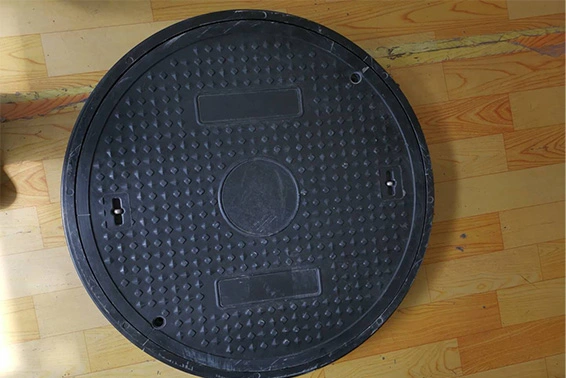
Hebei Xinjiuyi Construction Technology Co., Ltd. makes covers for dangerous fuel environments, so some of the above mistakes are fixed in the product itself.
Non-Sparking, Anti-Static Material
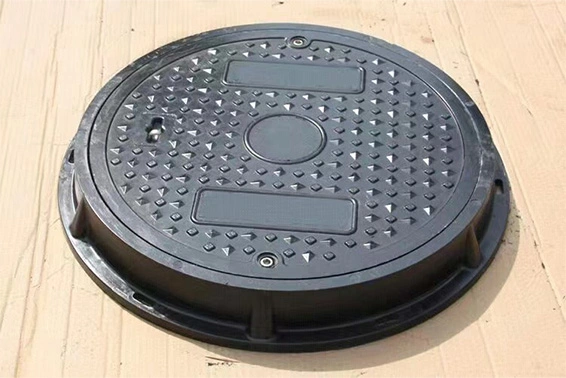
We press high-strength composite plastic (SMC) together at our plant in Cangzhou to make each cover. The material is made to not carry electricity or spark, and it is also designed not to explode. Not more than 10⁹ ohms are across its surface. When metal plates are near oil fumes, they can spark and carry electricity, which is not good. It can handle gasoline, diesel, ethanol blends, acids, alkalis, frost, and UV light, and it doesn't rust. For best results, keep it between -40°C and +80°C. It will last for more than 20 years. Ask for the test papers that your boss or an HSE inspector needs to sign for the petrol station manhole cover approval.
D400 Load Rating, Sizes, and Sealing
These are the main things most buyers want to know:
| Item | Specification |
|---|---|
| Available diameters | 800 mm / 900 mm |
| Material | High-strength resin composite (SMC) |
| Load capacity | D400 (40 tonnes) |
| Surface | Anti-slip texture |
| Sealing | Waterproof and gas-tight |
| Anti-static property | Surface resistivity below 10⁹ ohms |
| Chemical resistance | Gasoline, diesel, ethanol compatible |
These numbers make it easy for engineers and HSE reviewers to set clear requirements for what needs to be sent in. The D400 rating lets fully loaded fuel delivery trucks work. One seal is made of high-quality covers that keep rain out, and the other seal is made of fuel fumes.
Customization, Light Weight, and Theft Resistance
The cover is about 30% lighter than a metal one, so it can be lifted by one person during inspections without any special tools. The thieves don't have a reason to steal covers because composite isn't worth much as scrap metal. When people walk on it, it doesn't slip or make noise. You can ask Xinjiuyi to change the underground equipment's diameter, thickness, color, and shape to meet your needs. Our team can also make models before they start making things. Because of this service, fields don't need to be changed when openings change from one site to the next. Our company has ISO 9001, ISO 45001, and ISO 14001 stamps on it.
Conclusion
What is the best way to install a petrol station manhole cover? It depends on seven choices that are all linked. Checking the opening on-site, making a solid base, lining up the frame level with the finished surface, asking for features that stop slips, seals, and static, comparing materials based on total cost, inspecting the result, and writing it down are some of these steps. To help with these choices, EN 124 classes, fuel-specific codes, and advice on static control are used as examples. Some of these risks can be directly dealt with by a D400 composite cover that is light, has no scrap value, and has a surface that doesn't get static. There are fewer mistakes, extra tasks, and replacements that need to be done too soon when you check each item twice, once before you order it and again when you hand it over.
FAQ
1. What load rating suits a fuel forecourt?
It has to pass the EN 124 class D400 test with a 400 kN load on most roads and truck stops. The last class for a petrol station manhole cover is based on traffic, so make sure you know what it is before you place your order.
2. When should I set the frame level?
Set it to the finished pavement surface, not the unfinished subbase. Allow enough time for the grout or concrete to fully set before driving on it.
3. Can the cover be customized?
Xinjiuyi does come in sizes 800 mm and 900 mm, and they can change the diameter, thickness, color, and shape to fit the way certain pieces of equipment are set up.
4. How often should I inspect the installation?
Check it after the first few weeks of use, after a big storm or flood, and every so often for maintenance. Check the frame's seals, bolts, slots, and any dust or dirt that is near it.
5. What documents should I request from a supplier?
Ask for size drawings, information on EN 124 tests, certificates of materials, and steps on how to put the products together. Add sample approval and testing by a third party if the owner wants them.
Request a Petrol Station Manhole Cover Specification or Quotation
A business called Xinjiuyi in Cangzhou, Hebei, makes composite petrol station manhole covers by pressing them together. They come in two sizes, 800 mm and 900 mm, and each one has its own color and anti-static surface. Please send your drawings, clear opening, traffic data, and quantity to global@xjy8.com so that our team can look them over. After that, they'll give you a good specification. Go to xjy8.com to learn more about the product.
References
1. EN 124-1: Gully Tops and Manhole Tops for Vehicular and Pedestrian Areas, European Committee for Standardization, 2015
2. NFPA 30A: Code for Motor Fuel Dispensing Facilities and Repair Garages, National Fire Protection Association, 2021
3. Technical Standards and Corrective Action Requirements for Owners and Operators of Underground Storage Tanks (40 CFR Part 280), U.S. Environmental Protection Agency, 2015
4. PEI/RP100: Recommended Practices for Installation of Underground Liquid Storage Systems, Petroleum Equipment Institute, 2017
5. NFPA 77: Recommended Practice on Static Electricity, National Fire Protection Association, 2019
6. API RP 2003: Protection Against Ignitions Arising Out of Static, Lightning, and Stray Currents, American Petroleum Institute, 2015