How to Choose a Rebar Processing Shed Manufacturer for Large Construction Projects
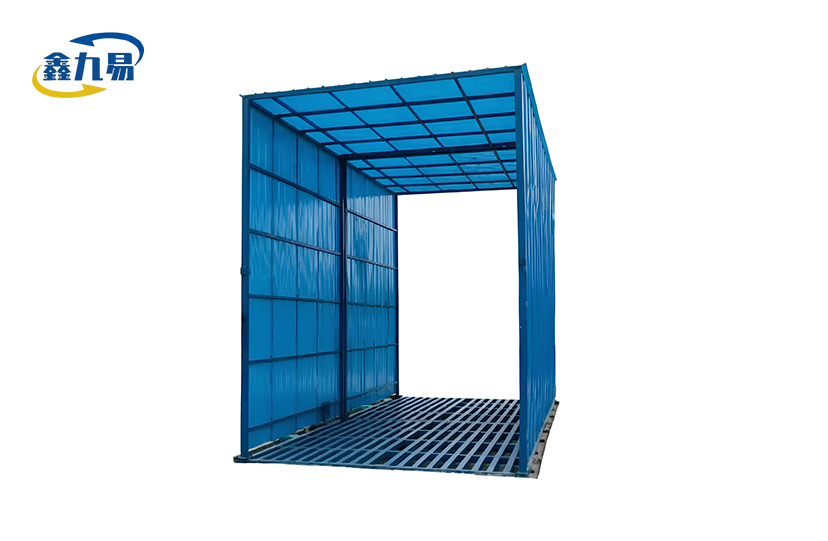
Picking the right rebar processing shed manufacturer has a direct effect on how safe your project is, how well it stays on schedule, and how well you can control long-term costs. A good steel bar processing shelter puts all the cutting, bending and welding in one safe area, protecting workers and equipment from falling objects, the weather and fire risks. For big building projects, the stakes are higher; you need a supplier that can meet foreign standards, deliver on time, and help with installation in tough site conditions. There are important steps that every procurement team should take in this guide.
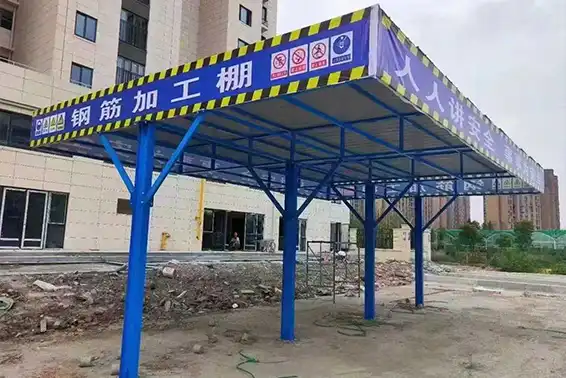
Defining the Decision Scenario for Rebar Processing Shed Procurement
Before you talk to a manufacturer, you should know what your place needs. If you skip this step, you'll waste money, have things that don't go together, and have to wait longer to put them away.
Identify Your Processing Capacity Needs
Just think about how much steel there is on your site every day. For building a bridge, big bars are better, and for building a house in the city, heavy column loads are better. Make sure the shed can hold all of your stuff. This will save you a lot of money in the long run.
Assess Automation and Equipment Integration
These days, CNC bending tools, automatic stirrup formers, and mesh welding lines are used to make rebar. These methods should be easy to get into your shed. Need to move things up? The building needs to be strong enough to hold a gantry crane with loads of 3 to 10 tonnes.
Confirm Regulatory and Scheduling Constraints
A lot of the time, people who work on big building projects have to follow strict rules about health and safety. Check out OSHA rules in the US. In Europe, study the EN building rules. Check out ISO standards to get bids from all over the world. Put wait times for building and getting the place ready at the beginning of your plan to buy.
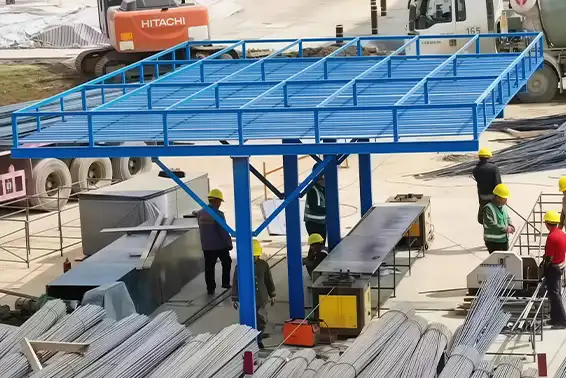
Establishing Core Selection Criteria for Manufacturers
Once you know what you need, you can use consistent standards to judge producers. Here are the main things that set trustworthy suppliers apart from risky ones.
Product Quality and Certification
If a company has certain certifications, you can tell if their quality control is organised or not. For quality control, look for ISO 9001, and for health and safety at work, look for ISO 45001. Make sure the structural steel is a recognised grade, like Q235B or Q345B, and that the surface has been hot-dip galvanised with a coating that is at least 60 to 80 εm thick to prove that it won't rust. These specs have a direct effect on how long something will last in humid, coastal, or high-salinity places.
Technological Depth and Customization Ability
If the manufacturer of a rebar processing shed is strong, they can change normal designs to fit different site conditions. This means giving you options for length, width, and height, combining crane-load columns with corbels, and using C4 or C5-M coatings that don't rust for marine use. Being able to make detailed engineering drawings before the fabrication process starts greatly reduces the number of surprises that happen on-site.
After-Sales Service and Technical Support
Help with installation and service after delivery are more important than most people think. You won't be responsible for any problems on regulated job sites if the manufacturer sends a technical team to check the bolt torque specs, the integrity of the weld and the grounding resistance below 4 ohms. Ask especially about the availability of spare parts and how long it takes to get claims for structural defects processed.
Comparing Rebar Processing Shed Manufacturing Solutions
A lot of different things can be made from steel bars. Besides price, there are other important things you should think about when making a choice.
Manual vs. Automated-Ready Designs
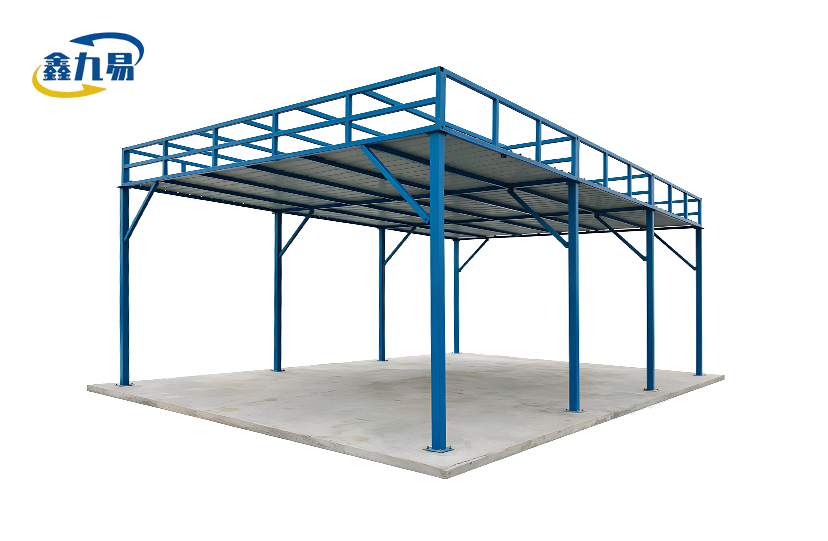
A shed that is put together by hand costs less at first, but in the future, they won't be able to be computerised. It's possible to change the layout whenever your tools do. This can be seen in systems made with 18# I-beam steel poles and Q235B/Q345B frames. For projects with more than one stage, being able to move things around is helpful.
Fixed vs. Portable Structures
Plants and projects that need to last a long time should use a set method. Blocks that can be moved around are better for people who are in charge of more than one job spot at the same time. Modules that are well-built can be moved three to five times before they break if they are taken apart by trained professionals. Each job costs a lot less because it can be used again.
Total Cost of Ownership Analysis
It's not just the price of a rebar processing shed that can change. How often does it need to be cleaned, how long does the finish last, how much does it cost to move, and how long can it be used? The shed made of hot-dip galvanised rectangular tubes and electrostatic powder finish will last longer than the one painted mild steel. For all of your projects, you will need to get a new shed less often.
Matching Manufacturer Solutions to Project Profiles and Procurement Strategies
It's not enough to just get the technical match right. Whether that match leads to on-time, on-budget delivery depends on the procurement plan.
Segment by Project Complexity and Scale
A tall building in the middle of a busy city needs to be small and follow strict safety rules. It needs standard safety signs, red/white or yellow/black dual-color kick plates and reflective warning strips. As little weather damage as possible and as fast field assembly as possible are needed for a remote bridge or tunnel job. Specification risk is greatly reduced when you choose a manufacturer with documented experience on both types of projects.
Coordinate Lead Times and Logistics Early
For a normal 12 m 18 m steel bar processing shelter, it takes seven days to make in the factory and an extra three to five days to put together on-site, depending on how ready the foundation is. When shipping internationally, you have to add time for customs processing and inland goods. Talk to your manufacturer early enough so that these windows can be built into the project plan instead of being added on top of it.
Prioritize Suppliers with Project Management Support
When a manufacturer gives a dedicated coordinator to a large order, you can see at a glance how the fabrication is going, how the shipment is progressing, and what the installation milestones are. This level of operational visibility cuts down on the friction that often causes construction schedule delays in foreign procurement.
Conclusion
It's important to be picky about which rebar processing shed manufacturer you work with on a big building project. Before going shopping, you should know exactly what your site needs. You should also set standards for quality and certification that can't be lowered. When comparing options, you should look at the total cost instead of the price, and you should make sure that delivery times work with your building plan. You can be sure that your job will be safe and go smoothly if you buy from a company that guarantees structural quality, lets you make changes, and offers quick technical help. Ask for project references as soon as possible, and make sure you have written down everything before you sign off.
FAQ
What certifications should a qualified manufacturer hold?
Look for ISO 9001 for quality management, ISO 45001 for occupational health and safety, and ISO 14001 for environmental management. Structural materials should conform to recognized national or international steel grades. Surface treatment verification through coating thickness testing is also a standard quality assurance practice you should request.
Can a steel bar processing shelter be relocated between project phases?
Yes — a properly designed modular structure using bolt connections can be relocated three to five times without structural compromise. Disassembly must be handled by trained technicians who verify bolt torque and structural integrity at each new installation point to maintain safety compliance.
What is the typical lead time from order to site-ready?
For a standard 12 m × 18 m configuration, factory fabrication generally takes seven days. On-site assembly adds three to five days depending on your foundation status. International shipments require additional time for freight and customs clearance, so building these windows into your procurement calendar from the start is essential.
Do manufacturers offer financing or flexible payment terms?
Leading suppliers typically offer negotiated payment terms for bulk orders or long-term partnerships. Discuss options such as milestone-based payments or credit terms during the initial inquiry stage, especially for large-scale international procurement contracts.
Get a Project-Specific Quote from Xinjiuyi
The sheds that Hebei Xinjiuyi Construction Technology Co., Ltd. sells are allowed for processing rebar and are made to fit the needs of real projects. The steel we use for our buildings is 18# I-beam, Q235B/Q345B grade, and the coatings are hot-dip galvanized and guarantyd to be 60–80 µm thick. They can be used in factories, bridges, tall buildings, and tunnels. We are a trustworthy company that has been approved by ISO 9001, ISO 45001, and ISO 14001 to build rebar processing sheds. We deliver on time and help with the whole process of setting up. Send our team an email at global@xjy8.com or visit xjy8.com to get a price for your job.
References
1. American Institute of Steel Construction (AISC). Steel Construction Manual, 16th Edition. AISC, 2022.
2. International Organization for Standardization. ISO 9001:2015 — Quality Management Systems: Requirements. ISO, 2015.
3. Occupational Safety and Health Administration (OSHA). Construction Industry Standards: 29 CFR Part 1926. U.S. Department of Labor, 2023.
4. European Committee for Standardization (CEN). EN 1090-2: Execution of Steel Structures and Aluminium Structures. CEN, 2018.
5. Construction Industry Institute (CII). Prefabrication, Preassembly, Modularization, and Offsite Fabrication in Industrial Construction. CII, 2019.
6. National Institute for Occupational Safety and Health (NIOSH). Preventing Injuries and Deaths in Construction. U.S. Centers for Disease Control and Prevention, 2021.