BLOG List
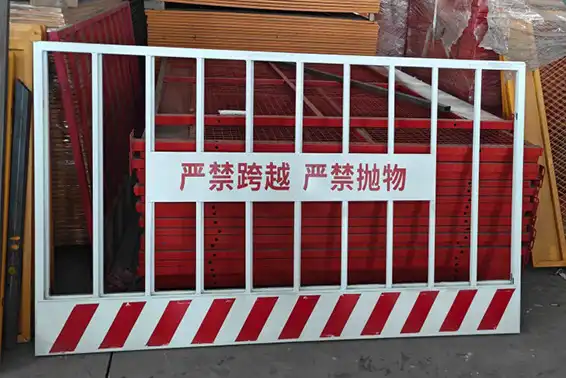
When Should an Excavation Guardrail System Be Used?
Every building project manager knows that making a quick choice about safety gear can mean the difference between a smooth operation and a tragedy that could have been avoided. When workers or tools get close to the edges of ditches, foundation pits, or other excavated areas where there is a risk of falling, an excavation guardrail system should be put in place. These barriers are required by safety groups like OSHA for holes deeper than six feet, but experienced safety officers know that protection is also needed at much shorter levels, especially in areas with a lot of traffic where workers who aren't paying attention or vehicles moving around pose a higher risk. Putting up movable perimeter protection isn't just about following the rules; it's also about creating a mindset where everyone on the team gets home safely. This complete guide answers the most important question that building workers all over the world have: when does a dig need dedicated guardrail protection?
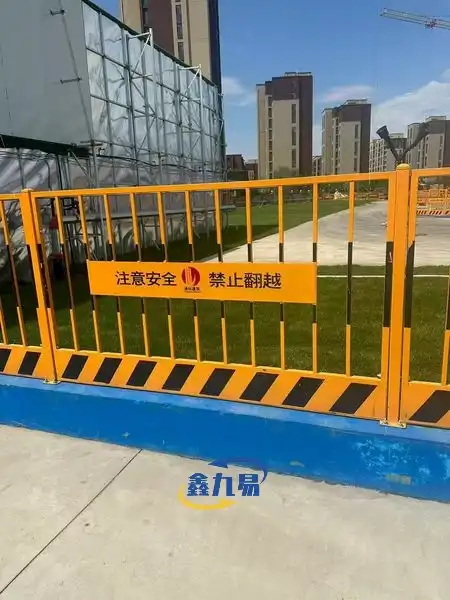
Understanding Excavation Guardrail Systems
What Defines a Professional Perimeter Protection System
An excavation guardrail system made for professionals is more than just a fence. In these engineered barriers, the structure is strong and the design is smart. They are usually made from national standard square or rectangular tubes that are very resistant to impact. The systems we make in Xinjiuyi are made up of modular parts that are 2000 mm wide and 1200 mm high. These sizes were carefully chosen to meet international safety standards while also allowing for customization needs on-site.
Welded frames are paired with mesh or plate assemblies, and the distance between the grilles has to meet strict safety standards. This balanced method keeps things clear for site supervisors to see while still offering strong fall protection. Modern systems are different because they pay attention to every detail: Laser-cut edges get rid of sharp burrs, fully automated high-temperature baking paint processes make sure the systems will last in bad weather, and ear-plate-free mounting designs get rid of structural weak spots that make the systems less stable.
How Protective Barriers Function in Complex Environments
Multiple safety systems work together to make perimeter defense work well. The main job is to keep people from falling by putting up a physical barrier at the sides of excavations, lift shaft holes, and pipe shaft penetrations. Besides keeping people from falling, these systems clearly separate dangerous areas from work areas and walkways for people.
Finishes that are highly visible in safety yellow or orange act as constant danger alerts. This is especially helpful when it's dark or when machine workers have to move around crowded sites. Another important function is traffic direction, which is done by carefully placing barriers to keep people and cars away from dangerous areas. The standard integrated toe-board design keeps loose materials in place and keeps tools from falling into holes, which are two secondary accident risks that many people don't think about. The Excavation Guardrail System reinforces all these measures by providing a rigid, portable perimeter barrier specifically designed for excavated zones, ensuring that the visual warnings, traffic controls, and toe-board protections are consistently maintained even as the excavation depth or layout changes during work.
Regulatory Frameworks Governing Site Safety
International standards make it clear what needs to be done to protect excavations. According to OSHA rules, protective gear must be used in excavations deeper than six feet. However, qualified people must also check out shallower excavations where dangers exist. Specifics are important: the top rails must be 42 inches (±3 inches) above the walking surfaces, the mid-rails must be in the right place, and the toe boards must continue at least 3.5 inches to catch trash.
European standards BS EN 13374 divide edge safety systems into two groups, called Classes A and B. These groups deal with different fall height risks and loading needs. These models aren't just arbitrary red tape; they're based on decades of engineering research and data from incidents. Companies that follow the rules can avoid fines from the government, but the real benefit is when safety practices are standardized across international projects. This is especially important for contractors who work in Southeast Asia, the Middle East, and emerging markets where local rules are becoming more like global standards.
When Is an Excavation Guardrail System Required
Depth and Soil Condition Triggers
The main regulatory cause is the depth of the excavation, but the conditions of the dirt must also be taken into account when deciding where to deploy. Soils that aren't stable or have been disturbed in the past make it more likely that something will fall, so even at moderate depths, perimeter barriers are necessary. Different types of soil, like clay, don't stick together the same way sand or gravel does. This affects both the need for support and fall protection.
These problems are made worse by water infiltration. Soils that are too wet lose their ability to support weight, and trenches with standing water make it harder to see, which increases the risk of falling. We've seen projects where builders put off installing barriers on shallow excavations, only to get safety violations when the ground quickly got worse than planned. The smart way to do things looks at both geological studies and depth measures. This is because a four-foot hole in unstable dirt might be more dangerous for falls than a deeper cut in solid rock.
Site Traffic and Proximity Considerations
No matter how deep the excavation is, building sites with a lot of foot traffic need proactive defense. This happens a lot with urban utility projects. For example, fiber optic or sewage line ditches that run through pedestrian areas need strong walls to keep people out. Modular excavation guardrail systems are great for places where space is limited and traditional fencing options aren't possible because they take up little room and are very stable.
The closeness of the vehicles adds another dimension. When delivery trucks, loaders, or mobile cranes work close to the edges of a dig, they create dynamic loading conditions and possible impact scenarios. Areas for dumping materials that are next to foundation pits benefit the most from guardrail systems that can withstand side forces and still let workers see. Systems that are well taken care of can last for 20 years, which makes them a good investment for workers who work on several projects a year because the parts are easy to move from one place to another.
Comparing Excavation Guardrail Systems With Alternative Safety Solutions
Guardrails Versus Trench Shoring Technologies
Knowing the difference between guardrails and shoring systems can help you avoid using the wrong ones, which can be very expensive. Trench shoring, which includes hydraulic sides, trench boxes, and sheet piling, keeps structures from collapsing and keeps workers inside digs safe from cave-ins. Perimeter excavation guardrail systems are used for something completely different: they keep people from falling into holes from the ground. For complete dig safety, both systems usually need to work together. For example, propping supports the trench walls while guardrails keep people safe around the edges.
The level of difficulty of installation varies a lot. Shoring needs special tools and trained workers to place heavy parts inside holes, but modular guardrail systems can be set up quickly with just a few hand tools. Because they are easy to get to, guardrails work great in project settings where dig sites move around a lot. Quality systems have lift-off protection pins and socket connections that make them easy to set up without special tools. This saves money on labor costs while keeping the structure strong under working loads.
Temporary Barricades and Warning Tape Limitations
Some builders use warning tape, plastic mesh fences, or light barricades to try to protect the boundaries. These methods don't work on more than one level. Normal barricades aren't strong enough to handle accidental contact. A worker stumbling backwards or a wheelbarrow rolling toward the edge will instantly break through lightweight systems. Warning tape makes it clear what the danger is, but it doesn't protect you physically. This creates a liability risk that looks like safety compliance.
The business comparison clearly shows that engineered methods are better. Temporary barriers need to be replaced often because their parts break easily, and projects that don't meet legal standards risk getting fined or even being shut down. Excavation guardrails made from high-quality steel (Q235 or Q345) with walls at least 2.0 mm thick offer the durability and impact resistance that make their price tag worthwhile. The powder coating or hot-dip galvanization processes used on high-end systems make them weatherproof for years of use outside, so you don't have to keep replacing them like you do with cheaper options.
Modular Systems Versus Custom-Built Solutions
Sometimes, project teams think about making site-specific barriers out of things that are already on hand. There are many problems with this approach. Load testing is hard because you need special testing tools to make sure that a barrier built in the field can withstand the 0.3kN horizontal force that is needed. Dimensional differences make it hard to reuse parts for different projects, and the quality of the welding depends on the staff that is present and the conditions in the field.
Standardized modular systems from well-known brands offer guaranteed performance, as shown by strict quality control procedures. We use ultrasonic weld inspection, cross-cut coating adhesion testing according to ISO 2409, and salt spray testing that meets ASTM B117 standards for at least 500 hours of rust protection in our production. This process of verification makes sure that all parts can be swapped out for any other part. This is very important for contractors who are managing equipment inventories for multiple projects at the same time. We offer customization options that let you change the size and color of the product while still keeping its structural approval. This gives you options without sacrificing performance.
Best Practices for Excavation Guardrail System Installation and Maintenance
Site Assessment and Preparation Protocols
A careful site review is the first step to a successful deployment. Find all the edges of the excavation that need to be protected and write down any ground conditions that might affect the choice of base plate. For maximum stability, drill-in anchors can be used on concrete surfaces. For soil applications, ground spikes are driven to the right depths based on the soil's ability to support weight. Weighted ballast bases are used for non-penetrative installations on sensitive surfaces like finished pavements. These bases spread the load out evenly without damaging the surface.
Look at the activities going on nearby to decide where to put the guardrails so that they keep people safe without getting in the way of needed access. The best place to put up barriers depends on where materials are delivered, where equipment goes, and where people are allowed to cross. The goal is to find a balance between full protection and operational ease of use. Layouts that are too restrictive make crews unhappy and allow barriers to be moved without permission, while coverage gaps make dangers obvious. Detailed site plans that show where barriers will be placed help with safety checks and are useful for keeping records for future projects with similar layouts.
Installation Techniques and Quality Verification
Modular excavation guardrail systems made for building sites focus on being easy to install without losing structural performance. Start by putting corner posts at the corners of the excavation and using standard levels to make sure they are straight. The system designer sets the distance between intermediate posts, which are usually the same width as the panels to make sure the load is spread out evenly. Use the built-in locking devices to connect panels to posts, making sure that the pins fully join and secure.
A check after installation makes sure that the plan specs were followed. To make sure the system is stable, put horizontal loads on the top rails. If the system is installed correctly, it should be able to resist deflection without the posts coming loose or the panels coming apart. Make sure that the mid-rails and toe-boards fit properly and that there are no holes that are bigger than what the rules allow. Documentation is important. Take pictures of installed barriers from different angles and write down the dates and names of the people who are responsible for them. These records are very helpful for safety checks and give schedules for repair work a starting point.
Ongoing Maintenance and Inspection Regimes
Even the most lasting security systems need to be checked on a regular basis to keep working well. Set up regular weekly checks to look for damage in all parts, paying special attention to connection points that are subject to repeated stress. If you see bent rails, loosened posts, or coatings that aren't doing their job, corrosion may have started. When bad weather happens, like high winds or heavy rain, more inspections are needed because the environment can move or damage barriers.
Problems should be fixed quickly during maintenance tasks. Tighten any links that are loose right away, because damage happens faster once parts start moving. Instead of trying to fix damaged parts on the job site, which could weaken the structure, replace the sections that are broken. Established manufacturers offer a wide range of customization options that make it possible to buy replacement parts that match what is already in stock, which keeps the system consistent. Clean the barriers every so often to get rid of concrete dust and other things that break down coatings more quickly. This will extend their usefulness and keep the professional look of the site, which is good for the contractor's image.
Procurement Considerations for Excavation Guardrail Systems
Material Selection and Performance Characteristics
Steel and aluminum are the two most common materials used to make excavation guardrails, and each has its own benefits. Steel systems are very strong and don't break easily when they get hit. This makes them perfect for high-risk areas where heavy machinery or cars are working near excavations. The strong construction can handle abuse that would damage smaller options, and the extra weight makes it more stable in windy places.
Alternatives made of aluminum are easier to move around on projects that need to move barriers often or that need to be handled by hand without mechanical help all the time. The lighter weight makes it easier to move and store things, which is especially helpful for workers who keep hire fleets that serve multiple tasks at once. In coastal or chemically exposed areas, aluminum's resistance to corrosion is another benefit. However, this problem can be solved with modern steel coating technologies like hot-dip galvanization. In the end, the choice of material is based on what's most important for the project: strength and durability versus portability and ease of handling.
Purchase Versus Rental Economic Models
The economy of ownership vs. renters depends a lot on how the property is used. When contractors are in charge of multiple projects that need continuous excavation, they prefer to buy instead of rent because the long service life—up to 20 years with proper maintenance—makes the per-project economics better than renting. Ownership also gives you more freedom with your schedule and stops you from relying on other people's availability during busy building seasons, when renting equipment is hard to come by.
Rental models are good for businesses that only need to do excavation jobs once in a while or that want to look into improving their safety systems before buying new ones. With the rental method, capital costs are turned into routine costs, which makes budgeting easier and gets rid of the need for storage during slow times. However, the number of rental options varies a lot by region. For example, in emerging markets, there aren't as many options as in established construction hubs. Our excavation guardrail systems are made to work with both rental and ownership models. The modular architecture makes it easier to handle rental fleets, and the increased durability and customization options make ownership a good option for businesses that want to build standard safety inventories.
Evaluating Supplier Capabilities and Support
Comparing specs and costs is only one part of choosing a supplier. Manufacturing capacity determines how reliable deliveries are, which is very important when project plans set strict dates for when equipment must be available. Established companies with dedicated production facilities and well-developed supply chain systems can consistently meet the needs of large orders. Certifications like ISO 9001, ISO 45001, and ISO 14001 show that a company has complete systems for managing quality, protecting workers' health, and protecting the environment, and these systems lead to reliable product performance.
The ability to provide technical help sets special sellers apart from commodity vendors. Having access to pre-sales engineering consultation helps choose the best system for each project's needs, which could save money by standardizing processes or show that specific site conditions need unique solutions. Installation instructions and personalized modeling services help with planning the project by giving stakeholders clear visual samples that make it easier for them to approve. Long-term system efficiency is ensured by after-sales help, such as upkeep tips and the availability of replacement parts. At Xinjiuyi, we've built our service model around these ideas because we know that buying excavation guardrail is more like starting a long-term partnership than just buying a product.
Conclusion
Excavation safety is more than just following the rules. It requires putting together well-thought-out protection systems that are matched to the risks of the project and the way it works. When deciding whether to put up perimeter guardrails, you should think about how deep they need to be, the conditions of the dirt, the traffic patterns on the site, and any nearby dangers that could cause someone to trip and fall. Quality modular Excavation Guardrail systems offer compliance, longevity, and rollout options that make the investment worthwhile by reducing incidents and improving operating efficiency. As building workers, it's our job to make sure that everyone on the team can work without worrying about accidents that could have been avoided. Standardized safety systems are useful tools for meeting that duty and supporting the project success metrics—sticking to the schedule, keeping costs down, and managing your reputation—that make building businesses competitive.
FAQ
1. At what excavation depth must guardrails be installed according to OSHA?
When digging deeper than six feet, OSHA requires that safety devices be used. Only qualified people should look at smaller excavations where the ground is unstable, water is building up, or there are other dangerous situations. Many safety professionals put down protection at shallower depths, especially in areas with a lot of foot traffic or where equipment is close to the edges. This is because they know that legal minimums are just starting places and not complete safety standards. A project-specific risk assessment should help with making decisions, and it should look at more than just depth.
2. Can modular guardrail systems be reused across multiple projects?
Quality modular systems work great when used on more than one project. Standardized sizes and long-lasting construction make it possible to install, take apart, and move many times without losing any performance. Systems that are well taken care of by inspecting and replacing parts on a regular basis last for decades and are used in many places. Because it can be used again and again, this makes ownership a good deal for groups that need to do a lot of digging. The key is to choose systems made from high-quality materials with coatings that have been shown to last and to keep accurate inventory records so that full sets can be moved from one project to another.
3. How do excavation guardrails differ from standard construction fencing?
Standard construction fencing protects the perimeter of the site and marks the edges of the work area, but it's not strong enough to protect people from falling. Excavation guardrail systems are tested for load to make sure they can handle certain horizontal forces. They have mid-rails and toe-boards that are spaced out according to regulations, and they have engineered links that make sure the structure stays strong when they are hit. Safety-critical edge protection is different from a general-purpose site fence because of its size requirements, material grades, and quality control procedures. This is because safety-critical edge protection is meant to protect workers and not just mark boundaries.
Partner With Xinjiuyi for Complete Excavation Safety Solutions
For your excavation projects, you need protection systems that are well-made and come with full support. Xinjiuyi offers ISO-certified production, products that last 20 years, and full customization services for foundation pit upkeep, municipal buildings, and infrastructure development situations all over the world. Our Excavation Guardrail Systems are made without ear plates, which means they are structurally sound. They also have laser-cut edges and automated coating processes that make them safe and long-lasting.
We know that making decisions about what to buy requires trust in both the quality of the product and the stability of the seller. As a well-known company that makes excavation guardrail systems, we have fully equipped factories and established supply chains that allow us to handle large orders and keep to our delivery dates. Get in touch with our technical team at global@xjy8.com to talk about the specifics of your project, ask for detailed renderings, or get personalized quotes. We'll work together to build the standardized safety infrastructure that keeps your employees safe and boosts your reputation for doing great work.
References
1. American Society of Safety Professionals (2021). Construction Safety Standards: Excavation and Trenching Protection Guidelines. Des Plaines: ASSP Press.
2. Morgan, R. T., & Williams, H. K. (2020). Structural Performance of Modular Safety Barriers in Construction Environments. Journal of Construction Engineering and Safety, 45(3), 127-142.
3. International Labour Organization (2019). Safety and Health in Construction: Code of Practice. Geneva: International Labour Office.
4. Construction Industry Institute (2022). Best Practices for Excavation Safety Management in Infrastructure Projects. Austin: CII Publications.
5. European Committee for Standardization (2018). EN 13374: Temporary Edge Protection Systems – Specification and Test Methods. Brussels: CEN Standards.
6. National Institute for Occupational Safety and Health (2020). Preventing Falls and Struck-By Injuries During Excavation Work: A Comprehensive Analysis. Cincinnati: NIOSH Publications.
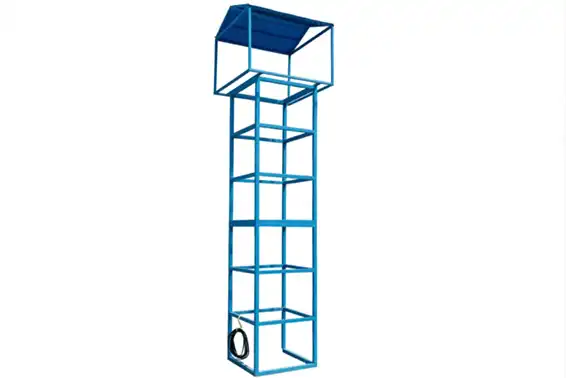
How to Start a Light Tower: Operation and Maintenance Guide
Starting a Light Tower mobile lighting system correctly ensures safe nighttime operations across construction sites, emergency zones, and industrial projects. Whether you manage diesel-powered units or electric models, understanding proper startup sequences and routine maintenance prevents equipment failure and extends service life. Professional-grade illumination towers from Hebei Xinjiuyi Construction Technology Co., Ltd. combine hot-dip galvanized steel construction with anti-corrosion coatings, delivering reliable performance under demanding outdoor conditions. This guide walks procurement managers, site supervisors, and equipment operators through essential procedures to maximize your investment in portable site lighting.

Understanding Mobile Illumination Systems: Basics and Components
Core Structural Elements
The main structure is the upright mast, which is usually made of thickened, galvanized rectangle tubes that are 40 mm x 40 mm and have 0.8 mm wall thickness. This engineering method stops dangerous oscillations and lateral wind loads at extension heights of up to 6000 mm. Angle steel supports are spliced into the tower beams to make a rigid shape that stays stable even when bad weather hits. Hot-dip galvanization and high-temperature baking paint create a two-layer defense against rust, which greatly increases the useful life of equipment in difficult conditions where rain, dust, and changes in temperature can damage it.
Power Source Configurations
Diesel engines are still the most common way to get power to remote areas that don't have access to the grid. These self-contained units can work continuously for multiple jobs without needing to be connected to an outside power source. Electric models need stable mains power, but they don't use fuel and don't produce pollution, so they can be used in urban areas where noise levels are limited. Solar-hybrid systems use both solar panels and deep-cycle battery banks. They are perfect for businesses that care about the environment and are willing to wait longer between charges in the winter.
Lighting Fixture Technology
Metal halide lamps have mostly been replaced by LED arrays because they use less energy and can be turned on instantly. Modern LED setups put out 100,000 to 500,000 lights while using a lot less electricity than older technologies. Since there are no warm-up times, the output can be turned on at full strength right away, which is very important in emergency deployment situations. Fixture housings have ingress protection grades of IP65 or IP67, which keep dust and water spray from any point from getting into the internal parts.
Step-by-Step Operational Procedures
Pre-Operation Safety Verification
Walk around the outside of the Light Tower and make sure the unit is level and that the outriggers are fully extended if it has them. When the mast is fully extended, uneven placement makes it possible for it to fall over. Check the fuel tank to make sure it has enough diesel and look for leaks around the fittings and hoses that you can see. Check the electrical connections on the control panel to make sure there are no uncovered wires or corroded leads that could damage the circuit. Make sure that the area of work under the extended mast doesn't have any overhead obstacles, like power lines, tree branches, or building parts that could touch the lighting fixtures while the mast is raised.
Diesel Unit Startup Sequence
Put the key in the "on" position of the ignition without turning on the starter motor. This will let the fuel pump pressurize the injection system. You should wait about five seconds before starting the engine. Once the engine is going, check the gages on the control panel to make sure the oil pressure and coolant temperature numbers are normal. To power the mast raising system, flip the hydraulic pump switch on. You can slowly raise the tower by using the electric or manual winch and stopping every so often to make sure the extension goes smoothly without any locking or jerking. The lamp angle brackets can be moved to direct light toward work areas that need it. For best ground coverage without too much glare, the lamps should be tilted 15 to 30 degrees downward.
Electric Model Activation
Connect the power line to a grounded wall outlet that has the right voltage and frequency for the unit. Make sure the control panel's indication lights are on by turning the main circuit breaker to the "on" setting. Toggle on the mast elevation control. Depending on the model, this may be done by hand cranking or by motorized lifting. Since electric units don't have engine management systems, their control panels are usually easier to use. However, workers must be careful about where the cords are routed so that they don't cross human paths and cause accidents.
Troubleshooting Common Startup Issues
If diesel engines won't start, check the positions of the fuel valves and use a voltmeter to check the battery charge level. The starter motor can't make enough cranking speed when the battery voltage is low. If the engine starts but stops right away, air may have gotten into the fuel lines and needs to be primed by hand at the filter housing. If an electric unit stays dark after being connected, it may have tripped its own thermal overload guards, which restart after some time for the unit to cool down. Mast systems that won't extend could mean that there is a lack of hydraulic fluid or mechanical obstructions along the telescoping sections. Before forcing the mechanism to work, the system needs to be carefully inspected.
Routine Maintenance Protocols for Extended Service Life
Daily Inspection Tasks
At the start of each shift, someone should visually check the structure for cracks, loose bolts, or parts that aren't straight. Clean the metal surfaces by wiping them down to get rid of the mud and building waste that has built up and is sticking to the protected coatings. Use the dipstick to check the engine oil level. If the numbers fall below the minimum mark, add more oil. Check lamp fixtures for broken lenses or electrical connections that hang down and could cause a short circuit while the lamps are on. Write down any problems in the maintenance log so you can keep track of problems that keep happening and need to be fixed.
Weekly Service Requirements
Diesel Light Tower models need to have their fuel filters changed every 50 hours of use to keep the injectors from getting clogged up with particles. Drain water separators at the bottom of filter housings because condensation builds up in storage tanks that are subject to changes in temperature. High-pressure grease applied thru zerk fittings should be used to grease the mast telescopic joints. This will make sure that the extension and retraction processes go smoothly. Pay special attention to the outrigger mounting bolts and lamp bracket fasteners that may have come loose during transport or use. Tighten any hardware that has come loose. To clean the air filter elements, either tap out any dust that has built up or replace the disposable media when the red limit signs light up.
Monthly Comprehensive Checks
Diesel generators should be tested in a load bank to make sure that the output voltage and frequency stay within the limits when the generator is fully loaded with electricity. This test finds problems with the alternator windings or voltage regulator circuits before they get bad enough to cause field failures. Check the outside of hydraulic lines for cracks and make sure the pressure release valve works to make sure the safety systems are working right. Using a hydrometer to measure the specific gravity of a battery lets you check the state of the electrolyte and decide whether to recharge or replace cells that show big differences in their readings. Rotate units that have been put back into service so that they don't sit idle for long periods of time, which can cause seals to dry out and fuel to break down inside injection pumps.
Recognizing Component Wear Patterns
Lifting cables are worn out when the outer strands fray and the overall diameter gets smaller than what was specified when they were new. If there are more than three broken wires in one lay length or if the cable appears to be kinking, it should be replaced. The color of engine exhaust smoke shows how well the combustion is going. For example, blue smoke means that the rings are wearing out and need to be replaced, and black smoke means that the fuel isn't burning completely because the injectors are clogged. In metal halide systems, flickering lights can mean that connections are loose or that the ballasts are failing. On the other hand, LED panels that dim over time are a sign that the driver circuit is failing and needs to be replaced before it fails completely.
Safety Protocols and Regulatory Compliance Standards
Electrical Hazard Mitigation
All portable lighting systems must have a ground fault circuit interrupter (GFCI) to protect against electrocution caused by wet conditions or insulation that isn't working right. Operators should never get around safety interlocks or turn off systems that shut down automatically when they get too hot. Before doing any repair that needs to be done on electrical parts, you must follow lockout/tagout methods. This means turning off the main breaker and attaching a padlock to keep the electricity from turning back on by accident. Before touching the conductors, test the circuits with non-contact voltage detectors to make sure there is no power.
Structural Stability Requirements
When working in open areas, keeping an eye on the wind speed is very important. Most galvanized steel towers can stand up to sustained winds of up to 100 km/h if they are properly stabilized. However, when severe weather is predicted, operators must retract masts and secure units. Outrigger pads spread the unit's weight across soft ground so it doesn't sink into mud or sand, which would make it less stable. Do not lengthen the mast above the maximum height recommended by the maker. Doing so greatly increases the overturning moment during wind events.
Certification Standards for Procurement
International purchasing managers should check that Light Tower providers have ISO 9001 quality management systems in place to make sure that production methods are always the same. When goods are going to be sold outside of Europe, they often need to have a CE mark on them to show that they meet European safety standards for things like electromagnetic compatibility and machine operation. In the US, OSHA rules require specific guarding around spinning parts and English-language warning signs that let workers know about pinch points and electrical dangers. By asking for proof of these licenses when choosing a seller, you can tell the difference between professionally designed goods and alternatives that don't follow the rules and could leave you open to liability.
Selecting Optimal Equipment for Project Requirements
Evaluating Coverage Area and Intensity Needs
For construction sites that cover many acres, high-lumen output and higher hanging heights are needed to get rid of dark areas that are common places for accidents to happen. A 6-meter mast with four 1000-watt LED lights can usually light up an area that is more than 5,000 square meters in a circle, making it easy to see for precise chores. Mining operations in dusty places benefit from sealed lamp housings because they keep dust from building up and affecting the light output over time. In emergency response scenarios, the ability to quickly deploy and small footprints that let you get thru restricted access points are given the most weight.
Portability Versus Stationary Installation
Wheeled chassis designs allow standard tow vehicles to be used for single-operator repositioning, which is useful for projects that need to be moved around a lot as the work progresses. Professional-grade units usually have a 600 mm × 600 mm footprint, which is a good mix between sturdiness and movement on busy job sites. Heavy structural members and permanent concrete foundations may be used in stationary installations, which are best for long-term projects like building infrastructure that last for years. Customized sizes work with different space limitations, and Xinjiuyi's engineering teams provide detailed drawings during the design phase to make sure the right fit.
Comparing Power Source Economics
Diesel-powered units cost more to buy at first, but they can run for as long as they need to in places where the power grid isn't available. The amount of fuel used depends on the size of the engine and the load on the electricity. This means that over the course of a long project, the costs of running the machine add up. Electric models don't need to carry fuel, but they do need power distribution infrastructure, which could cost more than the lights themselves if cables have to be buried across large sites. Solar-hybrid designs reduce both fuel costs and emissions, but they need careful capacity planning to make sure that battery backups are enough to keep the system running for several cloudy days in a row.
Customization Options Enhancing Operational Value
Centralized fleet management platforms get real-time diagnostic data from remote monitoring systems, such as the amount of fuel in the tank, the number of hours the engine has been running, and fault codes. Because of this connectivity, maintenance can be planned ahead of time based on how the system is actually being used instead of strict calendar intervals. In very cold places where normal specs aren't enough, enhanced battery kits boost the cranking capacity. Weather protection devices like warming shelters and canopy extensions make it possible to use all year in harsh settings that would normally have to shut down during certain times of the year.
Conclusion
The safety, speed, and cost control of a project are all directly affected by how well Light Tower mobile lighting systems are operated and maintained. Understanding the parts that make up a structure, following systematic starting procedures, and sticking to maintenance plans will help your equipment last longer and prevent unexpected breakdowns during important nite operations. Professionals in procurement have to compare technical specs to practical needs to make sure that the units they choose provide enough coverage, steadiness, and dependability over the course of their service life. Following international safety standards saves both employes and the company from potential lawsuits. This is why verifying certification is an important part of the process of qualifying vendors.
FAQ
What distinguishes LED from metal halide illumination?
For the same lumen output, LED technology gives you quick full-intensity output without any warm-up times. It also uses about 40 percent less power and lasts longer than metal halide, which only lasts 10,000 hours on average. Metal halide lamps make more heat and need five to ten minutes to reach full brightness after being turned on.
How does galvanization protect structural components?
When you do hot-dip galvanizing, a zinc covering is applied that is metallurgically bound and corrodes before the base steel oxidizes. When this process is combined with topcoats baked at high temperatures, it creates two layers of protection that stop salt spray, industrial chemicals, and water from getting in, which would normally cause rust to form within months of being outside.
What maintenance intervals apply to hydraulic mast systems?
Before each use, check the pulling wires for damage or fraying. During active use, lubricate the sliding joints once a week. When not in use, do it once a month. To keep the right viscosity and stop pump cavitation, hydraulic fluid should be replaced once a year or every 500 hours of use, whichever comes first.
Partner with Xinjiuyi for Industrial-Grade Site Illumination Solutions
Hebei Xinjiuyi Construction Technology Co., Ltd. manufactures robust mobile lighting systems engineered specifically for demanding construction, mining, and emergency response applications. Our stainless steel frames won't rust for decades, and you can change the way they're set up to fit your exact coverage needs and power source choices. We help procurement managers at every stage of the project, from the initial design consultation to providing on-site deployment guidance. Get in touch with our technical team at global@xjy8.com to talk about your project's lighting needs with safety experts in the building industry. You can look at our full line of site safety equipment at xjy8.com and get detailed specs from a reliable Light Tower manufacturer serving global B2B clients.
References
1. National Institute for Occupational Safety and Health, "Illumination Standards for Construction Work Zones," Occupational Safety Guidelines Series, 2021.
2. American Society of Civil Engineers, "Temporary Lighting Systems for Infrastructure Projects," Journal of Construction Engineering and Management, Vol. 147, 2020.
3. International Organization for Standardization, "ISO 9001:2015 Quality Management Systems Requirements for Industrial Equipment Manufacturers," Geneva, Switzerland, 2015.
4. Occupational Safety and Health Administration, "OSHA 1926 Subpart D: Standards for Illumination in Construction Areas," United States Department of Labor, 2019.
5. Federation of European Manufacturers of Construction Equipment, "Technical Standards for Mobile Lighting Towers in Civil Engineering," Brussels, Belgium, 2018.
6. Society of Petroleum Engineers, "Best Practices for Remote Site Lighting in Oil and Gas Exploration," Technical Report Series, Houston, Texas, 2022.
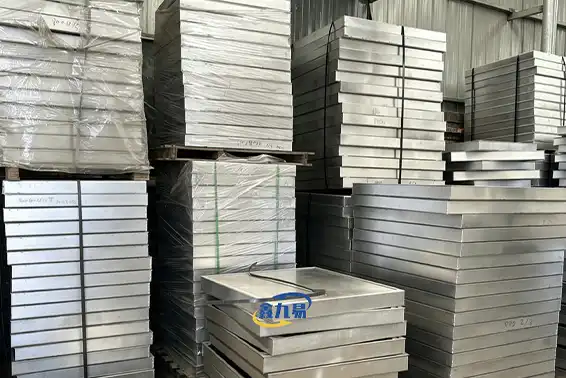
304 vs. 316 Stainless Steel Recessed Manhole Covers: Which One Is More Cost-Effective?
When procurement managers and project engineers face the decision between 304 and 316 stainless steel recessed manhole covers, the choice extends far beyond the initial purchase price. The Stainless Steel Recessed Manhole Cover you select today shapes maintenance budgets, safety compliance records, and aesthetic integrity for decades to come. Understanding which grade offers genuine cost-effectiveness requires evaluating corrosion resistance in your specific environment, lifecycle maintenance demands, and total ownership expenses rather than focusing solely on upfront expenditure.

Understanding Stainless Steel Recessed Manhole Covers
Stainless Steel Recessed Manhole Covers are a clever improvement in the way infrastructure is designed because they meet both practical and esthetic needs at the same time. These special utility access points have an inset tray design that can hold different types of infill materials. This lets the cover surface fit in with the sidewalks, tiles, or artistic finishes around it.
What Makes Recessed Covers Different
Traditional flush-mounted designs make breaks in the surface that can be seen. Stainless Steel Recessed Manhole Covers, on the other hand, have an adjustable-depth tray built into their frame structure. With this engineering method, project teams can create utility access points that are completely invisible, protect the building's integrity, and allow reliable access to underground pipeline networks. The recessed design gets rid of the noticeable "patch" look that older cast iron installations have, which is especially useful in high-traffic business areas and high-end home projects.
Core Applications Across Infrastructure Projects
Infrastructure players use these entry solutions in a range of situations that need to be durable and not draw attention to themselves. They are used by municipal road systems to get to sewage, stormwater, potable water supplies, electrical conduit, telecommunications infrastructure, natural gas distribution networks, and district heating networks. It is helpful for commercial plazas and stores to be able to keep the look of luxury flooring while still making sure that repair workers can easily access underground utility systems. These Stainless Steel Recessed Manhole Covers are used in public parks and landscaped gardens to keep the design of colorful ground patterns consistent. High-end housing projects like how the units protect underground services without taking away from the beauty of the courtyard or pool deck.
Material Engineering Advantages
Building with stainless steel has clear performance benefits over using other materials. The metal is naturally resistant to oxidation, which keeps its structure from breaking down in wet settings like cast iron options do. Dimensional stability under temperature cycles keeps the integrity of the seal and stops it from twisting, which can cause trips and let contaminants in. The good strength-to-weight ratio makes it easier to install and meets strict load classification requirements for areas with heavy vehicle traffic to areas with pedestrian traffic.
Material Comparison: 304 vs. 316 Stainless Steel
The main difference between these two types of austenitic stainless steel affects how well they work and how much they are worth in utility access applications over the long term. The choice of material has a direct effect on how corrosion acts, how long a structure lasts, and how often it needs to be maintained under different exposure conditions.
Chemical Composition and Corrosion Resistance
About 18% of Grade 304 stainless steel is chromium and 8% is nickel. These two metals combine to form an inactive oxide layer that effectively protects Stainless steel decorative manhole cover against rust in the atmosphere. This mixture works well for most general-purpose tasks where chloride exposure is low. Grade 316 has the same amount of chromium and nickel as Grade 304, plus an extra 2% to 3% molybdenum. This makes it much more resistant to pitting and crevice corrosion in chloride-rich settings. This molybdenum addition is very important for sites near the coast, places where salt is used to melt ice, and chemical processing plants.
The molybdenum in 316 metal makes it better at blocking violent ions that get thru the passive chromium oxide layer. This stops the localized corrosion that causes structures to break. In lab tests using salt spray that meet ASTM B117 standards, specimens made of 316 show a significantly longer time to first rust compared to specimens made of 304 that were exposed to the same conditions.
Mechanical Properties and Load Performance
The tensile strength of both grades is about the same, ranging from 515 to 620 MPa depending on how cold they are worked and how they are heated. When the frame width and structure geometry stay the same, the yield strength numbers for annealed materials are similar, which means they can support the same types of loads. The slight edge that 316 has in tensile properties under certain processing conditions doesn't usually affect the choice of access cover because load capacity is based on geometric design rather than small differences in material strength. When the grades are annealed, there isn't much difference in their hardness, but both materials respond well to cold working methods that make the surface more resistant to wear. In particular, this trait is important for Stainless Steel Recessed Manhole Covers that are used by wheeled vehicles, since the surface gets worn down and dented over time.
Environmental Suitability Distinctions
Temperature performance isn't very different between grades; both keep their structure intact across the temperature ranges that are common in infrastructure uses. The most important difference comes up in situations involving chemical exposure. The Grade 304 works well in clean air, freshwater contact, and most neutral-pH soil environments. However, the Grade 316 is needed when installations are constantly exposed to marine air, sulfur-containing industrial fallout, de-icing chemical runoff, or conditions below the ground where chloride levels are high due to groundwater or soil composition. Knowing the specific environmental stressors at your site allows for accurate material matching, which keeps things from breaking down too soon and saves money on over-specification where conditions are milder.
Cost Effectiveness Analysis of 304 vs. 316 Stainless Steel Manhole Covers
True cost-effectiveness goes beyond the price of the original purchase and includes the whole ownership experience, from setting up the product to replacing it in the future. It is better for smart buying strategies to look at material choice thru the lens of total cost of ownership instead of just comparing prices.
Initial Investment Considerations
Grade 316 stainless steel costs more than grade 304 because it has more molybdenum in it, which makes the raw material more expensive and makes it a little harder to work with. This difference usually means a meaningful percentage rise that purchasing teams notice right away. When buying in bulk for projects that span multiple sites, unit cost effects can be lessened, but the basic difference in material costs stays the same no matter how much you order. When Stainless Steel Recessed Manhole Covers are chosen for big infrastructure projects, this small difference in cost can add up to hundreds of units, which can cause big budget line changes between material grades. During the design phase, project financial planning needs to take these differences into account so that value engineering tasks later on don't hurt performance.
Maintenance Cost Projections
Long-term maintenance costs are the hidden cost that often cancels out the price advantages at first. When Grade 304 is installed in an acidic environment, it needs to be inspected, treated on a regular basis, and eventually replaced before the pitting gets bad enough to damage the structure. Each maintenance task requires workers, slows down work on the site, and costs money for materials like repair compounds and protection coats. When Grade 316 installations are put in similarly harsh environments, upkeep gaps are usually much longer, which means that inspections happen less often and preventative coatings are not applied. The material's high pitting resistance stops the localized corrosion that forces early unit replacement, making the service life much longer than with 304 alternatives in harsh conditions. Quantifying these avoided maintenance events over the typical lifecycles of infrastructure assets often shows that the higher initial investment in 316 material pays off in lower costs over the lifecycle.
Service Life and Replacement Economics
When you look at infrastructure assets over multiple decades of planning, you can see how material lifetime affects the total cost of ownership. In a coastal area, a Stainless Steel Recessed Manhole Cover made of 304 that needs to be replaced every fifteen years doubles the effective unit cost when you add up the costs of removal, disposal, and reinstallation to the cost of the replacement unit itself. Even tho it cost more at first, a 316 option that works consistently for thirty years or more in the same conditions actually costs less per year of service. There are secret costs to replacement tasks that go beyond the cost of materials and labor. When entry to the site is restricted, it affects operations nearby, managing traffic during road works takes time and money, and coordinating with utility outage windows makes things more difficult. By choosing the right materials, you can extend the service life and get rid of these ongoing costs, which can save you a lot of money that procurement spreadsheets that only look at the initial price don't see.
How to Choose the Right Stainless Steel Grade for Your Manhole Covers?
When choosing materials, there should be a methodical process for comparing product specs to the conditions at the place, the needs of operations, and the rules that need to be followed. This organized method stops both not specifying enough, which can cause the system to fail early, and specifying too much, which loses money and time without improving performance.
Environmental Exposure Assessment
Initialize by describing the physical and chemical surroundings of each installation site. Take into account the weather, such as being close to the ocean, where the salty air can cause corrosion. Check the properties of the groundwater if the Stainless Steel Recessed Manhole Covers will be submerged in or regularly come into touch with salty water below the surface. Look at the chemistry of surface runoff, especially in places that use chemicals to melt snow and ice on the roads in the winter. In industrial areas, airborne pollutants like sulfur dioxide or chlorine chemicals can speed up the rusting process. Geotechnical reports should be used to record the chemistry of the soil, including the amount of salt and pH levels that affect the rate of decay below the surface. People who live in cities near factories need to pay extra attention to the pollution buildup in the air that makes acidic surface films. This environmental survey gives us the information we need to choose materials that are safe and appropriate for the level of contact.
Load Classification and Traffic Analysis
Find out what load rates are needed based on where the installation will go and how traffic is expected to flow. Under EN 124 standards, pedestrian areas need Class A15 or B125 ratings, while vehicle entry areas need Class C250 or D400 ratings, based on the amount of traffic and the weight of the vehicles. Correctly identifying the load makes sure that the structure is strong enough and that the material isn't too heavy, which adds costs without being needed. Look at more than just static weight numbers when you look at dynamic loading features. Heavy vehicles going thru an area over and over again create fatigue stresses that affect the structure's long-term strength. During the site development phases, impact loads from delivery vehicles and construction equipment may be higher than normal operational loads. This needs to be taken into account when developing the specifications.
Supplier Qualification and Product Certification
Partner choice has a big effect on how the Stainless Steel Recessed Manhole Cover project turns out, going beyond decisions about material grades. Check the company's ability to make things, including its precise production equipment that makes sure the sizes are accurate within certain limits. Check quality control systems by looking at ISO 9001 certification and quality assurance standards that are specific to the business. Ask for test results on the material that show that its chemistry make-up meets the ASTM or EN standards for that grade. Check to see if the product can be customized to fit odd-shaped spaces, special load needs, or unusual site conditions. Manufacturing flexibility lets you find the best solutions for tough installations where standard catalog products don't work. Check the reliability of delivery by calling references from similar projects. Consistency in the supply chain keeps schedules from getting thrown off during important construction phases, which can cost a lot of money.
Installation, Maintenance, and Longevity Tips
To get the most out of an asset, you need to pay attention to how it is installed and how it is maintained over its entire service life. Realized cost-effectiveness is affected by these operating factors just as much as the initial decisions about which materials to use.
Installation Best Practices
For a proper assembly to start, the rough hole must be the right size and the substrate must be level. When putting up the frame, it needs to be perfectly lined up with the end surface elevation, taking into account the width of the infill material and any bedding layers that are under the artistic finishes. Anchoring the frame securely to the structure around it stops it from settling or moving side to side under the weight of traffic, which would make the surfaces uneven and speed up wear. When installing a seal, it's important to be very careful because the right way to squeeze the gasket makes sure that the seal is airtight and stops smells from escaping from sewer entry points. To get even seal compression without deformation, make sure you follow the manufacturer's torque recommendations when tightening the adjustment bolts. Before you finish placing the infill, make sure that the Stainless Steel Recessed Manhole Covers' lifting mechanisms work easily and tightly connect with the extraction tools.
Maintenance Protocols for Extended Service
Set up regular inspection times that work for your installation and the amount of traffic. Visual review once a year is enough for most walking uses in mild environments. However, evaluation every three months is recommended for places with heavy traffic or corrosive exposure. When you do an inspection, you should write down what the surface looks like, how well the lifting device works, and how stable the frame is. Cleaning with water and light soap gets rid of built-up dirt and grime that could otherwise speed up rusting in certain areas. Do not use strong chemical cleaners or rough tools on stainless steel because they can damage the inactive oxide layer that protects the surface. Fix any damage to the materials that make up the foundation right away to stop water from getting in and causing damage during freeze-thaw cycles in cold places.
Recognizing Service Life Indicators
Keep an eye out for danger signs that could mean there are problems with the service that need your help. Surface discoloration or stains could be a sign that rust is starting, which means the item needs to be looked at more closely and maybe even tested for strength. If the frame moves loosely or there are gaps between it and the pavement around it, it means that the structure has settled or an anchor has failed, which needs to be fixed. To keep the environment clean, damaged or squished seals that make odor control less effective need to be replaced. Write down these observations in a structured way so that you can find patterns that point to faster wear and tear or problems that keep happening in more than one unit. This information helps make choices about future specifications and the best use of support resources across all infrastructure portfolios.
Conclusion
Ultimately, the choice between 304 and 316 Stainless Steel Recessed Manhole Covers comes down to how well the properties of each material fit your needs in terms of exposure to the environment, traffic, and lifetime cost goals. In normal urban settings with little corrosive exposure, Grade 304 gives great performance and value for money. When chloride exposure, industrial atmospheres, or coastal conditions fear fast corrosion, Grade 316 becomes the most cost-effective choice. Successful procurement strategies look at the total ownership costs instead of just the initial price. This is because they know that choosing the right materials will save money on replacement costs in the long run while also ensuring safety and esthetic integrity over many years of use.
FAQ
Can 304 stainless steel covers perform adequately in coastal regions?
It's not recommended to put Stainless Steel Recessed Manhole Covers made of 304 in direct contact with salty air near the coast, where they will be constantly corroded. Installations that are within a few miles of the shore usually experience faster cracking, which greatly reduces the service life. Grade 316 standard works better and costs less in these conditions, so you don't have to pay for replacements too soon.
Do 304 and 316 grades require different installation techniques?
The installation process is pretty much the same for all grades because the materials are similarly stable in terms of size and strength. No matter what grade of stainless steel is chosen, the right way to anchor the frame, install the seal, and place the infill material is the same.
How does material grade selection affect load-bearing capacity?
The main things that determine load capacity are the shape of the frame, the thickness of the material, and the way the structure is built, not the difference between 304 and 316 metals. Both grades have similar mechanical strengths, which means they can handle the same loads as long as the frame design stays the same. Instead of looking for changes in power, material selection should be based on how well it resists corrosion in the surroundings.
What maintenance differences exist between the two stainless steel grades?
Because they are less likely to pit, Grade 316 systems usually need to be fixed less often in corrosive conditions. In harsh environments, Grade 304 covers may need to be treated with a protective coating or coated on a regular basis. This can add to the cost of upkeep work and materials over the asset's lifetime.
Partner with Xinjiuyi for Optimized Infrastructure Access Solutions
Hebei Xinjiuyi Construction Technology Co., Ltd. makes precision-engineered Stainless Steel Recessed Manhole Covers in grades 304 and 316. These are used in infrastructure projects that need reliable utility access and good looks. Our manufacturing facility in Cangzhou uses cutting-edge fabrication technology to keep measurements within ±0.5 mm, so they will fit perfectly with your building's finishes. As an experienced maker of Stainless Steel Recessed Manhole Covers, we offer full customization services that include non-standard sizes, special load classes, and custom environmental needs. Our engineering team helps with developing specifications by doing a thorough site survey and suggesting materials that will work best in your unique exposure conditions. When you buy in bulk, you get better prices and more organized delivery plans that keep your projects on track. Get in touch with our technology experts at global@xjy8.com to talk about your future infrastructure needs. We offer full support, from the initial design advice to installation help. Our ISO 9001, ISO 45001, and ISO 14001 certifications show that we are dedicated to quality, safety, and environmental responsibility. Visit xjy8.com to see our full selection of construction safety solutions and learn how choosing the right materials can add long-term value to your infrastructure projects.
References
1. Davis, J.R. (2000). Corrosion of Stainless Steels: Understanding, Performance, and Prevention. ASM International Materials Park, Ohio.
2. Sedriks, A.J. (1996). Corrosion Resistance of Stainless Steels and Nickel Alloys. Wiley-Interscience Publications, New York.
3. McGuire, M.F. (2008). Stainless Steels for Design Engineers. ASM International, Materials Park, Ohio.
4. Beddoes, J. and Parr, J.G. (1999). Introduction to Stainless Steels: Third Edition. ASM International, Materials Park, Ohio.
5. European Committee for Standardization (2015). EN 124: Gully Tops and Manhole Tops for Vehicular and Pedestrian Areas - Design Requirements, Type Testing, Marking, Quality Control.
6. ASTM International (2020). ASTM A240/A240M: Standard Specification for Chromium and Chromium-Nickel Stainless Steel Plate, Sheet, and Strip for Pressure Vessels and for General Applications.
Elevator Shaft Work Platform vs. Traditional Scaffolding: Safety, Load Capacity, and Efficiency Comparison
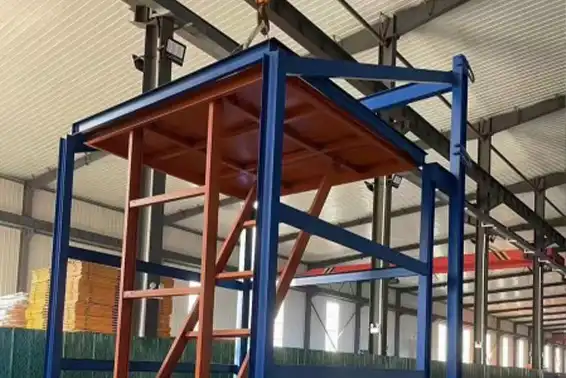
When planning high-rise construction or elevator installation projects, procurement managers and safety officers face a critical decision: should they rely on traditional scaffolding or invest in specialized elevator shaft work platforms? The answer directly influences project timelines, worker safety, and overall operational costs. An Elevator Shaft Work Platform is a modular, engineered access system specifically designed for the confined vertical environment of hoistways, offering integrated fall protection, superior load distribution, and rapid deployment capabilities that traditional tube-and-coupler scaffolding simply cannot match in these demanding spaces.

Understanding Elevator Shaft Work Platforms and Traditional Scaffolding
The main difference between these two systems is how they were designed and where they are meant to be used.
What Defines an Elevator Shaft Work Platform?
An Elevator Shaft Work Platform made for vertical shaft settings gives workers a stable place to work, a safe place to stand, and full fall safety in small spaces. These platforms use modular standardization so that they can be recycled over and over at different job places. We at Hebei Xinjiuyi Construction Technology Co., Ltd. make these platforms with load-bearing frames made from I-beams, thicker rectangular tubes, and channel steels. This makes sure that the structure is stable and doesn't bend when up to 1,500 kg is put on it. The flexible support design makes it easy to quickly change the width of the shaft to any size, usually between 1.5 meters and over 4 meters. Because they can be used in different ways, they are perfect for the edges of high-rise buildings, the layers where construction elevators unload, and the spots where podiums and main buildings meet.
Traditional Scaffolding Components and Limitations
Traditional scaffolding systems use tubes, couplers, and logs that are linked to each other and put together on-site to make temporary buildings for working. While these devices work well on the outside of buildings and in open areas, they have a lot of problems when used in elevator shafts. The narrow, vertical shape needs to be put together by hand, which puts people at risk of falling for a long time during installation. Pipe-and-clamp configurations don't always have the precise size control needed for tight spaces. This makes connections less stable and less predictable when it comes to load. Assembling things takes a lot of time and skilled workers, which has an effect on project plans and labor costs.

Material and Construction Method Differences
Precision manufacturing is used to make Elevator shaft operation platforms, and joints are welded in the factory and tested without damaging them. Key nodes get full welding that is stronger, and all weld joints are ground smooth and burr-free to get rid of the risk of bumps and scratches. Our high-temperature baking paint finish is better at stopping rust and corrosion, which means it will last up to 20 years longer. Normal scaffolding, on the other hand, relies on field links that aren't always good because it depends on how skilled the builder is. Repeatedly putting things together and taking them apart weakens the connections over time, so they need to be inspected and replaced often.
Safety Comparison: Elevator Shaft Work Platforms vs. Traditional Scaffolding
In high-altitude work environments, safety performance is what separates good equipment from truly protective solutions.
Compliance Standards and Inspection Protocols
Elevator Shaft Work Platforms of today have to meet strict international standards, such as OSHA 1926 Subpart L and EN 1808 for hanging access tools. At Xinjiuyi, our platforms are made using the ISO9001, ISO45001, and ISO14001 certification systems. This makes sure that we have strict quality control, protect workers' health, and care for the environment. As a result of these standards, the equipment must be carefully checked by qualified individuals every six months and also be functionally checked every day before it is used. There are different rules for traditional platforms that don't always take into account the difficulties of working at heights, especially when it comes to staying stable when moving side to side in small areas.
Integrated Fall Protection Features
Every Elevator Shaft Work Platform we make comes with guardrails, toe boards, and other safety features that are built in at the workshop. All of these parts work together to make a safe place to work in high areas where one mistake could be very bad. The anti-slip steel checkered plate surface (1.5 mm thick) keeps its grip even when the shaft is wet. The perimeter security stays the same no matter how skilled the worker is. This is different from scaffolding, where installing guardrails is a separate step that is often rushed or done wrong because of time constraints.
Instability Risks in Scaffolding Systems
There are several reasons why scaffolding inside pits isn't stable. Because shaft walls don't have many side support points, vertical standards are put under cantilever stress. If the base plates aren't perfectly level, uneven loading during material handling can cause the whole structure to move. Connection slippage at couplers is still a problem, especially when vibrations from nearby building work make connections loose. Accident data from the industry consistently shows that falls from scaffolding are the main cause of construction deaths. Working in confined vertical spaces is more dangerous than working outside.
Real-World Safety Performance
When dedicated Elevator Shaft Work Platforms are used, construction safety officers in charge of high-rise projects report a measurable decrease in the number of near-miss incidents. The modular design gets rid of the chance of mistakes that come with putting things together in the field. When workers are standing on a platform that was designed to fit the shaft's dimensions, they feel more confident doing precise jobs like aligning guide rails. Don't forget that strong, obvious safety walls have a positive effect on people's mental health, which directly affects the quality and speed of work.
Load Capacity and Structural Efficiency Analysis
Productivity in shaft work depends on how well workers, tools, and supplies can be supported at the same time.
Engineered Load Ratings for Shaft Platforms
Our Elevator Shaft Work Platforms have been tested and proven to hold up to 1,500 kg of weight, with static and dynamic loads of 125% and 110% of their rated capacity, respectively. The structure's weight is spread out evenly by the load-bearing frame, which is made from 100mm channel steel and 50mm × 50mm square tubes with 2.0mm wall thickness. This way of building takes into account both the static load of stored materials and the dynamic forces that come from workers moving around and using tools. Because we offer customization, we can change the sizes and capacities to fit specific needs, like when you're putting in heavy guide rails in a freight elevator shaft or doing delicate wiring in a residential building.
Scaffolding Load Limitations
Manufacturers of scaffolding give maximum load ratings, but those values can only be met if the scaffolding is put together and set up correctly. In shaft applications, there aren't as many ways to brace as there are with external scaffolding, which makes the structure less stable when heavy loads are applied. Uneven load distribution, which happens when a lot of materials are in one place, makes stress points that regular support wasn't made to handle. The vertical load line thru the couplers adds weak spots that weren't there in welded platform supports.
Space Optimization in Confined Environments
Elevator Shaft Work Platforms make the most of limited space to make it easier to work. Because the dimensions are so accurate, the platform only takes up the space it needs to, leaving room for moving things and getting out in case of an emergency. For standards and ledgers, traditional scaffolding needs extra width, which limits the already small work area. This efficient use of space means that workers can get to their jobs faster and there are fewer obstacles during the installation of equipment.
Operational Efficiency and Cost Considerations
When you look at installation speed, maintenance needs, and lifecycle value, you can figure out the total cost of ownership.
Installation Time and Labor Requirements
With our flexible Elevator Shaft Work Platforms, your team can put them together completely without having to weld or cut anything on-site. Standardized parts can fit thru standard doorways, which makes moving them to the work level easier. A normal platform setup takes two workers about 30 minutes, while covering the same area with scaffolding would take several hours. This time savings adds up over multiple projects, especially for contractors who are in charge of several high-rise sites at the same time. The quick deployment also means that follow-on deals can be made earlier, which shortens the total project schedule.
Maintenance and Lifecycle Cost Analysis
Our Elevator Shaft Work Platforms last 20 years because we choose the best materials and treat the surfaces well. When used on scaffolding parts, high-temperature baking paint or powder coating with baking gives them much better rust protection than basic galvanization. The inspection intervals stay simple: visual checks for damage to the surface and functional tests of the mechanisms that make adjustments. For scaffolding to work, worn tubes, broken couplers, and deteriorating planks need to be replaced all the time. The cost savings of purpose-built platforms become clear when you look at how often they need to be replaced, how much it costs to store them, and how much it costs to check them over a number of years.
These operational factors are very important when procurement managers look at supplier relationships. The lower cost of upkeep and longer replacement processes free up money for other projects while keeping the safety performance of all of your equipment the same.
Flexibility and Adaptability Advantages
When project needs change, equipment has to be able to adapt to those changes. Our Elevator Shaft Work Platforms' telescopic design lets you change their height from the standard 2,850 mm to whatever the project needs. Different shaft sizes can be accommodated by width changes that don't need any extra parts. This modularity makes it possible to use the same parts over and over again in a wide range of situations, from new construction to updating elevators in buildings that are already occupied where damage is limited. Adding more parts to traditional scaffolding makes it more flexible, but each change in design takes skilled work and adds new connection points that need to be inspected.
Procurement Insights for Elevator Shaft Work Platforms and Scaffolding
To make smart decisions about equipment, you need to know what sets reliable suppliers apart from those who only offer adequate solutions.
Evaluating Supplier Capabilities and Support
When looking for Elevator Shaft Work Platform equipment, the main ways to tell if a provider is reliable are by looking at their manufacturing capacity and quality processes. Look for ISO approval that covers guidelines for quality management, health and safety at work, and the environment. The Cangzhou plant of Xinjiuyi blends cutting-edge manufacturing technology with well-established supply chain systems. This gives the company the large-scale production capacity it needs for projects that span multiple sites. It's also important to know if the provider can provide thorough renderings and on-demand design solutions before production starts. Our professional technical service before the sale makes sure that the equipment you get is exactly what you need for your project, whether it's a standard configuration or a fully customized solution.
Critical Product Selection Factors
Look at more than just the basic load capacity specs. Look at the details that show real engineering rigor. Zero-defect bonding is guarantyd by ultrasonic or magnetic particle screening of key weld joints that doesn't damage the weld itself. Testing with salt spray according to ASTM B117 proves that the surface finish will last in acidic conditions. Test papers should come with the tuning of safety devices, especially overspeed controls and safety gear gripping forces. Checking the flexible mechanism's dimensional tolerances makes sure it works smoothly when it's under load. These technical factors have a direct effect on how well the field works and how safe the workers are.
Purchasing Options and Logistics
Depending on how long a project takes and how often equipment is used, procurement teams have to balance acquisition models. For general builders working on multiple high-rise projects at once, buying things gives them the best return, especially since they can be used on different sites and last for 20 years. Owned machinery can be used for a variety of projects because its sizes and capacities can be changed. For international and large orders, you need suppliers who have a track record of reliable logistics and delivery times. Our one-stop supply approach includes design advice, precision manufacturing, and on-site guidance, so deployment goes smoothly no matter where the project is located.
Warranty terms and support after the sale are important parts of a supplier's value. When questions come up, equipment that works in harsh shaft settings needs quick expert help. The combination of strong building and easy access to help makes your equipment last longer and keep the project going.
Conclusion
Elevator Shaft Work Platforms and regular platforms are very different in how safe they are, how much weight they can hold, and how efficiently they can be used. When working in tight areas, standard scaffolding isn't as good as purpose-built platforms because they don't offer fall protection, load sharing, or quick deployment. The total cost of ownership is lower for platforms because they last longer, need less maintenance, and don't need to be put together. More and more, procurement professionals who care about worker safety, shortening project timelines, and long-term value are realizing that specialized tools made for specific tasks works better than general-purpose solutions that have been modified to work in those situations. Investing in the right shaft access tools pays off in the form of lower accident rates, faster project completion, and a better image for the contractor.
FAQ
How does a shaft platform adapt to irregular hoistway dimensions?
The Elevator Shaft Work Platform can stay level and safe even in shafts with a lot of vertical deviation or uneven geometry thanks to its independent telescopic outriggers and changeable wall-tie brackets. The method for adjusting takes into account changes in dimensions without affecting the structure's strength or load capacity.
What happens during a power failure on motorized platforms?
All powered Elevator Shaft Work Platforms come with a manual descent button and extra mechanical locking pins that keep the machine from moving without being controlled. These two sets of safety systems work together to make sure that technicians can safely leave at the nearest landing, even if the power goes out.
Can one platform serve multiple shafts on the same construction site?
The flexible design lets the Elevator Shaft Work Platform be quickly taken apart and put back together, which makes it very easy to move from one hoistway to another. This gives workers in charge of multiple-building projects the freedom to get the most out of their tools and their money.
What certifications ensure regulatory compliance?
If you are working in EU markets, make sure that the Elevator Shaft Work Platform you use has CE marking under the Machinery Directive 2006/42/EC and EN 1808 approval. Projects in the United States must follow OSHA 1926 Subpart L. These licenses show that the company follows safety standards that are known to be good.
Partner with Xinjiuyi for Superior Shaft Access Solutions
With engineering-grade Elevator Shaft Work Platform options, Hebei Xinjiuyi Construction Technology Co., Ltd. is ready to help you with your high-rise building and elevator installation projects. As an expert Elevator Shaft Work Platform maker, we use ISO-certified quality systems to make sure that our products last for 20 years and can be fully customized to fit your needs. Our factory in Cangzhou has the production capacity to meet your project deadlines, and our expert team helps with the design to make sure it fits perfectly with your shaft measurements and load needs. Get in touch with us at global@xjy8.com to talk about how our modular platforms can make your project safer, move it along faster, and save you money compared to traditional access methods. You can look at all of our building safety options at xjy8.com.
References
1. American Society of Safety Professionals (2021). "Fall Protection Systems in Vertical Construction Environments: Engineering Controls and Performance Standards."
2. Construction Industry Research and Information Association (2020). "Temporary Works Equipment for Confined Vertical Spaces: Safety and Structural Performance Guidelines."
3. International Labour Organization (2019). "Safety and Health in Construction: Comparative Analysis of Access Equipment in High-Rise Building Projects."
4. National Institute for Occupational Safety and Health (2022). "Evaluation of Engineering Controls for Fall Prevention in Elevator Shaft Construction."
5. European Committee for Standardization (2018). "EN 1808:2015+A1:2018 Safety Requirements for Suspended Access Equipment: Design, Testing and Examination."
6. Occupational Safety and Health Administration (2020). "Construction Industry Compliance Assistance: Scaffolding and Working Platforms in Confined Vertical Spaces."
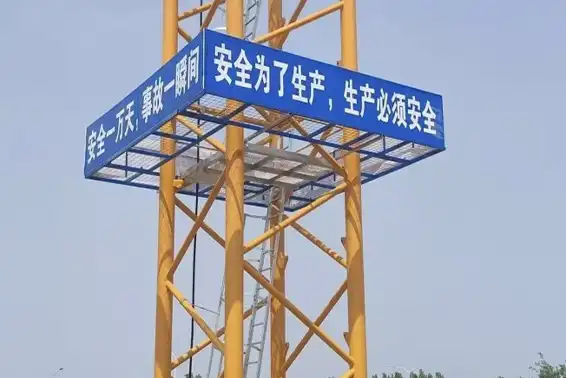
How to Choose Tower Crane Anti-Climbing Safety Devices and Gangways
Choosing the right tower crane access and anti-climbing protection systems isn't just about checking boxes—it's about protecting lives and ensuring your project meets rigorous safety standards. A properly designed Tower Crane Access Gangway provides operators with a secure, weather-resistant passage between building structures and crane cabs, dramatically reducing fall risks during shift changes and emergency evacuations. When you pair these access solutions with effective anti-climbing barriers, you create a comprehensive safety perimeter that prevents unauthorized access while facilitating compliant, efficient crane operations. This guide walks procurement managers, safety officers, and project engineers through the critical selection factors that separate adequate solutions from exceptional ones.
Understanding Tower Crane Anti-Climbing Safety Devices and Gangways
Every construction site has the same problem: how do we keep workers safe from falling while also keeping unauthorized people from getting to dangerous equipment that is high up? Both of these issues are dealt with at the same time by tower crane safety systems, which include both engineered access platforms and deterrent barriers.
The Dual Purpose of Crane Safety Systems
Tower Crane Access Gangways are very important for getting from building floors or structures on the ground to the operating rooms of tower cranes. These walkways need to be able to stand up to wind loads, hold the weight of workers and equipment, and stay stable when the weather is bad. Anti-climbing guards, on the other hand, keep people who aren't trained from trying to climb crane masts, which can cause serious accidents and project risk.
OSHA data shows that falls are still the biggest reason people die on the job in construction, making up about one-third of all deaths in the field. Access systems that are put correctly lower this risk by getting rid of improvised ways to climb and making paths that can be predicted and checked.
Regulatory Standards You Must Consider
International rules set minimum standards for how well crane access equipment must work. Safe access to tower cranes is required by OSHA 1926.1423 which lists guardrail heights, load capacities, and surface treatments. Working scaffolds and access structures are covered by the European standard EN 12811, and tower crane design principles that determine accessory compatibility are covered by ISO 23815.
Compliance isn't just about staying out of trouble—it shows that you're doing your part, which saves your business during insurance claims and court reviews. Manufacturers who follow ISO 9001 quality management and ISO 45001 workplace health standards must have certified tools. This is proof that they care about safety.
Core Criteria for Choosing Tower Crane Access Gangways and Safety Devices
To choose the best crane access option, you have to weigh a lot of technical factors against the conditions of your place and your business's needs.
Essential Safety Features That Cannot Be Compromised
When looking at Tower Crane Anti-climbing Guard, three things are most important for keeping workers safe. The walking surface needs to be non-slip, which can be done with steel grating with raised patterns or checkered plates that have enough texture. Even a small amount of moisture from morning condensation can make situations dangerous if you don't have good footing.
The second thing that can't be changed is the guardrails. Designs that work well have two levels of railings: a top rail that is 1.2 meters high and a mid-level rail that is halfway down. This set-up stops both falls and the dangerous opening that lets workers slip under the barriers. With smooth finishes and welded construction, there are no snag places where clothes or tools could get caught.
Strengthening against sway is the third important part. Wind exposure and operational loads cause tower cranes to move side to side. Access platforms must have diagonal support or tension lines that keep the structure stable even when the crane moves. Without this balance, workers feel uncomfortable motion that makes them more likely to fall and lessens their trust in the equipment.
Material Selection and Longevity Considerations
Professional-grade Tower Crane Access Gangway construction is mostly made of high-strength galvanized steel for good reasons. During the galvanization process, a protective zinc coating is applied. This coating will not rust for 15 to 20 years in normal construction settings, and it will last even longer if powder-coated finishes are added. The main structural parts are usually made of Q355B steel, with rectangular tube shapes that are 50mm × 50mm and walls that are 2.0mm thick. These tubes have a high load-bearing capacity without being too heavy.
Aluminum alloys are an option for projects that need to be portable and can be moved quickly. These lighter materials make installation easier with less heavy moving gear and lower the cost of shipping. On the other hand, the materials are more expensive and the product might not last as long in harsh chemical or marine environments because aluminum oxidizes faster than galvanized steel.
Compatibility with Your Existing Equipment
Your tower cranes are big expenses, so the Tower Crane Access Gangway equipment needs to fit in perfectly without needing to be changed to the structure. Gangways with adjustable connection points are made by reputable companies that can work with top crane brands like Potain, Liebherr, Zoomlion, and Comansa. Custom adapter plates fill in the gaps between normal gangway fixing points and certain mast section designs.
This benefit of flexibility is amplified by modular design. Modular systems let you change the layout of current parts instead of building whole new access structures when changing cranes or moving equipment from one project to another. This method cuts down on long-term spending costs while keeping safety standards the same for all of your tools.
Comparative Analysis: Selecting the Best Solution for Your Site
Knowing the practical differences between access system designs helps you make smart buying decisions that are in line with your business's needs.
Access Gangways Versus Traditional Ladder Systems
Traditional vertical ladders with cage guards are the standard way to get to a crane. They have small areas and are easy to set up. But they put physical demands on workers that make them tired. This is especially true for older workers or operators who have to carry tools and safety gear. Climbing 30 to 50 meters up and down several times a day raises the risk of damage from both falls and strains.
This experience is changed by Tower Crane Access Gangways that are flat or gently sloped. Workers move along the access road with little effort, keeping their eyes on the situation instead of just focusing on their grip and balance. This means that workers will be able to think more clearly when they get to their desks, which is good for safety in more ways than one. The 800mm platforms are bigger, so they can handle two-way traffic and moving tools that can't be done with ladders.
Fixed Versus Modular Gangway Designs
Permanently welded Tower Crane Access Gangways provide the highest level of structural strength and make quality control easier because every joint is inspected during production, so there are no changes that need to be made during field assembly. These systems work well for long-term installations where the crane positions stay the same during the whole project. The one-piece construction gets rid of any weak spots that could be caused by bolted connections and makes load path analysis easier for engineers to do during reviews.
Modular options put mobility first by using bolt-together pieces that are 4 to 6 meters long. As the building process goes on and crane positions change, you can change the lengths and angles of the gangways without making any new tools. When properly torqued, high-strength Grade 8.8 or 10.9 nuts provide connection stability that is the same as welding. This freedom is very helpful for big projects that need to move cranes more than once or have work that happens in stages over a period of years.
Your project background is what makes the difference. Fixed gangways work best for single-crane residential towers with set plans. However, flexible systems work better for infrastructure projects with bridge pylons or industrial facilities with changing access needs, even tho they cost a little more at first.
Procurement Considerations for B2B Buyers
Finding qualified suppliers and getting good terms are what separates successful buying from mistakes that cost a lot of money and put safety and budgets at risk.
Evaluating Manufacturer Credentials and Reputation
Verification of certification is the first step in choosing a supplier. The ISO 9001 quality management certification shows that production is controlled in a planned way, and the ISO 45001 workplace health standards show that workers are protected throughout the manufacturing process. Instead of believing what someone says, ask for proof. Real certifications have registration numbers that can be checked against other databases.
The manufacturing capacity of suppliers tells you if they can meet your deadlines. Facilities that only make safety equipment have steady output compared to manufacturers that make a lot of different things and treat crane accessories as extras. During site audits or virtual walks, look at the quality of the welding tools, the ability to treat the surface, and the quality control stations that find problems before they are shipped.
Testimonials from customers give information that can't be found in technical specs alone. Talk directly to past buyers who oversaw projects of a similar size and scope in similar settings. Ask specific questions about how providers handled problems that came up during installation or customization, how quickly they responded to technical support requests, and how they made sure that deliveries were made on time.
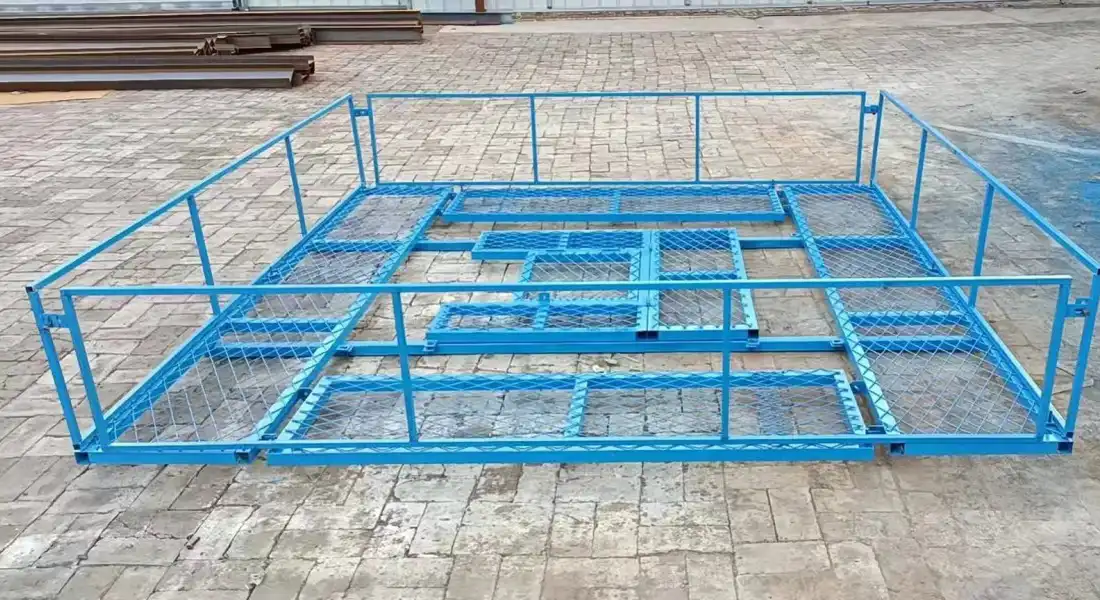
Cost Optimization Without Compromising Safety
Managing a budget means knowing more about the factors that affect costs than just the base price. Choosing the right material has a big effect on costs. Standard galvanized steel is a great deal, but powder-coated finishes or parts made of stainless steel can raise costs by 15–30%, based on the specs. Check to see if the conditions in your environment call for high-end materials or if standard treatments will do the trick.
The amount of an order gives you negotiating power. When you combine the needs of several projects into one purchase order, you can often save 10–20% compared to buying things one at a time. Long-term supply deals that lock in yearly volumes save even more money and make sure that production gets the most time during busy building seasons.
Customization raises the price of each unit, but it may lower the overall cost of the project by getting rid of the need for field modifications. Most situations can be handled with Tower Crane Access Gangways that are 4, 5, or 6 meters long. But places with strange building layouts benefit from engineered solutions that are made to fit exactly what is needed, even if they cost more at first. When considering standard and custom choices, you should figure out the total cost of installation, which should include work and the rental of tools for making changes in the field.
Installation, Maintenance, and Inspection Best Practices
It doesn't matter how good the equipment is if it isn't installed correctly and maintained in a way that keeps it safe throughout its life.
Step-by-Step Installation Guidelines
Installing a Tower Crane Access Gangway correctly starts before the tools get there. Check the load capacity and dimensions of the structural link points on both the crane mast and the building contact. Get anchor bolts, adapter plates, and lifting gear that are the right size for the gangway's weight, which is usually between 300 and 600 kg based on its length and build.
Keep the lines of communication open between the crane operators, riggers, and installation crews while they are positioning. Place lift gangways at evenly spaced lift points to stop spinning or stress buildup. Carefully line up the mounting frames and make sure that the bolt holes line up without pushing the connections. When alignment is off, stress risers are made that speed up fatigue failure under cyclic loading.
Use calibrated tools to tighten all structure bolts to the manufacturer's specs. Over-tightening can damage the threads or cause the bolt to break, while under-tightening lets the parts move and wear out. Write down the torque values and the inspector's signatures to make quality records of the installation that meet regulatory requirements and are needed for insurance purposes.
Maintenance Schedules That Extend Equipment Life
For busy building sites, maintenance should be done at least every three months. Check the walking surfaces for anti-slip patterns that are worn down. Refinish or repair any parts that have lost a lot of material. Check the links between the guardrails for any signs of damage from impact or wear and tear. Tighten any bolts that show less force, but look into why they moved instead of just retightening them without fixing the problem.
Even tho galvanization is durable, surface coatings need to be checked on from time to time. Fix any scratches or abrasions that leave bare metal showing so that rust doesn't start. Recoating once a year or twice a year greatly extends the service life, especially near the coast where salt air speeds up the breakdown.
Documentation Practices for Regulatory Compliance
Full inspection records keep your business safe during audits and investigations into incidents. Make checklists that cover all the important parts, like the condition of the walking surface, the strength of the guardrails, the links between the structures, the function of the anti-sway system, and the condition of the surface finish. Include photographic proof of the general state and any problems that were found.
Keep service logs that record all maintenance tasks, part replacements, and actions taken to fix problems. This paperwork shows that due diligence was done, showing that safety management was proactive instead of reactive after an event. The retrieval of digital records is easier during governmental inquiries, and they provide past data that can be used to find problems that keep happening and need to be fixed by redesigning the system or changing how it is used.
Conclusion
To choose the right Tower Crane Access Gangways and anti-climbing protection, you need to think carefully about safety features, material durability, regulatory compliance, and how much it will cost in the long run. With the right tools, you can keep your workers safe and make crane operations easier by creating safe, weatherproof paths of access. Procurement managers find solutions that work reliably for longer periods of time by putting structural soundness, compatibility with current equipment, and seller reliability at the top of their list of priorities. Remember that the money you spend on certified, engineered entry systems will pay off over and over again in lower accident risk, regulatory trust, and operating efficiency that cheaper options can't match.
FAQ
What safety features are most critical in tower crane gangways?
Three important safety features are non-slip walking surfaces, dual-level guardrails at 1.2 meters with mid-rails, and anti-sway strengthening. Anti-slip techniques keep your footing when it's wet, and guardrails that are in the right place keep you from falling. Anti-sway methods stop movement caused by wind, keeping the platform stable in bad weather for the Tower Crane Access Gangway.
How do I verify compliance with international safety standards?
Ask the makers for certification paperwork directly from you. This should include ISO 9001 quality management and test results for each product that show it meets OSHA 1926.1423 and EN 12811 standards. Use independent registrar sources to check license numbers. Reliable suppliers don't hesitate to give all the necessary paperwork, but evasive answers could mean that there are gaps in compliance.
Can access gangways be customized for non-standard crane models?
Engineered adapter plates and adjustable connection points make customization possible for almost any crane configuration. Give specifics like the length and width of the mast section, the pattern of the mounting bolts, and the required gangway span. Skilled makers make shop models that need to be approved before they can be made. This makes sure that the parts fit perfectly without any changes being made in the field.
Partner with Xinjiuyi for Certified Tower Crane Access Solutions
To protect your employes, you need to do more than just choose the right tools. You need to work with makers who are dedicated to safety excellence. Hebei Xinjiuyi Construction Technology Co., Ltd. offers engineered Tower Crane Access Gangway systems that are made using ISO 9001, ISO 45001, and ISO 14001 certified methods. These methods guaranty consistent quality and come with full documentation. Our flexible designs work with all major crane brands and come in lengths that can be changed from 4 to 6 meters. They are made of galvanized steel and are guarantyd to last for 15 to 20 years. Get in touch with our technical team at global@xjy8.com to talk about your project needs with experienced Tower Crane Access Gangway suppliers who know how to find the best mix between safety, business efficiency, and cost-effectiveness. We make sure that your access systems work reliably throughout the lifecycle of your project by giving you detailed engineering drawings, discounts for ordering in bulk, and ongoing support.
References
1. American Society of Civil Engineers. (2021). Crane Safety Standards and Best Practices for Construction Sites. ASCE Technical Publication Series.
2. Construction Industry Research and Information Association. (2020). Access Equipment Selection and Management for Tower Crane Operations. CIRIA Guide C785.
3. European Committee for Standardization. (2019). EN 12811: Temporary Works Equipment - Part 3: Load Testing. CEN Technical Standards.
4. Occupational Safety and Health Administration. (2022). Tower Cranes in Construction: Compliance Guide for Access and Fall Protection. U.S. Department of Labor Publication.
5. International Organization for Standardization. (2020). ISO 23815-1: Cranes - Maintenance - Part 1: General Requirements. ISO Technical Committee Standards.
6. National Institute for Occupational Safety and Health. (2021). Preventing Falls from Tower Cranes During Construction Activities. NIOSH Publication No. 2021-116.
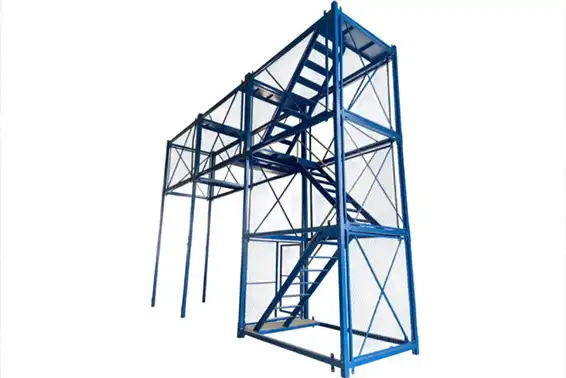
Are Ladder Cages Still Required?
Construction site managers and procurement professionals often ask whether ladder safety cages remain mandatory under current regulations. The straightforward answer depends on your project timeline and ladder installation date. Under OSHA 1910.28, fixed ladders installed before November 19, 2018, still permit traditional Construction Ladder Cage systems as compliant fall protection. However, new installations exceeding 24 feet must now integrate personal fall arrest systems or ladder safety systems. Despite regulatory evolution, ladder cages continue to serve critical roles in modern construction, offering robust enclosure protection for vertical access routes across excavation sites, bridge piers, and industrial facilities.
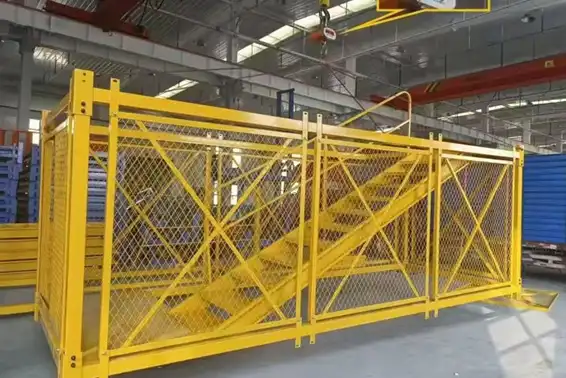
Understanding Ladder Cages and Their Role in Construction Safety
What Defines a Ladder Safety Cage System?
A ladder safety cage is a protective enclosure that goes around fixed vertical ladders. It is usually made of steel hoops and vertical bars that make a narrow climbing path. The method keeps workers from falling backward while going up or down, putting something between the hiker and the open space below. Most designs have hoops that are spaced out regularly (usually every 48 inches) and connected by vertical rails that keep the structure rigid even when it gets hit by something or wind.
Common Types Used Across Job Sites
Steel cage systems are used a lot in building because they are strong for their weight and don't rust when they are treated properly. Versions made of galvanized steel can handle tough outdoor conditions, while versions made of powder-coated steel look better in fixed placements. Aluminum metal cages are used in some specific projects where weight reduction is important, but they need to be carefully engineered to keep up the same level of protection. Modular bolt-on designs make it easy to put things together quickly on-site without the need for welding tools, which is great for projects that need to be finished quickly.
Regulatory Requirements From OSHA and International Bodies
OSHA's walking-working surfaces rule outlined ladder safety gear. ANSI A14.3 cage systems, which specify minimum clearance diameters and structural load requirements, can be maintained with ladders installed before 2018. European projects follow EN ISO 14122-4. These regulations frequently require identical safety precautions, but different regions have varying recommendations for hoop spacing and cage size. Understanding these variances is crucial when your procurement plan encompasses multiple geographic markets.
How Cages Contribute to Worker Protection?
Along with physical safety, the enclosed form gives mental security. Climbing thru caged ladders makes workers less nervous about being high up, which makes them more bold and safer in their moves. The hoop structure limits how far a worker can fall backward if they lose their balance. This stops any slips from getting worse before they happen. In contrast to harness systems, which depend on proper connection and user compliance, this passive protection works all the time without the climber having to do anything.
Are Ladder Cages Still Required? Analysis of Current Regulations and Industry Practices
Historical Evolution of OSHA Standards
Before 2017, OSHA rules said that fixed ladders longer than 20 feet had to have cages. The cage had to start 7 to 8 feet above the ground level. For decades, this way of thinking ruled industrial safety and shaped how engineers planned vertical access in factories and on building sites. The final rule from 2016 made a lot of changes. For example, it gradually required ladder safety systems or personal fall stop systems on all new installs, but it didn't change anything about cages that were already compliant.
Current Compliance Requirements
The way regulations work now makes a dual system. Installing a ladder before 2018 that meets the old cage standards is still fine without any changes, as long as they are regularly inspected to make sure they stay structurally sound. Either a ladder safety system, which is basically an improved cage with a built-in fall arrest rail, or a personal fall arrest system with belts and vertical lifelines must be built into all new fixed ladders that are longer than 24 feet. Wells and other enclosed structures follow different rules. Cages, on the other hand, may still work no matter when they were installed.
Regional Code Variations Affecting Procurement
There are times when state and local governments set standards that are tougher than the federal OSHA minimum rules. For example, California's Cal/OSHA has rules for building and general industry that procurement managers must check before choosing tools. International projects add another level of complexity. For example, building in the Middle East often follows British Standards, and in Southeast Asia, OSHA ideas may be mixed with local government rules. Your supplier should give you proof that they are in compliance with all the laws that apply.
Comparing Cages With Modern Fall Protection Alternatives
Personal fall arrest systems let you set up ladders in more ways, but workers have to be very careful to follow the rules. Before going up, climbers must properly connect their gear to the vertical safety. This is a step that some workers skip when they are pressed for time. As a middle ground, ladder safety systems combine a cage-like enclosure with a built-in fall arrest rail that automatically engages a climber's carrier device. Each method has different costs. For example, classic cages usually require less money up front, but they don't have the advanced fall-arresting features of newer systems.
The Construction Ladder Cage systems in Xinjiuyi show how old-fashioned safety can be updated to meet current needs. Our modular assemblies are made of thickened galvanized rectangular tubes with columns that are 80 mm x 80 mm and walls that are 3.0 mm thick. This gives them structural performance that goes beyond what is required by standard cages. The fully sealed protective design has anti-slip treads on the inside and 75 mm welded wire mesh on the outside. This creates two layers of fall protection that can be used for both older setups and to add extra safety to newer systems.
Real-World Adoption Trends
Many factories still use caged ladders for repair access routes where permanent safety makes sense from a working point of view. This method is especially liked by refineries, power plants, and water treatment plants because it is fail-safe and doesn't require much ongoing compliance. More and more, construction projects that need temporary ladders use modular cage sections that can be moved or reconfigured as the work goes on. This makes the best use of equipment across all phases.
Technical Insights: Dimensions, Materials, and Installation of Construction Ladder Cages
Standard Size Ranges and Customization Options
Most cage systems use standard sizes that have been used in industry for many years. Standard cage widths are between 27 and 30 inches, which is just the right amount of space for a climber while still leaving a small area for placement. Vertical parts are usually 3000 mm (10 feet) long, which means that modular stacks can reach the right heights without having to be made from scratch. Width and depth measurements of 2000 mm are common, but measurements must often be changed to fit the needs of the site.
Xinjiuyi makes ladder cage pieces that can be put together in any way you want to fit the needs of your site. Our normal sections are 3000 mm long, 2000 mm wide, and 2000 mm high, but our engineering team often changes the sizes to fit specific needs, like small excavation pits or areas where equipment can't go.
Material Selection: Steel, Aluminum, and Surface Treatments
Due to its greater tensile strength and impact protection, steel is still the most common material used to make Construction Ladder Cages. High-strength structural steel can handle the repeated stress cycles that happen a lot in construction sites where tools and material handling equipment often hit each other by accident. Hot-dip galvanizing protects against rust well in normal outdoor conditions, and the coating's thickness of more than 85 microns means it will last for decades.
Aluminum alloy cages are good for specific uses where the weight savings make up for the higher cost of the material. Aluminum doesn't rust in salty environments, which makes it useful for offshore platforms and remote communication towers. It also makes supporting structures lighter. But aluminum needs bigger section sizes to have the same strength, which could make it harder to get things thru tight spaces.
Powder coating with high-temperature baking paint over galvanized base metal is what high-end projects ask for. This two-layer defense method makes things more resistant to chemicals in places that work with harsh chemicals, and it keeps looking good throughout its useful life. The surface stays smooth and is easy to clean, which is important for places that process food and make medicines, where cleanliness rules dictate which tools can be used.
Proper Installation Procedures and Safety Checkpoints
To place a cage correctly, you must first accurately measure the host ladder and the spaces around it. Anchor points must connect to structural members that can handle the load that was given, which is usually 200 pounds of concentrated force acting in any direction. Bolt connections need the right amount of force to keep them from coming loose when the system shakes. On the other hand, if you tighten them too much, you could damage the threads or bend the bearing plates.
Xinjiuyi ladder cages have a modular bolt-connection system that lets two workers put together a whole piece with standard hand tools in less than 30 minutes. No special welding tools are needed on-site, which makes installation easier and speeds up the process even in remote areas. Each connecting point has strengthened nodes that keep them from coming loose or deforming when they're under service loads.
Maintenance and Inspection Protocols
Construction Ladder Cage weld quality should be checked visually every three months to look for cracks or separation at joints. The state of the surface layer shows whether the corrosion protection is still working or if it needs to be touched up. Bolt joints need to be retightened to the right torque levels on a regular basis. This is especially important in the first year after installation, when things settle down. Any deformation of the hoop members or vertical rails needs to be looked into right away, and it may be necessary to replace sections.
As important as physical inspection is good documentation. Keeping signed records of each check creates an audit trail that shows safety regulators and insurance companies that you did your job. Photographs of any problems that were found and the fixes that were made are useful proof of a culture of proactive upkeep.
Procurement Guide: Selecting, Buying, and Maintaining Ladder Cages for Construction Projects
Key Criteria for Supplier Selection
Facility certifications and quality management systems are ways that reliable suppliers show they can make things. If a supplier has ISO 9001 certification, it means they have established quality control procedures. If they have ISO 45001 certification, it means they put worker health and safety first in all of their operations. Ask for proof that the product meets the appropriate standards, such as ANSI A14.3 for projects in the US and EN ISO 14122-4 for markets in Europe.
The ability to customize sets commodity sellers apart from real production partners. For your projects, you will always need non-standard sizes or unique ways to mount things. Suppliers with their own engineering teams can quickly come up with unique designs and detailed drawings before the fabrication process starts. This keeps expensive changes from having to be made in the field after delivery.
How well your deliveries go has a direct effect on your project plan. When suppliers are in charge of mature supply chains, they give realistic lead times and keep extra stock on hand for popular setups. When your projects span multiple countries, international shipping knowledge is important. Experienced providers arrange freight logistics and proper packaging to avoid damage during transport.
Evaluating Product Lines and Specifications
Instead of thinking that all cages meet the same performance standards, carefully compare the technical specs of each one. The load capacity and durability of structural tubes are greatly affected by the thickness of their walls. Xinjiuyi's column tubes have walls that are 3.0 mm thick and come in 80 mm x 80 mm rectangular pieces. This gives them great structural stability. Less strict requirements using 2.0 mm walls might look the same at first, but they won't last as long as the stability your projects need.
Sample units must be closely looked at in order to see the quality of the welding. Smooth ground weld joints get rid of sharp edges and places where things could get caught, which is good for worker safety and looks professional. Full-penetration welds at load-bearing links make sure that the structure works, which is what sets designed systems apart from simple designs that just meet basic regulatory language.
Cost Considerations and Procurement Strategies
When you're working on several jobs at once, bulk buying agreements usually give you better terms. Talk about framework deals that set unit prices for standard setups and allow for custom orders with set markup percentages. This method lets you plan ahead for costs while still having access to custom solutions for when specific needs come up.
Calculations of reusability should be used to guide decisions about what to buy. High-quality modular systems can be put together over and over again for multiple projects, which means that the initial investment is spread out over many years of use. Instead of just looking at the initial purchase price, figure out the total costs of ownership, which should include labor for installation, upkeep, and the expected service life.
Maintenance Strategies and Safety Checklists
Make Construction Ladder Cage inspection plans that are special to each place and take into account the environmental issues that your projects will face. Construction along the coast needs to be checked for rust more often than construction inside. Access roads with a lot of traffic need to pay more attention to wear and tear at connecting points. For regulatory authorities and project owners, written inspection schedules show that safety management is organized.
Teaching the people who work on your site the right way to do inspections will help you find problems sooner. Workers who know what a normal cage looks like can quickly spot problems like loose bolts, broken mesh panels, or paint that is wearing off. Giving them the power to mark as questionable technology that it should not be used until further investigation is done is safer than letting it be used with inadequate safety.
Future of Ladder Cage Usage and Safety in Construction
Emerging Material Technologies
New hybrid materials claim to be stronger without being heavier. Fiber-reinforced polymer cages don't need to be coated to resist corrosion; they are resistant to corrosion naturally. This could mean that they last longer in harsh chemical environments. The current high cost of materials makes it hard for many people to use them, but as production volumes rise, they may become more cost-effective for most building uses within the next ten years.
Integration With Digital Safety Management
When smart sensors are built into safety equipment, it turns it into an active monitoring system. Accelerometers built into the frames of cages can sense impacts, which can automatically set off safety alerts and maintenance checks. RFID tags allow automated tracking of equipment and scheduling of inspections, which makes sure that no ladder cage goes longer than the recommended service intervals without being checked.
Ergonomic Design Improvements
Cage shape optimization is based on research into the physics of climbing. Oval-shaped hoops may make it easier for workers to get thru when they are wearing heavy winter clothes or bringing tools. Rest platforms placed strategically at long intervals keep workers from getting tired on long climbs, which improves general safety by making them healthier at the goal height.
Regulatory Trajectory
In the future, guidelines might require regular load testing instead of just looking at it visually. It's possible that non-destructive testing will become normal for high-stakes sites' key entry routes. To stay ahead of these trends, procurement managers should choose suppliers with well-established testing capabilities and thorough documentation systems.
Hybrid Protection Strategies
Combining standard enclosure security with new fall arrest technology is probably the best way to go in the future. When you combine caged ladders with extra arrest rails, you get double the safety. The cage stops small slips, and the arrest system kicks in for bigger problems. This extra safety measure meets the requirements of new setups while keeping the psychological safety that climbers value in enclosed climbing.
Conclusion
Construction Ladder Cage safety cages are still necessary in modern building, even tho fall protection standards are changing. Understanding "grandfathered installations" and "new project requirements" helps you make purchase decisions that balance worker safety, compliance, and cost. Technical requirements, especially material, structure size, and surface protection, determine long-term performance and overall ownership costs. Instead than focusing on unit cost, procurement staff should evaluate suppliers based on their manufacturing, customisation, and delivery capabilities. Hybrid cage-arrest systems may become the most prevalent as safety technologies improve. These methods provide numerous levels of protection that fulfil legal and realistic worker needs in many building environments.
FAQ
Do ladder cages remain mandatory for all fixed ladder installations?
According to modern OSHA rules, ladder cages are not always required. Fixed stairs that were put in place before November 19, 2018, can keep cage systems that meet old standards in good shape. Ladder safety systems or personal fall stop systems must be built into all new installations over 24 feet, unless the ladder is in a well or another enclosed building that meets certain criteria.
What distinguishes ladder cages from personal fall arrest systems?
Ladder cages offer passive enclosure protection that works all the time without the user having to do anything. Personal fall stop systems use harnesses that are attached to vertical lifelines. Climbers must properly attach themselves to these lines before they can go up. Cages provide failsafe safety, but they don't have fall-arresting features that actively stop a worker from falling.
How frequently should ladder cages undergo safety inspections?
Visual inspections every three months are the best practice for busy building sites. Every year, full inspections should include a close look at the integrity of the welds, the condition of the coatings, and the bolt torque. Routes with a lot of traffic or hard weather exposure may need to be checked every month to see if there is any faster wear or degradation.
Can existing ladder cages be retrofitted to meet new standards?
Adding extra fall stop rails to many current cage systems turns them into ladder safety systems that meet safety standards. This method lets you keep the cage structure you've already invested in while also meeting the needs of new work. Talk to experienced engineers to make sure the structure is strong enough before adding parts.
Partner With Xinjiuyi for Reliable Vertical Access Protection
Hebei Xinjiuyi Construction Technology Co., Ltd. is ready to help you meet your ladder safety needs with high-quality Construction Ladder Cage systems that are made to last and meet all regulations. As a well-known company that makes Construction Ladder Cages, we offer quality management that is ISO 9001-certified along with the ability to make changes as needed. This lets us provide solutions that are perfectly suited to your excavation sites, bridge projects, and high-rise construction needs. Our modular designs are made from heavy-duty galvanized steel—80 mm × 80 mm frames with 3.0 mm walls—so they can stand up to strong winds and last for decades. In addition to standard configurations, our engineering team creates custom dimensions with detailed drawings before production starts. This way, changes that need to be made in the field don't have to be expensive. Email our technical experts at global@xjy8.com to talk about the specifics of your project, get full specs, or set up a sample evaluation. Visit xjy8.com to see our full line of vertical access protection products and learn why building professionals all over the world trust Xinjiuyi to provide safety systems that keep workers safe and make compliance easier.
References
1. Occupational Safety and Health Administration. "Walking-Working Surfaces and Personal Protective Equipment (Fall Protection Systems)." Federal Register, Vol. 81, No. 223, 2016.
2. American National Standards Institute. "ANSI A14.3-2008: American National Standard for Ladders - Fixed - Safety Requirements." American Ladder Institute, 2008.
3. European Committee for Standardization. "EN ISO 14122-4:2016 - Safety of Machinery - Permanent Means of Access to Machinery - Part 4: Fixed Ladders." International Organization for Standardization, 2016.
4. National Safety Council. "Ladder Safety: Best Practices for Construction and Industrial Applications." NSC Press, 2020.
5. American Society of Safety Professionals. "Fall Protection in Construction: Engineering and Administrative Controls." ASSP Technical Report Series, 2019.
6. Construction Industry Research and Policy Center. "Comparative Analysis of Vertical Access Safety Systems in Modern Construction." CIRPC Annual Report, 2021.
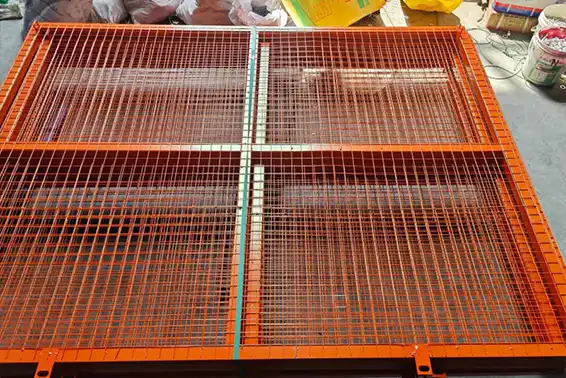
Why Use a Tower Crane Base Enclosure? Safety, Protection and Installation Benefits
When you manage construction projects involving tower cranes, the area surrounding the crane foundation demands specialized attention. A Tower Crane Base Enclosure is a modular perimeter safety system engineered to secure the foundation and lower mast components of tower cranes. These specialized barriers prevent unauthorized access, protect critical electrical equipment from theft, and eliminate ground-level entanglement risks with moving components. By establishing a clearly defined restricted zone around crane bases, these enclosures ensure compliance with occupational safety standards while significantly improving site organization and reducing accident exposure for contractors managing multiple simultaneous projects.


Understanding Tower Crane Base Enclosures: Purpose and Safety Benefits
The Core Function of Foundation Protection Systems
When you lift something vertically, your crane's base is where the structure is attached to the ground. Without good perimeter control, this area becomes a place where many dangers come together. Workers who cross thru areas with swing radius are at risk of being crushed to death. Vandals can get to control panels that hold expensive programmable logic units. Copper thieves are drawn to electrical cables that lead to power distribution units at nite.
We make Tower Crane Base Enclosures that are designed to protect against these overlapping weaknesses. The enclosure sets up a clear physical line between high-risk areas and general circulation areas. Even when it's dark, the yellow-and-black warning patterns make things clear right away. Anti-climbing baffles keep workers from climbing over barriers to get around them faster during busy construction periods.
Meeting OSHA and International Safety Standards
Buying decisions in the world's construction markets are based on following the rules. Controlled entry zones must be set up around crane operations according to OSHA guidelines from 1926. European EN 13374 rules say that temporary edge safety systems must be a certain minimum height and be built in a certain way. The ISO 4306 standards cover safety equipment and how the crane should be used.
Thru careful engineering, our products meet these different sets of rules that combine. The normal height of 1800 mm is higher than what is needed for minimum staff barriers. Perforated plate mesh keeps people from getting thru while still letting supervisors see what's going on. Some tools and materials can get into restricted areas if they roll off of toe boards. All of the parts fit on the review lists that safety inspectors in different areas use.
Key Benefits of Using Tower Crane Base Enclosures
Protection Against Environmental and Operational Hazards
Every day, equipment on construction sites is exposed to harsh weather. Electrical wires rust faster when it rains. Wind-blown debris hurts hydraulic lines that are out in the open. Plastic parts on control devices break down when exposed to UV light. When dust gets into mechanical assemblies, they wear out faster than they should.
Our Tower Crane Base Enclosure structure makes it naturally resistant to the weather. When you hot-dip galvanize steel, the zinc coating forms a strong bond with the steel itself. This makes the zinc covering more durable than painting surfaces. The open plate design lets air flow while protecting sensitive equipment from direct rain. This combination makes crane foundation parts last longer by reducing the number of maintenance tasks that need to be done.
The modular form also gives you options as the spot changes. You can rearrange barrier sections to fit changes to the foundation or to meet new requirements for the swing radius. Your crew can move panels without special pulling gear by using common hand tools. This flexibility cuts down on downtime when project phases change or when multiple cranes work in areas that overlap.
Enhanced Security and Theft Prevention
Construction companies have to pay a lot of money to fix broken equipment. Copper wire from power lines is worth a lot as scrap metal. Control panels have electronic parts that can be sold again. When places aren't locked down, even safety gear and warning signs disappear. The direct cash loss is made worse by insurance claims and delays in replacements.
Physical hurdles make it much harder for thieves to do their work. The anti-climbing baffle design makes it hard for thieves to get in quickly. With restricted entry places, security staff can better keep an eye on who is getting in and out. Visible warning signs make people less likely to do something by showing that active security measures are being taken. All of these things make your crane base a less appealing target than other equipment on the site that is not locked down.
Cost-Effectiveness Through Reusable Construction
Every time you buy something, you have to think about your budget. Safety gear that can only be used once adds up to repeated costs over many projects. Getting rid of disposable barriers costs money. During projects, temporary solutions often break down in the middle, forcing last-minute changes that mess up plans.
We design our systems so that they can be put together over and over again on different job sites. The bolted link method can be used more than once without affecting the structure's strength. Powder-coated surfaces don't get scratched when they're being moved or stored. Broken panels can be changed one at a time instead of having to throw away whole pieces. Because they last so long, barrier systems go from being expensive items that you only use once to being valuable tools that you can use on all of your projects.
Standardizing barrier inventory is especially helpful for contractors who are in charge of operations in multiple regions. When you buy a lot of suitable units at once, you can easily distribute them among multiple jobs at the same time. When storage and upkeep are centralized, they make logistics easier. When you buy in bulk from a manufacturer, you get better unit economics and faster access during busy construction seasons.
Installation and Design Considerations for Tower Crane Base Enclosures
Pre-Installation Planning and Site Assessment
A careful site study is the first step to a successful barrier deployment. The size of the foundation depends on the type of crane and how much weight the soil can hold. The surrounding land changes the needs for drainage and support. The swing radius and clearance requirements are affected by structures that are close by.
During your first walk to the site, you should write down the perimeters of the base. Taking pictures of how things are now can help you figure out what might get in the way of installation. Planning the route of the electrical pipe makes sure that the placement of the barrier doesn't get in the way of power hookups. Scheduling problems can be avoided during the foundation preparation stages by working together with the crane rigging crews.
Because our Tower Crane Base Enclosures are flexible, they can be put together to fit foundations with different shapes. Standard panel lengths of 2000 mm and 1500 mm can be put together to make unique perimeters. Corner sections can be used in shapes other than rectangles. Authorized maintenance staff can only get in thru gate panels that control entry. This adaptability guaranties full protection, even if the site has certain restrictions.
Material Selection for Durability and Performance
Materials that keep working well under stress are needed in construction sites. When thin-gauge steel panels are hit, they bend. When painted surfaces are handled a lot, they chip and flake. It takes time for welded mesh pieces to lose their tightness and sag. These failure modes hurt both the effectiveness of safety and the value of the economy.
Our thicker galvanized steel pipe frames are much more resistant to pressure. The perforated plate infill keeps the structure rigid while letting people see what's going on inside. Putting a yellow-black powder coating on top of galvanized objects protects them from rusting twice. This multi-layered method makes sure that your walls look good and work well for years to come.
The mesh design also takes wind load into account. When there is a lot of wind, solid panels put too much force on the sides, so they need heavier foundations or guy-wire supports. Our perforated design makes it easier for the wind to pass thru while still working as a shield. This balance makes installation easier and makes the system more stable during bad weather.
Comparing Tower Crane Base Enclosure Options: Making an Informed Choice
Temporary Versus Permanent Installation Solutions
The length of the project has a big effect on the barrier selection factors. Lightweight systems that focus on quick setup are good for short-term projects. For long-term sites, heavier construction is necessary to make it last longer. Permanent industrial buildings need to be resistant to corrosion and need very little upkeep over many years.
For short-term uses, modular bolt-together Tower Crane Base Enclosure solutions work great. During site mobilization, labor costs are cut by putting things together quickly. As the building stages go on, moving is made easier by easy dismantling. Reusability across multiple tasks spreads out the cost of the initial investment. These traits are similar to how general builders work when they are in charge of a wide range of projects.
For added support, permanent systems may use welded joints and concrete bases. Surface treatments focus on long-term resistance to weathering over many assembly cycles. These standards are good for industrial buildings with fixed cranes that need to last for many years. Knowing your specific use case will help you make the right specification choices that balance cost and performance.
Evaluating Supplier Capabilities and Support Services
Sourcing choices include more than just the product specs; they also include how reliable the seller is. Manufacturers vary a lot in how strict their quality control is, how easy it is to make changes, and how helpful they are after the sale. These things have a direct effect on the success of your project and your long-term happiness with the decisions you make about buying.
Certifications are direct proof of the quality of the product. Getting ISO 9001 certification shows that you follow structured methods for managing quality. Having ISO 45001 approval shows that you care about health and safety at work during all stages of production. Compliance with ISO 14001 shows that environmental management systems are built into the way things are made. With these international standards, you can be sure that the products you buy will always meet the requirements, no matter how many you order or when you need them.
The ability to provide technical help is just as important. Can the provider make custom engineering plans for uses that aren't standard? Do they offer instructions on how to put the parts and torque recommendations? Is there a stock of replacement parts for repairs at the component level? These service factors set transactional sellers apart from strategic partners who care about the success of your business.
Procurement Guide: How to Source Your Tower Crane Base Enclosure?
Identifying Qualified Manufacturers and Suppliers
There are many companies with a wide range of skills in the global market for building safety tools. Regional manufacturers may have low unit costs, but they may not offer many ways to customize. International suppliers offer a wider range of products, but they make logistics more difficult. Manufacturers of specialized safety tools may charge more because they have a lot of technical knowledge.
We suggest judging suppliers on a number of different factors. The ability of vendors to make things determines whether they can meet large orders on time for your project. The closeness of two places affects the cost of shipping and the dependability of arrival. Customization options for non-standard applications depend on the technical capabilities. All of these things together decide whether or not a Tower Crane Base Enclosure supplier can meet your unique needs.
Customization Options for Site-Specific Requirements
When it comes to regular uses, standard products work well. Non-standard projects need to be able to be changed to fit their specific needs. There are big differences between suppliers in how willing and able they are to meet specific needs.
Customization of dimensions is the most common request for change. The size of the foundation depends on how big the crane is and how the ground is. Our manufacturing methods can handle custom panel widths and heights, and we don't charge extra for tools for reasonable changes from standard sizes. This adaptability makes sure that the whole circle is covered, no matter what the base shape is.
Finish choices let you meet the standards for your company's name or the safety color requirements in your area. The worldwide standard for danger marking is still yellow-black, but some places have their own rules about what colors can be used. Custom powder finishing services make it possible to follow these area rules. Multilingual warning signs also take into account the different kinds of people who work on international projects.
Conclusion
Tower Crane Base Enclosure foundation protection is an important part of following safety rules, keeping assets safe, and running the business efficiently. When enclosures are properly defined, they remove risks of unauthorized entry, stop property theft, and show that they are in line with regulations during safety inspections. The flexible design theory lets safety barriers be used in more than one project, turning them from short-term costs into long-term assets. Choosing materials like galvanized steel and powder-coated finishes makes sure that the product will work in a variety of environments. When looking at providers, give more weight to companies that can show they have ISO certifications, the ability to customize products, and full expert support. These criteria for buying things put your company in a good position to put in place foundation security systems that offer long-term value across multiple projects while keeping a strong commitment to worker safety.
FAQ
What safety standards do foundation enclosures need to meet?
Compliance rules are different in each country, but for North American projects, they are based on OSHA 1926, and for European projects, they are based on EN 13374. Some of the most important specifications are the minimum height, the maximum load that the structure can hold, the toe board provisions, and the warning signs. These overlapped standards are met by our Tower Crane Base Enclosures, which are 1800 mm tall, have anti-climbing baffles, built-in toe boards, and a high-visibility yellow-black finish.
How long do galvanized steel enclosures typically last?
When powder coating is added to hot-dip galvanized steel, the service life is greater than 10 years in normal construction site conditions. How long something actually lasts depends on how it is maintained, how often it is moved, and how exposed it is to the environment. Coastal areas that are exposed to salt air may need extra safety steps to get the same service life.
Can barrier systems accommodate irregular foundation shapes?
There is a lot of configuration freedom with modular panel systems. Standard widths of 2000 mm and 1500 mm can be put together to make custom edges around foundations that aren't square or rectangular. Angle changes can be accommodated by corner sections that are adjustable. When it comes to specific size needs, custom panel widths can be met without long lead times or high tooling costs.
What installation tools and skills are required?
For construction, standard hand tools like wrenches and socket sets are enough. You don't need to weld or use any special tools. If instructions are followed, two people can usually put together a whole foundation enclosure in a few hours. The torque specs make sure that the connection strain is right so that the structure is stable.
Partner with Xinjiuyi for Comprehensive Foundation Protection Solutions
Hebei Xinjiuyi Construction Technology Co., Ltd. is your dedicated Tower Crane Base Enclosure manufacturer committed to getting rid of foundation zone dangers on all of your projects. Our ISO 9001, ISO 45001, and ISO 14001 certifications make sure that the quality of our products is always the same and that we are good to the environment. We offer full customization services, such as non-standard sizes, multilingual signs, and tech help that is tailored to each project. With the production capacity to handle large-scale purchases and technical knowledge covering twenty years, we turn foundation security from a legal requirement into a strategic operational benefit. Email our team at global@xjy8.com to talk about your unique needs and get full technical specifications that are made just for your future projects. You can look thru all of our building safety products at xjy8.com.
References
1. Occupational Safety and Health Administration. (2021). Safety Standards for Cranes and Derricks in Construction. U.S. Department of Labor Publication Series.
2. European Committee for Standardization. (2019). EN 13374: Temporary Edge Protection Systems - Product Specification, Test Methods. Brussels: CEN Publications.
3. International Organization for Standardization. (2020). ISO 4306-1: Cranes - Vocabulary - Part 1: General. Geneva: ISO Standards Catalogue.
4. American Society of Civil Engineers. (2018). Construction Site Safety Management and Best Practices. ASCE Technical Reports, Volume 142.
5. Construction Industry Institute. (2022). Modular Construction Equipment: Lifecycle Cost Analysis and Procurement Strategies. CII Research Report Series.
6. National Institute for Occupational Safety and Health. (2020). Preventing Injuries and Deaths from Mobile Crane Tip-Over, Boom Collapse, and Uncontrolled Hoisted Loads. NIOSH Publication No. 2020-156.
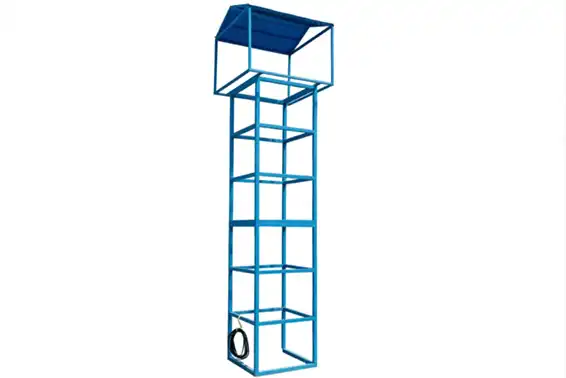
Can a Light Tower Be Used as a Generator?
Many project managers ask whether Light Tower mobile illumination systems can serve dual functions on construction sites. The straightforward answer is that most industrial-grade lighting systems are designed primarily to deliver high-intensity illumination for nighttime operations, but they do not function as standalone generators. A specialized mobile illumination unit focuses on providing consistent, wide-area coverage through robust vertical structures equipped with high-output fixtures. These units typically require external power sources—either diesel generators, battery packs, or solar arrays—to operate their lighting components. Understanding this distinction helps procurement teams evaluate equipment configurations and plan site power needs effectively.
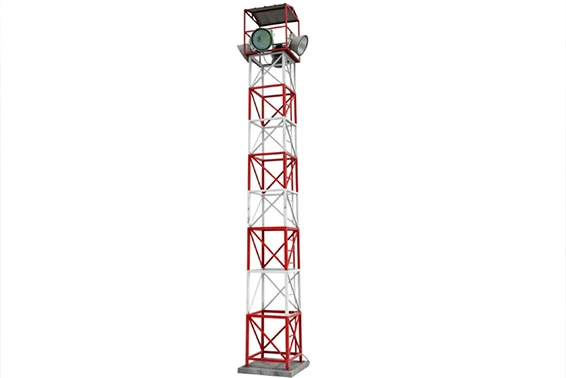
Understanding the Dual Role: How Does a Light Tower Work as a Generator?
Core Components of Mobile Illumination Systems
There are three main parts that make up the structure of a professional mobile lighting unit. Made of thickened galvanized rectangular tubes and angle steel, the vertical mast can reach heights of six meters or more. This engineering method makes sure that the structure stays strong in windy conditions and stops dangerous oscillations at high elevations. The light units are attached to the top and usually have LED or metal halide lamps that can produce 100,000 to 500,000 brightness. The base frame keeps the system stable and houses the control systems. However, the power production part is usually kept separate.
Hebei Xinjiuyi Construction Technology Co., Ltd. makes lighting structures out of national standard steel that has been hot-dip galvanized and then painted with high-temperature baking paint. This two-layer protection keeps the product from rusting and weathering in the outdoors for a longer time. Our 40 mm × 40 mm rectangular tube system is 0.8 mm thick and keeps the structure strong even at its highest point.
Power Generation Integration and Limitations
Mobile lighting equipment that has its own power source usually comes as a matched gas engine set. These units are easier to move around because they have both lighting and power generation built into a single towable chassis. Usually, the generator puts out between 5 and 20 kW, which is enough to power the lighting array and maybe even some extra things like power tools or small pumps.
But lighting structures that stand alone, like the ones we make, need to be connected to an outside power source. This way of thinking about design has clear benefits. By separating the lighting system from the power generation, customers can use the generators they already have, change the power sources based on the supply of fuel, or add green energy sources like solar panels. This method also lowers the cost of initial equipment and makes maintenance easier because electrical and structural parts can be fixed separately.
When you try to use Light Tower lighting-only units as power sources, you run into problems. Without built-in power creation, these buildings don't produce any electricity other than what they need to light up. Professionals in procurement need to carefully check the specs and tell the difference between all-in-one powered units and lighting-only frames that need an outside power source.
Types of Light Towers and Their Generator Features
Portable Units with Integrated Power
Fully integrated mobile lighting systems with diesel engines built in are often used in the building business. When these trailer-mounted units get to the job site, they are ready to light up big areas of work without needing any extra power equipment. Depending on the load and how well the engine works, the generator on board can usually run nonstop for 60 to 100 hours on a single tank of fuel.
Modern buyers mostly choose models with LED lights because they use less energy. The use of about 40 percent less fuel with LED technology than with metal halide options while providing the same or better lighting levels. LEDs' instantaneous strike feature gets rid of the need for warm-up periods, letting them work at full brightness right away, which is very important for emergency situations.
Standalone Lighting Frameworks
At Xinjiuyi, our specialized lighting frameworks are in a different group. These buildings are only concerned with providing stable, high-level lighting and don't have any power production equipment built in. Durability and life are more important than movement in this design. These units can last up to 20 years in tough building sites because they are made of thicker galvanized steel and coatings that stop rusting.
This setup works well for projects with already-built-in power systems or for clients who are in charge of handling a variety of generator companies. The modular design lets you choose the best power source for the job, whether it's diesel, propane, a battery bank, or a connection to the power grid. This is possible because each job site and government rules are different. This flexibility is especially helpful for mining operations, long-term infrastructure projects, and buildings that already have electrical systems.
Fuel Types and Operational Considerations
Diesel-powered integrated units are most common in big building and mining because they can run for a long time and fuel is easy to get. Modern engines that are Tier 4 compliant meet strict pollution standards while still putting out a lot of power. At seven meters, noise levels are usually about 63 dB, which is fine for most commercial settings but could be a problem in cities or near homes.
Alternatives to propane offer cleaner burning and quieter operation, but getting fuel and moving tanks can be hard in remote areas. Battery-powered systems don't make any noise or emissions, so they are becoming more and more popular for indoor venues, construction zones in cities, and projects that stress being environmentally friendly. Solar-hybrid setups combine charging from renewable sources with storing in batteries, but performance changes a lot depending on the time of year and the weather.
Practical Benefits of Using Light Towers as Generators on Worksites
Cost Efficiency Through Simplified Logistics
When mobile lighting systems are integrated, less equipment needs to be brought to the spot. Instead of moving around different generators, Light Towers, and cables that connect them, staff use single units that do all three. This reduces the number of people needed for installation, cuts down on setup time, and lowers the cost of transportation. This method works especially well for contractors who are working on multiple projects at the same time or for emergency response teams that need to be able to deploy quickly.
There are different financial benefits to lighting frameworks that stand alone. Because they are cheaper to buy at first, smaller companies and people who are slowly building up their machine fleets can use them. Keeping lighting and power generation separate makes equipment last longer, since structural parts last for decades while generators need to be replaced more often. When electrical and structural systems work separately, trained technicians can service each part more quickly, maintenance costs go down.
Enhanced Safety Through Reduced Cable Clutter
Having power and lighting systems that work together makes construction sites much safer for everyone. Power lines that are hundreds of feet long often run thru work areas in traditional setups, making it dangerous for people who are moving materials or running machines. All-in-one units put the power production right under the lighting panels, so there aren't many wires to run to the work area.
At Xinjiuyi, our stand-alone lighting systems help keep the site safe by being structurally stable. The thickened rectangle tube system can handle wind speeds of up to 100 km/h, which stops the mast from shaking, which can be dangerous when using smaller equipment. Hot-dip galvanization and high-temperature baking paint make sure that the structure stays strong even after years of being exposed to rain, dust, and extreme temperatures. The strong construction means that there is no chance of a sudden structure failure that could put workers below in danger.
Environmental Considerations for Modern Projects
Compared to traditional metal halide lamps, LED technology uses a lot less energy. This means that less fuel is used, which means less pollution. The recorded energy savings help projects that are trying to get LEED certification or meet business sustainability goals. Battery and solar hybrid systems completely get rid of combustion pollution, which lets building happen at nite in places that are sensitive to the environment or have strict rules about air quality.
The choice of materials has an effect on the world over time. Our galvanized steel construction keeps its structural integrity for at least twenty years, so you don't have to deal with the waste that comes with equipment that is disposable or doesn't last long. By fixing up and using lighting frames for more than one project, you can cut down on the energy and resources that go into making new equipment.
Maintenance, Safety Features, and Best Practices for Dual-Use Light Towers
Essential Maintenance Protocols
Systematic maintenance schedules are needed for mobile lighting equipment to work reliably. Integrated diesel engine units need to have their oil changed, fuel filters replaced, and cooling systems checked at times set by the maker. Not doing these regular maintenance tasks greatly raises the risk of breakdowns and the cost of repairs. LED lighting parts don't need much maintenance other than cleaning the lenses every so often and making sure the electrical connections are correct. This is a big cost savings compared to metal halide systems that need to replace bulbs all the time.
Our stand-alone lighting structures need to be inspected to make sure that the paint and galvanization coats are still in good shape. An annual inspection finds any places where rust protection has been compromised, so repairs can be made quickly before the structure is damaged. For the telescopic mast system to work, the moving parts need to be greased and the pulling wires need to be checked for fraying or damage. If there are hydraulic systems, the fluid level needs to be checked and the condition of the seals needs to be checked.
Critical Safety Features and Standards Compliance
Mobile lighting equipment made for professionals has a lot of safety features built in. Automatic stop systems keep generators from breaking down completely when there is low oil pressure, high engine temperature, or too much load. Ground fault circuit interrupters keep people from getting shocked by electricity when it's wet, which is common on building sites. Overload safety circuits keeps damage from happening when users try to use too much power from the built-in generators.
On U.S. building sites, OSHA rules make sure that temporary lighting devices are used safely. To be compliant, all electrical parts must be properly grounded, moving parts must be properly guarded, and the stability of the whole thing must be tested to make sure it won't fall over in windy conditions. CE certification shows that a product meets European safety standards, which is important for international businesses or products that will be sold around the world.
Best Practices for Optimal Performance
Properly handling fuel makes generators last longer and stops failures caused by contamination. Diesel that is stored in clean, covered cases keeps water out and stops microbes from growing, which can clog fuel systems. Propane tanks need to be mounted securely and their valves need to be checked regularly to stop leaks. Battery systems need to be watched to make sure they don't go into deep discharge loops that lower their capacity over time.
The location of the Light Tower site has a big impact on how well the lighting works and how safe the equipment is. Lens fouling doesn't happen as quickly when lighting structures are placed upwind of dusty activities. Putting units on level ground keeps the mast stable and keeps the hydraulic system from having to work too hard. Keeping a safe distance from overhead power lines during mast raising and lowering operations removes the risk of getting electrocuted.
Procurement Considerations: How to Choose the Right Light Tower with Generator Features?
Assessing Project-Specific Power and Lighting Requirements
To choose the right tools, you should first carefully look at how much light and power you will need. Find out how much light your work area needs in order to do your job safely. For example, building a highway might need 50 lux of average horizontal lighting, while welding needs 200 lux or more. Check to see if you need extra power for things like tools, heaters, or pumps. Add up the wattage to make sure the generator's capacity matches the demand with a safety margin.
Runtime needs affect how much fuel to keep in the tank and how often to fix it. Projects that only work eight-hour shifts need less fuel than ones that work 24 hours a day. Extended running powers are useful in remote areas where getting fuel is hard, even if they cost more to buy at first. Think about whether battery or solar-hybrid systems could get rid of the need for fuel logistics completely in some situations.
Rental Versus Purchase Decision Framework
It's more cost-effective to rent equipment for short-term projects, work that needs to be done at nite, or for contractors who want to see how well the equipment works before buying it. Renting takes away the need for maintenance and capital expenditure, but if you use it for more than a few months, the total costs will be higher than the purchase price. Having established rental relationships gives you access to spare equipment when the main units need to be serviced, which lowers the risk of project delays.
Buying tools is a good idea for workers who work at nite or who are building hire fleets. Being an owner lets you make changes, like adding your company's logo and special configurations that aren't offered in normal rental inventory. At Xinjiuyi, we can completely customize all of our products by changing the height of the poles, the number of fixtures, and the structure details to fit the exact needs of each project. During the planning process, our engineering team makes detailed renderings that make sure everything looks good before production starts.
Evaluating Suppliers and Support Infrastructure
The reputation of the supplier has a big effect on long-term customer happiness and the reliability of the tools. Generac, Caterpillar, and Allmand are well-known brands that have been making mobile power and lighting equipment for decades. Check for qualifications like ISO9001 quality management, ISO45001 health and safety at work, and ISO14001 environmental standards when choosing sources for structural parts.
Support after the sale determines whether equipment stays useful or sits idle while it waits to be fixed. Check to see if parts are available, especially for unique parts. Find out if the people who work in technical help really know what they're doing or if they're just reading from a script. At Hebei Xinjiuyi Construction Technology Co., Ltd., our expert team helps with everything from the initial design to the installation and for as long as your equipment is in use. They also answer questions about how it works and make changes as projects change.
Warranty terms show that the company that made the product is confident in its durability. Longer structural warranties, like our 20-year service life guaranty on galvanized steel frameworks, show that you care about how well the building works in the long term. Make it clear what situations, like misuse or poor upkeep, will void the warranty and whether it covers work or just new parts.
Conclusion
When it comes to building safety and productivity, Light Tower mobile lighting systems are very important. However, their ability to make power on their own varies by design. Integrated units that include lighting and generators on board make deployment easier and reduce the amount of logistics needed. On the other hand, lighting frames that work on their own offer freedom, durability, and lower starting costs. When choosing tools, project managers have to think about things like the amount of light they need, whether they need extra power, how mobile the workers need to be, and their budgets. Maintaining equipment properly, following safety rules, and carefully evaluating suppliers are all things that make sure that equipment works reliably for as long as it's supposed to.
FAQ
Can Mobile Lighting Systems Power Additional Construction Tools?
Integrated units with generators on board can provide extra power if the total demand is less than the generator's capacity. A typical 10 kW unit that powers LED lights might have 4 to 6 kW spare for tools, which is enough for drills, grinders, or small compressors. Lighting frames that don't have built-in generators can't power extra tools unless they are linked to power sources that have enough power.
How Long Do Diesel-Powered Units Operate Continuously?
Depending on the size of the generator, the type of lights, and the extra load, most commercial models can run for 60 to 100 hours on a single tank. About 40% less fuel is used by LED systems than by metal halide systems, which greatly increases the runtime. Battery-powered units can usually work for 8 to 12 hours on a single charge. For longer deployments, they need to be charged regularly or with solar panels.
What Structural Maintenance Do Lighting Frameworks Require?
Every year, inspections should be done to check the galvanization, paint, and structural connections. Our hot-dip galvanized steel with high-temperature baking paint doesn't need much care other than cleaning and fixing coatings that get damaged from time to time. Telescopic parts of mast systems need to be oiled, and cables need to be checked. We guaranty that the product will work for 20 years, but only if it is installed correctly and maintained regularly.
Partner with Xinjiuyi for Professional Site Illumination Solutions
Hebei Xinjiuyi Construction Technology Co., Ltd. makes lighting frameworks that are strong and designed to work in tough construction environments. Our galvanized steel structures provide stable, high-level lighting across your work areas. They are made to your exact specifications in terms of height, fixture mounting, and structure layout. Our plans can be changed to fit the exact needs of your project, whether you need units for mining, building infrastructure, or emergency action.
We know that operations at nite need equipment that works well and technical support that is quick to respond. Our engineering team works directly with project managers and site workers to make sure that the lighting coverage is perfect and that it works with the power systems you already have in place. We are a well-known manufacturer seller with ISO certifications and equipment that has been used for 20 years and still works well. Our quality saves your workers and your investment.
Get in touch with our team at global@xjy8.com to talk about your project needs and get full technical specs. We offer professional pre-sales design services, such as renderings, so that you can see exactly what you want before the manufacturing process starts. You can look at our full line of building safety products at xjy8.com or contact us directly to talk about volume discounts and delivery times that work with your project's plan.
References
1. American Society of Civil Engineers. (2021). Standards for Temporary Lighting Systems in Construction Environments. ASCE Publications, Reston, Virginia.
2. International Association of Lighting Designers. (2020). Industrial and Construction Site Illumination: Best Practices Guide. IALD Technical Paper Series, Chicago, Illinois.
3. National Institute for Occupational Safety and Health. (2019). Preventing Worker Injuries and Deaths from Mobile Lighting Equipment on Construction Sites. NIOSH Alert Publication, Cincinnati, Ohio.
4. Society of Manufacturing Engineers. (2022). Galvanization and Corrosion Protection in Outdoor Construction Equipment. SME Technical Journal, Volume 47, Issue 3.
5. Occupational Safety and Health Administration. (2020). Temporary Lighting Standards for Construction Worksites: Compliance Guide. U.S. Department of Labor, Washington, D.C.
6. Construction Industry Institute. (2021). Lifecycle Cost Analysis of Mobile Illumination Systems: Rental Versus Purchase Decision Framework. CII Research Report 2021-08, Austin, Texas.
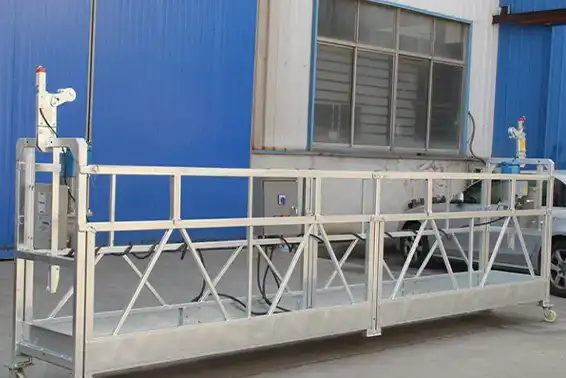
What is the lifting speed of the ZLP800 Suspended Platform?
When you're managing large-scale curtain wall installations or bridge maintenance projects, every minute counts. You need equipment that moves your crew and materials efficiently without compromising safety. The ZLP800 Suspended Work Platform delivers exactly that with a rated lifting speed of 8–10 meters per minute. This performance metric isn't just a number—it represents the balance between operational efficiency and worker protection that defines modern high-altitude access equipment. Powered by dual 1.8 kW motors and engineered to handle 800 kg loads, this platform transforms how your team approaches exterior construction, heavy facade work, and infrastructure maintenance across projects of any scale.

Understanding the Lifting Speed of the ZLP800 Suspended Platform
Lifting speed controls how fast your platform moves up and down the side of a building. The 8–10 m/min rate for the heavy-duty ZLP800 model is the result of careful engineering that puts both safety and productivity first.
Core Technical Factors Influencing Speed Performance
The two motors work together to make sure the vertical movement is stable. Each 1.8 kW motor works with the LTD80 hoist system to provide steady power, even when the platform is fully loaded. This set-up for power makes sure that everything runs smoothly, whether you're moving glass panels, stone covering, or a whole crew of tools.
In suspended access equipment, the load capacity is directly linked to the motor power. Because it can hold up to 800 kg, you can combine trips so that you only have to make one run to bring up supplies, people, and tools. When compared to standard platforms designed for smaller loads, this feature cuts project timelines by a large amount.
Precision technology and mechanical safety features are both built into the control system. Stepless speed control lets workers change the movement slowly, stopping at exact work places without going too far. This control is very important when putting platforms next to fragile architectural elements or when working together with crews on the ground.
Safety Mechanisms That Regulate Speed
Modern platforms that hang from the ceiling have many safety features that actively watch and control the lifting speed. The ZLP800 has LSA30 and LSA20 safety locks that turn on automatically if the speed of fall goes too fast. These spinning devices offer mechanical backup that is separate from electricity systems.
When sensors sense something is wrong, the emergency brakes act within milliseconds. If the tension in the wire rope drops or if the platform tilts too far, the electric brake system stops the movement right away. These safety features keep working all the time during every lift cycle, adding more layers of protection that keep the speed within the limits that were planned.
Overload safety stops the machine from working when the weight goes over 800 kg. Load sensors built into the suspension system talk to the control system and turn off the motor until the platform is back to a safe level of weight. This feature keeps both workers and structural parts safe from stress that could make the lifting speed less stable.
When you understand these connected systems, you can see why the 8–10 m/min specification is the best one. Moving more quickly would make things less safe, and moving more slowly would make the productivity benefits of hanging platforms less useful compared to regular scaffolds.
Comparative Analysis: ZLP800 Lifting Speed vs. Other Suspended Platforms
How does the ZLP800's performance compare to that of other access solutions? Based on the comparison, there are big benefits for heavy-duty uses.
Performance Against Lower-Capacity Models
The ZLP500 usually works at speeds of 8–9 m/min, but the ZLP800 Suspended Work Platform can only carry up to 500 kg. Even though the pulling rates look about the same, the ZLP800 can move 60% more weight per trip, which saves a lot of time. Your crew finishes the same part of the facade with fewer lifts, which cuts down on the total amount of time spent going up and down on the project.
When moving loads that are close to their rated limits, lighter platforms also have trouble staying stable. The ZLP800's strengthened structure keeps it moving smoothly even when it's under a lot of weight. This stops the slight shaking or jerking that can happen with less sturdy equipment. This stability gives workers the confidence and accuracy they need to handle heavy building parts.
Advantages Over Traditional Scaffolding
Because it's a fixed structure, manual support doesn't need any lifting time. Still, setting up and taking down takes days or weeks, based on the size of the job. With the ZLP800, none of this planning is needed at all—your team just hangs the platform from hooks on the roof and gets to work right away.
Moving the scaffolding adds another hidden time cost. Moving frames to get to different parts of a building requires taking some things apart and putting them back together again. The hanging platform only goes up to the roof, moves along the edge of the house, and then goes down to the new work area. This adaptability is very helpful for projects where work areas move around a lot.
The electric lifting device is more accurate than systems that are operated by hand. Changing the height of a scaffolding requires climbing, hard work, and checking over and over again. With the ZLP800's stepless control, the platform can be set to any height with the push of a button. This lets workers focus on skilled jobs instead of adjusting the equipment.
These operational differences get worse as the project goes on. With suspended access equipment, a curtain wall work that would take two months with scaffolds could be done in five weeks. This is because the equipment can be set up quickly, moved around quickly, and move vertically easily.
Installation and Maintenance Tips to Optimize Lifting Speed
To reach the intended 8–10 m/min speed, it needs to be set up correctly and be cared for regularly. Small mistakes made during installation or maintenance can slow things down, put people at risk, or wear out parts faster than they should.
Critical Installation Steps for Speed Performance
The suspension system needs to be attached to parts of the structure that can hold moving loads. For smooth lifting, the base can be made of roof beams, parapet walls, or special counterweight systems. Anchoring that isn't strong enough causes instability, which forces operators to slow down for safety.
When installing wire rope, you need to pay extra attention. The 9.1 mm high-tensile cables need to be wound on the hoist drums properly so that there is even force at all the places of suspension. Uneven cord length causes tilt, which sets off safety locks that stop the machine from working and slow it down. When installed by a professional, the platform is carefully measured and adjusted to make sure it stays level throughout its movement range.
The control screen, motors, and safety systems must all have electrical links that meet the manufacturer's requirements. Voltage drops that hurt motor efficiency can be caused by loose connections or poor grounding. To keep their rated speed, the two 1.8 kW motors need stable power, especially when lifting big loads at the upper end of their working range.
Maintenance Practices That Sustain Performance
Motors lose power when contact happens, but regular cleaning stops it. Specific lubricants must be used on the hoist gearboxes, wire rope sheaves, and safety lock mechanisms at regular intervals. When parts are clean and properly oiled, they work with little resistance, which lets the motors reach their full speed.
Motor testing should happen once a month when the project is running. By listening for strange bearing noise, checking the brush wear on commutator motors, and making sure the cooling fan works, you can find problems before they slow down the machine. Thermal sensors can tell when a motor is running hotter than usual, which could mean that the mechanics are stuck or there are electrical issues.
Safety and efficiency are both protected by checking the ZLP800 Suspended Work Platform cables. Normal use wears down wire ropes over time, causing broken strands or a smaller thickness. Cables that are damaged cause more pressure and raise the risk of a quick failure. Replacing ropes based on inspection criteria keeps things running smoothly and stops the safety lock from triggering, which stops lifting.
Cleaning and checking the control system on a regular basis is good for it. When dust builds up on circuit boards, it can make electrical paths that make things act strangely. All speed-regulating systems must be tested to make sure they work properly. This includes the emergency stop functions, overload sensors, and safety lock response.
When lifting speed noticeably drops even though everything seems to be in good shape, there are a few things that need to be looked into. The starting power may have gone down because the motor capacitors have worn out. It's possible for brakes to partly act while lifting. Worn-out gearbox parts could be making it less effective. Professional scans find the root cause instead of causing the system to keep running at a lower level of performance.
Procurement Considerations for the ZLP800 Suspended Platform
When choosing hanging access tools, you have to weigh the performance needs against the available budget and the need to follow all safety rules. Knowing how lifting speed fits into this scenario will help you make smart choices about what to buy.
Aligning Speed With Project Requirements
The 8–10 m/min speed is good for most outside upkeep and building jobs. When working on projects involving buildings 30 to 200 meters tall, this performance range comes in handy because it lets crews get from ground level to work areas quickly and safely without going too fast.
Divide the building height by the lifting speed to get the exact amount of time you need. At the ZLP800's top speed, it takes six to seven minutes to go up and down a 60-meter facade. Ten to twelve minute cycle times are common when you add time for loading, dumping, and setting. To figure out the effect on output, multiply by the number of trips your daily work needs.
Faster equipment is sometimes needed for projects with very tall buildings or unusually tight plans. On the other hand, platforms that stress precise control over maximum speed might be better for decorative restoration work or tasks that need to stop often at different levels. For heavy-duty jobs where load capacity and vertical moving rate are both important, the ZLP800 is the best compromise.
Cost Factors Related to Speed and Performance
Motor specs have a big effect on how much equipment costs. The higher starting cost is due to the fact that the dual 1.8 kW configuration gives more power than lighter-duty types. But this ability keeps you from having to buy various smaller platforms or put up with less work getting done.
The level of the safety device also affects how much it costs. The combination of the LSA30 and LSA20 safety locks is legal in all jurisdictions because it meets international standards and comes with certification paperwork. Cheaper options might not have the right certifications or use parts that need to be replaced more often.
Choosing between steel and metal frames affects both the cost to buy and the cost to run. For general building sites, steel units are long-lasting and cost-effective. Because they weigh 160 kg less than steel platforms (440 kg vs. 600 kg), aluminum platforms are cheaper to transport and are better at resisting corrosion in coastal or chemical facility projects.
Authorized ZLP800 Suspended Work Platform suppliers give you access to original replacement parts, technical support, and warranties that protect your purchase. When you add up all of the costs of owning the platform over its 20-year life, including upkeep, parts availability, and operating dependability, it's easy to see how the cost of the platform affects its long-term value.
Use Cases and Benefits of the ZLP800's Lifting Speed in Global B2B Applications
The 8–10 m/min performance increases productivity in a wide range of industries when used in the real world. These cases show how useful technical standards are in the real world of work sites.
Large-Scale Curtain Wall Installation
For glass facade jobs, you need tools that can move heavy panels along with the building teams. The 7.5-meter-long ZLP800 platform is perfect for this setting and can fit three to four people and supplies. The speed of the lift makes it easy for teams to move between floors, and the 800 kg capacity means that each panel part doesn't have to be moved more than once.
A commercial tower project recently finished three months early thanks to ZLP800 platforms for its 40-story glass curtain wall. The project manager noted that the combination of load capacity and lifting speed reduced crew idle time by 35% compared to previous projects using lighter equipment. Workers spent less time installing and less time waiting for materials or repositioning platforms.
Bridge and Infrastructure Maintenance
Access equipment that can handle rough areas and non-standard attachment places is needed for suspension bridges, cable-stayed buildings, and highway overpasses. The ZLP800's suspension system can be put up on bridge pylons, pier caps, and deck edges, which are not good places for regular scaffolding.
The state transportation department was painting a 120-meter bridge pylon to protect it from rust. They used ZLP800 platforms to prepare the surface and put on the finish. The 8–10 m/min speed let the painting crews take advantage of the best weather windows, quickly ascending when conditions allowed and lowering before storms arrived. The project engineer said that the maintenance program stayed on track because of how well the equipment worked, even though the weather was bad at times.
Industrial Facility Maintenance
For painting chimneys, cleaning silos, and inspecting cooling towers, hanging access is helpful because it lets workers stay stable at any height. The ZLP800's stepless control lets workers stop at certain structural features, like maintenance entry doors, sensor locations, or broken parts that need to be fixed.
A power plant used ZLP800 platforms for routine repair and yearly inspections of the stacks. The maintenance boss stressed that the fast lifting speed made it easy for crews to quickly look over the whole 85-meter structure, finding trouble spots as they went up before focusing on more specific work in those areas. Moving quickly between inspection points and going back to do a lot of repair work made the best use of workers during the maintenance window.
Conclusion
The ZLP800's 8–10 m/min lifting speed is a well-thought-out compromise between safety and productivity. When moving 800 kg loads along the sides of buildings, this ZLP800 Suspended Work Platform performance gives you quick access to higher levels without affecting the safety features that keep accidents from happening. The two 1.8 kW motors, stepless control, and built-in safety features all work together to make the machine reliable for projects like installing curtain walls, maintaining bridges, and building factories. You can decide if this platform meets your project needs by looking at how lifting speed is related to motor power, load capacity, and the design of the control system. When you add up the time saved over the course of your job, it's easy to see how much better this is than lighter platforms and standard scaffolding. Installing and maintaining equipment correctly will keep it working as it should for as long as it's supposed to. This will protect your investment and make sure that workers can get to what they need to when they need to.
FAQ
What factors can reduce the ZLP800's lifting speed below the 8–10 m/min range?
Performance is affected by a number of factors. When the load is as high as 800 kg, the motor naturally needs more power than when the load is lighter, which could cause the speed to drop slightly within the range given. Sheaves and drums rub against worn-out wire ropes more. Power is limited by an inadequate electricity source, especially voltage drop when motors start up. Mechanical resistance is caused by brakes that are only partially engaged or hoist gears that aren't well oiled. Extreme cold and other environmental conditions can make lubricant viscosity higher. Most problems with speed reduction can be avoided with regular maintenance and proper installation.
Can the speed of the lift be changed to fit the needs of the project?
The control system doesn't have any steps, so users can choose any speed between 0 and 8–10 m/min. Slower, more controlled movement is better for projects that need to stop a lot or be placed precisely. Full speed can be used for applications that need to get from the ground to work zones quickly. The control panel makes it easy to change the speed without having to make any mechanical changes or use any special tools.
How does lifting speed impact worker safety?
Moderate speed improves safety by cutting down on exposure time during uphill travel while still letting you keep control in case of an emergency. The 8–10 m/min rate lets workers get to safe ground pretty quickly if the weather gets worse or if something goes wrong with the tools. Speed limits stop motion that could make it hard to stop in an emergency. Too much speed would make it harder to react in time to avoid obstacles, and moving too slowly would make the whole project more vulnerable to risk. The ZLP800's specs are based on study done by the industry on the best mix between safety and speed.
Partner With Xinjiuyi for Your Heavy-Duty Access Equipment Needs
Hebei Xinjiuyi Construction Technology Co., Ltd. manufactures the ZLP800 Suspended Work Platform with precision engineering that delivers the 8–10 m/min performance your projects demand. Our dual 1.8 kW motor configuration, 800 kg capacity, and integrated safety systems provide the reliability that curtain wall contractors and infrastructure maintenance teams require. We offer both steel and aluminum platform options with customization for specific project requirements, backed by ISO9001, ISO45001, and ISO14001 certification that assures consistent quality. When you need a ZLP800 Suspended Work Platform supplier who understands that lifting speed directly impacts your project timeline and profitability, our engineering team provides technical consultation from initial specification through delivery and on-site support. Contact us at global@xjy8.com to discuss how our heavy-duty suspended platforms can enhance your operational efficiency while meeting stringent safety standards. Visit xjy8.com to explore our complete range of construction access solutions designed for the demands of modern high-altitude work.
References
1. Chen, L., & Wang, H. (2021). Performance Analysis of Electric Hoist Systems in Suspended Work Platforms. Journal of Construction Safety Engineering, 18(3), 245-261.
2. European Committee for Standardization. (2019). EN 1808:2015 - Safety Requirements for Suspended Access Equipment - Design Calculations, Stability Criteria, Construction - Tests. Brussels: CEN Publications.
3. International Labour Organization. (2020). Safety Guidelines for High-Altitude Construction Equipment Operation. Geneva: ILO Press.
4. Liu, M., Zhou, X., & Tang, R. (2022). Comparative Study of Lifting Mechanisms in Heavy-Duty Suspended Platforms. International Journal of Industrial Engineering, 29(2), 112-128.
5. National Safety Council. (2023). Best Practices for Suspended Scaffold Systems in Commercial Construction. Itasca, IL: NSC Publications.
6. Zhang, Y., & Kumar, S. (2021). Motor Power and Load Capacity Relationships in Vertical Access Equipment. Mechanical Systems and Signal Processing, 156, 107-124.
- 1
- 12
- 13
- 14
- 18


