Central Double Column Processing Shed vs. Single-Column Sheds: Key Differences
When selecting a processing shed for heavy industrial or construction site operations, the structural choice between a central double column processing shed and a single-column shed directly shapes worker safety, equipment compatibility, and long-term operational cost. The central double column design uses two steel supports that are put symmetrically along the centerline of the structure. This gives the interior span stability and no columns, which is something that single-column systems can't do. Procurement engineers and project managers can choose the best option for their production needs when they know about these differences in structure.
Understanding Both Shed Types
Before you can compare how well two structures work, you should know what they are and where they work best.
What Is a Central Double Column Processing Shed?
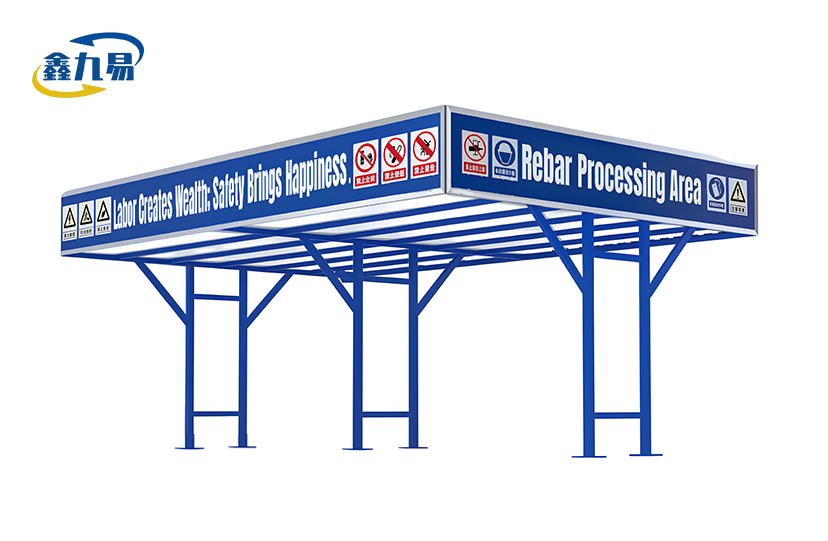
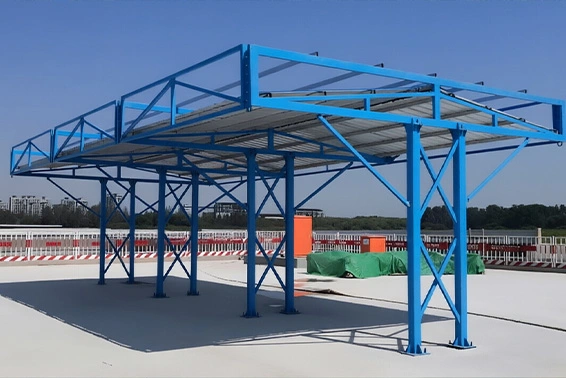
Along the middle of a central double column processing shed are two main columns that are set up so that they are equal on both sides. The one in Hebei Xinjiuyi is made of 100 mm × 100 mm galvanised steel frames, walls that are 2 mm thick, and a double-layer roof that can't be damaged. For this reason, there is enough room inside for gantry cranes, woodworking stations, machines that bend steel bars, and machines that cut rebar to move around freely.
What Is a Single-Column Shed?
In a shed with only one column, there is a support column in the middle that cuts the span in half. The floor plan isn't as smooth, but this shape is good for storing light items or setting up small tool sets. It can be hard to put in some places big automatic lines or long-form pre-made parts because the machinery has to be designed to fit around the column.
Typical Industrial Applications
It can be used in places that make PC parts, concrete beams, metro segments, bridge parts, and places that work with more than one kind of rebar. Single-column sheds are often used for temporary site offices, light storage, and other tasks where the floor plan doesn't need to be very flexible and the roof loads are low.
Key Design and Functional Differences
You can tell these two types of sheds apart by their load lines, the amount of space inside, and their safety features.
Structural Integrity and Span Capacity
When a house has two beams, the weight of the roof is spread out over two different load lines. Its frame is made up of main bars that are 50 mm x 50 mm and 2 mm thick. These are used to give both poles equal weight and keep stress from building up in one place. All the weight that goes up and down goes through a single support in a single-column design. This cuts down on the clear span that can be used and raises the risk of damage to the structure over time if it is loaded in a strange way.
Interior Clearance and Equipment Fit
In Xinjiuyi, most central double column processing sheds are 3,700 mm tall and 4,000 mm to 6,000 mm wide. A gantry crane, an automatic bending machine, and a rebar bundling machine can work without having to go around anything on the inside because there are no columns there. When you work in a shed with one column and the same size, there is always something to hold it up. To do this, tools must be moved out of the way or shrunk down to fit.
Safety Features and Falling Object Protection
Because it has a double-layer anti-smash top, tools and materials won't break when they fall during high-rise construction. The roof of most sheds with only one beam is made of a single layer, which doesn't absorb shock as well. A place where cranes or high workers do work has different safety requirements than other places. This is because of OSHA rules and worker safety duties.
Performance and Cost Comparison
Both types of sheds have pros and cons when it comes to the initial cost, long-term upkeep, and operational return. This is an organised comparison of the things that procurement teams care about the most.
Load-Bearing and Structural Durability
Because lateral forces are spread out over two column bases, the double column system can hold more weight on the roof and better fight wind uplift. When national standard galvanised steel is hot-dip treated at about 450°C, it creates an alloy bond layer that keeps the steel from rusting even after the surface has been worn down. When there is cyclic wind or machine vibration, the column-to-beam link wears out faster in single-column structures, especially mid-range models with thinner wall tubing.
Total Cost of Ownership
The price of a single-column shed is less. But the real cost picture changes when you think about how little can be reused, how much more work there is to do each time, and how much production is held up because of changes to the layout of the equipment. Instead of field welding, the Xinjiuyi double column shed has bolted modular joints. This means that a group of four to six workers can take the structure apart and put it back together at different stages of a project, spreading the cost of the initial purchase over a longer period of time.
Maintenance and Inspection Requirements
When you mix hot-dip galvanising with electrostatic powder coating or warning baking paint and let it dry at 180–200°C, you get a hard surface that doesn't break down easily from weather, UV light, or wear and tear. This treatment on the surface makes it much less likely that the shed will need to be painted again than single-column sheds that only use a single-pass spray paint finish. Pre-installed safety markings and warning signs meet the standards of a normal construction site without the need for extra work on the site.
Customization, Delivery, and After-Sales Support
Procurement managers frequently ask whether a supplier can adapt a standard product to an unusual site condition. Xinjiuyi's answer is concrete.
Dimension and Layout Customization
Standard lengths for the central double column processing shed are 6,000 mm and 9,000 mm. Width adjusts from 4,000 mm to 6,000 mm and height from the standard 3,700 mm, all based on equipment clearance requirements submitted during the order stage. If a rebar bender requires 5,000 mm clearance width or processing equipment stands 3,500 mm tall, column and beam dimensions shift accordingly. Detailed assembly drawings and foundation anchor point specifications accompany every custom order.
Installation Support and Documentation
Every shipment includes assembly instructions, foundation requirement drawings, and maintenance guidelines. Grade 8.8 bolted connections mean no on-site welding equipment is required. A site team with basic tools completes installation in a standard workday. Xinjiuyi holds ISO 9001, ISO 45001, and ISO 14001 certifications, which means quality management, occupational health, and environmental documentation are available for contractor qualification submissions.
Reuse and Project Lifecycle Value
Because the structure disassembles without cutting or grinding, the galvanized and coated surfaces retain their protective properties through multiple assembly cycles. For construction firms running sequential project sites, this reuse capability converts an initial capital expenditure into a depreciating asset that generates safety compliance value across years of operation.
Choosing the Right Shed for Your Operation
Ask yourself three practical questions to help you make your choice: What is the clear span your gear needs? How likely is it that someone from above will notice your site? How many times do you need to run the project for the cost to be spread out?
The double column design is the best choice if your site works with rebar, makes formwork, or gets materials ready for more than one process under a high-rise crane path. Lighter single-column options can't offer the same level of interior clearance, impact-resistant roof, and accurate equipment alignment as this one. Builders who work on PC part factories, bridge precast yards, or metro segment production lines will find that single-column systems fail structural review checks by the design institute. That's a problem that needs to be fixed, and it will cost a lot.
Single-column sheds are still a good choice for light staging, storing tools temporarily, or small job sites without overhead cranes where the load needs to be kept low.
Conclusion
A single-column processing shed is not the same as a central double column processing shed in terms of how it is built and what it does. It changes the building's overall length, capacity for impact, ability to work with certain tools, ability to pass structure review, and overall cost over its entire life. It has the main features that building inspectors, design institutes, and site safety officers look for in heavy-duty or multi-process site infrastructure. The Xinjiuyi central double column design meets these needs. For small jobs, a shed with only one pole might be enough, and it will cost less to build. Choose a structure based on how much weight it needs to hold, how long it needs to be, and how safe it needs to be. Not just the one with the lowest price.
FAQ
How long does a double column processing shed typically last?
With hot-dip galvanized steel and powder-coated surfaces, the Xinjiuyi double column shed is engineered for a service life of up to 20 years under normal outdoor construction site conditions. Actual service life depends on local weather, maintenance frequency, and how many times the structure is disassembled and redeployed.
Is the double column shed more expensive to maintain than a single-column version?
No. The dual-layer corrosion protection system—galvanizing plus powder coating or baking paint—reduces repainting frequency significantly compared to single-coat single-column sheds, which lowers long-term maintenance labor costs.
Can dimensions be adjusted to fit non-standard equipment?
Yes. Xinjiuyi accepts dimension modifications for length, width, and height based on submitted equipment specifications. Custom anchor point drawings and assembly documentation accompany all non-standard orders.
Does the shed meet safety compliance standards?
The structure meets civilized construction site requirements for warning markings and pre-installed safety signage. Xinjiuyi holds ISO 9001, ISO 45001, and ISO 14001 certifications. Structural calculation documentation is available upon request for design institute review submissions.
Get a Custom Quote from Xinjiuyi — Central Double Column Processing Shed Supplier
A structural review is done by Xinjiuyi to make sure that the processing sheds are built correctly and can be used at different stages of a project. We are a central double column processing shed maker that is certified by ISO 9001, ISO 45001, and ISO 14001, so we can help you with every part of the buying process, from the technical specs to the steps for setting up the shed. To get a unique price, dimensional drawings, or help with a product, go to xjy8.com or email our global sales team at global@xjy8.com.
References
1. American Institute of Steel Construction (AISC). Steel Construction Manual, 16th Edition. AISC, 2022.
2. Occupational Safety and Health Administration (OSHA). Construction Industry Standards: 29 CFR Part 1926. U.S. Department of Labor, 2023.
3. ASTM International. ASTM A123/A123M: Standard Specification for Zinc (Hot-Dip Galvanized) Coatings on Iron and Steel Products. ASTM International, 2017.
4. Steel Framing Industry Association (SFIA). Technical Guide for Cold-Formed Steel Framing. SFIA, 2021.
5. International Organization for Standardization. ISO 12100: Safety of Machinery — General Principles for Design. ISO, 2010.
6. National Institute of Building Sciences (NIBS). Whole Building Design Guide: Structural Systems. NIBS, 2023.