Can a pier cap work platform be adjusted for different bridge widths?
Yes — a pier cap work platform can absolutely be adjusted for different bridge widths. Modern platforms are engineered with modular steel frames and configurable bracket systems that accommodate varying pier cap geometries, from narrow urban overpass piers to wide cross-sea bridge caps. At Hebei Xinjiuyi Construction Technology Co., Ltd., our platforms start at 800 mm in width and scale up through customization to match your exact drawings. This adaptability makes them a practical replacement for ground-based scaffolding across diverse project types, without sacrificing structural load capacity or on-site safety compliance.
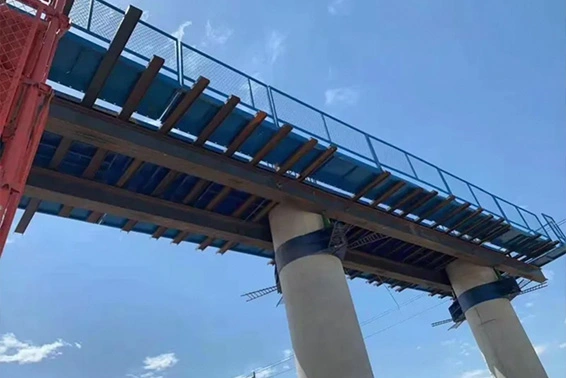
Understanding Pier Cap Work Platforms and Their Adjustability
It's helpful to know what these platforms are for and how they're put together before you judge their adjustability.
What a Pier Cap Work Platform Does?
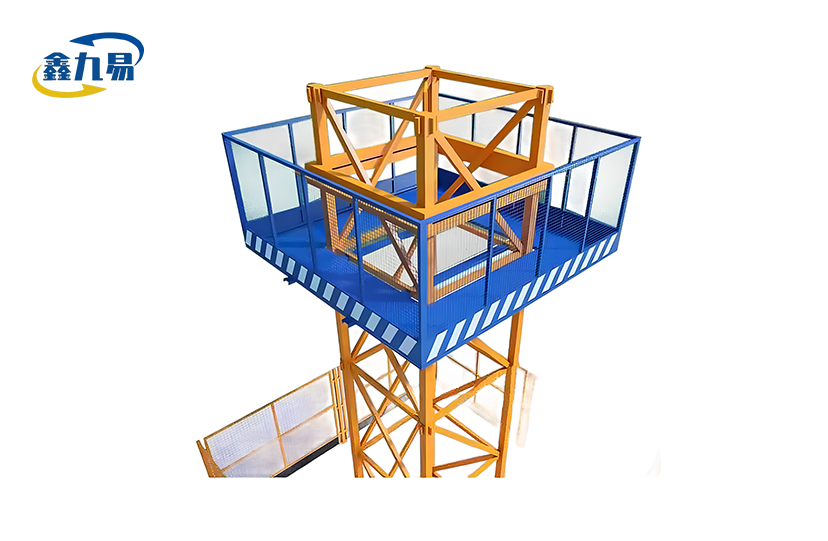
At the top of a bridge pier, a pier cap work platform gives you a safe, raised place to work. It is used by workers to fix rebar, set up forms, and pour concrete, all while they are up high. It replaces ground-supported platforms and the need for a lot of work to be done on the base below because it attaches directly to the pier structure.
Types Commonly Used in Bridge Construction
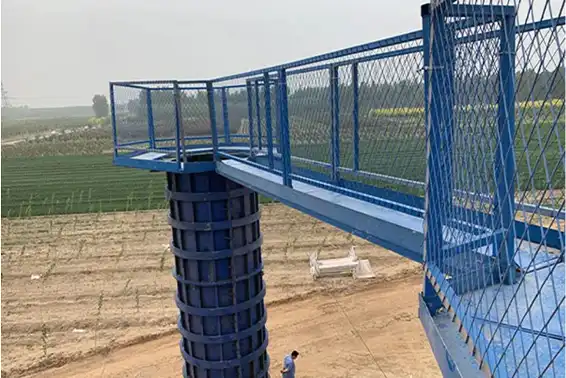
Cantilevered bracket platforms and full-circumference wrap-around platforms are the two main types. Cantilevered forms work well on smaller piers where two sides need to be accessible. For wider caps that need access from all sides during cap beam building on high-speed rail viaducts or raised highway structures, wrap-around designs work better.
Relevant Standards Governing Adjustability
The design and setup of the pier cap work platform must follow EN 12811-1 for temporary work tools and OSHA 1926 Subpart L for fall protection. These rules say how much weight a structure can hold, usually between 2.5 and 5 kN/m². They also say how high the guardrails can be, how strong the decks must be, and how strong the connections must be. Platforms made with ISO 9001 quality control systems are more consistent in their sizes when they are being adjusted in modules.
Technical Approaches to Adjusting Pier Cap Work Platforms for Different Bridge Widths
Bridge widths are very different. A normal crossing pier cap in a city may be 2 meters long, but the cap of a multi-lane highway bridge can be over 12 meters long. This range needs to be taken into account by platform tools so that each site doesn't have to do a full restart.
Modular Sections and Telescoping Components
Modular sections that are made ahead of time and then bolted together on-site are the most practical way to make adjustments. Xinjiuyi's platform has a welding frame structure with 50 × 50 mm square tubes as the main grid. Sections can be added or taken away depending on the width of the cap beams. When access to the formwork is needed along the edges of a wide pier, 300 mm wide by 2890 mm high flip boards make the working area bigger.
Adjustable Bracket Systems
For eccentric load avoidance, bracket orientation is very important. Professional platforms have spreading beams and bracket systems that can be moved within ±2 mm to fit the measurements of the pier. This accuracy is important because brackets that aren't lined up right cause uneven load distribution, which is a main reason why platforms become unstable during concrete pouring operations.
Case Application: Phased Construction on a Long-Span Viaduct
When working on a multi-pier viaduct project with different pier spacing between sections, crews move pier cap work platform units from finished piers to work faces that need to be done right away. Using mechanical connections, each unit can be put back together in two to four hours. This cycle cuts down on the total amount of tools needed and the cost per pier while making sure that all work faces follow the same safety rules.
Comparing Pier Cap Work Platforms With Other Access Solutions
The right comparison shows which system saves time, money, and lives when picking access equipment for building a variable-width bridge.
A modular pier-mounted platform is better than other options in the following ways:
- Traditional tube-and-clamp scaffolding requires ground-level footings and extensive labor to erect. On active traffic corridors or over water, this simply is not feasible. Setup can take several days per pier, and the system cannot be relocated without full dismantling.
- Suspended work platforms offer flexibility over water but require overhead anchor points and carry higher wind-load risk at elevation. They also limit the weight of materials that can be staged on the platform at any given time.
- Modular pier cap platforms attach directly to the pier, require no ground footprint, install in hours, and reuse across dozens of piers. At approximately 26 kg per platform section, crane positioning is manageable without heavy lifting rigs.
Modular systems are the best choice for high-volume viaduct projects where per-pier cycle time directly impacts the project schedule because they are light and easy to set up.
Procurement Insights: Choosing and Sourcing Adjustable Pier Cap Work Platforms
It takes more than just comparing unit prices to find the best supplier for adjustable bridge pier platforms. Whether or not a platform works over a multi-year project depends on a number of technical and practical factors.
Key Selection Criteria
Load capacity documentation, the ability to change the dimensions, and third-party weld certification should all be required by any procurement checklist. Ask suppliers to show you studies on how much weight the structure can hold and material certifications that say the steel is Q345B or a similar grade. International consulting engineers usually need technical files in English and full material tracking for projects that are going to be exported.
Buy Versus Rent Analysis
You can rent suits with short, single-bridge contracts. When 50 or more pier caps are needed for a project, which is usual in highway and rail programs, ownership cuts the cost per pier by a large amount. The metal finish on Xinjiuyi platforms makes them last 20 years or more, which means that the initial investment is spread out over many project rounds.
Evaluating Supplier Credibility
A reliable pier cap work platform supplier should have ISO 9001, ISO 45001, and ISO 14001 certifications, and they should be able to make changes to your order based on drawings. Ultrasonic testing (UT) or magnetic particle inspection (MPI) records can be used to check the quality of the weld. After-sales support, such as on-site fitting help and the availability of extra parts, lowers your risk if something needs to be changed in the middle of a project.
Maintenance, Safety, and Best Practices for Adjustable Pier Cap Work Platforms
A platform that is well taken care of works the same way in different assembly cycles and applications with different widths.
Installation Process for Variable Dimensions
Before putting it together, check the measurements against the drawing of the pier cap. Before you load the platform, make sure the brackets are lined up correctly and tighten all the connection nuts to the recommended levels. Before workers step on the surface of bigger cap beams, make sure that all modular additions fairly distribute the load across the main frame.
Fall Protection and Load Distribution Checks
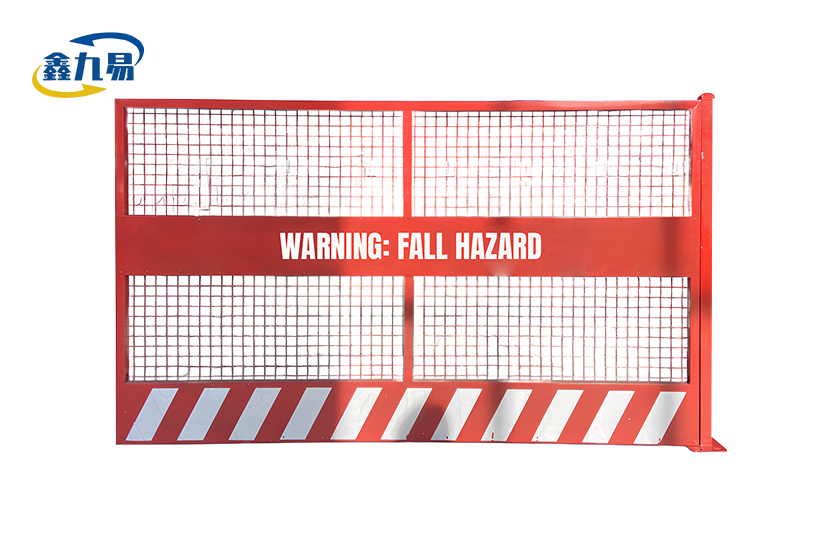
As per EN 12811-2, guardrails must be at least 1 m high and have a toe board. For safety, the Xinjiuyi platforms have 40 × 40 mm fence tubes backed by 60 × 100 mm extended metal mesh. This keeps tools and materials from falling. Under no circumstances should the platform hold more weight than it is designed for. Before each concrete pour cycle, check the total weight of the workers, rebar, and forms.
Maintenance Schedule for Adjustment Mechanisms
Check the bolt pressure on all link points every three months. Check the weld seams visually for fatigue cracks, especially where the bracket meets the frame, where dynamic load cycles put a lot of stress on the area. Every year, check the condition of the galvanized coating on adjustable parts. To make them last longer, fix any spots where base metal is showing with a zinc-rich primer.
Conclusion
Modular section additions, configurable brackets, and factory-level customization from drawings can be used to change the width of a pier cap work platform to fit different bridge widths. Because it can be changed to fit different needs, the platform is a safe, cost-effective choice for projects like high-speed train viaducts, sea bridges, and overpasses in cities. Whether that adjustability gives you consistent performance over the life of your project depends on how well you buy it, including having load documentation, certified materials, and qualified suppliers.
FAQ
Are all pier cap work platforms universally adjustable?
No, not every platform on the market really lets you change the dimensions. Lower-quality standard-size units often don't come with the modular bracket choices that are needed for pier lengths that aren't standard. Before placing a large order, you should always make sure that the supplier can provide a customized drawing response.
How do I verify that a supplier's platform meets safety certifications?
Ask for the structural load calculation report, material certificates that say what type of steel it is, and inspection records from a third party, like SGS or TUV test results. For projects that involve people from other countries, make sure that the documentation is available in English and that it meets EN 12811-1 or similar local standards.
How often should adjustable components be inspected?
For high-frequency use, checks are usually done every three months. Check the torque on the bolts, the quality of the welds at the connection points, and the condition of the decking surface. If the platform has been moved more than five times, it should have a full structural inspection done before it is moved again.
Can the same platform work on both rectangular and circular pier heads?
Yes, as long as the bracket system has sitting choices that are either adjustable or curved. Through rearranging link parts, Xinjiuyi's flexible design can work with pier shapes that are rectangle, circular, or flared.
Get a Custom Quote From Xinjiuyi — Pier Cap Work Platform Supplier You Can Count On
Xinjiuyi makes engineered pier cap work platforms that are built to your exact pier drawings. These platforms can be standard or fully customized. Contractors in Asia, the Middle East, and beyond trust us to make pier cap work platforms because our factory is ISO-certified, our finishes are hot-dip galvanized, and our platforms last 20 years. Our team is ready to help you with drawings, load estimates, and shipping dates, whether you need a single project batch or a full multi-bridge supply package. To start your question right away, email us at global@xjy8.com.
References
1. European Committee for Standardization. EN 12811-1: Temporary Works Equipment — Part 1: Scaffolds, Performance Requirements and General Design. CEN, 2003.
2. Occupational Safety and Health Administration. OSHA 1926 Subpart L: Scaffolds. U.S. Department of Labor, 2011.
3. International Organization for Standardization. ISO 1461: Hot Dip Galvanized Coatings on Fabricated Iron and Steel Articles. ISO, 2009.
4. Xanthakos, Petros P. Bridge Substructure and Foundation Design. Prentice Hall, 1995.
5. Chen, Wai-Fah, and Lian Duan. Bridge Engineering Handbook: Construction and Maintenance. CRC Press, 2014.
6. Ratay, Robert T. Temporary Structures in Construction: Professional Reference Manual. McGraw-Hill, 2009.