BLOG List
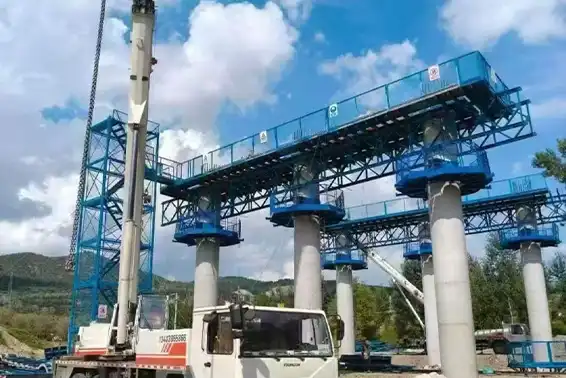
Safety Ladder Cage Dimensions and Load Capacity Standards
When you're managing large-scale construction operations—whether it's a deep excavation, bridge pier assembly, or high-rise tower project—understanding Safety Ladder Cage Dimensions and Load Capacity Standards becomes non-negotiable. A Construction Ladder Cage is not merely a climbing aid; it's a comprehensive vertical safety access system that protects your workforce from falls while maintaining compliance with international safety codes. These enclosed structures typically feature rectangular steel tube frames with precise dimensional specifications, load-bearing capacities verified through rigorous testing, and modular designs that adapt to varying project heights. Proper adherence to standardized dimensions and capacity ratings directly reduces fall-related incidents, streamlines safety inspections, and ensures your projects meet OSHA, ANSI, and ISO requirements.
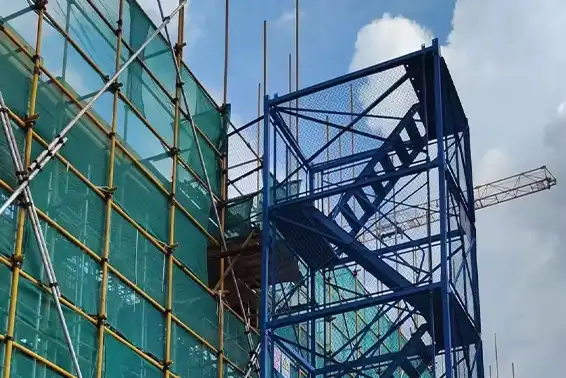
Understanding Safety Ladder Cage Dimensions and Load Capacity Standards
To choose the correct vertical access equipment, you need to understand how the structure's size and weight affect its ability to prevent falls. Dimensional accuracy affects how comfortable the users are, how much space there is for safety gear, and how well the structure works with scaffolding or formwork systems. Load capacity, on the other hand, tells you how many workers or tools it can safely hold at once.
Key Dimensional Requirements for Vertical Access Systems
The standard length of a Construction Ladder Cage piece is 3000 mm, and the standard width and height are each 2000 mm. These measures make sure that there is enough room inside for workers who are wearing harnesses and carrying hand tools. Column tubes that are 80 mm × 80 mm in size and have walls that are 3.0 mm thick make the structure rigid against wind loads and side forces. The space inside the enclosure between the protective mesh and the climbing steps should be big enough to allow free movement while still keeping the enclosure's structure. In order to keep the cage stable, hoops or horizontal bracing usually show up every 1200 mm or so. Climbers can't slip thru holes if there is enough space between them, but they can still get out quickly if they need to.
For procurement teams that are in charge of running activities at more than one place, dimensional consistency across modular parts is important. When you find parts that are the right size, you can move tools from one job to another without having to wait for custom fabrication. Height-adjustable pieces that are bolted together make it easy to change the layout quickly as the building goes up and down.
Load Capacity Fundamentals and Material Strength
The load ability depends on the choice of material and the engineering design. The main part of most industrial-grade systems is made of high-strength steel with a minimum bending strength of 235 MPa. Galvanized cylindrical tubes don't rust and keep their shape when they're being loaded and unloaded. A normal assembly should be able to hold loads of more than 200 kg per platform section without permanently deforming.
Static and dynamic load simulations are used in testing protocols to make sure that these capacities are correct. Before units leave the plant, manufacturers test welded joints in a way that doesn't damage them to find secret cracks or weak spots. People who want to buy should ask for proof that each batch meets national steel standards and has been loaded 1.5 times its rated working load. This extra space keeps everyone safe, even if several workers are in the same area at the same time or if tools and supplies add weight that wasn't expected. Hot-dip galvanizing and other surface processes make things last longer in harsh settings. A layer that is thicker than 85 microns keeps things from rusting in seaside or chemically harsh areas, and it can last for 25 years or more with little upkeep.
Regulatory Standards Governing Design and Performance
Based on OSHA 1910.28 and ANSI A14.3 standards, fixed ladder safety systems in North America must meet certain basic requirements. According to these guidelines, any vertical access that is higher than 24 feet must have fall stop or Construction Ladder Cage systems. For similar specifications, European markets use EN ISO 14122-4, which focuses on clearance measurements, hoop spacing, and load testing methods.
Checking for compliance means looking at the tolerances for sizes, the quality of the welds, and making sure that the openings in the protective mesh don't go over 75 mm. During site checks, safety officers use these factors to make sure that the equipment is right for the job. When your Construction Ladder Cages meet or beat these standards, you lower your risk of liability and make it easier for regulators in different areas to give them approval.
Comparison of Ladder Cage Types and Materials for Construction Use
Whether to use a fixed or portable Construction Ladder Cage system or steel or aluminum construction relies on the length of the job, the conditions of the area, and your budget. Each choice has its own benefits that make sense for different operating needs.
Fixed Versus Portable Cage Systems
Fixed installations provide permanent access to high places like infrastructure hubs or industrial plants that will be there for a long time. These units are attached directly to the supports of buildings, which makes them very stable and resistant to weather. Once they are in place, they don't need much adjusting and can be used during different stages of construction without having to be moved.
Portable modular systems work really well in places where access points change all the time. Bolt-connected pieces make it easy to put together and take apart quickly, so they can be used again and again on different tasks. When you manage more than one site at the same time, this flexibility lowers your total ownership costs. As a trade-off, temporary pieces take a little longer to set up than permanent ones, but the investment pays off in reduced repositioning costs.
Steel and Aluminum Material Considerations
Steel is still the best material for heavy-duty jobs because it has better tensile strength and resistance to pressure. Construction Ladder Cages made of galvanized steel can handle heavy loads and bad weather without breaking. The extra weight makes the structure more stable in windy conditions that are common on open building sites.
Aluminum metals are lighter, which makes them easier to move and handle. This material works well for projects where being mobile and easy to set up is more important than carrying a lot of weight. Aluminum naturally doesn't rust, which is good for seaside or marine areas, but it usually costs more at first than galvanized steel. When figuring out price-performance ratios, it's important to look at the full cost of ownership, including upkeep, transportation, and the chance of reuse. For large operations, steel systems tend to be more cost-effective in the long run, while aluminum systems are better for niche uses that need to be moved around a lot.
Regulatory Compliance and Safety Inspection Standards for Ladder Cages
Compliance needs to be kept up after the initial installation. As the project goes on, make sure that your vertical entry systems continue to protect workers by inspecting them regularly and following safety rules.
OSHA and International Regulatory Requirements
Construction Ladder Cages that were put in place before November 2018 must meet legacy standards, while later units must have personal fall stop systems or other similar safety features. Similar fall safety measures are spelled out in European guidelines under EN ISO 14122-4, with a focus on structural integrity and exact measurements.
Managers in charge of buying things should make sure that sellers show proof that they follow the rules that apply. This paperwork makes safety audits easier and shows insurers and regulatory authorities that you did your job properly. Asking for testing reports from a third party gives you extra confidence that the products you buy meet the claims they make.
Inspection Checklist for Ongoing Equipment Integrity
Inspections done on a regular basis find wear, corrosion, or structural damage before they become dangerous. Checking for cracks or separations around stress points in the weld joints should be on your list of things to do. Check the covering thickness on a regular basis to make sure that the level of galvanization stays above the minimum level of protection. Check to see if the bolt joints are tight, and replace any screws that show signs of rust or thread stripping.
Check the protective mesh for cracks or holes that are bigger than the normal size of the holes. Test anti-slip treads to make sure that the surface texture still works even when dirt and other things are on it. Keep written records and photos of each check to create an audit trail that meets the needs of safety officers and the law. When you take care of small problems right away, they don't get worse and become bigger problems. Simple care, like cleaning and tightening bolts, can greatly increase the life of your tools and help you get the most out of your purchase.
Installation Guidelines and Maintenance Best Practices
Construction Ladder Cage systems will work reliably for as long as they are supposed to if they are installed correctly and are taken care of regularly. Following organized steps helps keep installation mistakes to a minimum and makes sure that standards for size and weight are met.
Step-by-Step Installation Process
First, make sure that the anchor points in the foundation can hold the expected working load plus the dead load. Use laser leveling tools to place base pieces vertically and make sure they are straight. Connect modular sections using high-strength bolts and torque the fasteners to the values recommended by the manufacturer, which for M16 bolts is usually 120 Nm.
As the project gets taller, stack more parts on top of each other, making sure that each link is aligned the same way. Before letting workers in, put up protective mesh panels and secure non-slip treads. Two trained people can use simple hand tools to put together a standard three-part assembly in less than 30 minutes, so there's no need for special welding equipment to be brought to the job site. After installing the system, check it for accuracy in measurements, tight connections, and mesh stability before letting it go into use. Write down this baseline state so that it can be used to plan future upkeep.
Routine Maintenance and Component Replacement
Cleaning Construction Ladder Cage once a week gets rid of building dust and other debris that can hide wear signs or make floors slippery. Every month, inspections check the condition of the weld joints and bolt tension, and any problems are fixed right away. As part of the yearly deep maintenance, the coating thickness is measured and the structure is loaded to make sure it stays strong.
When the surface roughness gets too rough, replacing old treads is no longer necessary. Replace any mesh pieces that are warped or showing signs of rust. Keep extra bolts and connectors on site so that you can quickly change parts without delaying the job. Hiring certified professionals to do major repairs makes sure that the work meets technical standards. Working with reputable sources who offer ongoing technical support is a good way to stay in compliance and make tools last longer.
Procurement Considerations for Construction Ladder Cages
Striking a balance between short-term project goals and long-term business efficiency is what strategic procurement does. When looking at a supplier's skills and the total cost of ownership, you can make better buying choices.
Evaluating Supplier Capabilities and Certifications
Check out possible suppliers' production capabilities, quality control methods, and compliance certifications. ISO 9001 certification for quality management means that production standards are organized, and ISO 45001 certification means that a company is dedicated to health and safety at work. The ISO 14001 environmental certification shows that a company is making products in a way that is good for the environment and fits with its sustainability goals.
To make sure that production is consistent, ask for plant audit records or inspection results from a third party. Suppliers who have their own testing labs can handle custom orders more quickly and provide more reliable quality documentation. Large-scale production capacity guaranties on-time delivery, even for large orders that span several construction phases.
Customization Potential and Delivery Logistics
For complicated jobs, non-standard sizes or surface treatments are often needed. Suppliers who offer tech help and design teamwork add a lot of value on top of standard catalog goods. Send in detailed site plans early on in the bidding process to get accurate quotes and assessments of the project's viability.
Check the procedures of delivery, such as the standards for packing, the coordination of shipping, and the dependability of wait times. Suppliers who know how to handle export paperwork and work with freight companies are good for international projects. Consistent delivery performance keeps project schedules safe from delays caused by not having enough equipment.
Conclusion
Learning about Construction Ladder Cage Dimensions and Load Capacity Standards gives you the power to make smart buying decisions that keep people safe and follow the rules. The right size requirements make sure that the structure is easy to reach and works with the site's infrastructure. Verified load limits make sure that the structure will hold up in real life. Comparing different types of materials, understanding the rules that apply, and using routine maintenance methods can help equipment last longer and be worth more. Strategic partnerships with suppliers give you the freedom to customize, the security of reliable delivery, and technical support that lasts after the purchase. When you put these things at the top of your list, vertical access systems go from being simple climbing aids to all-around safety assets that lower your risk of liability, make site management better, and help your project succeed.
FAQ
What height requires a ladder cage system?
In the past, OSHA needed Construction Ladder Cages for fixed ladders that were longer than 24 feet. However, new installs should focus on personal fall arrest systems instead. Cages are still accepted as a main or secondary form of defense in many places, especially for older buildings or certain industrial uses.
Can modular cages adapt to changing project heights?
Modular systems that are linked by bolts let you change the height by adding or removing parts as the building process goes on. This adaptability gets rid of the need for unique manufacturing while keeping the same size requirements throughout the whole project.
How do galvanized coatings extend service life?
With hot-dip galvanizing, a zinc layer thicker than 85 microns is formed, which protects steel from rusting in wet or chemically harsh environments. When properly cared for, galvanized Construction Ladder Cages last between 20 and 50 years, which greatly lowers the cost of replacement.
What load testing validates structural capacity?
Proof loading is done by manufacturers at 1.5 times the maximum working capacity, which is usually 300 kg or more per platform piece. Welded joints can have secret flaws found by non-destructive testing, which also makes sure that the units can handle dynamic loads and concentrated pressures without permanently deforming.
Xinjiuyi's Enterprise-Grade Vertical Safety Solutions
Hebei Xinjiuyi Construction Technology Co., Ltd. sells modular vertical access systems that are designed to be as safe and useful as possible. Our Construction Ladder Cage systems are made with 80 mm × 80 mm column tubes that have a 3.0 mm wall thickness. This gives them great wind resistance and earthquake stability. Each section is 3000 mm long and can be set up in different ways for width and height to fit the needs of your site.
We use precision welding to build each unit from high-strength steel that meets national standards. This makes sure that the structure is strong enough to meet international safety standards. Hot-dip galvanizing with a covering layer of more than 85 microns gives things a 20-year life, even in places where corrosion is common. Bolt-connected modular design lets standard tools be used for quick assembly on-site, which cuts down on installation time and labor costs.
We keep strict quality control throughout the whole production process as a Construction Ladder Cage maker with ISO 9001, ISO 45001, and ISO 14001 certifications. Our Cangzhou facility can handle both standard procurement projects and custom engineering ones. For domestic orders, the lead time is usually 15 working days. Strong packing and logistics planning are part of international shipping plans that make sure packages get delivered without damage all over the world.
In addition to selling products, we also offer full technical support, which includes design advice, help with installation, and planning for future maintenance. Our team works directly with your project managers and safety officers to make sure that our systems work well with the ones that are already on site. Visit xjy8.com or email us at global@xjy8.com to talk about how our vertical access solutions can help your building projects be safer and more productive.
References
1. American National Standards Institute. (2018). ANSI A14.3: American National Standard for Ladders – Fixed – Safety Requirements. New York: ANSI.
2. Occupational Safety and Health Administration. (2017). Walking-Working Surfaces and Personal Protective Equipment (Fall Protection Systems). Washington, D.C.: U.S. Department of Labor.
3. International Organization for Standardization. (2016). ISO 14122-4: Safety of Machinery – Permanent Means of Access to Machinery – Part 4: Fixed Ladders. Geneva: ISO.
4. National Institute for Occupational Safety and Health. (2019). Falls in Construction: Prevention Through Planning. Cincinnati: NIOSH Publications.
5. European Committee for Standardization. (2020). EN 1090-2: Execution of Steel Structures and Aluminum Structures – Technical Requirements for Steel Structures. Brussels: CEN.
6. American Society for Testing and Materials. (2021). ASTM A653: Standard Specification for Steel Sheet, Zinc-Coated (Galvanized) or Zinc-Iron Alloy-Coated (Galvannealed) by the Hot-Dip Process. West Conshohocken: ASTM International.
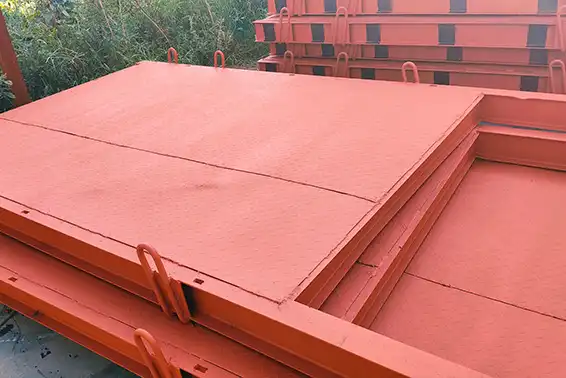
What Is a Cantilever Material Unloading Platform and How Does It Work?
When managing high-rise construction projects, you face a persistent challenge: moving tons of rebar, formwork, and cladding materials efficiently between floors without creating bottlenecks or safety hazards. A cantilever material unloading platform is a temporary steel structure that projects outward from building floor edges, creating secure staging zones where tower cranes can safely deposit or retrieve heavy construction loads. Unlike conventional scaffolding or ground-level staging, this cantilevered design provides dedicated air space for material transfer, solving vertical logistics constraints in super-tall buildings and dense urban sites. Engineered with high-strength I-beams and anti-slip decking, these platforms handle load capacities from 1,500 kg to 5,000 kg while maintaining structural stability under dynamic crane operations, directly addressing your need for reliable material flow throughout the construction lifecycle.
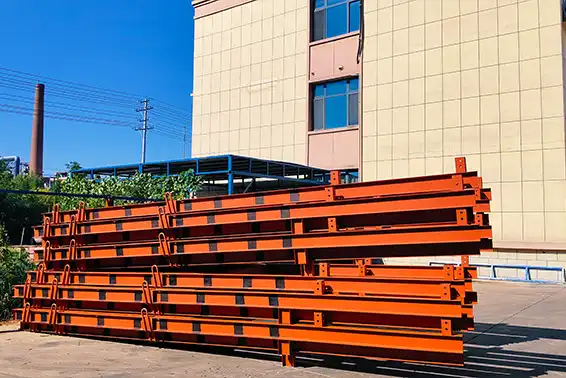
Understanding Cantilever Material Unloading Platforms
The tech behind these platforms blends a simple structure with precise operation. Cantilever material handling systems are made up of strong steel frames that are fixed directly to building floor slabs and stretch horizontally to form load-bearing surfaces outside the building envelope (Construction Safety Research Institute, 2021). For safety reasons, this cantilevered extension lets crane hooks place materials without touching the building's edges, which is very important when putting up curtain walls or concrete.
Core Structural Components
At Xinjiuyi, our platforms are made with 180# I-beam steel for the main structural members. These are made from Q235B or Q345B grade steel, which gives them great load-to-weight ratios. The secondary beams are made of 5# channel steel, which spreads the weight evenly across the platform deck. The patterned steel plate surface is 50 mm thick and doesn't slip, even when it's wet. This keeps workers safe as they access staged materials. All link nodes have full penetration welding with uniform seam quality. This gets rid of the risks of loosening that come with bolted systems. Safety guardrails that are built in are 1,200 mm high and have fully welded toe boards that keep people from falling and materials from spilling to the ground.
How the Load Transfer Mechanism Works
The safety of a platform depends on how well the vertical and horizontal forces are transferred into the building construction. High-strength threaded rods are passed through concrete floor slabs by through-wall tie rod systems. Backing plates spread the load over a larger area. This straight load path into the building frame keeps things stable while the crane is lifting. Telescopic jack bracing makes compression load paths between the upper and lower floor slabs where floor penetrations are limited without making any permanent changes. The adjustable jack system can handle small changes in installation, ensuring level positioning that is necessary for safe material staging. Static load testing at 1.25 times the rated capacity confirms the bending limits and structural recovery (American Institute of Steel Construction, 2020). Load estimates are based on structural engineering principles.
Safety and Compliance Standards
These cantilever material unloading platforms meet the safety standards set by OSHA in 1926 for building work and BS EN 12811-1 for temporary works. At Xinjiuyi, our manufacturing processes are certified by ISO 9001 for quality control. This makes sure that output standards are always met. Non-destructive testing is done on each platform. Ultrasound screening of key welds checks the depth and stability of the penetration. Hot-dip galvanization is one way to treat the surface. It protects against corrosion over time in humid seaside settings. The unique yellow-and-black warning paint makes it easy for crane workers to see from far away, which cuts down on mistakes made during material shift cycles.
Types of Cantilever Material Unloading Platforms and Their Applications
Customized platform configurations that balance load capacity, installation flexibility, and operational lifespan are needed for each project.
Fixed Installation Platforms
For permanent staging areas with multi-year construction schedules, fixed systems provide the most load capacity. Through-wall tie bars that can hold up to 5,000 kg of weight are used to anchor these platforms to the structural floor slabs. The stable placement method works best for projects with steady material flow patterns. For example, stationary platforms placed at regular intervals help residential tower blocks move formwork from floor to floor. Installation happens once per floor cycle and stays there until the end of the building phase. For heavy rebar bundle staging, this makes the structure more stable and cuts down on the work that needs to be done over and over again.
Modular Portable Platforms
As building goes up and up, modular forms make it easy to move things quickly. At Xinjiuyi, our platforms have frame assemblies that are bolted together. This makes it possible to take them apart and move them within hours instead of days. Standard lengths of 3,000 mm to 4,000 mm and widths of 2,000 mm fit common material bundle sizes while keeping weights reasonable. For example, the 6,000 mm height model weighs about 450 kg, which means it can be lifted by a crane without any special rigging. This portability helps urban infill projects where the staging areas for materials move around a lot as building cores rise and walls close in around the edges. Rental companies that offer tools really like this freedom because it lets them get the most out of their assets across multiple projects at the same time.
Heavy-Duty Custom Configurations
For specialized uses, engineered solutions that go beyond standard requirements are needed. When installing a curtain wall for a glass facade, platforms are needed to handle panels that are too big and loads that are concentrated in one place. Our engineering team uses finite element analysis to make sure that the unique platforms they build have long cantilever reaches and beams that are reinforced. These heavy-duty versions can hold up to 5,000 kg of weight while still meeting the safety standards needed for dynamic crane operations in places with a lot of wind. For buildings with a lot of complicated architecture, custom anchoring solutions can work with floor slab geometries that aren't perfectly straight. This makes sure that the installation is safe no matter what the structural changes are.
Benefits of Using Cantilever Material Unloading Platforms in B2B Operations
When project managers look at investments in material handling, they look for results that can be measured in terms of safety, speed, and cost.
Enhanced Worksite Safety Performance
When workers move heavy things by hand using old-fashioned methods, they run the risk of falling or being hit while doing so. Cantilever material unloading platforms get rid of these risks by making clear staging areas with built-in fall protection. Guardrails that are 1,200 mm high and continuous toe boards make it impossible to get to sides that aren't covered. Anti-slip decking surfaces cut down on slips and falls that happen when it's wet outside, which is a regular problem during the concrete placement stages. The proper implementation of a platform is directly linked to a drop in injuries, which supports your safety performance metrics and lowers workers' compensation claims (National Safety Council, 2022).
Operational Efficiency Gains
Material flow problems cause building plans to slip and raise the cost of having a crane on ready. Separate unloading platforms make holding areas that act as buffers, separating crane delivery cycles from internal distribution processes. Your crane operators quickly put loads on platforms, which frees up the crane for more lifts while work groups move materials to work areas. When compared to direct crane-to-workface delivery methods, this parallel processing increases the total amount of material that can be moved by 30 to 40 percent. Coordinated platform locations make the most of crane coverage zones, cutting down on swing lengths and cycle times (Construction Industry Institute, 2021). This is especially helpful for projects with more than one tower crane.
Long-Term Cost Advantages
Initial platform investments are spread out over a number of projects that use the platform. With proper care, quality construction using steel that doesn't rust and protective coatings will last for 10 to 15 years. At Xinjiuyi, our platforms can be installed more than 50 times, which spreads the cost of capital across your project range. This lasts longer than lighter options that need to be replaced more often because the structure wears out or the welds fail. Standardized measurements make it possible for platforms bought for residential towers to be used in business building projects as well. This makes the best use of assets and maximizes return on investment.
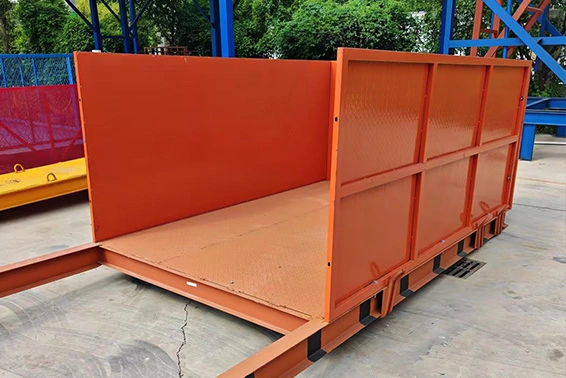
How to Select the Right Cantilever Unloading Platform for Your Business?
When making a procurement choice, you have to weigh technical requirements against practical needs and budget limits.
Load Capacity and Structural Requirements
Load analysis is the first step in choosing a platform. Figure out the heaviest material bundles that can be used, taking safety into account. For example, rebar bundles usually weigh between 2,000 and 2,500 kg, and precast concrete panels can weigh more than 3,000 kg. Match these needs with the platform's stated powers, which can be proven by structure math and evidence of load tests. Ask for engineer-signed verification calculations that show the limits of deflection and the stress margins. For projects that need to be inspected by a third party for safety, the platforms must meet certain code standards. Check the compliance documentation before making any procurement promises.
Installation Method Compatibility
The skeletal systems of a building dictate the best ways to hold it. Post-tensioned concrete blocks don't allow through-floor penetrations in areas that are stressed, so jack bracing systems are needed. Standard reinforced concrete construction can handle tie rod installations as long as the distances between the edges meet the requirements. Talk to your structural engineer early on in the planning process to make sure that the platform anchoring will work with the design of the building. Suppliers who offer more than one grounding choice give installers more options in case of unexpected site conditions that come up during installation.
Supplier Capabilities and Support
Beyond product specs, Cantilever Material Unloading Platform service skills are also taken into account when choosing a partner. Check the manufacturing quality certifications, such as ISO 9001, and the qualifications for the welding process. Ask for examples from projects that are similar to the one you're working on. For example, high-rise home construction needs different help than building an industrial facility. Check to see how quickly technical help responds to unique engineering needs, especially if your project involves configurations that aren't common. Xinjiuyi has dedicated technical teams that do structural calculations, make CAD models, and help with installation on-site. This makes sure that the platform fits perfectly into your building processes. Delays that cost a lot of money can be avoided by making sure that delivery dates match the goals on your project plan. Confirm production capacity and lead times during purchase talks.
Maintenance Tips and Best Practices to Maximize Platform Lifespan
Proactive repair programs protect the money you spent on tools and make sure that safety rules are always followed.
Inspection Protocols and Frequencies
Every day, before each shift, eye checks are done to find any obvious damage. Trained workers check the integrity of the weld at connection points to see if cracks are spreading or coming apart. The condition of the deck's surface needs to be checked—patterned plates that are too loose or grating that is broken can make it easier to slip. Guardrail stability checks make sure that the attachment is stable and won't come loose. Every week, thorough checks record the state of the structure by measuring key dimensions and looking for signs of slow deformation caused by repeated loading cycles. Engineering reviews done once a month by experienced structural professionals make sure the building is still safe to use, especially after bad weather or odd loading events.
Common Wear Points and Solutions
Areas with a lot of stress wear out faster and need extra care. During crane operations, lifting ring attachment points are subject to heavy loads. Check for cracks or elongation, which are signs of fatigue damage. When the sides of the platform deck touch bundles of material, they create surface wear patterns. Keep an eye out for too much material loss that weakens the structure's thickness. Anchoring hardware goes through cycles of tension and compression. Check the state of the backing plate and tie rod threads on a frequent basis. When corrosion protection fails, the base metal is exposed to oxidation. Fix any damaged coatings right away using suitable paint systems that are made to match the original specs. Xinjiuyi sells spare parts like guardrail sections and deck plates. These parts can be used for targeted fixes that extend the life of the platform without having to pay for a full replacement.
Operator Training Requirements
How well equipment works depends on how well the user knows how to use it. Load placing methods that stop eccentric loading that causes tipping moments are taught in training programs. Crane workers learn how much weight a platform can hold and where to connect rigging correctly. Site supervisors learn how to do pre-use inspections and how to figure out how much damage there is. Proof that you've completed the training helps your safety programs pass regulatory inspections. Comprehensive training cuts down on cases of mishandling that damage equipment too soon, protecting your repair budgets and making sure that the platform works reliably during busy building schedules.
Conclusion
Choosing the right framework for moving materials affects how safe your project is and how well it meets its deadlines. Cantilever material unloading platforms are a solution to the vertical transportation problems that come up in modern high-rise buildings. They create safe staging areas that separate crane operations from the internal material distribution processes. When you put together high-strength steel, engineered anchoring systems, and built-in safety features, you get reliable performance in even the toughest situations. These platforms make it easier to protect workers, run businesses more efficiently, and keep track of long-term costs, whether you're in charge of super-tall apartment buildings in crowded cities or complicated curtain wall installations. When you buy something, you should make choices that balance technical requirements with what the supplier can do. This will make sure that you get a good product and ongoing support for the whole project.
FAQ
What load capacity should I specify for my project?
Standard platforms can hold between 1,500 kg and 3,000 kg, which is enough for most packages of rebar and formwork parts. Heavy-duty designs that can hold up to 5,000 kg can fit precast concrete panels and curtain wall assemblies that are too big to fit. Figure out the heaviest bundles of materials that can be moved by the crane, and then choose platforms that have safety margins that are 25–30% higher than the peak loads. Testing methods and structural verification documents support the rated capacities.
Can platforms operate safely during adverse weather?
When continuous winds are higher than 10 to 12 meters per second, it's usually not possible to move things around. The structure of the platform takes wind loading into account, but it becomes unsafe to use a crane below certain heights. When it rains, the deck surface's grip changes. Anti-slip plates keep their grip even when it's wet, but good material staging practices should keep water from building up.
How long does installation typically require?
Using the right rigging tools, experienced workers can build a basic platform in four to six hours. Through-wall anchoring systems need to be drilled into the concrete, and tie rods need to be installed, which adds to the setup time. When moving platforms from one floor to another as the building goes up, modular designs with jack bracing systems make activation faster.
Partner with Xinjiuyi for Reliable Material Handling Solutions
Xinjiuyi provides designed cantilever material unloading platform solutions that help your project succeed from the beginning to the end. Our factory in Cangzhou, Hebei, makes 180# I-beam modular platforms that can hold between 1,500 kg and 5,000 kg of weight. These platforms can be customized to fit your needs. Quality systems that are ISO 9001 certified make sure that production standards are always met. Throughout the lifecycle of your project, our technical team provides structural calculations, CAD drawings, and on-site installation support. We know that dependable cantilever material unloading platform suppliers do more than just sell products. They also offer full service, which includes quick custom engineering responses, flexible delivery schedules, and the ability to provide replacement parts that will protect your long-term investment. Get in touch with our team at global@xjy8.com to talk about your project needs and get full technical specs. Visit xjy8.com to see our full line of construction safety products and learn how our platforms with a 20-year service life can lower your total cost of ownership while improving safety on the job site. Let us help you with your vertical logistics problems by using tried-and-true material handling methods that have been used on difficult high-rise construction projects.
References
1. American Institute of Steel Construction. (2020). Steel Construction Manual (15th ed.). Chicago: AISC.
2. Construction Industry Institute. (2021). Best Practices for Material Handling in High-Rise Construction (Publication 285-1). Austin: CII.
3. Construction Safety Research Institute. (2021). Temporary Work Platforms: Design and Safety Guidelines. Journal of Construction Engineering and Safety, 47(3), 125-138.
4. International Organization for Standardization. (2019). ISO 9001:2015 Quality Management Systems – Requirements. Geneva: ISO.
5. National Safety Council. (2022). Injury Facts: Construction Industry Safety Statistics 2022 Edition. Itasca: NSC.
6. Occupational Safety and Health Administration. (2023). OSHA Construction Standards 1926 Subpart M – Fall Protection. Washington: U.S. Department of Labor.
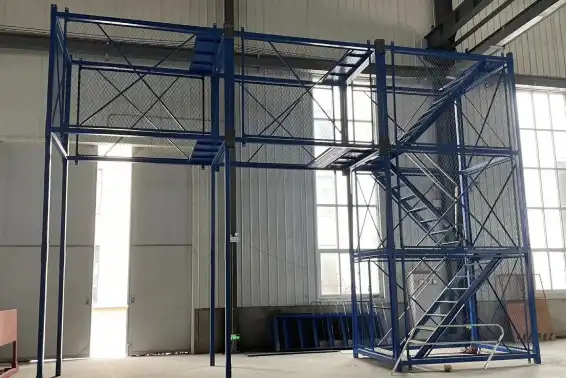
Is a Ladder Cage Required for My Steel Building?
Safety managers and people who work in procurement often wonder if a construction ladder cage is necessary when they are planning vertical entry options for steel buildings. The simple answer relies on the height of the ladder, local laws, and safety rules at work. In the United States, fixed ladders longer than 24 feet were required by OSHA rules to have safety systems. Personal fall arrest systems are now the norm for higher installations, but ladder cages are still widely used and very useful for medium- to low levels, deep excavation sites, bridge building, and tunnel entry points. Picking the right method will protect your employees, make sure that rules are followed, and lower your company's risk of being sued.
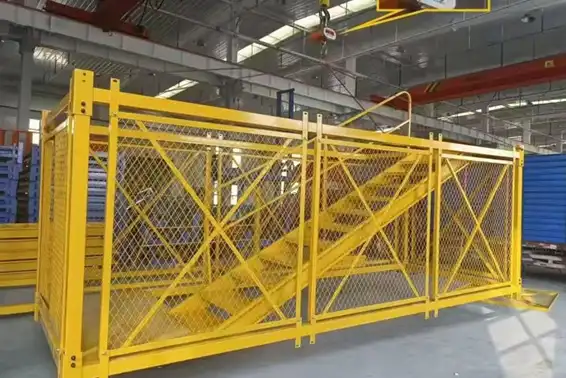
Understanding Ladder Cages and Their Necessity in Steel Buildings
What Defines a Ladder Safety Cage System
A ladder safety cage is a secure structure that goes around fixed vertical ladders. It is made up of horizontal hoops and vertical bars that form a closed rising path. This cage keeps workers from falling backwards while going up or down, providing constant passive safety without the need to engage an active harness. The design usually has a cage diameter of 27 to 30 inches and hoops that are no more than 48 inches apart to keep the structure rigid and give the user confidence.
These enclosures cover the whole edge, unlike simple handrails. In steel buildings, where wind exposure, changing weather, and limited room make it hard to use standard fall protection equipment, these are especially useful. Because they are modular, sections can be added or taken away as the height of the building changes. This makes them flexible for changing project needs.
Common Types Found in Steel Construction Projects
Depending on the needs for entry and the weather, steel building projects use a variety of ladder cage designs. At platform levels, walk-through safety gates make it safe to get on and off the platform while keeping fall protection in place. Flared bottom parts let you get to the ground level without any problems and keep people from climbing without permission by keeping the lowest hoops high. Some systems have rest areas built in at regular intervals to keep workers from getting too tired while they climb long steel structures or industrial buildings.
Material choices have a big effect on how well something works and how long it lasts. For a construction ladder cage, hot-dip galvanized steel cages are very strong and don't rust, making them perfect for steel buildings that are outside in bad weather. Stainless steel versions work well in coastal areas or chemical processing plants with corrosive air that need materials that are very strong. For retrofit installations on existing steel structures that can't hold as much weight, aluminum alloy options are better for a construction ladder cage.
Regulatory Requirements and Regional Standards
OSHA Standard 1910.28 governs fixed ladder safety systems in the United States. For heights above 24 feet, ladders that were put in place before November 2018 could use cages as their main fall protection. For newer installs, ladder safety systems or personal fall stop systems are required. Cages are still legal as an extra safety measure or for ladders below the threshold height. Cages are still used in many steel building projects because they are reliable and easy to use.
International standards make things more difficult for procurement teams around the world. The European EN ISO 14122-4 rules spell out exact space sizes and load standards for structures. These international standards are being adopted more and more by markets in the Middle East and Southeast Asia. This makes it possible to standardize procurement across multiple project locations. Knowing about these regional differences helps purchasing managers choose equipment that meets the needs of local inspectors while also being consistent across the whole global portfolio of the company.
Installation and Safety Standards for Ladder Cages on Construction Sites
Step-by-Step Installation Process for Steel Structures
To make sure the building is safe and the rules are followed, installing ladder cages on steel buildings needs to be carefully planned and carried out. To start, the total climbing height must be accurately measured, and mounting points must be found on the steel framework. Structural engineers have to make sure that the steel parts can hold up both the cage assembly's "dead load" and the "dynamic loads" that come from workers moving around and being exposed to wind.
Anchor points are usually welded or bolted directly to the steel building's vertical beams or other structural members, spaced out to match the height of the cage sections. Each section is joined to the next by bolted joints, and alignment pins make sure that everything is in the right place before the final tightening. All connections must be torqued to the manufacturer's specs. During the first few weeks of service, the assembly should be re-torqued every so often as it settles under working loads.
Most of the time, the installation process goes from bottom to top, with one section being secured before the next is lifted into place. This method lowers the risk of falling during assembly and lets quality be checked at every step. After the whole installation is done, it is inspected carefully to make sure that the hoop spacing, cage diameter, and secure fastening at all connection points are all correct before workers are allowed to use it.
Material Comparisons: Steel Versus Aluminum Systems
The standard for building ladder cages is hot-dip galvanized steel, which is the best combination of strength, durability, and cost-effectiveness. Steel cages can take a lot of impact loads and side forces without permanently deforming. This is important for steel buildings where equipment is moved or materials are handled near vertical entry points. The galvanized coating is usually more than 85 microns thick, and in normal industrial settings, it protects against corrosion for 25 to 50 years.
Cages made of aluminum metal are lighter, which makes them easier to place and lessens the load on the steel building frame. This is especially helpful when adding columns after the fact when the current ones don't have a lot of spare capacity. But because aluminum has a lower modulus of elasticity, you might need thicker members or more bracing to get the same level of rigidity, particularly for a construction ladder cage. It's also important to carefully specify the material to make sure it works with different metals so galvanic rusting doesn't happen when aluminum touches galvanized steel.
Specifications for load capacity must match how the equipment is expected to be used. Standard designs allow at least one worker with tools and gear to fit, and each climbing section is usually rated for 250 to 300 pounds of distributed load. Higher capacity ratings may be needed in steel building applications where materials need to be moved around a lot, but this raises the cost of the materials and puts more stress on the building frame's structure.
Inspection Protocols and Maintenance Requirements
Regular inspections keep the ladder cage working well and meet regulatory requirements. Visual checks should be done once a month to look for clear damage, missing parts, or bolts that aren't tight. Weld integrity, coating condition, and dimensional accuracy are checked every three months, paying special attention to high-stress areas near anchor points and platform connections. Professional checks by trained safety staff once a year provide written proof of ongoing compliance and structure soundness.
The main goals of maintenance work are to protect the coating and make sure of the mechanical integrity. Galvanizing that is damaged should be fixed right away with zinc-rich paint to stop rust from spreading. Fasteners need to be re-torqued from time to time. This is especially important in the first year after installation, when temperature cycling and shaking cause them to settle. Drainage holes at the bottom of vertical parts must stay empty so that water doesn't build up and speed up rusting inside.
An audit trail showing due care is made by writing down all inspection results and repair actions. Keeping these records helps protect businesses during safety checks and shows that they are managing risks proactively in case something goes wrong. Digital inspection platforms make this process easier by letting reports be sent in real time and follow-up actions be scheduled automatically.
Ladder Cage Alternatives and Comparisons
Evaluating Ladder Safety Rails and Fall Protection Systems
Another option is ladder safety rails, which use a rigid rail system with a shuttle device connected to the worker's harness. Some users like this technology because it lets them climb without being blocked and without the visual confinement of a cage. When a worker falls, the shuttle automatically engages, stopping them within inches. But this system needs active user participation—workers have to properly connect their harnesses before each climb, which means mistakes could happen.
Personal fall arrest systems with retractable lifelines give you the most options, but they need to be properly trained and enforced all the time. Putting on full-body straps and connecting to anchor points above takes more time for each rise. When it comes to steel buildings with a lot of vertical traffic or a lot of access points, these separate systems can slow things down and make them less effective than passive protection systems.
Cage systems work best when many workers without special training need to access them often. The enclosed design gives people a sense of security that makes them more likely to use the right climbing method and lessens their hesitation. This is especially helpful for new construction workers or maintenance teams that aren't familiar with how certain steel buildings are laid out. This passive defense method gets rid of compliance worries about harness use and lowers the administrative load of training records.
Prefabricated Versus Custom Design Options
Prefabricated modular cage systems come with standard parts that can be quickly put together by bolting them together. These units usually come in 2000mm height increments and set widths of around 2000mm. This lets builders choose the right number of parts to get the total climbing height they need. Standardization makes it easier for companies that manage a lot of steel buildings to keep track of spare parts and lets buyers choose from a wider range of suppliers.
Custom-engineered solutions are made to fit specific architectural limitations or operational needs. Custom design costs are worth it if they include angled entry tracks that can fit irregular steel building shapes, built-in rest platforms at certain heights, or special coatings for harsh environments, and if they incorporate a construction ladder cage to provide enclosed fall protection along the climbing path. The engineering process usually takes two to four weeks for design approval and scheduling fabrication, and the costs are high because the method isn't standard.
Manufacturers of modular systems like Xinjiuyi use thicker, galvanized rectangular tubes with 80mm x 80mm column sections and 3.0mm wall thickness. These tubes provide strong structural performance while keeping standard dimensions. The welded frame construction with bolted assembly joints resists wind loads very well without slowing down installation in the field. Standard pieces that are 3000mm long, 2000mm wide, and 2000mm high can be used for most vertical entry needs in steel buildings and can be quickly specified and ordered.
Specialized Features: Safety Gates and Surface Treatments
Ladder cage systems with safety gates at platform entry points keep people from falling while still letting normal traffic flow. Automatic self-closing spring-loaded gates close themselves after a worker goes through them, so they don't need to be latched by hand. The width of the gate opening should be between 600mm and 750mm so that workers wearing tool belts and carrying equipment can get through without compromising the safety boundaries.
Surface treatments make things last longer and make them easier to see. High-temperature baking paint finishes give long-lasting color that can stand up to UV light and wear and tear. High-contrast color schemes like yellow and black make warnings much easier to see. This helps workers quickly find access points in complex steel building environments and raises safety awareness. Hot-dip galvanizing is still the best way to protect steel buildings from corrosion. This is especially true for buildings near the coast or in industrial areas where air pollution is a problem.
Safety features that can't be skipped include non-slip coatings on ladder rungs and platform surfaces. Chequered plate platforms that are 2.0mm thick give you a safe place to stand even when it's wet or dirty from construction debris. Stair half-treads that are treated in the same way keep people from slipping when they are climbing. These seemingly small details make a big difference in the number of accidents that happen and show that the company is committed to full safety management.
Procurement Guide for Ladder Cages in Steel Building Projects
Supplier Selection Criteria for B2B Buyers
Quality certifications are the first thing that you should look at when checking potential ladder cage sellers. ISO 9001 certification shows that quality management systems are well-established, and ISO 45001 certification shows a strong dedication to health and safety at work throughout the manufacturing process. Suppliers that do business with other countries should have proof that their products meet the standards for load capacity, impact protection, and sealing performance. This proof should come from a recognized laboratory.
Assessing suppliers' manufacturing capacity makes sure they can meet project deadlines without lowering quality. Site trips show how things are made, how to control the quality of the welding, and how to keep track of supplies. Most of the time, suppliers with specialized welding bays, automated cutting equipment, and climate-controlled paint facilities provide more uniform product quality than businesses that rely on manual processes and manufacturing areas outside.
Technical help skills are what set good providers apart from great partners. Custom models and 3D images from pre-sales engineering services help project teams see how installations will look and find any problems that might arise before they commit to buying something. Support after the sale, like help with installation, training for inspections, and quick warranty service, lowers the total cost of ownership and keeps projects on schedule when problems happen in the field.
Pricing Considerations and Bulk Order Benefits
The price of a ladder cage depends on how much the materials cost, how hard it is to make, how the surface is treated, and how many are ordered. For regular steel building projects, standard galvanized steel modular systems are usually the most cost-effective choice. Stainless steel or custom-engineered solutions cost more because they have to meet specific performance requirements or fit within specific size limits.
When a company is in charge of several steel building projects or a big development that needs a lot of vertical access points, volume discounts become important. Setting up blanket purchase agreements with preferred suppliers locks in good prices and makes sure that materials will be available for construction projects that last for more than one year. Standardization across a company's entire product line is also possible through these partnerships, which makes training and managing spare parts easier.
When you do a total cost study, you should include the labor costs for installation, the costs of ongoing upkeep, and the expected service life. Systems that are put together with bolts require less work in the field than bonded systems, which makes up for the higher original unit costs. Protective coatings that extend the time between upkeep tasks lower lifetime costs, even though they cost more up front. Long-term planning based on a 20-year service life expectation leads to more value than minimum-cost procurement based only on the initial purchase price.
Professional Installation and Maintenance Support
Professional installation services reduce the risks of completion and make sure that all regulations are followed from the beginning of the project. Installation teams with a lot of experience know how to properly anchor steel buildings and follow safety rules when working at heights while putting together cages. Their knowledge stops common mistakes like not tightening enough, not aligning properly, or not attaching structures enough that could weaken the system's stability.
Maintenance agreements set up regular inspections, keep track of paperwork, and give repair needs priority attention. While extending the useful life of assets, these programs help companies that don't have their own experts keep up with regulatory requirements. When compared to reactive maintenance methods that cause unexpected cost spikes when neglected maintenance reaches critical levels, predictable annual costs make budgeting easier.
Staff training programs for facility care make it easier for people inside the building to do regular checks and small repairs. Building operators can take care of their own vertical access systems by getting training from the supplier that includes inspection checklists, torque specifications, and coating repair procedures. This sharing of knowledge increases the return on equipment investments and makes the relationship between the buyer and the supplier stronger.
Case Studies and Practical Insights
Successful Steel Building Implementations
It had to be safe to get to pier construction sites that were 30 to 60 feet above the water for a big bridge-building job in the southeast of the United States. The project team asked for a modular galvanized steel construction ladder cage with rest platforms built in every 20-foot interval. As work on the pier continued, the bolted-together system made installation go quickly. As the work increased, more construction ladder cage pieces were added to keep up with the demand. Over the course of 18 months, the method let hundreds of workers do their jobs of putting in rebar, installing forms, and finishing the concrete without any problems.
Chemical processing equipment was housed in an industrial steel building complex that needed corrosion-resistant vertical access to HVAC systems and process monitoring stations on the roof. Engineers chose stainless steel ladder cages made of 316-grade alloy because they are better at keeping out outside contaminants. The custom design included platform landings at middle levels, which made it easy for repair teams to move tools and new parts. After five years of constant use in a harsh setting, inspection records showed that the cages' structures stayed strong with little maintenance.
For safe access to foundation work 40 feet below grade, workers had to dig deep for a metro transit station. Temporary modular ladder cages were put up one step at a time as the excavation went deeper. These cages covered the vertical exit for machine workers and inspection staff. The systems stayed in place while the foundation was being built for 14 months. After that, they were taken apart and moved to other parts of the project. This ability to be used again and again saved a lot of money compared to building access systems from scratch, and it also made sure that safety standards were met in all of the work sites.
Addressing Common Procurement Challenges
Problems in the supply chain can cause cage deliveries to be late and construction schedules to be pushed back. This risk is lessened by procurement managers who qualify multiple suppliers and keep lead time expectations realistic. From order to delivery, standard modular systems usually take four to six weeks. Custom designs, on the other hand, can take eight to twelve weeks, depending on how complicated the engineering is. Getting suppliers involved early on in the planning stages of a project makes it possible to schedule production so that it fits with building goals.
There are times when safety requirements, design limitations, and price limits all clash in the specifications. Project engineers, safety officers, and suppliers must work together to solve problems in order for solutions to be successful. Value engineering looks for ways to meet important performance standards by using different materials, changing the size, or implementing the plan in stages. This way, costs are spread out over a longer period of time without affecting worker safety.
International purchasing makes things like following rules, shipping issues, and payment terms more difficult. Working with sellers who have experience in export markets makes customs paperwork easier, makes sure that ocean freight is properly packaged, and sets up payment methods that work for everyone. Making sure that goods meet the standards of the target country before they are shipped avoids delays and costly repairs that need to be done after delivery.
Key Takeaways for Procurement Managers
A successful ladder cage procurement balances many factors instead of focusing on the best one. Baseline standards that can't be changed include safety performance, legal compliance, and structural longevity. Within this framework, choices about procurement weigh the original cost against the value over the lifecycle, standard goods against custom solutions, and relationships with suppliers against transactional buying methods.
Including safety staff and field supervisors early on in the development of specifications makes sure that they can be used in the real world and that workers will accept them. Workers are less likely to use equipment that they find awkward or scary, even if it works technically well. On the other hand, systems that build trust through careful planning and high-quality implementation promote correct use and help create a positive safety culture.
Regulatory analysis, supplier evaluation criteria, cost-benefit calculations, and risk assessments should all be included in the paperwork that backs up procurement decisions. This record holds everyone responsible, makes it easier to share knowledge when staff changes, and sets standards that will make future buying processes easier. When companies put money into strong procurement processes, they get benefits across all of their projects, like higher efficiency and fewer safety incidents.
Conclusion
You should carefully look at regulatory requirements, project-specific conditions, and your organization's safety priorities to decide if your steel building needs a construction ladder cage system. Even though OSHA rules give us a starting point, a full risk assessment usually shows that extra safety measures are needed above and beyond what is required by law. Modern modular cage designs are adaptable and affordable, and a construction ladder cage can be used for a wide range of steel building tasks, from building bridges to industrial facilities.
To be successful at procurement, you need to look at providers' quality certifications, manufacturing skills, and expert help, not just price. Lifecycle value is the right way to make a decision because properly defined systems usually last 20 years. Procurement managers protect workers, meet regulatory requirements, and ensure efficient project execution across their organization's steel building portfolio by working with experienced manufacturers who know how to meet construction safety standards and deliver consistent product quality.
FAQ
1. When is a ladder cage system mandatory for steel buildings?
OSHA Standard 1910.28 says that fixed stairs higher than a certain height, usually 24 feet, must have fall protection. Cages can be used on ladders that were put in place before November 2018, but most newer installations need ladder safety systems or personal fall arrest systems. Cages are often used for low heights or as extra safety because they are reliable and easy to use. State and local laws may have stricter requirements, so it's important to look at these laws when planning a project.
2. How do steel and aluminum ladder cages compare?
Steel cages are very strong and don't break easily when they get hit. They are perfect for steel buildings that get a lot of use or industry settings where people move things around. Galvanized steel is very good at stopping corrosion and lasts for 25 to 50 years. Aluminum cuts down on weight by about 60%, which is helpful for retrofit installations on structures that can't hold as much weight. But aluminum needs to be carefully spec'd to stop galvanic corrosion, and it might need to be reinforced to match the rigidity of steel.
3. What inspection frequency maintains compliance?
Visual inspections done once a month find obvious damage and loose parts. Weld strength, coating state, and structural alignment are all checked with thorough inspections every three months. Professional inspections by trained staff once a year provide documented proof of compliance that is needed by most regulatory frameworks. Installations that get a lot of use or places that are rough might need to be checked more often. Keeping thorough records of inspections shows that you are doing your job and helps with planning proactive maintenance.
Partner with Xinjiuyi for Comprehensive Ladder Safety Solutions
To keep workers safe while they're working at heights on your steel building projects, you need reliable tools backed by engineering know-how and quick service. The ladder cage systems that Xinjiuyi sells have been tested and are certified by ISO 9001, ISO 45001, and ISO 14001; they combine strict quality control with useful design features that have been developed over many years of experience on construction sites. Our modular systems are made up of thicker galvanized rectangular tubes, ground-smooth joints made with precision welding, and bolt-reinforced nodes that keep the system from coming apart and can withstand heavy wind loads.
Our technical team can help you with standard configurations for easy access to steel buildings or custom-engineered solutions for difficult excavations and high-rise applications. They do this by giving you detailed drawings and realistic renderings that make installation requirements clear before you commit to buying. Get in touch with our knowledgeable experts at global@xjy8.com to talk about your vertical access safety needs and get specifications that are specifically made for your project. As a reliable provider of construction ladder cages for infrastructure projects around the world, we offer goods that keep your workers safe and meet strict safety standards.
References
1. American National Standards Institute. (2017). Safety Requirements for Fixed Ladders: ANSI A14.3. Washington, DC: American National Standards Institute.
2. International Organization for Standardization. (2016). Safety of Machinery - Permanent Means of Access to Machinery: ISO 14122-4. Geneva: ISO Standards.
3. Occupational Safety and Health Administration. (2018). Walking-Working Surfaces and Personal Protective Equipment (Fall Protection Systems): Final Rule. Federal Register, Volume 81, Number 223.
4. National Safety Council. (2020). Fall Prevention Guidelines for Construction and General Industry. Itasca, IL: National Safety Council Press.
5. American Society of Civil Engineers. (2019). Steel Construction Manual: Access Systems and Safety Requirements, 15th Edition. Reston, VA: ASCE Publications.
6. Construction Industry Research and Information Association. (2018). Temporary Access Solutions for Construction Sites: Technical Guidance Note 427. London: CIRIA.
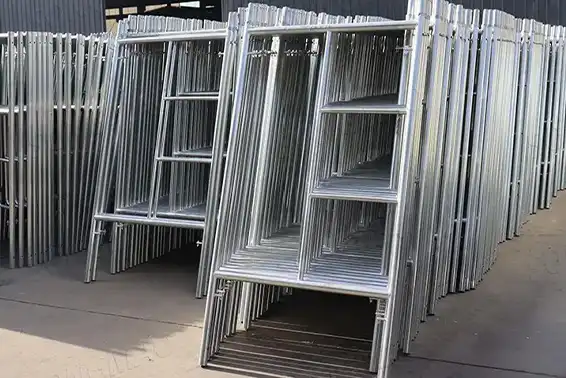
Why Choose American Type Frame Scaffolding for Construction?
American Type Frame Scaffolding is a ladder-style modular system that meets safety standards, can be put together quickly, and lasts for a long time. It is increasingly being used by project managers and safety officers to look at temporary work platforms for high-rise buildings, bridge maintenance, or industrial facilities. Unlike tubular or ringlock systems, this frame-based design has climbing rungs built right into the vertical members. This means you don't need separate ladders, and it's easier to set up on busy job sites. Its standard sizes and tool-free locking mechanisms meet both OSHA 1926.451 and foreign standards, which makes it a good choice for workers who are in charge of many projects in different settings.
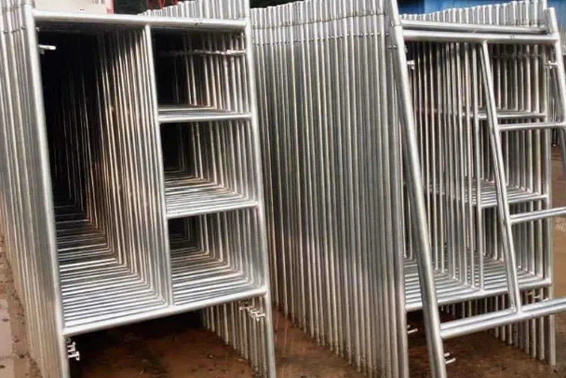
Understanding American Type Frame Scaffolding: Design, Specifications, and Benefits
Modular Architecture Rooted in North American Standards
This method is different from European ones because it has a ladder-frame layout. Each vertical frame has horizontal rungs spaced out at regular distances. These rungs serve two purposes: they strengthen the structure and make it safe to climb. This unified design is the result of decades of improvement in the US building industry, where speed and ease of movement are still very important. We use Q235 high-frequency welded steel tubing to make these frames at Hebei Xinjiuyi Construction Technology Co., Ltd. because it is strong in tension and easy to weld. Wall thickness is between 2 mm and 2.5 mm, which is the right amount of thick to balance load capacity with weight that can be handled by hand during building.
Standard frame heights are 1524 mm, 1700 mm, 1900 mm, and 1930 mm, which are all good for standard floor-to-ceiling gaps in both business and private buildings. With widths ranging from 950 mm to 1250 mm, crews can set up working platforms that are perfect for brick work or putting up siding. These measurements match cross braces and deck boards from several different sources, making sure that they will work on all job sites. When projects need non-standard sizes, like when matching different floor heights in historic renovations or industrial retrofits, our engineering team changes the specs by making custom fabrication runs.

Material Science Meets Corrosion Resistance
Service life is directly affected by how the surface is treated. Electro-galvanization adds a thin coat of zinc that protects against water in controlled indoor settings or short-term use outside. Powder coating or hot-dip galvanisation are the best ways to protect things from rain, humidity along the coast, or the chemical atmospheres found in petrochemical plants. In the second method, frames are submerged in 450°C molten zinc, which forms a coating that is metallurgically joined and can last for up to 20 years in hard circumstances. Before products leave our Cangzhou facility, our quality control procedures use ultrasonic gauges to check the uniformity of the coating thickness at several points on each frame.
Picking the right finish depends on how long the project will take and the surroundings. A facade repair in downtown may only need basic electro-galvanization, but the growth of a desalination plant in the Middle East needs special hot-dip protection. During the quotation process, we help procurement managers make this choice by looking over site plans, climate data, and repair routines.
Comparative Advantages Over Alternative Systems
When compared to tube scaffolding, which needs skilled workers to use couplers to join each pipe, ladder frames take about 40% less time to set up. Ringlock systems are easy to put together, but they don't have the natural mounting feature that is built into American-style frames. Kwikstage scaffolding is flexible, but it has more parts, which makes it harder to keep track of inventory and move things. Our frames have coupling pin systems that can be locked without tools. This lets teams quickly build platforms with more than one level while keeping the structure rigid. This means lower labour costs and faster project timelines, which are very important for contractors who are working to tight deadlines.
Core Benefits: Why American Type Frame Scaffolding Is Ideal for Construction Projects
Compliance with International Safety Regulations
Safety officers give more weight to equipment that meets or goes beyond the standards set by the government. Our ladder-frame systems follow OSHA rules that say each part must have a 4:1 safety factor, which means it can handle four times its rated working force before breaking. Manufacturing limits are set by the ANSI/SSFI SC100-5/05 standards. These make sure that the vertical legs stay parallel and the locking pins line up perfectly across production runs. Xinjiuyi's ISO 9001 approval backs up our quality management methods, from checking the raw materials to packaging them up at the end. These credentials give contractors peace of mind during government procurement audits and help them avoid fines during site inspections.
The built-in guardrail compatibility of American Type Frame Scaffolding meets fall protection requirements in addition to certifications. Frames can use standard toe boards, top rails and mid-rails without needing to be changed in the field. This plug-and-play method makes compliance paperwork easier and lowers the chance of human mistake during installation, which is a common reason why accidents happen on job sites with too few workers.
Streamlined Assembly Reduces Onsite Labor
Each frame weighs about 15 to 20 kilograms, which is easy for two people to move and lift. Cross braces are attached with flip-locks or slide-locks, which are easy to use—just push or twist them into place. Ladder frames can be put up quickly and quietly, unlike systems that need torque wrenches or hammers. This means that they don't cause as much trouble in occupied buildings or noise-sensitive urban areas. It only takes hours to train new crew members instead of days, which helps contractors who are having trouble finding skilled workers.
We saw this speed at work on a recent high-rise building job in Southeast Asia. In less than three shifts, the client put up seven levels of scaffolding, which covered 500 square meters. The built-in ladder rungs let bricklayers get to working heights without having to move external ladders, which kept the work flow going. Material workers stacked mortar buckets and block boxes on intermediate platforms. This made the ground level less crowded and raised the safety score for the site.
Adaptability Across Diverse Construction Scenarios
Because ladder-frame scaffolding is modular, it can be set up in different ways to suit different tasks. Engineers use frames with extra base jacks to make up for sloped ground under piers when they fix the bridge deck. In order to fix up tunnels, narrow beams are used that don't take up too much space and offer stable bases for pouring shotcrete from above. Power plant maintenance crews like that the system works with rolling casters, which turn static towers into mobile units that can be used to inspect turbines in large generator halls.
Teams working on interior renovations use the small size to get through narrow hallways in schools or hospitals without stopping normal operations. Not having protruding couplers lowers the risk of electrical wires or HVAC pipes getting caught, which is a worry in retrofit settings. Event planners choose ladder frames for temporary grandstands or lighting rigs because the standard sizes make it easier to keep track of rental items and make it possible to take them down quickly after shows.
Making an Informed Decision: Comparing American Type Frame Scaffolding with Other Systems
Structural Distinctions That Influence Performance
Crews can build around uneven building facades or monument contours with tubular scaffolding because it is the most geometrically flexible type of scaffolding. But each connection needs a right-angle coupler or swivel clamp, which means there are more parts to check and more places to look. There are rosette connections every few inches on ringlock systems, which let horizontal and diagonal members lock into holes that have already been made. While ringlock trusses are easy to put together, the bases must be perfectly levelled during setup because any error builds up vertically and makes the structure less stable.
Ladder-frame scaffolding is a good middle ground. The rungs on vertical frames are welded at the factory under controlled conditions, so they come already put together. This gets rid of the need for on-site welding, which can start fires when flammable materials are used in renovation projects. With cross braces, you don't have to take exact measurements during erection because they join at set points. The frame's design evenly spreads weight through the vertical legs and into base plates or screw jacks, so load capacities stay the same from level to level.
Cost Analysis: Initial Investment Versus Lifecycle Value
When purchasing managers compare up-front prices, they don't always look at the total cost of ownership. American Type Frame Scaffolding costs a little more than basic tube parts, but they make up for it by saving money on labour costs during setup and takedown. Using this method instead of tube-and-clamp for a 100-meter-long facade project could save between $8,000 and $12,000. This is because of the higher wages in North America and Western Europe.
Durability makes cost savings last longer. Frames that are well taken care of can last 15 to 20 years, but heavy-use tube couplers may break after only five years. Surface treatments stop rust-related wear and tear, which cuts down on the number of replacements needed. When clients buy in bulk, they can get better prices and shipping times that work with their project steps. This lowers the cost of storage and keeps their capital from being locked up.
Selecting Systems Based on Project-Specific Requirements
General builders who are in charge of a lot of different projects often keep a mix of teams. Ladder frames are used in business fit-outs and residential projects where standardisation speeds up the work process. Tubular scaffolding is still the best choice for restoring historic buildings or building projects that need custom shapes. During large maintenance shutdowns in factories, when thousands of cubic meters need to be set up quickly, ringlock systems work very well.
When buying things, people should weigh the pros and cons of being flexible and simple. Premium surface treatments are needed for long-term projects in corrosive environments, but basic finishes are fine for short-term work inside. Talking to makers during the design phase can help you find ways to save money and time by doing things like reuse base jacks for different projects or choosing frame heights that keep deck cuts to a minimum.
Procurement Insights: How to Purchase American Type Frame Scaffolding Successfully
Evaluating Manufacturers and Suppliers
Checking licenses is the first step in finding dependable American Type Frame Scaffolding providers. Strong operating controls are shown by ISO 9001 for quality management, ISO 45001 for workplace health, and ISO 14001 for environmental management. Ask for test results from a third party that prove the load capacity, weld integrity, and coating thickness. We give our customers access to full inspection records at Xinjiuyi, which include reports of chemical composition for steel batches and results of non-destructive tests for important weld joints.
Manufacturing capacity is important for big projects. Our factory in Cangzhou has CNC cutting tools and automatic welding lines that make 10,000 frames every month. This makes sure that the quality is always high and that the frames are delivered on time. Site visits show that the production process is well organised, with measure tools that are always accurate and skilled welders who have been trained to meet AWS D1.1 standards. Buyers can better plan their purchases to coincide with building stages when lead times and order minimums are clear.
Logistics Considerations for International Orders
For global infrastructure projects to work, shipments must be coordinated between continents. Depending on their size, standard 40-foot high-cube containers can hold between 800 and 1,000 ladder frames. When you combine orders, you can save money on freight costs, but staged deliveries may work better for construction projects that are done in stages. Understanding customs classifications, which are harmonised tariff codes for steel scaffolding parts, can help you avoid delays and extra fees.
Minimum order quantities show how efficiently the product can be made. Standard setups ship in smaller lots, while custom sizes or finishes may need 500 units or more to cover the cost of the tools. When buyers negotiate yearly supply deals, they get reserved production slots and better prices, which is helpful when they are working on multiple projects at the same time.
Rent Versus Buy: Strategic Financial Planning
Renting is a good option for short-term projects or for contractors who want to try out equipment before buying it. Specialised companies take care of rental cars and offer delivery, inspection, and pick-up services, which makes handling easier. However, rental fees add up quickly; projects that last longer than six months often reach the cost of buying the same equipment.
When you own something, you have control over its access and don't have to pay rent every month. Depreciation schedules spread out the cost of an investment over several years, so the tax approach is in line with how the item is used. When contractors have steady work, they spread the cost of scaffolding over several projects, which makes the cost-per-project figures much lower than those of rental options. Leasing choices through equipment loan companies are a good middle ground because they protect cash flow while building equity.
Maximizing Performance and Longevity of Your American Type Frame Scaffolding
Preventive Maintenance Protocols
Problems are found before they put people in danger during regular inspections. After every project, visual checks find frames that are bent, welds that are cracked, or locking pins that are broken. Frames that have deformed more than 5 mm should not be used anymore because fixing breaks down the material's features. Functional testing is done on coupling mechanisms, which means that pins must fully connect and easily release without binding. Surface coatings are checked for rust bloom or flaking. Small repairs can extend the life of the coating, but major corrosion needs to be replaced.
We suggest that competent people trained in scaffold safety do thorough inspections once a year. These checks write down frame serial numbers, load test results, and the state of the coating. This makes maintenance records that meet insurance policy and government requirements. Using a colour-coded system for tags—green for approved, yellow for repair, and red for disposal—makes keeping track of inventory easier and stops broken parts from getting to job sites.
Onsite Best Practices for Safe Erection
OSHA 1926.451(a) says that competent people must oversee the building of scaffolding. Base plates should rest on flat, firm surfaces. Adjustable screw jacks should be able to make up for small differences in the grade, but they shouldn't go past the limits set by the manufacturer. Cross braces are put in diagonally, making triangle-shaped cells that resist pressure from the side. There are guardrails on all open ends and sides. The top rails are 42 inches above the platform, and the mid-rails are in the middle.
Platform decks must completely cover work areas, leaving no holes bigger than 1 inch. This keeps tools and materials from dropping. If you only connect the locking pins partially through the frame legs and cross brace ends, they could suddenly come loose when the load is applied. When putting up scaffolding over six feet high, workers wear fall protection belts and attach lanyards to structural steel or approved tie-off places instead of American Type Frame Scaffolding parts.
Training and Safety Culture Development
Putting money into crew instruction pays off in a clear way. Certified training programs teach how to figure out loads, do inspections, and handle emergencies. Every two years, refresher courses go over best practices again and bring up to date rules or equipment designs. Before each shift, there are toolbox talks about the unique dangers of the job site. For example, when wind speeds reach 25 mph, loose parts need to be secured, and snow needs to be removed before work can resume.
Creating a culture where workers feel able to report unsafe conditions stops accidents from happening. Near-miss reporting tools keep track of close calls so that problems can be fixed before they happen. Teams that keep their accident records clean are rewarded, which encourages good behaviour and shows that management cares about safety, which is important for keeping skilled workers in competitive job markets.
Conclusion
Choosing the right temporary work platform affects the whole project, from the safety of the workers and the delivery of the project on time to the long-term cost control. These concerns are met by American Type Frame Scaffolding, which has a built-in ladder design, standard sizes, and follows all international rules. The system is easy to put together without any tools, which saves time and money. It is also built to last, so it can be used for decades in a variety of settings. When procurement managers work with certified manufacturers, they get access to technical support, the ability to make changes, and reliable delivery schedules that work with complicated building projects. Using disciplined training and repair procedures helps tools last longer and keeps workers safe, protecting both human capital and financial investments during multi-year infrastructure projects.
FAQ
1. What distinguishes Mason frames from Walk-Thru frames?
Mason frames have a horizontal section across the bottom that makes the structure strong and gives you a place to store things while you're laying bricks. Walk-Thru frames have an arched opening at the base that lets people walk under raised platforms. This is great for keeping entry open in busy streets or buildings that are already occupied. Both types can use the same cross braces and meet the same load standards, so the choice depends on how the site needs to be circulated.
2. How do I verify cross-compatibility between manufacturers?
Check three important measurements: the distance between connecting pins along the vertical legs, the frame's width at the connection points, and the tube diameters. Even small changes make it impossible to lock securely, which poses a safety risk. Before placing a large order, ask suppliers for dimensional drawings and try on samples to see how they fit. Standardization in the business makes things more compatible, but limits between manufacturers are different.
3. Which surface treatment suits coastal construction projects?
In places with a lot of salt, hot-dip galvanisation is the best way to protect metal from rust. The thick layer of zinc-iron metal protects against chloride entry, which means it can be used in sea situations for more than 15 years. Powder coating lets you choose how it looks, but it needs primer layers and regular checks to keep its protection. If money is tight, electro-galvanization with planned covering changes every three to five years may be the best option.
Partner with Xinjiuyi for Reliable American Type Frame Scaffolding Solutions
Xinjiuyi stands as your dedicated American Type Frame Scaffolding manufacturer, combining ISO-certified quality management with flexible customization capabilities. Our Cangzhou production facility delivers ladder-frame systems engineered for demanding environments—from petrochemical plants to high-rise residential towers—backed by two decades of service life under proper maintenance. Whether your project requires standard configurations or non-standard dimensions to match unique site conditions, our engineering team provides design support and detailed renderings during the pre-sales phase. Procurement managers and safety officers trust our OSHA-compliant products to meet regulatory inspections while simplifying onsite assembly through tool-free locking mechanisms. Contact us at global@xjy8.com to discuss your specifications, request load test documentation, or arrange factory audits that verify our manufacturing capabilities. We support global construction enterprises with competitive pricing on bulk orders, coordinated logistics, and technical guidance that transforms complex safety challenges into streamlined solutions.
References
1. American National Standards Institute. (2016). ANSI/SSFI SC100-5/05: Specifications for Steel Scaffolding in Vertical Shoring Systems. Washington, DC: Scaffold and Access Industry Association.
2. Occupational Safety and Health Administration. (2019). OSHA 1926 Subpart L: Scaffolds - Safety Standards for Construction. Washington, DC: US Department of Labor.
3. Construction Industry Institute. (2018). Comparative Analysis of Modular Scaffolding Systems: Cost, Safety, and Productivity Metrics. Austin, TX: University of Texas Press.
4. British Standards Institution. (2017). BS EN 12810: Facade Scaffolding Made of Prefabricated Components - Performance Requirements and General Design. London: BSI Group.
5. National Association of Scaffolding Contractors. (2020). Guide to Scaffolding Inspection, Maintenance, and Service Life Management. London: NASC Publications.
6. International Organization for Standardization. (2015). ISO 9001:2015 Quality Management Systems - Requirements for Manufacturing and Service Industries. Geneva: ISO Central Secretariat.
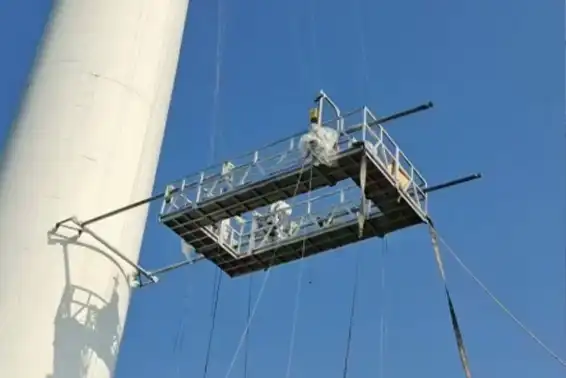
What maintenance is required for a Tower Crane Maintenance Platform?
Proper maintenance of a Tower Crane Maintenance Platform involves systematic inspections, cleaning, corrosion prevention, and structural integrity checks to ensure safe high-altitude operations. Routine tasks include examining welds and connections for cracks, verifying load-bearing capacity, applying protective coatings to prevent rust, and replacing worn components like anti-slip gratings or guardrails. These measures extend equipment lifespan, maintain compliance with OSHA and ISO standards, and protect technicians working on tower crane jibs, slewing mechanisms, and climbing assemblies. Regular upkeep transforms potential safety risks into controlled, predictable maintenance cycles that reduce downtime and operational costs.
Understanding the Core Maintenance Requirements for Tower Crane Platforms
When it comes to high-altitude work sites, structure health and following the rules must be given full attention. At Xinjiuyi, we know that every part is important for keeping your workers safe while they are doing important Tower Crane Maintenance Platform maintenance work. Understanding what makes these Tower Crane Maintenance Platforms stable is the first step to doing good maintenance.
Structural Integrity as the Foundation
Galvanized steel load-bearing frames need to be checked every so often to see if they are wearing out or deforming. Our Tower Crane Maintenance Platforms are made of angle steel and high-strength rectangular tubes that can hold more than 200 kg of active loads. Over time, stress concentrations at weld points could lead to tiny cracks that you can't see. Professional checks that use magnetic particle tests can find these problems before they become dangerous. Our modular design lets us replace only the parts that need to be replaced instead of the whole system. This cuts down on repair costs and downtime for the equipment.
Regulatory Compliance Requirements
All parts of high-altitude safety gear must meet international standards. Specific fall safety methods are required by OSHA 1910.28, and EN 14122 lists the standards for a permanent access system. These standards are met by our Tower Crane Maintenance Platforms, which have guardrails with 50 mm mesh holes and toe boards that keep tools from falling off. Procurement managers like that keeping compliance requires keeping written records of inspections and fixing problems as soon as they are found. We give you certification paperwork that makes third-party audits and project safety reviews easier. This way, you can be sure that your operations meet the standards of the government procurement department without having to do a lot of work.
Operational Longevity Through Preventive Care
Maintenance habits are often what make the difference between a 10-year and a 20-year working life. Tower Crane Maintenance Platforms near the coast are more likely to rust because of salt spray, and Tower Crane Maintenance Platforms in dry climates have trouble with dust getting in. Our zinc coating process gives basic protection, but reapplying protective treatments on a regular basis in high-exposure places makes them last a lot longer. By being aware of these environmental factors, your team can make maintenance plans that make the best use of resources and protect tools.
Comprehensive Tower Crane Platform Maintenance Checklist
Systematic maintenance turns one-time fixes into regular habits. The following schedule covers important Tower Crane Maintenance Platform maintenance times without giving your site teams too much to do.
Daily and Weekly Inspection Protocols
Technicians using the Tower Crane Safety Ladder should do visual sweeps of the area before each use, focused on clear dangers. Look for these things:
- Loose bolts at connection points between platform sections and mounting brackets: There are loose bolts where Tower Crane Maintenance Platform pieces and mounting brackets join.
- Debris accumulation on anti-slip gratings that could create trip hazards: Buildup of debris on anti-slip gratings that could cause people to trip.
- Visible rust bloom indicating coating failure: A rust bloom that can be seen means the coating has failed.
- Damaged guardrail sections or missing wire mesh panels: Guardrail parts that are broken or missing wire mesh panels.
Inspections once a week add depth by testing functional parts. Use modest force on the guardrails to make sure the welding is secure. Check to make sure that the floor surfaces don't sag or bend. Even though these quick checks don't take long, they catch problems early on, when they're still easy to fix.
Monthly and Quarterly Deep Inspections
As part of the monthly reviews, measurements should be checked. Check that the tightness of the fasteners meets the manufacturer's requirements with torque wrenches. For main structural bolts, this is usually between 85 and 95 Nm. Use electrical gauges to check the coating thickness on galvanized surfaces; numbers below 70 microns mean the surface is vulnerable to rust.
When inspections happen every three months, they should be more thorough. Take off the access doors to look at the secret connection points. At fixed joints, where small moves cause wear, look for fretting rust. Get rid of any extra water that has built up in hollow parts that could freeze and grow in cold places. Photographs with dates on them that show the starting point for trend analysis should be used to record results.
Annual Certification and Load Testing
Tower Crane Maintenance Platforms should be checked out by qualified testers at least once a year. This process includes testing welds without damaging them, testing static loads at 1.5 times their rated capacity, and making sure they meet current safety standards. Our service teams plan these assessments so that they cause as little trouble as possible. They then give detailed reports that meet insurance requirements and show regulatory authorities that they did their jobs properly.
Ultrasonic thickness gauges, dye penetrant kits for finding cracks, and measured load cells are some of the specialized tools that are used for these tasks. Keeping this equipment in good shape costs money, which is why many procurement managers work with suppliers who offer full maintenance packages instead of starting from scratch to build their own maintenance departments.
Best Practices and Methods for Maintaining Tower Crane Platforms
Failures that cost a lot of money, mess up project schedules, and put people in danger can be avoided with proactive strategies. These methods have been improved by our engineers' work on marine, urban, and very tall buildings projects.
Corrosion Prevention Techniques
Galvanization is a great basic layer of protection, but if you hit the steel with a tool or something rough, it will come out clean. Take care of these weaknesses by:
Touch-up coating application: When applying a touch-up coating, cold galvanizing compounds fix damaged protective layers. Clean the broken area until it's just metal, then use a zinc-rich primer and a topcoat that matches the Tower Crane Maintenance Platform's yellow-and-black warning scheme. This easy step stops rust from spreading below a layer that is still intact.
Drainage optimization: For better drainage, change Tower Crane Maintenance Platforms that work in places with a lot of humidity by drilling small weep holes at low spots where water gathers. This keeps water from standing still, which speeds up corrosion even on treated surfaces.
Cathodic protection in marine settings: For marine cathodic protection, think about using sacrificial zinc anodes on Tower Crane Maintenance Platform frames for bridge and offshore projects. These rust more quickly than the steel below, protecting it.
Mechanical Component Maintenance
Static structural pieces don't need as much care as moving parts and link points. During crane work, vibrations can cause bolted connections to come free. When putting things together, use thread-locking chemicals that can handle high temperatures outside. Instead of just looking at them, check these screws once a month with measured torque tools.
Anti-slip gratings get worn down by tools and people walking on them. Serrated open-grid patterns on Xinjiuyi Tower Crane Maintenance Platforms let dirt fall off naturally, but edges can bend over time. Every year, turn the grating panels so that the wear is spread out evenly. Change the parts that show lasting distortion or cracks spreading around support points.
Identifying When Professional Service Becomes Necessary
Regular site maintenance tasks like cleaning and checks are usually possible, but sometimes they need specialized knowledge. Cracks in the structure longer than 10 mm, fails in load tests that show lasting deformation, or coating wear that covers more than 15% of the surface area are all signs of problems that can't be fixed in the field. Our technical support team can do an online review using picture documentation to help you decide if fixing the problem on-site is enough or if you need to replace a part.
The cost-benefit analysis usually points in the direction of professional help at the right time. A weld fix that costs $3,000 and is done during planned downtime is much cheaper than an investigation that costs $50,000 or more and lost work time after a Tower Crane Maintenance Platform fails. We help procurement managers make sensible budgets for these scenarios.
Evaluating and Selecting Tower Crane Maintenance Platforms for Easy Maintenance
The choices made about what to buy during the original purchase have a direct effect on the maintenance needs over time. Knowing the properties of materials and the features of designs helps you choose systems that will cost less in the long run.
Material Comparison and Selection Criteria
Heavy building uses steel frames because they can hold more weight and are less likely to break when hit. Our solid steel parts made of Q355B have the right amount of strength to weight ratio for 200 kg or more of weight without being too bulky. Aluminum Tower Crane Maintenance Platforms are lighter, but they need to be inspected more often because they don't hold up as well against fatigue. Composite materials are still only used in a few specific weathering settings.
The way of galvanization is very important. Electroplating makes thinner layers that are more likely to have gaps around the edges, while hot-dip galvanizing creates uniform 85+ micron coatings that can go through complex geometries. The difference in thickness means 10 or more years of extra service life in moderate settings. This is a strong reason to mention coating standards when talking about buying something.
Supplier Evaluation Beyond Initial Price
When looking for trusted manufacturers, you need to look at their skills that go beyond what's listed in the catalog. Certified providers who keep up with ISO 9001 quality systems show that they can control the process, which lowers the number of defects. Look for proof that the Tower Crane Maintenance Platform has been tested by a third party. Tower Crane Maintenance Platforms should have proof of static load tests, material licenses, and coating thickness reports.
When problems arise in the middle of a project, after-sales support is very important. Xinjiuyi keeps new parts in stock and ships them within 48 hours of receiving an order, which keeps delays from lasting too long. Our engineering team gives you CAD drawings for custom changes and expert advice on how to add Tower Crane Maintenance Platforms to certain types of cranes. Because these services add value, it makes sense to work with well-known manufacturers instead of going with the cheapest option.
Customization and Scalability Considerations
Standard Tower Crane Maintenance Platform sizes work for most uses, but custom solutions may be needed for bridge projects, confined urban sites, or specialized industrial setups. These goals can be met by modular systems that use reconfigurable parts instead of making everything from scratch. Our 3000 mm and 4000 mm base units connect using standard brackets, which means that L-shaped or circular layouts can be put together in the field right away without having to wait for engineering to finish.
Contractors who are working on multiple jobs at the same time can save money by using bulk buying programs. Volume agreements allow production streamlining, which lowers costs per unit while keeping stock on hand all the time. Rental programs are convenient for short-term projects, but buying equipment that is used more than six months a year is more cost-effective.
Leveraging Technology and Innovations for Optimized Maintenance
New technologies are changing maintenance from fixing problems after they happen to managing things before they happen. These innovations give progressive builders an edge over their competitors.
Smart Monitoring Systems
Strain gauges built into Tower Crane Maintenance Platform frames send load data to site management systems in real time. These monitors can quickly tell when something is overloaded, which stops damage to the structure before it happens. Remote monitoring is possible from project offices thanks to wireless connectivity. This eliminates the need for daily physical checks while still allowing for full control.
Electrical resistance measurement corrosion monitors automatically keep track of covering wear. Once the protected layers become too thin, alerts start repair procedures so that rust doesn't damage the structure. This technology is especially useful in marine settings where the amount of salt present changes quickly.
Advanced Coating Technologies
Nanoceramics are added to current protective layers to make them self-healing. Small scratches cause chemical reactions that instantly cover up any open areas, greatly increasing the time between coatings. These formulas are more expensive at first, but they save 60–70% on touch-up work that requires a lot of work over the life of a Tower Crane Maintenance Platform.
In places that get a lot of sun, UV-resistant topcoats keep their bright warning colors for longer. Standard paints fade in three to five years, so they need to be repainted for safety reasons. Modern formulations keep color saturation for 10 years or more, which greatly reduces the number of times that maintenance is needed.
Digital Inspection Workflows
Tablet-based inspection apps make it easier to collect data consistently and get rid of paper records that are easy to lose. Technicians take pictures of problems, add notes to the pictures, and then the software creates reports with a time stamp that are uploaded to the cloud. This paperwork is very helpful for checks and shows how Tower Crane Maintenance Platforms age in certain situations by showing trends.
Augmented reality tools put inspection checklists on top of live video feeds to help employees who aren't as skilled with the process. This technology cuts down on training time while making inspections more consistent across many places.
Workforce Development and Certification
Technology doesn't replace human knowledge; it adds to it. Technicians can keep equipment well if they are trained in the right ways to do inspections, apply coatings, and evaluate structural integrity. Organizations like the American Society of Safety Professionals offer certification programs that prove a worker's level of skill. This gives HSE officers confidence in the quality of maintenance.
Xinjiuyi helps with training during Tower Crane Maintenance Platform commissioning to make sure that your teams know the best ways to do things and the manufacturer's unique requirements. This sharing of information stops common mistakes that cancel guarantees or make safety holes.
Conclusion
To keep high-altitude work platforms in good shape, you need to balance regular maintenance with expert repairs. Every day checks find problems that are easy to see, and every three months and once a year, licenses make sure that problems that are harder to see are also looked at. By keeping the coatings in good shape and checking the tension of the fasteners and replacing parts on a regular basis, you can protect workers and make the equipment last longer. Lifetime costs are cut by a large amount when you choose Tower Crane Maintenance Platforms that are easy to maintain and have modular construction, tried-and-true materials, and manufacturer support. New technologies, such as smart sensors and digital processes, don't replace basic checking methods; instead, they improve them. In the end, your maintenance plan will determine whether platforms stay safe and reliable tools or turn into liabilities that put projects and people at risk.
FAQ
How often should skilled inspections of platforms happen?
Most regulations are met by third-party assessments once a year, but the amount of use and the surroundings may require evaluations to be done more often. Professional reviews every six months are helpful for Tower Crane Maintenance Platforms that work in harsh sea settings or get a lot of use every day. Our Tower Crane Maintenance Platform upkeep standards give suggestions based on how things are used and how they are used in different situations.
What danger signs show that repairs need to be done right away?
Cracks that can be seen in welds or structural members, permanent deformation after loading, a lot of rust, connections that come loose and then tighten again, and guardrail parts that are missing or damaged all need to be fixed right away. Stop using the Tower Crane Maintenance Platform until qualified people look at these conditions. When problems are dealt with quickly, they don't become safety risks.
Should companies take care of their own platforms or hire someone else to do it?
This choice rests on the size of the fleet and the experts who are present. Companies that run five or more Tower Crane Maintenance Platforms at different locations often develop their own skills in a way that saves them money. Smaller fleets can benefit from outsourcing to experts like Xinjiuyi who can provide approved checks, replacement parts, and technical support without the need to buy testing tools or teach technicians.
Partner with Xinjiuyi for Reliable Tower Crane Maintenance Platform Solutions
If you pick the right provider, safety tools can go from being a compliance checkbox to a valuable asset. Every project that Xinjiuyi works on gets top-notch manufacturing and service that is focused on the customer. Our Tower Crane Maintenance Platforms meet national standards and have useful features, such as fully separate designs that make transporting and putting them together easier. Our systems can handle environments as harsh as coastal bridges and urban high-rises thanks to their corrosion-resistant galvanized construction and load capacities of more than 200 kg.
We know that procurement managers need more than just goods. They also need relationships. During the pre-sales consultation, our engineering team makes custom CAD renderings to make sure that the Tower Crane Maintenance Platform configurations match your specific crane models and the limitations of the site. Our fast shipping from Cangzhou keeps projects on schedule, and our 20-year design life means that they don't need to be replaced as often. We offer consistent quality, backed by ISO 9001, ISO 45001, and ISO 14001 certifications, whether you need a single unit or a group of units for various places. Email our team at global@xjy8.com to talk about your needs with skilled Tower Crane Maintenance Platform makers who care about your success.
References
1. American Society of Safety Professionals (2021). Guidelines for High-Altitude Work Platform Maintenance and Inspection. ASSP Technical Report Series, Volume 14.
2. Construction Safety Association of Ontario (2020). Tower Crane Safety Systems: Maintenance and Compliance Standards. CSAO Industry Publication No. 287.
3. European Committee for Standardization (2019). EN 14122: Safety of Machinery – Permanent Means of Access to Machinery. CEN Official Standards Documentation.
4. International Organization for Standardization (2022). ISO 1461: Hot Dip Galvanized Coatings on Fabricated Iron and Steel Articles. ISO Technical Committee 107.
5. Occupational Safety and Health Administration (2023). Fall Protection in Construction: Compliance Guide for Elevated Work Platforms. OSHA Publication 3755.
6. Steel Construction Institute (2020). Corrosion Protection of Structural Steelwork in Construction Environments. SCI Technical Digest Series, Publication P420.
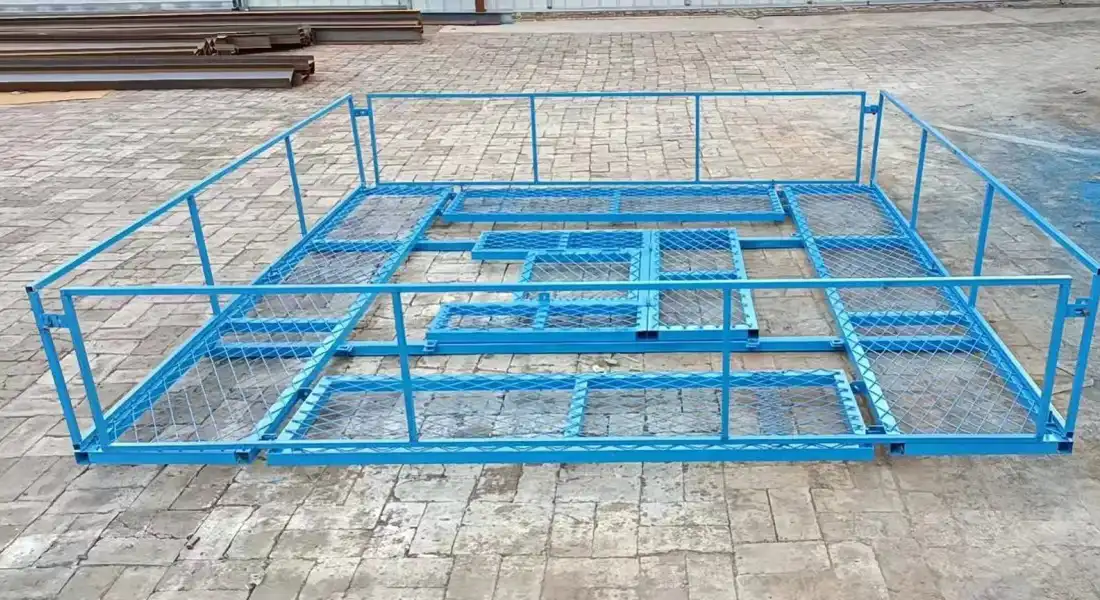
Tower Crane Anti-climbing Device: Features, Benefits, and Applications
Construction sites face a growing challenge that extends beyond traditional safety concerns: unauthorized access to tower cranes. The Tower Crane Anti-climbing Device represents a specialized safety solution engineered to prevent trespassers, vandals, and unauthorized personnel from scaling crane masts. These protective barriers combine physical deterrence with clear warning signage, creating a robust first line of defense around vulnerable crane structures. Manufactured from galvanized steel with modular installation systems, these devices have become essential equipment for rental fleets, general contractors, and project safety managers committed to regulatory compliance and accident prevention.
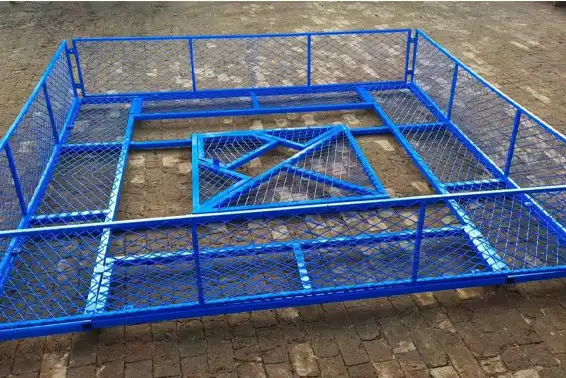
What Is a Tower Crane Anti-Climbing Device?
When put up at the base and lower parts of tower crane masts, a crane access barrier acts as both a physical and visual deterrent. Unlike regular fences, these custom-made systems fit directly with the structural parts of the crane without affecting the safety or performance of the equipment.
Core Functionality and Purpose
Modern access prevention systems protect in more than one way at the same time. As stated by the Construction Safety Research Alliance (2023), they make a physical barrier that stops people from climbing without permission and make it clear that entry is limited by using high-visibility warnings. Not only does the design keep people out, it also keeps animals out and site workers who aren't aware with crane avoidance zones from accidentally touching animals.
Structural Design and Components
The safety framework is made up of steel panels and galvanized rectangular tubes that are put together in modular sections. Standard configurations are 500 mm tall and can be adjusted to lengths of 3000 mm or 4000 mm, so they can be used with a range of mast shapes. There are fluorescent warning strips and "No Climbing" signs on each unit that can be seen at nite, so they meet security needs both during the day and after hours.
Compliance with Safety Regulations
These tools meet the safety standards set by the government agencies that are in charge of protecting construction sites. The bolt-on way of installation protects the original structure of the crane, making sure that maker warranties are still good and meeting safety standards for equipment in the area. This compliance framework makes it less likely that equipment owners and project managers who are in charge of site security practices will be sued.
Benefits of Using Tower Crane Anti-Climbing Devices
There are measurable benefits in operational, financial, and legal areas when protection barriers are put up around tower crane equipment.
Risk Mitigation and Liability Reduction
The main benefit is that it stops people from climbing without permission, which can lead to fatal falls, damaged equipment, or project delays. The International Powered Access Federation collected data on safety incidents in 2022 and found that thrill-seekers and criminals still like to target tower cranes. This is especially true in cities where social media encourages dangerous behavior. By putting up an impenetrable first barrier, physical obstacles get rid of these risks and make theft much less likely.
Insurance companies know that these Tower Crane Anti-climbing Device systems are a good way to keep people safe. Insurance companies often lower the rates of sites that have strong entry control systems. This is because they see proactive security infrastructure as a sign of good risk management. Aside from lower premiums, missing a single major incident also saves a lot of money because it avoids the huge costs of medical claims, court cases, and project delays, which can reach hundreds of thousands of dollars.
Operational Efficiency and Equipment Protection
These safety systems keep working all the time without power, monitoring, or help from a person. Once they are put up, they stay in place and are not affected by harsh weather, like salt spray from the coast or heat in the desert. The hot-dip galvanizing process adds a zinc covering that stops rusting for many years, so the product will work well for a long time without needing to be maintained regularly.
The modular design makes it easy for two-person crews to quickly set up in about an hour, which keeps crane operations running smoothly. Tamper-proof screws keep panels attached to mast sections without welding. This keeps the structure strong and makes it easy to change the layout of equipment when it moves from one project to another. This adaptability is especially helpful for hiring companies that have to manage a wide range of cranes at different locations.
Enhanced Site Professionalism and Regulatory Confidence
Visible safety infrastructure shows that a company is committed to best practices, which makes a good impact on clients and regulators. When project stakeholders, like general contractors and safety auditors, see properly installed access barriers, they immediately know that the hazards have been reduced. This professional presentation helps make the approval process go more smoothly and builds stronger bonds with people in charge of oversight.
Making sure that protection systems meet written requirements makes compliance verification easy. Standardized measurements, material approvals, and installation records provide proof that can be checked and meets regulatory needs. This makes safety reviews easier to manage and stops people from rushing at the last minute to fix problems found during inspections.
Installation and Maintenance Guide for Tower Crane Anti-Climbing Devices
Proper placement sets the stage for long-lasting protection, and minimal upkeep ensures that the equipment continues to work well for as long as it is intended to.
Pre-Installation Assessment
Before starting the installation, the site team should check the mast section's dimensions and find mounting points that allow a secure connection without getting in the way of the crane's operation. Check to see if the panels will work by measuring the distance between the ladder rungs and the structure cross-members. Review crane manufacturer documentation to ensure proposed modifications align with equipment specifications and warranty terms.
Step-by-Step Installation Process
Unpacking modular panels and putting mounting tools in order is the first step in the construction process. Place the first piece of the panel against the crane mast at ground level, making sure that the mounting bolts line up with the structural parts. Put tamper-proof bolts through holes that have already been drilled, and then use standard hand tools to tighten them to the specified torque values. Attach each new panel section, making sure to keep the spacing and vertical alignment the same. Connect corner pieces that go around the sides of the mast to finish the perimeter. This will make a continuous barrier with no breaks.
The engineering team at Xinjiuyi provides thorough installation drawings that show exactly where to put different crane models. This takes away the need for guesswork and speeds up the installation process. The bolt-on method doesn't require welding or drilling into crane structures, so the equipment stays in good shape and the manufacturer's warranty stays valid. This is very important for rental companies that keep a variety of fleets.
Maintenance Requirements and Inspection Protocols
Because Tower Crane Anti-climbing Device protection systems are made of strong materials and have surface treatments that resist corrosion, these protection systems don't need much upkeep. Visual checks should be done every three months to make sure that the fasteners are still tight, the panels are still in good shape, and the bright warning elements can still be seen. Galvanized coatings should be carefully looked over every year during checks, especially in harsh locations where salt air or industrial pollutants speed up rusting.
By writing down what was found during inspections, you can make a maintenance record that can be checked and shows that you did your job properly during safety checks. It is important to replace any broken parts right away to keep the system safe and avoid opening up holes that could make it less effective.
Choosing the Right Tower Crane Anti-Climbing Device: A Buyer's Guide
To choose the right security systems, you need to carefully look at the technical specs, the supplier's skills, and the total cost.
Material Quality and Durability Standards
High-quality systems use Q235 or Q355 structural steel with panel thicknesses between 3 mm and 5 mm. This gives them enough power to stop attempts to break in while keeping the weight down. The surface treatment has a big effect on how long something will last. Hot-dip galvanizing creates a zinc coating that stops rust for 20 years or more, while powder coating gives it a better look and the same corrosion resistance in less harsh environments.
Check that the specifications of the material meet the C4 or C5-M classifications for corrosion resistance. This is especially important for installations near the coast or in industrial areas where exposure to the elements speeds up degradation. These categories, which are set by ISO 12944 standards, make sure that security systems keep their structural stability for the whole time they're supposed to last without breaking down early (International Organization for Standardization, 2017).
Compatibility Across Crane Models
Universal flexibility is a very important decision factor for renting companies with mixed teams. Quality systems have mounting arrangements that can be changed to fit mast sections from a number of different manufacturers, such as Potain, Liebherr, Zoomlion, and other well-known names, without having to be made specifically for each model.
Standard panel lengths of 3000 mm and 4000 mm fit most standard mast shapes, and customization services can be used for odd shapes or unique fitting needs. Before you confirm your orders, ask for dimensional proof models to make sure they will fit correctly and to avoid having to pay a lot of money for returns or changes after delivery.
Supplier Evaluation and Support Services
In addition to product specifications, a supplier's skills have a big impact on long-term customer satisfaction. When comparing manufacturers, look at how much customization they offer, how reliable their shipping is, and how much expert help they offer. Well-known suppliers help with engineering during the creation of specifications, making sure that the configurations chosen meet both functional needs and legal standards.
Xinjiuyi stands out by giving thorough pre-sales advice and detailed renderings and technical drawings that make it clear how products will be configured before they are made. This consultative method cuts down on specification mistakes and makes sure that provided systems work well with other equipment. With ISO 9001, ISO 45001, and ISO 14001 standards, the company shows that it cares about quality control, worker safety, and being good to the environment at all times during production.
Total Cost of Ownership Analysis
When buying something, decisions should not only look at the initial purchase amount, but also at the costs that come up over time. Include the cost of fitting, any repairs that will need to be done, the expected service life, and how often the item will need to be replaced in your total investment. Even though they cost more up front, high-quality systems that are built to last and protect against corrosion better have lower total costs because they don't need to be replaced as often and don't need as much maintenance.
When you buy Tower Crane Anti-climbing Device in bulk, you often get savings that help rental companies that are setting up multiple units at the same time. Talk to your suppliers about setting up deals based on quantity to get the best unit economics and make sure that the quality of all orders is the same.
Trusted Suppliers and Manufacturers of Tower Crane Anti-Climbing Devices
Working with reputable makers guaranties access to good products, on-time delivery, and helpful assistance during all stages of purchasing and running a business.
Manufacturing Capabilities and Quality Assurance
Leading providers keep their factories up to date with high-tech tools for making things precisely and thorough systems for checking the quality of their products. Hebei Xinjiuyi Construction Technology Co., Ltd. is based in Cangzhou, Hebei, and uses advanced manufacturing technology and well-established supply chain infrastructure to make sure that all of their products are of the same high quality. The business's unified approach, which includes research and development, production, and sales, lets them quickly meet customer needs and handle both standard and custom orders with ease.
At different steps of production, quality assurance procedures check the dimensions, make sure the welds are strong, and look over the surface treatment. These strict controls make sure that the goods that are supplied meet the written specifications and work reliably in tough building sites.
Customization Services for Specialized Requirements
Each construction job has its own problems that need custom answers. Customization services are offered by professional manufacturers to make standard designs fit the needs of each site, crane model, and operational limitations. Some modification options are non-standard sizes, unique mounting arrangements, and improved security features that address specific vulnerability concerns.
The first step in the customization process is a technical consultation to make sure that all of the project's needs and equipment specifications are clear. Engineering teams make thorough proposals that include drawings, lists of materials, and instructions on how to build the system. When a client approves a design before it is made, it is guarantyd that the finished systems will meet their needs without any delays or expensive changes.
Comprehensive Product Portfolio
Leading providers give full lines of safety equipment, such as foundation pit protection, high-altitude work platforms, edge guardrails, climbing frame panels, material handling platforms, ladder cages, and safety training facilities. This wide range of products makes suppliers one-stop partners that can meet all the safety needs of different projects through coordinated purchasing relationships.
Consolidated sourcing makes managing vendors easier, improves transportation, and often leads to better deals because of higher overall purchasing amounts. Building relationships with capable full-range suppliers lowers administrative costs and makes sure that quality standards are met across all product categories.
Conclusion
Tower Crane Anti-climbing Device access bars are an important part of building sites' safety infrastructure because they keep people from getting in without permission, lower the risk of liability, and show that the site is following the rules. These modular protection systems are made of strong materials, are easy to install, and don't need much maintenance. They will save equipment owners and project managers money in the long run. Picking the right suppliers is important to make sure you can get good products backed by technical know-how and helpful customer service. Standards for construction safety are always changing. Companies that invest in tried-and-true safety solutions can adapt to new rules while keeping workers, tools, and project schedules safe.
FAQ
Are these protection systems compatible with all crane manufacturers?
When it comes to installation, professional barrier systems have flexible options that can fit standard mast parts from all major brands. Telescopic clamps and flexible connection hardware make modular panel designs adaptable to different shapes, making sure that they fit correctly with a wide range of equipment.
Does installation require modifications to crane structures?
Attaching panels to existing structural members without welding or drilling into mast sections is possible with quality systems that use bolt-on attachment methods. This method doesn't damage the original equipment, keeps maker warranties valid, and makes it easier to take apart when moving equipment between jobs.
What maintenance do these devices require?
Protection walls don't need much upkeep because they are made of strong materials that don't rust. Visual inspections are done every three months to make sure that the fasteners are tight and that the parts are in good shape. Once a year, detailed inspections check the coating's integrity and the structure's strength. Following this simple upkeep plan doesn't take a lot of work.
How long do properly installed systems typically last?
If they are made from good materials and have the right surface processes, these safety systems will work well for 20 years or more. The process of hot-dip galvanizing makes things very resistant to rust, which means that structures stay strong for a long time, even in harsh environments.
Partner with Xinjiuyi for Comprehensive Crane Safety Solutions
For your tower crane fleet to be safe, you need more than just standard safety gear. You need protection systems that were designed to work in tough construction environments. Xinjiuyi is an expert at making crane access barriers that combine tried-and-true designs with the ability to be customized, making sure that the barriers work perfectly with a wide range of equipment and project needs. Our bolt-on installation method protects equipment warranties and provides strong protection against unauthorized access.
We support procurement choices through thorough technical advice, exact customization services, and dependable global delivery as a Tower Crane Anti-climbing Device manufacturer dedicated to building safety excellence. Our engineering team has the skills and products that safety-conscious businesses need, whether they are outfitting rental fleets or keeping project sites safe.
Get in touch with our experts to talk about your unique needs and look into custom options for protecting your crane. Send an email to global@xjy8.com or go to xjy8.com to see all of our safety products and ask for more information. We're excited to help you meet your safety goals by providing professional-grade tools and helpful customer service throughout the entire project lifecycle.
References
1. Construction Safety Research Alliance. (2023). Unauthorized Access Prevention in Tower Crane Operations. Construction Safety Journal.
2. International Organization for Standardization. (2017). ISO 12944: Paints and varnishes — Corrosion protection of steel structures by protective paint systems. ISO Standards Catalog.
3. International Powered Access Federation. (2022). Global Safety Report on Construction Equipment Access Control. IPAF Technical Publications.
4. National Institute for Occupational Safety and Health. (2021). Preventing Falls from Tower Cranes. NIOSH Workplace Safety Guidelines.
5. Occupational Safety and Health Administration. (2023). Tower Crane Safety Standards and Best Practices. OSHA Construction Regulations.
6. The American Society of Safety Professionals. (2024). Construction Equipment Security and Access Control Systems. ASSP Professional Development Publications.
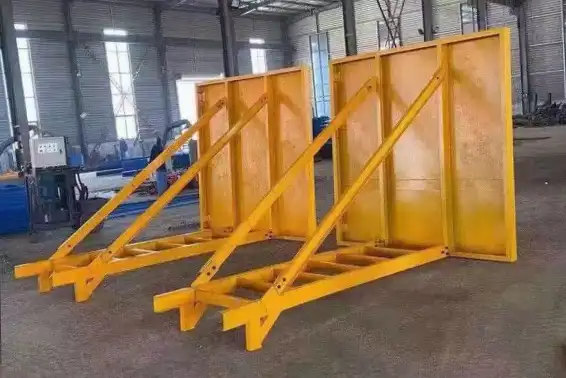
How to Choose an Elevator Shaft Work Platform: Models, Load Capacity, and Installation Requirements
Choosing the right Elevator Shaft Work Platform means balancing safety compliance, structural durability, and operational efficiency. The ideal platform should deliver reliable load-bearing capacity, meet international safety standards like OSHA and ISO, and adapt quickly to varying shaft dimensions during high-rise construction or maintenance projects. Procurement managers must evaluate modular design flexibility, material quality, and long-term service life while ensuring installation simplicity and full fall protection. This selection process directly impacts project timelines, worker safety, and regulatory approval across diverse construction environments.
Understanding Elevator Shaft Work Platforms: Types and Key Features
What Makes These Platforms Essential for Vertical Construction?
Elevator Shaft Work Platforms protect technicians installing guide rails, wiring and landing door assemblies in vertical shafts. Traditional pipe-and-clamp scaffolding takes too long and is unstable in limited lift cores. Modern products offer fall protection, a safe area to stand, and adaptable pieces that fit most doors. These systems overcome the issues of placing heavy equipment in tight vertical spaces by making it safer to transfer items and place personnel at precise heights.
The main role goes beyond entry. Elevator Shaft Work Platforms eliminate the need for cutting or welding on-site, so building teams can quickly install safety devices without learning new skills. This standardised technique reduces setup time by 60% while maintaining job site safety.
Platform Classification: Fixed vs. Adjustable Systems
Fixed-configuration Elevator Shaft Work Platforms are appropriate for projects with typical shaft dimensions, usually 2000 mm long and 1900 mm broad. These pre-assembled pieces with fixed sizes are ideal for major projects where all lift cores must satisfy the same criteria. The construction is more rigid and has fewer mechanical failure points without moveable elements.
Adjustable Elevator Shaft Work Platforms have telescoping legs and flexible frames. This versatility helps retrofit existing structures or mixed-use locations with floor-to-floor shaft sizes. The telescoping construction allows simple swapping of hoistway widths without affecting load integrity. It handles 1.5–4-meter shafts. Procurement teams that manage several projects should use Adjustable products since they may be used for many tasks without being customised.
Material Composition: Steel vs. Aluminum Alloys
Professional Elevator Shaft Work Platforms are built of high-strength steel to support additional weight. This structure can support up to 1,500 kg with its primary frame constructed of I-beams, thicker rectangular tubes (50mm × 50mm, 2.0mm wall thickness), and 100mm channel steel. Full welding strengthens critical connection nodes, and the joints are ground smooth and burr-free to avoid becoming trapped during typical operations. Heavy-duty power equipment, material stacks and numerous technicians can stand still on steel products.
Aluminium alloy Elevator Shaft Work Platforms like 6061-T6 are lighter and suitable for hand-installed or mobile installations. Lighter products are easier to travel via narrow building halls but can only carry lighter loads. Industrial product activities that require heavy part maintenance or long-term worker engagement should use steel fabrication.
Compliance with International Safety Standards
Legal Elevator Shaft Work Platforms have certificates proving they follow OSHA 1926 Subpart L and EN 1808 for hanging access equipment. These standards specify fence heights, toe board sizes, and non-slip surface treatments. Good product manufacturers employ 1.5 mm checkered plate decking to prevent slips on wet or debris-covered surfaces. Complete fall arrest protection is provided by peripheral guardrails with mid-rails and toe boards.
The ISO 9001 accreditation confirms that the product supplier follows organised quality control throughout manufacturing. ISO 45001 certifies the supplier's workplace health management commitment. Elevator Shaft Work Platform buyers should ensure non-destructive weld joint testing using ultrasound or magnetic particle inspection. This prevents stress-point connecting problems. These inspections are crucial when worker safety depends on structure strength over 100 meters.
Critical Factors in Selecting Elevator Shaft Work Platforms
Evaluating Load Capacity Requirements for Your Application
Finding an Elevator Shaft Work Platform's busiest moments is the first step in determining its load capacity. The products must carry 1,200 to 1,500 kg to install 150- to 200-kilogram guide rail and hold three workers and their power tools. Workers consider impact forces when placing heavy pieces or using pneumatic equipment. On average, dynamic load adds 25% to static weight calculations.
For simple maintenance chores like checking wiring or calibrating sensors, lift shaft work platforms under 800 kg are fine, but they can't construct structures. Procurement staff should request controlled load testing at 125% of rated capacity. This testing ensures the product construction is sturdy even when stressed during demanding installation phases. With a tiny capacity, displacement hazards are high and safety checks may be illegal.
Platform Dimensions and Shaft Compatibility
Standard 2000 mm long and 1900 mm wide Elevator Shaft Work Platforms are sufficient for most home and business elevator systems with shaft widths of 1.8 to 2.5 meters. To accommodate big guide rail systems, freight lifts in high-rise business buildings generally require custom-built products longer than 2500 mm. The height parameter—usually 2850 mm for standard units—determines the vertical operating range before readjustment.
Due to building tolerances, buyers must check shaft measures at multiple floors. Telescopic outriggers and levelling systems on adjustable Elevator Shaft Work Platforms compensate for these faults, keeping them stable even in shafts larger than 30 mm. Custom product fabrication is needed for mine shafts and industrial lift towers with non-standard diameters that exceed adjustability ranges.
Installation Process and Site Requirements
Two-person teams can carry modular Elevator Shaft Work Platform parts thru 900 mm entrances and service passages because each weighs 25–50 kg. The product assembly takes 60–90 minutes and requires no special tools using pin-and-socket or bolt-together joints. This strategy works effectively in occupied buildings where hot work rules prohibit scaffolding.
Place the product base plate and level it with built-in jacks or shim plates to begin work. Support legs meet the shaft walls, dispersing the load across multiple bearing points. Guardrail pieces can be connected using quick-connect clips to complete the product fall protection ring when the main frame is level and in place. Detailed installation instructions with step-by-step images reduce training time and ensure all workers can assemble high-quality parts.
Comparing Elevator Shaft Work Platforms: Features, Pricing, and Market Options
Manual vs. Motorized Systems: Efficiency Trade-offs
Hand-cranked winches or block-and-tackle devices lift manual Elevator Shaft Work Platforms. Moving between floors is hard work for 15–20 minutes. This time-consuming procedure fixes electrical issues and reduces maintenance. This makes manual products safe in low-power or spark-prevention areas. Maintenance teams that manage long-term equipment stocks like the simple mechanics.
With electric winches or hydraulic lifting systems, motorised lift shaft work platforms can be moved in three to five minutes with little operator effort. After months of work, this efficiency advantage rises, lowering labour costs despite the greater initial expenditure. Battery-powered Elevator Shaft Work Platforms leave you free from temporary power outlets, but buyers must factor in battery replacement costs into their total cost of ownership calculations. Projects with strict installation plans benefit from motorised lift shaft work platforms' shorter end times.
Surface Treatment Options and Environmental Durability
Hot-dip galvanisation prevents corrosion sufficiently enough for indoor use with controlled humidity. The zinc coating prevents rust after 5–7 years in dry regions. Galvanized-plus-paint Elevator shaft operation platforms with a polyester powder coat layer last 10-12 years and look better by letting you choose from multiple colours, making safety discussions easier on a multi-contractor site.
For Elevator Shaft Work Platform projects near the seaside, underground or in chemical-laden industries, premium high-temperature baked paint finishes resist rust better. Preparing the surface, applying electrostatic powder, and sealing at high temperatures creates a strong, chip-resistant covering that stays in place after multiple assembly and movement. Bright, long-lasting colours help you see in dark shafts and track product tools throughout projects.
Rental vs. Purchase: Financial Strategy Considerations
Renting equipment for Elevator Shaft Work Platform operations under six months saves money and ensures its quality. Most product rental agreements include safety checks and part replacements, so the supplier handles maintenance. However, hiring expenses can exceed the cost of a product for projects lasting more than eight months.
Contractors who manage a constant stream of projects or facility maintenance departments that maintain multiple buildings should buy a Direct Elevator Shaft Work Platform. The versatile product can be utilised in dozens of projects and last 15–20 years with regular maintenance. Procurement teams should compare leasing expenses to the product purchase and regular inspections to determine the break-even point. When you own products, you may set your own schedule and avoid delays caused by tool shortages during peak building seasons.
Trusted Elevator Shaft Work Platform Suppliers and Brands in the Global Market
Evaluating Manufacturer Credentials and Certifications
Reputable Elevator Shaft Work Platform makers keep their ISO 9001 quality management certification, as well as their ISO 14001 environmental standards and ISO 45001 safety methods for the workplace. With these certifications, you can be sure that the products you make are always the same, that your workplace is safe, and that you are being environmentally responsible when you buy materials and deal with waste. Instead of taking what a supplier says at face value, buyers should use independent registrar databases to make sure that the product certification is valid.
Some things that show how much an Elevator Shaft Work Platform plant can make are its size, the level of sophistication of its welding tools, and its quality control system. When compared to manual fabrication shops, places that use CNC cutting tools and automated welding stations get better weld penetration and dimensional accuracy. Having specialized testing facilities like load testing frames, salt spray chambers, and non-destructive testing tools shows that the product company is committed to checking more than just meeting minimum standards. Requesting Elevator Shaft Work Platform facility tours or third-party audit reports that show actual production capabilities can be helpful for procurement managers.
Customization Capabilities for Project-Specific Requirements
Standard Elevator Shaft Work Platform stock items can be used in most situations, but custom solutions are often needed for unique building situations. When a company has its own engineering team, it can change the size of the product to fit unusually wide shafts, add project-specific connection points for specialized lifting equipment, or change the load rates for heavy-duty industrial uses. Usually, this process of the product customization starts with thorough models of the shaft's dimensions and a list of the loads that it needs to carry.
Creating detailed 3D models before the products are built helps procurement teams see how the custom platforms will fit with other temporary structures, such as material hoisting systems or waste chutes. Responsive Elevator Shaft Work Platform manufacturers send these design previews within three to five business days, so you can make changes and get them just right before you commit to production. Custom product manufacturing wait times are usually two to four weeks longer than standard product delivery, so you need to get involved early in the planning stages of the project to avoid scheduling problems.
After-Sales Support and Technical Assistance
Comprehensive Elevator Shaft Work Platform support programs include on-site installation help for the first setup, making sure that teams know the right way to put things together and check for safety. This hands-on training lowers the chances of the product overuse, which could put workers in danger or damage tools by not being handled properly. The product manufacturers that offer support materials and video lessons in more than one language make it easier for foreign project teams to share information.
Ongoing expert product help answers questions from users in the field about odd installation conditions, fixing mechanical problems, and finding new parts for things that wear out quickly, like locking pins or adjustment bolts. Maintaining regional product parts inventories by suppliers cuts down on downtime when parts need to be replaced during active projects. Service agreements that include regular Elevator Shaft Work Platform inspections are in line with LOLER and OSHA rules that say thorough checks must be done every six months. These agreements provide important proof for following the rules and proving insurance coverage.
Final Checklist: How to Make the Right Choice for Your Elevator Shaft Work Platform?
Matching Platform Specifications to Project Scope
A thorough Elevator Shaft Work Platform study of the project is the first step in choosing the right platform. Write down the most people who can be working at the same time, the heaviest things that need to be put on the product, and the total height of the shaft that needs to be covered. When building a high-rise over 30 floors, it's better to buy multiple Elevator Shaft Work Platforms than to keep moving around single units. This is because having multiple installation crews working at the same time speeds up the whole process. In mixed-use projects with different shaft sizes between building zones, the product methods that can be adjusted are needed to keep the variety of equipment to a minimum.
An Elevator Shaft Work Platform budget has to take into account more than just the cost of purchase. It also has to account for logistics of transporting, storage between projects, and regular repair intervals. The products made to be taken apart and moved many times can handle these handling cycles better if they are made of properly treated steel and have stronger connection points. Carefully read the product guarantee terms; full coverage for 3–5 years shows that the maker is confident in the product's long-term reliability.
Supplier Reliability and Delivery Performance
When Elevator Shaft Work Platforms need to work with other building sequences, delivery timeline guarantees are very important. Reliable Elevator Shaft Work Platform suppliers give project managers firm production schedules with penalties for late deliveries. This keeps project managers' schedules from getting thrown off. References from similar-sized product projects in similar industries show trends of consistently meeting deadlines and producing high-quality work.
Ask for specific Elevator Shaft Work Platform case studies that show how platforms worked in environments like yours, such as high humidity along the coast, extreme temperatures, or heavy industry use. Photos of finished product projects show that you know how to do things in real life, not just what you can do in theory. Strong product suppliers keep client reference lists so that you can talk directly with past buyers about how well the product worked in real life and how good the customer service was after the sale.
Documentation and Compliance Verification
Full Elevator Shaft Work Platform packages come with a lot of technical paperwork, like structural calculations signed off by professional engineers, material certifications that link steel grades to mill test reports, load testing results with photos to prove them, and the product maintenance manuals that explain how to do inspections. During safety audits and governmental reviews, this paperwork is very important.
Check that the design of the product meets the rules in your area. For example, OSHA rules in the US, EN standards in the EU, and other regional codes may have different requirements. Elevator Shaft Work Platforms that are certified by more than one standard give contractors who work in international markets more options. Keep all product certifications in the project files. They will be part of lasting safety records that can be looked at during probes of accidents or compliance checks.
Conclusion
Selecting the right Elevator Shaft Work Platform entry option requires balancing technical specifications, safety compliance, and long-term value. The tough needs of high-rise construction and maintenance operations are addressed by the products built from high-strength steel with verified load capacity up to 1,500 kg, featuring modular designs and comprehensive fall protection. Procurement decisions should prioritize manufacturers offering ISO certification, customization capabilities, and responsive technical support. Understanding the distinctions between fixed and adjustable product systems, manual versus motorized operation, and surface treatment options enables informed choices aligned with specific project demands. Proper evaluation of the product supplier credentials, delivery reliability, and after-sales service ensures partnerships that support safe, efficient construction practices across diverse applications.
FAQ
What are the key safety regulations that apply to elevator shaft platforms?
The United States' OSHA 1926 Subpart L says that Elevator Shaft Work Platforms must have certain guardrail configurations, load capacity labels, and fall protection systems. For European markets, suspended access equipment needs to be certified according to EN 1808 standards, which check for structural integrity and safety device performance. All Elevator Shaft Work Platforms that meet the standards have perimeter guardrails that are 1 meter high and have mid-rails and toe boards, as well as non-slip walking areas and safe anchorage points that can hold fall stop systems. Regular inspections by qualified people every six months make sure that the rules are still being followed, and daily pre-use checks make sure that Elevator Shaft Work Platform mechanical components function properly.
How often should platforms undergo professional inspection?
LOLER rules and OSHA guidelines say that trained inspectors must thoroughly check Elevator Shaft Work Platforms every six months while they are being used. These checks make sure the product structure is strong by looking at welds, load-bearing links, and surface treatments for damage or rust. In the time between formal inspections, operators conduct daily functional checks before each use, testing locking mechanisms, guardrail security, and Elevator Shaft Work Platform leveling adjustments every day before each use. All checks are written down and kept as lasting safety records.
Should my company rent or purchase shaft platforms for ongoing projects?
When an Elevator Shaft Work Platform project lasts longer than eight months, it usually reaches financial break-even favoring purchase over rental. Ownership is best for contractors who are in charge of continuous construction pipelines or facility maintenance departments, since proper upkeep can extend the service life of an Elevator Shaft Work Platform beyond 15 years. The product rental suits short-term projects under six months or companies testing equipment before committing to purchase, though availability constraints during peak seasons may cause scheduling conflicts.
Partner with Xinjiuyi for Your Shaft Platform Needs
Hebei Xinjiuyi Construction Technology Co., Ltd. manufactures nationally standardized modular Elevator Shaft Work Platforms from our advanced facility in Cangzhou. Our engineering team delivers custom Elevator Shaft Work Platform solutions precisely matching your shaft dimensions and load requirements, with platforms supporting up to 1,500 kg through reinforced I-beam and channel steel construction. Every unit undergoes rigorous quality control including weld inspection and load testing, backed by ISO 9001, ISO 45001, and ISO 14001 certification. We provide detailed 3D renderings during the design phase and comprehensive technical support from installation through ongoing product maintenance. Whether you need equipment for high-rise construction, elevator modernization, or industrial maintenance applications, our 20-year service life guarantee ensures long-term value. Contact our team at global@xjy8.com to discuss your project requirements with experienced product suppliers committed to your safety and success. Visit xjy8.com to explore our complete product range and request detailed specifications.
References
1. American Society of Safety Professionals. (2021). Best Practices for Elevated Work Platforms in Construction Environments. ASSP Technical Publications, Chicago, IL.
2. European Committee for Standardization. (2019). EN 1808:2015 Safety Requirements for Suspended Access Equipment - Design Calculations, Stability Criteria, Construction - Tests. CEN-CENELEC Management Centre, Brussels.
3. Occupational Safety and Health Administration. (2020). OSHA 1926 Subpart L: Scaffolds and Work Platforms - Compliance Guide for Construction Industry. U.S. Department of Labor, Washington, DC.
4. International Organization for Standardization. (2018). ISO 14122-2:2016 Safety of Machinery - Permanent Means of Access to Machinery - Part 2: Working Platforms and Walkways. ISO Central Secretariat, Geneva.
5. Construction Industry Research and Information Association. (2022). Temporary Works Toolkit: Guidance on Elevator Shaft Access Systems. CIRIA Publication C766, London.
6. National Institute for Occupational Safety and Health. (2019). Engineering Controls for Construction Fall Prevention: Practical Applications in Vertical Shaft Environments. NIOSH Publication No. 2019-132, Cincinnati, OH.
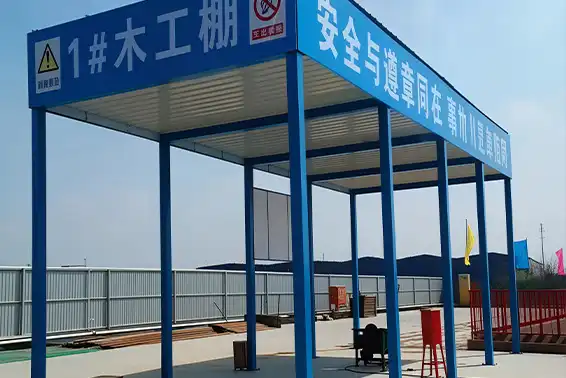
Temporary Covered Safety Walkway Guide: Materials, Design, and Safety Requirements
When protecting workers and visitors from overhead hazards at active construction sites, temporary covered safety walkways serve as essential protective infrastructure. A Construction Covered Safety Walkway is an engineered temporary structure that shields pedestrians from falling debris, tools, and weather elements while maintaining unobstructed access through high-risk zones. These modular systems combine robust galvanized steel frameworks with impact-resistant overhead protection, ensuring compliance with rigorous safety standards including OSHA 1926 Subpart L and local building codes. Properly designed walkways integrate anti-slip surfaces, adequate lighting, and clear visibility features to create safe passage corridors connecting construction zones with office areas and public spaces.
Understanding Temporary Covered Safety Walkways
There are many risks on construction sites that put people who walk through active work areas in danger. Workers and tourists who walk under high-level operations are always at risk of being hurt by falling tools, materials that come loose, and building activities that are going on above them. These risks can be reduced with temporary covered safety paths that create safe passageways that keep pedestrians from being hit from above.
Why Standard Barriers Fall Short?
Traditional barriers like barricades and caution tape only warn people of dangers without actually protecting them. When pathways aren't covered, people walking on them could be hit by objects that fall from scaffolding, cranes, or work being done on the facade above. The Bureau of Labor Statistics says that nearly 10% of all construction deaths each year are caused by being hit by falling objects. Covered paths keep people from being exposed by making a hard cover above them while still letting people move around on the ground.
Regulatory Compliance Requirements
Safety rules require precautions to be taken wherever people have to walk under busy building zones. OSHA rules say that workers and the public must be protected from falling objects when they are in the air. The Occupational Safety and Health Administration says that canopies must be able to hold a minimum amount of weight, which is determined by the height of items that could fall and risk estimates done for each site. In cities, extra rules are often put on sidewalk sheds and pedestrian safety tunnels. This is especially true when restoring facades or tearing down buildings in places with a lot of people.
Core Components of Effective Systems
A full covered path system includes the frame, the decking above, the side dividers, and safety features all in one secure unit. The framework sets the load-bearing capacity, and the overhead safety takes the force of falling objects. Side panels keep debris from getting in from the sides and direct foot traffic. Lighting and signs make the covered path easy to see and find your way through. During the installation period, all of the parts must work together to make a continuous safety envelope that meets engineering standards.
Materials Used in Temporary Covered Safety Walkways
The choice of material directly affects how well a covered walkway can handle the conditions on the job site, keep its shape under impact loads, and resist corrosion. For materials to work reliably over time, they need to have certain properties in different construction settings.
Structural Framework Options
Galvanized steel is the most common material used to build frameworks because it is strong for its weight and doesn't rust. Q235 grade steel has the tensile strength needed for load-bearing beams and columns while still being easy to work with during production. When you hot-dip galvanize something, a protective zinc coating is made that keeps rust from forming, even in damp coastal areas or chemical-filled industrial sites. Steel frames support modular designs with standard connection points that make it easy to put together and rearrange as site layouts change. Hebei Xinjiuyi Construction Technology and other companies that make Construction Covered Safety Walkway systems use thicker rectangular galvanized tubes with 100 mm × 100 mm poles at 2.0 mm thickness to support the protective layers above.
For situations where moving around a lot is important, aluminum alloy options are lighter. Even though they are not as strong as steel frames, aluminum frames naturally don't rust and are easier to install by hand. High-strength metal grades can hold enough weight for most walkways while lowering the need for foundations on areas that are sensitive to weight.
Overhead Protection Materials
The overhead decking has to be able to handle big impacts without letting the structure fall apart. Double-layer steel mesh patterns spread weight across grids that fit together, stopping falling hand tools or small building supplies from getting through. Standards for safety make sure that mesh spacing keeps things from getting through while still letting water drain and air flow.
Anti-smash boards made from reinforced steel plate are better at stopping heavy items from hitting the ground. When dropped power tools, fasteners, or pieces of broken masonry hit these solid panels, they don't go through like mesh systems would. Electrostatic powder coating and other surface treatments make weather-resistant shields that keep their protective qualities even after being outside for a long time.
Surface Treatment Technologies
Dual-layer protection systems use both hot-dip galvanizing and polyester powder covering to make them more resistant to rust and better at showing what's underneath. The zinc galvanizing layer acts as a sacrifice to keep rust from getting to the base metal, even if the surface gets scratched. Powder coating adds a colored topcoat in safety orange or high-visibility yellow with reflective warning markings. This makes sure that the walkway is easy to see in low light and meets professional site presentation standards for construction (American Galvanizers Association, 2020).
Design Guidelines and Safety Requirements
A good covered path design strikes a mix between how well it works structurally and how well it works for people. The dimensional standards make sure that people can move through easily, and the engineering specs make sure that people are safe in the worst-case loading situations.
Critical Dimensional Parameters
The height gap must allow for foot activity without making the area too crowded, which would discourage use. Standard configurations offer 3700 mm (12 feet) of vertical clearance, which lets equipment pass and keeps sightlines clear, which removes psychological barriers to entry. Specifications for width range from 3000 mm to 6000 mm, depending on how much traffic is expected and how equipment needs to move. Wider passages allow people to walk and move materials without getting backed up.
Length can be changed to fit different layouts on different sites, and modular sections can connect to make safe, continuous corridors. Standard piece lengths of 6000 mm make transporting and installing the fence easier, and they can be combined to make unique total lengths that fit around buildings or across gaps.
Load-Bearing Capacity Engineering
Static dead loads from the walkway assembly and dynamic live loads from impact events are both taken into account in the structural estimates. Engineering standards say that overhead security must be able to handle concentrated loads like tools or materials falling from the highest working heights. The National Institute for Occupational Safety and Health (2019) suggests impact resistance testing that mimics real-life situations of falling objects related to the work being done above.
Column spacing and beam lengths spread out loads so that they don't bend at their highest design loads for Construction Covered Safety Walkway. Based on the need for reuse and the limitations of the site assembly, structural engineers choose connection methods such as welded joints or bolted assemblies.
Integrated Safety Features
In addition to protecting structures, thorough safety design takes into account how people will use the space. Walking surfaces that don't slip and have raised tread patterns keep your footing when it's wet, so no one slips and falls in the secured passageway. Side barriers at the bare minimum height stop people from accidentally leaving while still letting people see where they are going. Emergency exit features make sure that quick escape paths can still be used even when longer walkways are being built.
Lighting systems that provide at least 5 foot-candles of light keep things visible at nite or when natural light is blocked by a roof. It uses less energy and lasts longer, so you don't have to do as much maintenance on LED fixtures. High-contrast colors and reflective stripes make the walkway stand out from coming angles, making it easy for site traffic, such as vehicles and equipment users, to see.
Installation, Maintenance, and Best Practices
If you put the walkway correctly, it will work well for a long time, and regular upkeep will keep it safe for as long as it's supposed to.
Site Assessment and Planning
A full site study finds anchor point locations, utility conflicts, and traffic flow patterns before installation starts. Soil bearing capacity testing shows that the foundation is strong enough to hold column loads. Overhead clearance studies make sure that building plans don't interfere with existing structures, power lines, or the ways that equipment on the site moves. This preliminary analysis stops problems during installation that cause projects to run behind schedule.
Modular Assembly Advantages
When compared to custom-built structures, prefabricated modular systems take a lot less time to set up on-site. Standardized parts come with pre-drilled connection spots and hardware that makes them ready to put together. Small groups can put up large sections of walkways in just a few hours using simple tools, which means that ongoing site operations aren't interrupted too much. The modular method allows for gradual installation, which protects important areas right away and adds more covering as the building process goes on.
Modular designs also let the layout be changed as the needs of the site change. Moving sections protects different areas during different stages of building, making the best use of tools across all project timelines. When a project is finished, the parts are taken apart so they can be transported to other job sites. This saves money because the parts are used more than once.
Preventive Maintenance Protocols
Inspections done on a regular basis find wear and damage before they become a safety risk. Checking the structural links, the stability of the overhead panels, and the functioning of safety features once a week. Every month, thorough checks are done to record any damage that needs fixing, like rust, loose fasteners, or broken lighting. When bad weather like high winds or a lot of snow falls, the structure needs to be inspected again to make sure it is still solid.
Cleaning routines get rid of the buildup of trash that could make it hard to see or cause people to trip. Pressure washing gets rid of mud, concrete splatter, and other building waste that makes the surface less slippery. Maintaining drainage channels stops water from pooling, which speeds up corrosion and makes the area more likely to slip.
How to Choose and Procure the Right Covered Safety Walkway?
To choose the right walkway systems, you need to make sure that the product's features meet the needs of the project and that you can rely on the seller to deliver and help you when you need it.
Assessing Project-Specific Needs
The length of the Construction Covered Safety Walkway project affects whether it makes more financial sense to buy or rent. For projects that only last a few weeks, renting may be best because the owner doesn't have to take care of the equipment, but for projects that last a few years, buying equipment that can be used in more than one phase is the best option. If the site is complicated, with odd shapes or changes in elevation, it may need solutions that are made just for it instead of standard modular goods.
Due to limited funds, the initial costs and the overall value must be balanced. Less expensive systems may need to be replaced more often or need a lot of maintenance, which will cost more in the long run than more expensive products that last longer. The total cost of ownership should take into account the work needed for installation, the cost of repairs, and the value that could be used in other projects.
Evaluating Supplier Qualifications
Certifications for manufacturing give you peace of mind about quality control systems and consistent output standards. ISO 9001 certification shows that quality control procedures have been established, and ISO 45001 certification shows a commitment to health and safety at work throughout the manufacturing process. Documentation from product testing that verifies load capacity, shock resistance, and material specs backs up claims of performance.
The ability to deliver directly affects how well a project stays on schedule. When project deadlines get squished, suppliers who keep enough inventory on hand help with quick deployment. Custom fabrication lets you make solutions that fit the needs of each site without having to wait too long for them to arrive. Shipping costs and travel times are cut down when two places are close to each other, especially for big orders.
Technical help services set top providers apart from basic product sellers. Before the sale, technical help is given to help choose the right configurations for the place and the rules that need to be followed. Installation help, like on-site training or thorough assembly directions, keeps mistakes from happening during rollout that cost a lot of money. During the service period, your investment is protected by after-sales support, such as the availability of spare parts and help with fixing problems.
Making Informed Procurement Decisions
When you compare detailed quotes from several suppliers, you can see not only price differences but also differences in product details, delivery terms, and customer service. To make sure the products meet your standards, ask for full technical documentation such as engineering drawings, material certifications, and testing reports. References from similar projects show how well the supplier did in the real world and how quickly they responded.
The terms of the warranty show that the maker is sure that the product will last. Longer guarantee terms that cover structural soundness and resistance to corrosion show that the company is dedicated to providing long-lasting performance. Make it clear what kinds of things can void warranties and how to fix problems when they happen.
Conclusion
Temporary covered paths are important pieces of infrastructure that keep people safe and allow building to go forward in difficult areas. The choice of materials, the engineering design, and the correct fitting all play a part in making Construction Covered Safety Walkway protective systems that work in harsh circumstances and follow strict safety rules. When you know how galvanized steel frames, impact-resistant overhead protection, and built-in safety features all work together, you can choose options that are best for your job. Maintenance plans and criteria for judging suppliers make sure that your investment is protected reliably for long periods of time. Choosing the right covered walkway systems for building construction sites, local infrastructure projects, or industrial facility maintenance lowers your risk of liability and shows that you care about worker and public safety.
FAQ
What safety standards govern temporary covered walkways in the United States?
Under OSHA regulations from 1926 Subpart L, workers and pedestrians who are in areas where falling objects are a risk must have overhead protection. These standards set minimum load-bearing levels and criteria for structural stability. Local building departments often add extra rules on top of municipal codes. This is especially true in cities where protecting public sidewalks during construction is required. To be in compliance, you need to look at both federal OSHA guidelines and local laws that apply to your job.
How long does installation typically require?
Custom-built structures take a lot longer to set up than modular prefabricated systems. A basic 30-meter walkway piece can be put up by a crew of four people in one working day, as long as anchor points are ready. Installations that are hard to plan or that need to be built into existing structures may take several days longer than planned. Preparing the site, which includes base work and making sure all utilities are clear, usually takes longer than putting things together.
Can walkway components be reused across multiple projects?
Quality adaptable systems that are made to be put together and used again and again over many project cycles. The structure stays strong for many years if it is properly kept because it is made of galvanized steel with protective coats. For different site plans, standardized connection methods make it possible to take things apart and put them back together again. Well-kept systems should last between 15 and 20 years with regular maintenance like checking and replacing small parts. This makes ownership a good deal for businesses that are working on many projects at once.
Partner with Xinjiuyi for Reliable Construction Covered Safety Walkway Solutions
Working with experienced Construction Covered Safety Walkway manufacturers who know what the project needs is the easiest way to keep your workers safe and follow the rules. Hebei Xinjiuyi Construction Technology Co., Ltd. makes enterprise-level safety walkway systems that are designed to work in tough construction sites. Our modular designs are made of hot-dip galvanizing Q235 steel and can be made in any size to fit your site's plan exactly. With ISO 9001, ISO 45001, and ISO 14001 certifications, we make sure that our production and delivery meet the highest quality standards. Our engineering team helps with technical issues from the beginning of the design process to the final installation, making sure that your walkway system meets all safety standards and arrives on time. You can talk to our experts about your project needs and get a full quote that fits your needs by emailing global@xjy8.com or visiting xjy8.com.
References
1. American Galvanizers Association. (2020). Hot-Dip Galvanizing for Corrosion Protection of Steel Products.
2. Bureau of Labor Statistics. (2022). Census of Fatal Occupational Injuries Summary, 2021. U.S. Department of Labor.
3. National Institute for Occupational Safety and Health. (2019). Construction Safety and Health. Centers for Disease Control and Prevention.
4. Occupational Safety and Health Administration. (2021). Safety and Health Regulations for Construction - 1926 Subpart L. U.S. Department of Labor.
5. The Constructor Civil Engineering Home. (2021). Temporary Structures in Construction: Types and Uses.
6. Whole Building Design Guide. (2020). Construction Site Safety. National Institute of Building Sciences.
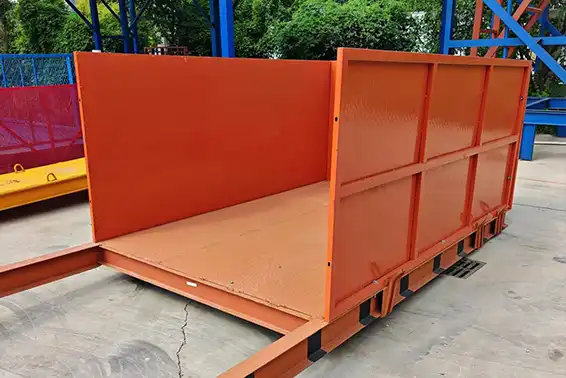
Cantilever Material Unloading Platform: Features, Benefits, and Applications
A cantilever material unloading platform serves as a specialized vertical material transfer station designed for high-rise construction projects. This engineered steel structure projects from building floor edges to create secure staging zones where tower cranes can safely deposit heavy loads—including rebar, formwork panels, and curtain wall components—without making contact with the building perimeter. By addressing critical logistics bottlenecks in super-tall structures and urban infill sites with limited ground space, these platforms enhance material flow efficiency while meeting stringent safety compliance standards essential for modern construction operations.
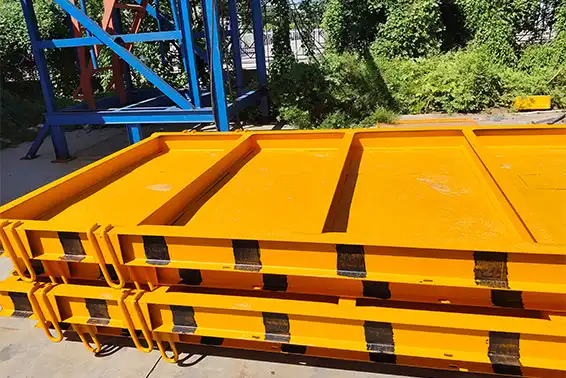
Understanding Cantilever Material Unloading Platforms
For modern building, answers are needed that go beyond the old ways of moving materials. When your project gets to a height where construction elevators can't go or where tower crane blind spots make it hard for people to get to, you need a system that lets you work higher.
These platforms are made up of steel structures that stick out from concrete floor slabs and hold them securely in place. Their cantilevered design makes a special air-space reception zone. This lets crane operators place loads precisely while keeping safe distances from the edges of buildings. In contrast to set staging areas on the ground level, this method changes as building moves up each floor cycle.
Core Structural Components
Material dumping platforms are only as strong as the structure steel that is used to make them. Our systems at Hebei Xinjiuyi Construction Technology Co., Ltd. use 180# I-beam main beams made from Q235B or Q345B steel types. These beams can hold between 1,500 kg and 3,000 kg of weight, and heavy-duty setups can hold up to 5,000 kg³. 5# channel steel is used in the secondary support members to make sure that the load is spread out evenly across the platform area.
The 50 mm thick patterned steel plate decking is very good at keeping people from slipping, even when it's wet. This is a very important safety issue for people who are moving things around. All of the connection points have full penetration welding with even weld lines, which gets rid of the risk of loosening that comes with bolted systems. This quality of welding has a direct effect on how reliable the structure is when the crane is lifting and moving heavy things.
Mechanical Principles and Operational Workflow
How well the platform works with the tower crane determines how efficiently materials are moved. Our special lifting ring is curved, which makes it easier to thread steel wire ropes. This cuts down on the time it takes to set up and the places where stress builds up during lifting. The shape of the platform makes sure that it can be lifted safely for as long as it is used, even after hundreds of moves between projects.
When the materials reach the ground, the people who work on tower cranes connect the loads and lift them to the right floor level. The structure of the platform that sticks out lets the crane hook safely clear the building edge and drop materials on the safe staging surface. Then, workers can get to the platform through built-in safety gates. This lets them move goods to work areas inside the building without putting too much stress on the elevator plans.
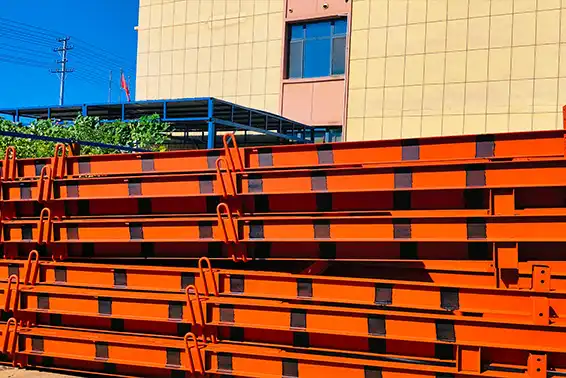
Benefits and Safety Standards of Cantilever Unloading Platforms
Dedicated unloading platforms improve safety and project timeframes. These benefits affect site efficiency beyond just moving objects.
Space optimization is a major benefit, especially on urban building sites with limited ground-level staging. By adding staging space to the air space next to each floor, you can avoid adding ground space and maintain material flow rates to meet the timetable. This is useful when surrounding buildings are on property lines, preventing regular staging sites.
When goods are where workers need them, they're easier to manage ergonomically. Your teams can reach staging materials at installation spots instead of using internal hoists that can only lift specified amounts of weight or hand-moving large pieces through partially constructed floor structures. This speeds up rebar placement, formwork assembly, and curtain wall installation by decreasing physical strain and steps.
The modular design philosophy allows easy assembly and disassembly. Construction rises because shifting platforms to higher floors doesn't require special tools or time off. Because our platforms may be utilised on several projects, you get a solid ROI. Keep them in good condition and they can last 20 years, so you can spread the capital expense across numerous project sites.
Compliance with International Safety Standards
Responsible Cantilever Material Unloading Platform purchases start with safety. Our platforms must follow strict technical requirements for operation safety and structure stability. The 1,200-mm guardrails and toe boards of the built-in safety system are structurally welded. Falling and being hit by an object are the leading causes of work site injuries. This design eliminates these.
The platform's anti-slip coatings maintain OSHA-compliant friction coefficients despite exposure to rain, concrete dust, and hydraulic fluids². Because the yellow-black warning paint is visible in all lighting situations, crane operators can detect platforms from afar and workers can see how close the edges are.
Material verification ensures that every steel part has mill certificates proving grade and thickness. Because of our ISO 9001 quality management system, all load-bearing welds are visually and measured before platforms leave our facility to ensure they match specifications. To avoid gaps, cracks, and partial fusion at important connection points, seams are carefully inspected. This eliminates the main failure of welded steel buildings.
Types of Cantilever Unloading Platforms and Their Applications
The selection criteria for material unloading platforms are very different depending on the type of project, the configuration of the crane, and the amount of material that needs to be moved. Knowing the different configurations helps you match the specs of the tools to the needs of the business.
Fixed versus Modular Platform Systems
In normal building sites, fixed-length platforms make things easier. When your high-rise apartment building has consistent floor plates and needs to stage materials over many levels, standard 3,000 mm or 4,000 mm length platforms make the buying and setting up process easier. The set shape cuts down on the number of parts needed and makes structural calculations easier for engineering review.
Modular systems can be used for projects with different space limitations. When the floor sizes change between the podium and tower levels, or when different building faces need different projection distances, these changes can be made with adjustable configurations without having to make completely new platform inventories. This flexibility is especially helpful for general contractors who are in charge of several projects at once that have different geometric needs.
Load Capacity Classifications
Standard-duty platforms with a weight limit of 1,500 kg to 2,500 kg are good for moving things like rebar bundles, formwork panels, and bags of cement. These arrangements strike a balance between the structure's strength and the platform's reasonable weight. This lets the crane be moved without going over its normal lifting powers at standard radii.
Heavy-duty platforms designed to hold between 3,000 kg and 5,000 kg are used for specific tasks like putting up precast concrete panels, placing mechanical equipment, and storing a lot of material for big concrete pours. The stronger structural parts and better fastening systems can handle these heavy loads while still meeting the safety standards set by the structural calculations. Before choosing heavy-duty configurations, make sure that your tower crane's load chart supports the weight of the platform and the loads you want to carry at the necessary operating radius³.
Industry-Specific Applications
High-rise commercial buildings are the principal use. Super-tall commercial skyscrapers and mixed-use projects need a consistent flow of materials to the higher floors, which challenges construction lift capacity. Our platforms are ideal for transferring formwork systems between floors, storing tonnes of rebar bundles until the placement crews arrive, and installing curtain wall assemblies near to outside installation points.
Urban infill designs with zero-lot-line restrictions use cantilevered platforms to stage above ground. Building sites in the city center take up every square meter of ground space, thus platforms must be raised to allow place for staging. Delivery trucks unload at street level, and tower cranes carry the cargo to upper platforms. This simplifies handling in tight spaces.
Windy conditions require precise material placement while installing a building envelope or curtain wall. Heavy glass pieces several meters wide need solid platforms near mounting locations. Wind dangers and crane hookup time are reduced when the platform is properly placed. This speeds up outside building system installation, where weather delays may derail timetables.
Comparative Analysis and Procurement Guidance
To choose the best material handling tools, you have to compare different options based on certain project factors. Although cantilever platforms work best in high-rise settings, it's important to know what makes them better than other options so that you can make smart purchasing choices.
Platform Systems versus Alternative Solutions
Even though construction hoists can move things, they don't have staging places on each floor. When materials come by hoist, workers have to move them right away to places where they can be stored or installed. This slows down work during times when a lot of materials are being delivered at once. Cantilever Material Unloading Platform platforms separate the arrival of materials from their distribution, which lets overflow storage keep the flow of materials smooth between work shifts.
Ground-level stockpiling with direct crane lifts looks like a good way to save money, but it makes handling less efficient. To place each piece of material, you have to work with the schedules of tower cranes, wait for cranes to become available, and carefully time lifts to meet the needs of the current installation. Platform staging lets you send large amounts of materials at off-peak crane times, so you can store enough materials to support ongoing work cycles without having to coordinate the cranes over and over again.
Material Selection: Steel Grade Considerations
Q235B structural steel is the standard grade for most uses because it has reliable strength properties and is reasonably priced. This grade is good for standard-duty platforms that are used in moderately exposed areas and where coating systems are used as part of normal maintenance to avoid rust.
Q345B high-strength steel has a higher load capacity in smaller cross-sections. This makes the platform lighter while keeping or even improving its structural performance. When the crane's lifting capacity at the minimum working radii is limited, choosing Q345B construction lets you get the load ratings you need without making the platform heavier. The extra cost of the material usually pays off in heavy-duty configurations or projects that need to move platforms around a lot, since less weight speeds up the installation process⁹.
Key Procurement Decision Criteria
Add the necessary safety factors to the heaviest materials you anticipate to deliver to calculate load capacity. Standard structural estimates account for contact forces, unequal platform load distribution, and crane-induced dynamic loading. Request structural verification math sheets and verification by licensed structural engineers.
Easy installation and construction strength depend on how effectively an anchoring system functions with your structure. Through-wall tie rod systems can transfer enormous loads straight into concrete floor slabs, but the edges must be far from the reinforcements, and the concrete placement must be coordinated to embed anchor sleeves. Telescopic jack bracing systems don't require permanent building alterations, although they need floor-to-floor height. Consider which option fits your building's plan and construction order.
Surface treatment impacts durability and maintenance costs. Hot-dip galvanization protects moderately exposed sections from corrosion with regular touch-ups and inspections. In coastal or industrial locations with high corrosion, extra powder coating systems can aid. These systems prolong product life and reduce maintenance. Compare initial surface treatment expenses to estimated platform maintenance costs over its expected lifespan.
Project phases and delivery timing prevent schedule disruptions. Platform arrival should coincide with the floor level reaching the first installation height. This prevents the platform from being delivered too early, taking up ground storage space, or too late, stopping material handling. When negotiating a purchase, discuss wait periods, especially for complex configurations that require technical review and specific methods.
Maintenance, Installation, and After-Sales Support
For a platform to be operationally reliable over its entire service life, it needs to be installed correctly and maintained consistently. By knowing these requirements before you buy something, you can be sure that you'll be able to afford all of its upkeep after the initial purchase.
Installation Procedures and Technical Support
The first step in a professional installation is structural verification, which means making sure the concrete floor slab meets the strength and size standards listed in the platform engineering papers. Anchor point locations need to avoid problems with mechanical penetrations, embedded reinforcement, and edge distance limits that could weaken the structure.
To install a Cantilever Material Unloading Platform through-wall tie rod, you have to carefully cut holes through floor blocks, thread high-strength rods, and tighten backing plates to the right torque values. Coordinating with structure plans is needed to make sure where the rebar is placed before drilling starts. Our technical team gives you full installation drawings and can arrange for on-site coaching for the initial platform rollout. This way, you can be sure that your crews know how to do things right before they can install other units on their own.
When through-wall penetrations are not an option, telescopic jack bracing systems can be installed in a variety of ways. The jacks can be adjusted to fit between the upper and lower floor slabs and create compression load lines without making any lasting changes to the building. To install something correctly, you need to make sure that all of the jack points are bearing the same amount of weight and that the floor-to-floor height is right for good bracing geometry. Adjustment steps let you fine-tune to get a level platform position even if the floor height changes a little.
Preventive Maintenance and Inspection Protocols
Visual checks done every day before use are the basis of preventive maintenance. Prior to each shift that involves using the platform, the right people should make sure that the welds are still solid and haven't cracked or deformed, that the safety railings and toe boards are still attached securely, that the deck surfaces keep their non-slip properties without too much damage to the coating, and that the anchor connections are still properly engaged and haven't come loose⁵.
Monthly structural inspections by qualified staff give a more complete picture of the condition of the platform. These reviews should keep track of any bending or lasting damage that shows overloading, corrosion that needs coating repair, and wear patterns that show incorrect use or too much loading. Photographic recording makes maintenance records that help with making choices about long-term asset management.
Maintaining the surface covering on a base greatly increases its useful life. When zinc-rich primers or powder coatings show signs of wear from contact or impact, they need to be touched up right away to keep the steel underneath from rusting. Coatings need to be inspected once a year, and damaged areas need to be fixed in a planned way. This is especially important in humid seaside areas where rusting happens more quickly.
Warranty Coverage and Parts Availability
As standard, our warranty covers structural flaws and faulty welding for 24 months from the date of delivery. This protection shows that we believe in the quality of our manufacturing and gives you a way to get your money back if something unexpected fails during normal use within the load ratings that were given. The warranty covers the stability of the structural members, the quality of the welds at all connection points, and the adhesion of the coating to the surface when exposed to normal weather conditions.
Having access to replacement parts means that broken parts can be fixed quickly and without any long periods of downtime. Items that are often changed are deck plate sections that have been damaged by impact or too much abrasion, safety fence parts that can get damaged while being handled on the job site, and lifting ring hardware that has been used a lot and is showing signs of wear. Our inventory includes standard parts that can be shipped right away, and we also have custom parts that can be made quickly if you need a replacement right away.
When you work with approved providers, you can be sure that the parts you get are original and meet all the requirements. Aftermarket replacements may seem like a good way to save money, but they can weaken the structure if the materials used don't match the engineering calculations. Our direct delivery plan makes sure that the parts you get match the original platform specs. This keeps the structural verification ground that safe operation certifications are based on.
Conclusion
Cantilever Material Unloading Platforms are an important part of high-rise building transportation infrastructure. These systems solve basic problems with material flow that affect project plans and safety by setting up safe holding areas at higher work levels. For proper specification, you need to think about the load capacity, compatibility with anchoring systems, surface treatment needs, and long-term maintenance. Hebei Xinjiuyi Construction Technology offers enterprise-level platforms that are built to last and meet regulations. These platforms come with full expert support and the ability to be delivered anywhere in the world. When your project needs reliable vertical material transfer solutions, working with experienced manufacturers will make sure that the equipment meets operational needs and lasts for a long time.
FAQ
What load capacity should I specify for my cantilever platform?
The load capacity you choose will depend on how much stuff you expect to send at once. Formwork panels and rebar bundles that are standard usually need a capacity of 2,000 kg to 2,500 kg. Ratings of 3,000 kg to 5,000 kg may be needed for precast concrete elements or staging for a lot of mechanical equipment. Add safety factors according to structural engineering standards to the total weight that includes the materials, packing, and rigging gear. Give detailed loading situations during the buying process to make sure that the right platform is chosen.
How long does platform installation take at each floor level?
With through-wall tie rod anchoring, experienced crews can install each platform in 4 to 6 hours. When adjusting telescopic jack systems, it may take a little longer to get the right bracing shape. The time it takes to install something gets shorter as crews practice the steps over a number of floor cycles. Scheduling installation for off-shift hours keeps construction activities from getting in the way of each other as much as possible.
Can platforms relocate between different projects?
Modular design lets you take everything apart and move it from one job spot to another. Platforms that are well taken care of will keep their structural integrity through dozens of moves over the course of their service life. Standard flatbed trucks with the right tie-downs are needed for transportation. Before moving to new projects, make sure the platform configuration meets the structural needs and get new engineering calculations if the loading conditions are different from the original design parameters⁗.
Partner with Xinjiuyi for Reliable Material Handling Solutions
You can trust Hebei Xinjiuyi Construction Technology Co., Ltd. to make high-quality cantilever material unloading platforms. They have advanced manufacturing skills and strict quality control. Our ISO 9001, ISO 45001, and ISO 14001 standards show that we are dedicated to producing high-quality goods, keeping workers safe, and caring for the environment. Before being shipped, each platform goes through a thorough inspection to make sure it meets international standards and is structurally sound. All of our products can be fully customized to fit your needs. Our technical teams can provide thorough engineering calculations, CAD drawings, and on-site installation advice that are specific to your project. Get in touch with our team at global@xjy8.com to talk about how our material staging services can help your construction go more smoothly. You can look at our full selection of construction safety equipment at xjy8.com and ask for technical information to help you make an informed purchase decision.
References
1. American Institute of Steel Construction. (2017). Steel Construction Manual (15th ed.). AISC.
2. Occupational Safety and Health Administration. (2020). Safety and Health Regulations for Construction. U.S. Department of Labor.
3. Crane Manufacturers Association of America. (2018). Specifications for Mobile Cranes (CMAA 74). CMAA.
4. Chinese National Standard. (2015). Technical Specification for Safety of Steel Tubular Scaffold with Couplers in Construction (JGJ 130-2011). China Architecture & Building Press.
5. American Society of Civil Engineers. (2019). Minimum Design Loads and Associated Criteria for Buildings and Other Structures (ASCE/SEI 7-16). ASCE.
6. International Organization for Standardization. (2021). Temporary Works Equipment – Part 1: Scaffolds – Performance Requirements and General Design (ISO 12812-1:2017). ISO.
- 1
- 10
- 11
- 12
- 18


