BLOG List
Double Ladder Walk-Through Scaffolding: Complete Buyer’s Guide for Construction
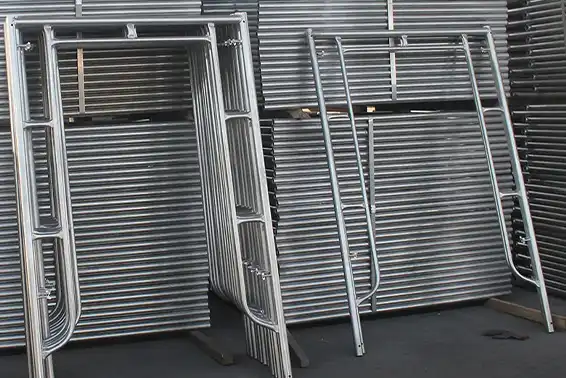
When safety officers and procurement managers look for quick and easy ways to get to places, they often find that double ladder walk-through scaffolding solves a number of problems at once. Workers can move horizontally under the structure without taking parts apart or jumping over braces because this modular system has vertical access on both frame sides and a clear base space. These frames are made from hot-dip-galvanized Q235 high-strength steel and support personnel platforms. They also have OSHA-compliant load capacities and two emergency exits, which are very important for job sites with a lot of moving parts.
Understanding Double Ladder Walk-Through Scaffolding
What Makes This System Different From Traditional Frames
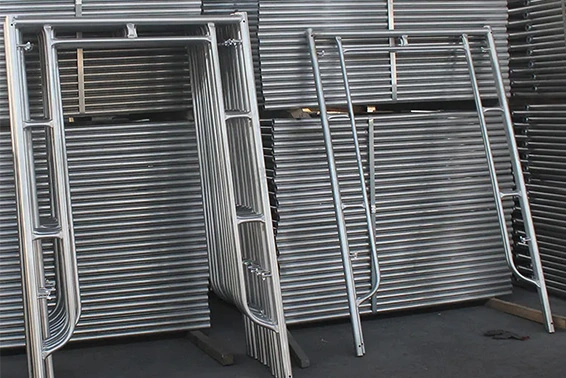
Crews have to work around cross-braces at ground level when using standard brick platforms, which slows down the movement of materials and shift changes. With the walk-through setup, this problem is completely gone. Both vertical parts have built-in ladder rungs that give your team two ways to get in and out without having to wait for clearance. This design works especially well for maintaining bridges and the outsides of tall buildings, where continuous work directly affects sticking to the schedule.
The structural benefit is more than just ease of use. Even when workers climb at the same time on different sides of the ladder, it stays stable because the weight is evenly distributed across both uprights. The frames at Xinjiuyi are made from 42 mm- or 48-mm-diameter tubes with wall thicknesses ranging from 2 mm to 3.5 mm. They are designed to handle the lateral forces that happen in windy places like petrochemical plants and tower crane platforms.
Core Applications Across Construction Sectors
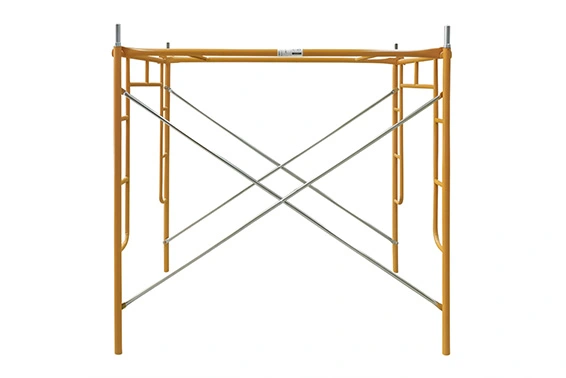
Industrial repair shops need scaffolding that can stand up to chemicals and high humidity without having to be replaced often. Our hot-dip-galvanized finish is more corrosion-resistant than the 500-hour salt spray test standards needed for power plant and mill turnarounds. The open base clearance lets technicians put tools under work areas so that operations can keep going while they work on overhead valve systems or turbine assemblies.
The same features can help commercial building projects in different ways. When airport terminals and show halls are being renovated, access systems like double-ladder walk-through scaffolding are needed to keep people moving below high work platforms. The flexible design can be used in high-ceilinged rooms inside buildings where disturbing activities on the ground level would cost the owners of the building a lot of money. While your team makes changes to the HVAC or lights, ticket counters or shopping areas below the building keep running normally.
Regulatory Compliance and Safety Standards
OSHA requires that mobile towers have certain height-to-base ratios, which are usually 4:1 without any extra support. Even tighter 3:1 ratios are required by European EN rules unless outriggers or wall ties are used. When procurement teams know these parameters, they can choose the right frame heights and other equipment during the planning phase. Before shipping, our engineering team checks your load calculations and gives you advice on the structure to make sure your design meets the rules in your area.
The two ladders work together to make things safer than the minimum requirements set by law. OSHA's protected entry rules are met by having multiple vertical paths that make emergency evacuations less crowded. Anti-slip checkered steel planks with reinforced edges keep workers from falling, and precision-cast connectors stop the wobbling that makes workers less confident when they have to work at heights for long periods of time.
How to Assemble and Maintain Walk-Through Access Systems
Step-by-Step Assembly Protocols
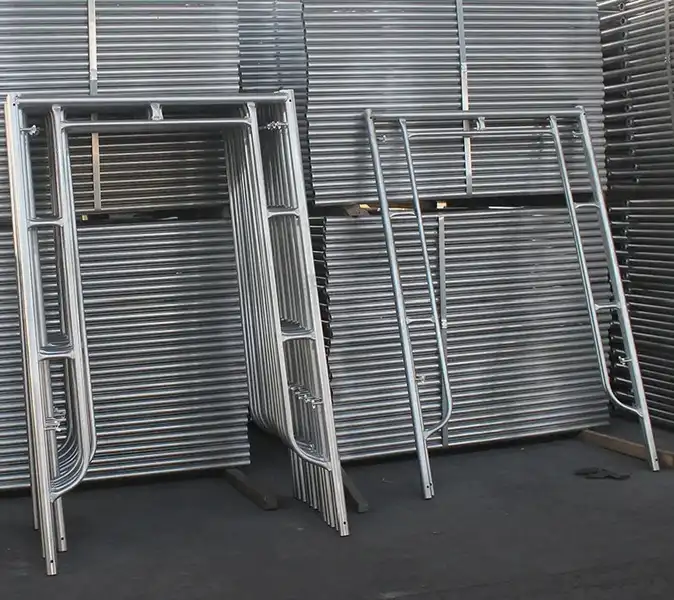
Our quick-disassembly pin connection method means that most setups can be done without the need for special tools. Place the base plates on level ground first, and use spirit levels to make sure they are stable before adding the vertical frames. Standardized pin spacing of 4 or 2 feet works with universal cross-braces and screw jacks, so it's easy to use with stock from other makers.
Next, diagonal bracing is attached to keep each bay from racking when loads are applied from the sides. First, your team should hand-tighten the connections. After the whole run is put together, they should do one last torque check. Hook-and-platform systems hold the decking boards in place, making the work area. When compared to traditional fixed systems, the whole process cuts on-site building time by about 40%. This directly lowers labour costs on projects with tight deadlines.
Always check the ground conditions before setting up. To keep the required height-to-base ratio, mud sills or extra base support are needed for areas with soft soil or uneven surfaces. When the height of a tower goes over the limits for an independent structure, wall ties are required to spread the loads back into the building structure at regular intervals set by engineering estimates.
Maintenance Routines That Extend Service Life
Routine checks on double-ladder walk-through scaffolding focus on five key areas that show how well the structure will hold up over long periods of time. Check the weld places for cracks or distortion that can be seen, especially at high-stress areas where the uprights and horizontal pieces meet. Pay attention to the verticality of the frame—misalignment beyond a tolerance of ±1.5 mm could mean damage from impacts or overloading that makes the frame less compatible with other modules.
In corrosive settings, the state of the surface layer has a direct effect on how long it lasts. Check galvanised finishes for rust blooms in certain areas, especially where the metal touches the ground and water builds up. A zinc-rich cold galvanizing spray works well on small scratches to restore protective barriers before oxidation spreads. If there is a lot of covering loss, it means that the product needs to be re-galvanized by a professional in order to keep its 20-year service life.
Locking pins and joints wear out over time when they are put together over and over again. Check these parts for deformation that stops them from engaging securely. Replace any worn parts right away to keep the safety factors of the structure. Keep thorough maintenance logs that list inspection dates, repairs that were done, and the results of load tests. This information is very helpful during safety checks and shows liability insurers that you took the necessary steps.
Comparing Walk-Through Scaffolding With Alternative Access Solutions
Performance Metrics Against Single-Ladder Frames
Single-ladder designs are cheaper at first, but they make work less efficient over the course of a job. Crews have to wait in a queue during shift changes when there is only one high entry point per bay. This wastes valuable work time. The walk-through option gets rid of this traffic jam, and its extra cost is justified by better use of labour on long-term projects like installing tube linings or pouring bridge decks.
Comparisons of stability also show that the two-ladder setup is better. When dynamic loads are spread across two strengthened uprights instead of one uneven ladder-equipped part, deflection is lessened. This is especially important when workers are moving heavy parts onto raised platforms as part of material handling. The increased rigidity reduces the bounce and sway that can be dangerous.
Evaluating Modular Versus Tube-and-Clamp Systems
Tube-and-clamp framing is the most flexible way to work with odd shapes, but it takes a long time and skilled labor to put together. Our modular method, which includes systems like double ladder walk-through scaffolding, gives up some geometric freedom in exchange for being much faster to set up and making sure that all of the parts work together perfectly. Standardised modular frames save a lot of time on projects with layouts that are the same, like perimeter guardrails for foundation excavations or uniform facade access on apartment towers.
Reuse cycles must be taken into account in cost-effectiveness analysis. Tube-and-clamp connections wear out over time and lose their shape, but modular parts can be put together and taken apart more times. Over the lifetime of an asset, which lasts five years and includes dozens of projects, the modular method gives a better return on investment, even though it costs more up front.
Whether to rent or buy depends on how much space is needed and how much money is available. Companies that manage ongoing building portfolios explain ownership by spreading the costs of tools over many projects and keeping supplies readily available. Contractors with unpredictable demand can save money by renting equipment instead of buying it, but they give up the benefits of long-term cost savings and familiarity with the equipment.
Procuring Walk-Through Scaffolding: What B2B Buyers Should Verify
Vetting Manufacturers and Suppliers
Manufacturers with a good reputation keep both ISO9001 and ISO45001 certifications for quality management and health and safety at work. These credentials show that the company is committed to consistency and ongoing growth, going beyond just meeting product standards. Ask for mill test reports that prove the chemistry of the material and its yield strength for each production batch. This will help you make sure that the tubing you're buying meets the requirements for Q235 or Q355, rather than cheaper alternatives.
When your project needs a lot of things quickly, manufacturing ability is important. You can visit production facilities in person or virtually and look at the level of automation in the welding process and the infrastructure for surface treatment. The Cangzhou factory of Xinjiuyi uses CO₂-protected arc welding and non-destructive testing methods to make sure that the joints are completely solid and meet the safety standards set by destructive load testing, which require 4:1 safety factors.
Customer reviews give you an idea of how good the customer service is after the sale. Ask buyers who oversaw projects of a similar size and level of difficulty to yours for references. Ask them specifically about how quickly they responded to technical questions and how reliable their deliveries were. When standard sizes don't work for your site, suppliers who can make things to your specifications can be very helpful. Check with them about their fine manufacturing tolerances and lead times for non-standard designs.
Navigating Purchasing Formats and Volume Negotiations
Complete kits are good for smaller builders who are just starting to build their scaffolding inventory because they come with the right number of frames, braces, planks, and extras. Established businesses like wholesale buying because it helps them get rid of old stock or add more tools to support growth. Customization requests can be made in either format, but for non-standard specifications like 6061-T6 aerospace aluminium construction or speciality powder coating finishes, there may be a minimum order quantity.
The more orders you place, the more power you have in negotiations, but buyers shouldn't give up on compliance paperwork or guarantee terms just to get a small price cut. Make sure that purchase deals clearly state delivery times and include penalties for late shipments that put your project plan at risk. Talk about logistics plans right away. How containers are loaded, which ports are preferred, and the paperwork needed for customs all affect the total landed costs, which are different from the unit prices that were given.
OEM partnerships are good for distributors and big builders who want to put their own name on lines of safety equipment such as double ladder walk-through scaffolding. These deals usually include promises for more than one year and guarantees on sales, but they can help a business stand out from its competitors and make more money in regional markets.
Making the Right Decision: Buyer's Criteria and Recommendations
Matching Scaffolding Specifications to Project Requirements
Small-scale improvements of home interiors or store fit-outs rarely need walk-through systems unless they have multiple entry points that speed up the work. When moving around on the ground isn't limited, standard frame scaffolding is enough. On the other hand, infrastructure projects like building a highway flyover or maintaining a dam need the extra space that open base clearance gives them so that materials can be delivered without stopping while teams work above.
In industrial building sites with strict safety rules, having multiple entry points and a strong load capacity are very helpful. Figure out the best frame spacing and platform widths by looking at the average size of your team and the tasks that are being done at the same time. Xinjiuyi has standard widths ranging from 950 mm to 1250 mm, which can be used for everything from inspections by one person to material staging by several workers.
Key Evaluation Metrics for Procurement Managers
Testing for durability starts with looking at the material and how well it was treated on the outside. Electro-galvanization doesn't resist rust as long as hot-dip galvanisation with a zinc thickness of at least 60 μm, but electro-galvanization may be enough for climate-controlled indoor uses. Think about where you'll be putting the materials—coastal projects near saltwater need the best rust protection, while dry inland places can handle lighter finishes.
Ease of assembly has a direct effect on labor costs. Ask for example films that show how to connect and how an erection usually works. Tool-free designs lower the level of skill needed from field crews. This lets you hire more people and spend less on training. Making sure that your new equipment works with the old ones will save you a lot of money on replacements. Check that the pin spacing and brace connection standards match what you already have in stock.
Support after the sale is what sets top sellers apart from commodity vendors. Technical advice services help with figuring out loads and making the best use of configurations, which lowers engineering costs while bids are being prepared. Installation instructions and crew training will make sure that your team gets the most out of the equipment while still following safety rules. Quality systems, like those made by Hebei Xinjiuyi Construction Technology Co., Ltd., are made to last 20 years, and they keep their value because they come with maintenance tips and extra parts that are easy to find.
Conclusion
To choose the right support system, you have to weigh the needs of the current project against the goals for long-term asset management. On projects where ground-level movement and dual entry points cut down on traffic and improve safety, walk-through configurations like double-ladder walk-through scaffolding make things run more smoothly. The quality of the materials, the accuracy with which they are manufactured, and the level of support provided by the supplier will ultimately decide how well your investment performs over many years of tough building uses. Buyers who put compliance documentation, durability specifications, and the ability to make changes high on their list of priorities set their companies up to meet changing safety standards while keeping lifecycle costs low.
FAQ
1. What height restrictions apply to freestanding towers?
In the United States, OSHA allows 4:1 height-to-base ratios without any extra support. In Europe, however, EN requirements usually demand 3:1 ratios unless outriggers or wall ties are used. Always check the rules in your area, because some cities and towns have tougher rules. Before mobilisation, Xinjiuyi offers technical advice to make sure your setup meets all the rules.
2. Can these frames integrate with existing scaffold inventory?
Standard pin spacing of 4 feet and 2 feet makes sure that universal cross-braces, screw jacks, and platform accessories from most manufacturers will work. Check to see if the styles of the connectors you already have are compatible. Our precision-cast parts are compatible with industry-standard fittings, which allows for seamless integration during phased equipment upgrades.
3. How often should inspection and maintenance occur?
Before each project is put into action, you should do eye inspections to check the state of the coating, the welds, and the alignment of the frames. Do thorough checks every three months while it's being used continuously and write down what you find in repair logs. To keep things from breaking down faster in corrosive settings, replace old locking pins right away and fix damaged coatings right away.
4. Are rental options available for short-term projects?
Many wholesalers have rental programs for workers who only need scaffolding sometimes, but the programs aren't always available in all areas. When used for more than 60 days a year across various projects, purchasing becomes cost-effective. Talk to Xinjiuyi or one of their authorised distributors about both buying and renting options that work for your business.
Partner With Xinjiuyi for Reliable Walk-Through Scaffolding Solutions
Hebei Xinjiuyi Construction Technology Co., Ltd. makes walk-through scaffolding systems that are designed to work in tough construction sites around the world. Our ISO9001-certified factory in Cangzhou consistently produces high-quality goods and offers full expert help from the beginning of a project to its end. Whether you're in charge of tunnel digs, petrochemical maintenance, or high-rise facade installations, we are experts at making custom setups that solve problems that are unique to each site. As an experienced supplier of double-ladder walk-through scaffolding, we keep a large inventory on hand so that we can meet your needs quickly. We can also make custom products to your exact specifications. You can email our procurement team at global@xjy8.com to talk about the needs of your project, ask for technical advice, or get cheap quotes. We don't just deliver products; we also help with installation, train crews, and provide upkeep support so that your safety equipment investment pays off over many years of reliable use.
References
1. American National Standards Institute. (2018). ANSI A10.8: Scaffolding Safety Requirements for Construction and Demolition Operations. New York: ANSI Publications.
2. European Committee for Standardization. (2019). EN 12811-1: Temporary Works Equipment—Part 1: Scaffolds—Performance Requirements and General Design. Brussels: CEN Central Secretariat.
3. Occupational Safety and Health Administration. (2020). OSHA 1926 Subpart L: Scaffolds in Construction Standards. Washington, DC: U.S. Department of Labor.
4. Construction Industry Research and Information Association. (2017). Guide to Scaffolding Selection and Safe Use in Construction Projects. London: CIRIA Publishing.
5. National Institute for Occupational Safety and Health. (2021). Preventing Falls from Scaffolds in Construction Workplaces. Cincinnati: NIOSH Publications.
6. International Organization for Standardization. (2015). ISO 9001:2015 Quality Management Systems - Requirements for Manufacturing Excellence. Geneva: ISO Standards Catalogue.
How Cage Ladders Reduce Workplace Accidents?
A lot of injuries on construction sites around the world happen every year because of accidents involving ladders. The construction ladder cage has become a revolutionary safety solution. Its sealed protection design has greatly reduced the number of falls. These modular safety systems make a safe way to go up and down that gets rid of the risk of falling backwards that comes with regular open ladders. Construction ladder cages solve the main problems that lead to accidents on ladders—loss of balance, dangerous environments, and not enough fall protection—by combining structural enclosures with non-slip treads and reinforced framing. These systems are made in line with international safety rules and guidelines for building, such as OSHA, EN, and ISO. They solve one of the biggest safety problems in the business all at once.
Understanding Construction Ladder Cages and Their Safety Role
Safety cage systems are a big step forward in protecting people who work at heights in building sites. Unlike regular ladders, which leave workers open to danger, these structures surround the climbing path with a solid wall.
What Defines a Safety Cage System
A construction ladder cage is made up of horizontal hoops and vertical bars that form a closed-off path for climbing around fixed ladders. The design is usually made of galvanized steel and has modular sections that can be changed to fit different height needs. In modern systems, thicker galvanized rectangular tubes with 80 mm × 80 mm poles and 3.0 mm wall thickness are used. This keeps the structure strong even when strong winds are blowing. The protective mesh connecting plates are 5 mm thick and have 75 mm welded wire mesh holes. They make a second safety barrier that stops falls while still letting you see. These requirements are in line with strict engineering standards that put worker safety and long-term durability in tough construction conditions at the top of the list.
How Protective Enclosures Function
The sealed design works on a simple but effective idea: it keeps you physically contained while you climb and descend. When workers climb inside the construction ladder cage, the framework around them makes it hard to move side to side, and anyone who loses their balance or grip is caught. Dual safety comes from anti-slip treads on the inside and protected mesh on the outside, adding extra layers of safety. At Xinjiuyi, our cage systems have 2.0 mm thick platforms made of chequered plate that give you a safe place to stand at transition points. The modular assembly design lets parts that are 3000mm long, 2000mm wide, and 2000mm high connect smoothly with strengthened bolt connections. This makes it possible for projects with a range of heights, from deep excavation pits to high-rise bridge piers. Because it is so flexible, the system can be used for a wide range of situations, from getting into a foundation pit to maintaining a tower crane.
Regulatory Compliance and Standards
For B2B procurement workers in charge of global building projects, meeting international safety standards is a must. In the past, OSHA rules said that ladders longer than 24 feet had to have cages. However, new rules stress that new installs should have integrated fall-stop systems. Specifications for hoop spacing, cage diameter, and structural load capacity are set by European EN ISO 14122-4 standards and national building safety laws in developing markets. ISO9001, ISO45001, and ISO14001 certifications are followed in Xinjiuyi's manufacturing processes. This makes sure that quality management is consistent and environmental rules are followed. Our hot-dip galvanizing treatment covers more than 85 microns of coating, which has been proven by salt spray testing to work in harsh maritime and industrial environments. With these certifications, procurement managers can show proof that their products have been through safety checks and regulatory inspections in more than one area.
Common Causes of Ladder-Related Workplace Accidents and How Ladder Cages Address Them
When you look at accident data, you can see clear trends in how and why ladder accidents happen on building sites. Figuring out how these things work helps explain why cage systems make a noticeable difference in safety.
Primary Accident Triggers
Most ladder accidents are caused by people losing their balance or slipping, which can happen in bad weather or when workers are carrying tools while climbing. If you make your own ladders or don't take care of them properly, they could fall apart at any time. Positioning mistakes and bad climbing methods make things more dangerous, especially in deep excavation engineering where limited space makes it hard to set up safely. Long steep climbs make workers tired, which weakens their grip and makes it harder for them to focus, which makes mistakes more likely. Environmental factors, such as wind exposure on a high-pier bridge project or oil contamination in an industrial setting, make things even less safe. Traditional makeshift ladders aren't standardized, so the risks aren't always clear and are different for each project and contractor.
Engineering Solutions That Mitigate Risk
Multiple engineering changes are made to construction ladder cage systems to fix these problems. The fully enclosed frame design stops backward falls even if you lose your balance or your grip. Nodes that are reinforced and connected by bolts keep the makeshift ladders from coming apart or deforming. Our systems use 2.0 mm thick stair half-treads with non-slip surfaces that keep your footing even when it's wet outside. The stable structure can withstand wind loads thanks to its welded rectangular tube framework. The gaps have been ground smooth to prevent sticking. The standard modular section design lets you put it together quickly without affecting the structure's strength. This means that you can replace unreliable workarounds with certified tools. Platform connecting tubes that are 90mm x 90mm and have a wall width of 4.0mm can hold a lot of weight at places where workers stop or change directions.
Reducing Fall Distance and Impact
When compared to open ladder designs, the cage structure greatly reduces the distance that someone could fall. Regular catch points are made by the horizontal hoops, which stop full-height drops. This containment principle gives workers a sense of psychological safety that makes them less anxious during climbs. This is especially helpful in tunnel shaft situations where claustrophobia and confusion are problems. The protective mesh frame is made from 30° angle iron that is 2.5 mm thick. It sets visual boundaries that help workers keep track of their surroundings. When there is an emergency, the stable handholds and safe footing of the cage make it possible to get out quickly without making mistakes out of fear. Vertical entry used to be a high-risk activity, but these features make it a controlled, regular process.
Evaluating Ladder Cage Solutions: Types, Benefits, and Comparisons
In order to choose the right safety systems, you need to know how the different technologies work and what their benefits are in different situations.
Material and Construction Variations
Metal bars are used a lot in industry because they are strong and don't catch fire easily. Welded high-strength national standard steel construction is the most durable way to install things permanently in building floors and on infrastructure projects. Hot-dip galvanizing protects against rust for decades, keeping the structure strong even when exposed to chemicals and high temperatures. Stainless steel versions are used in places like wastewater treatment plants where strong corrosives speed up the breakdown of materials. Which material to use relies on how long you want the project to last, how it will be used, and your budget. Xinjiuyi specializes in thickened galvanized construction that strikes a good mix between low cost and long service life (up to 20 years), which is exactly what big builders need so they can use the same tools for multiple projects.
Advantages Over Alternative Systems
When you compare construction ladder cages to other fall protection methods, you can see that they have clear operational benefits. Personal fall arrest systems need different gear for each worker, ongoing training on how to use the harness correctly, and regular checks on parts that have short useful lives. Guardrails and safety rails are different types of safety equipment that do different things. Temporary scaffolding for vertical movement is hard to set up, costs more in materials, and takes up space that equipment operators need. Construction ladder cage systems offer passive safety because the user doesn't have to do anything extra to use them. The modular bolt-on assembly makes it easy to set up and change the layout as the building process goes on. Visual checks and rare cleaning are all that's needed for maintenance, so long-term costs stay low while protection levels stay the same.
Return on Investment Through Accident Prevention
Beyond the moral requirement of worker safety, financial research shows strong economics. Injuries at work have direct costs, such as medical bills, workers' compensation claims, and possibly even lawsuits. Most of the time, indirect costs like project delays, lost productivity, regulatory probes, and damage to the company's image are higher than direct costs. Installing approved cage systems lowers insurance rates by showing underwriters that you are taking steps to control risk. Better safety records make it easier for contractors to compete for government and private infrastructure projects where safety records affect who gets the job. Because modular devices can be used on more than one job, the cost of buying them is spread out over many years of work, which is good for cost-per-use metrics. Just preventing one serious fall accident usually makes the investment more than worthwhile, so buying Construction Ladder Cages is a smart financial move.
Installation and Procurement Guide for Construction Ladder Cages
When safety systems are put in place correctly, they work as intended to protect people and avoid common deployment mistakes.
Installation Process and Best Practices
An accurate site assessment is the first step to a successful installation. This includes measuring the required vertical travel distance and finding anchor points that can hold structural loads. Preparing the foundation makes sure that the base can be mounted securely, which is very important in dig sites where the dirt isn't always stable. Connecting modular parts one after the other is done by tightening the bolt nodes to the manufacturer's specs. This keeps the joints from coming loose under dynamic loads. Verification of alignment at every link keeps the vertical plumb, which stops any binding or stress buildup that could weaken the structure. Platform sections need extra care to be level and make sure that the checkered plate surfaces are attached securely. The final check makes sure that all the protective mesh panels are in place and that the climbing treads are clean and free of any damage or debris. Some common mistakes are not anchoring properly in soft substrates, not accounting for thermal expansion in harsh climates, and mixing parts from systems that don't work together.
Procurement Considerations and Criteria
B2B procurement professionals have to look at more than just the initial price. Material approvals show that the steel type, galvanizing thickness, and welding quality meet national standards. What determines whether standard dimensions meet the needs of a specific project or if changes need to be made is the ability to customize. The ability of a supplier to make things affects how long it takes to send big orders that cover multiple construction sites. Warranty terms and expert help after the sale are what set reliable partners apart from transactional sellers. Safety checks and governmental approvals are easier to do when you have documentation packages with engineering drawings, load estimates, and compliance certificates. Xinjiuyi offers full technical services before a sale, such as on-demand design solutions and detailed renderings that show how systems will work with the site's current infrastructure. Our factories in Cangzhou, Hebei, keep stock and have flexible production plans so that we can meet tight project deadlines without lowering quality standards.
Working with Trusted Suppliers
Building relationships with trustworthy manufacturers creates long-term value that goes beyond single transactions. Suppliers with a history of success on a wide range of projects bring application knowledge that helps with choosing products and making changes. Location affects how well supplies work and how quickly they can meet urgent needs. As a modern building safety company that does research and development, production, and sales all in-house, Xinjiuyi can help customers from the initial design phase all the way through installation, including the integration of the Construction Ladder Cage where required. Our fully-equipped production sites and well-established supply chain system allow us to make a lot of things, which is needed for infrastructure development projects that span many countries. We are dedicated to quality management, occupational health, and environmental responsibility, as shown by our ISO9001, ISO45001, and ISO14001 certifications. Buying in bulk can save you money and make sure that all of the deliveries are the same in terms of quality, which makes it easier to keep track of your supplies and plan for upkeep.
Case Studies and Verification of Ladder Cage Effectiveness
There is evidence from real-world deployments that cage systems make construction sites safer in a variety of settings.
Documented Safety Improvements
Infrastructure projects in Southeast Asia have reported that ladder-related accidents have dropped by 70–85% since the cage system was put in place. High-rise builders in the Middle East said that serious fall injuries stopped happening completely after standard cages were used instead of temporary ladders for three years. When building bridges in areas with a lot of wind, the covered design was especially useful because it kept the workers from getting hurt when open ladder operations would have been stopped. Deep excavation projects were helped by cage systems because they allowed stable vertical access even as the site conditions changed as the work went on. These results show that properly designed systems provide consistent protection, even when workers behave in different ways.
Compliance Achievement and Audit Results
Regulatory authorities and third-party auditors always make sure that cage ladder installations meet the requirements set by the designers. When projects have certified systems, they pass compliance reviews with few problems. This speeds up the approval process from regulators, which could otherwise slow down construction schedules. The uniform look of modular cages makes a construction site look more professional, which is important for managing a contractor's reputation and public relations in urban projects. The yellow and black warning colors that are built into the look of our systems meet standards for clarity while also giving off an air of business. From manufacturing certifications to installation records, there are paper tracks that make proof that can be inspected and meets insurance requirements and legal due diligence standards.
Maintenance Programs and Longevity
Performance monitoring makes sure that systems keep their ability to protect throughout their useful lives. During routine checks, the state of the coating, the tightness of the bolts, and the structural stability of load-bearing parts are all looked at. Simple daily maintenance tasks at Xinjiuyi, like basic cleaning and eye checks, can be done by anyone working on the site without any special skills. Our hot-dip galvanized surfaces don't rust, so they keep their structural integrity even after years of use. This means you won't have to replace them as often as you would with lower-quality options. Maintenance records that list inspection times and any repairs are also proof of compliance. Standardized equipment makes training, keeping track of parts, and maintenance easier for clients who work on multiple projects. This creates operational efficiencies that build over time.
Conclusion
Construction ladder cage systems are a tried-and-true, well-thought-out way to solve one of construction's biggest safety problems. These protective enclosures turn vertical access from a dangerous activity into a controlled process by physically containing it, making sure the structure is redundant, and meeting international standards. The investment pays off in a measurable way by lowering the risk of accidents, making sure that rules are followed, and improving operational efficiency. When purchasing safety equipment, procurement professionals have a clear choice: they can keep using ad hoc solutions with unknown risks, or they can put in place standardized systems based on engineering principles and proven to work. There is proof from many different types of building sites around the world that properly designed and installed cage ladders greatly reduce accidents on the job and help the project's long-term finances.
FAQ
1. When Are Cage Systems Mandatory Under Safety Regulations?
Fixed ladders taller than 24 feet used to have to have cages according to OSHA rules. However, new rules require personal fall stop systems or ladder safety systems for all new installs. Cage requirements are still in place in many places for existing installations and certain uses. Each country has its own rules about building safety. Often, developing markets adopt rules that are similar to OSHA or EN guidelines. Based on contractor safety rules or client risk management standards, project specs often go above and beyond what is required by law.
2. Which Materials Perform Best in Harsh Environments?
Hot-dip galvanized steel is very good at resisting corrosion in most building environments, even those that are near salt water. Grades 304 or 316 stainless steel are used in specific situations where corrosion is very bad. When choosing materials for a project, you should think about how long it will last, how easy it will be to maintain, and environmental factors like temperature changes, chemical exposure, and humidity levels. Xinjiuyi's galvanized systems with coatings thicker than 85 microns last for decades and work well in a wide range of climates.
3. Can Existing Ladders Be Upgraded with Cage Systems?
When the existing ladder structures can handle the extra weight and anchor forces of cage parts, retrofitting is an option. Upgrades can be made with modular bolt-on kits instead of replacing the whole ladder, but an engineering review is still needed to make sure the structure is strong enough. It is possible to make established buildings safer with retrofits without having to change the whole system, which can be expensive and cause problems.
Partner with Xinjiuyi for Comprehensive Ladder Safety Solutions
For construction sites to be safe, they need partners they can trust who understand the complicated needs of global projects. Hebei Xinjiuyi Construction Technology Co., Ltd. offers advanced manufacturing skills and in-depth application knowledge to create safety systems that keep your workers safe and help the project succeed. Our construction ladder cage systems are made to meet the tough needs of deep drilling, high-rise construction, bridge projects, and tunnel uses. They do this by using flexible designs that can be changed to fit your needs. We offer the quality guarantee and technical paperwork that procurement workers need because we are a certified manufacturer under ISO9001, ISO45001, and ISO14001 standards. Email our team at global@xjy8.com to talk about the needs of your project and get detailed engineering help. Xinjiuyi offers reliable construction ladder cage options with 20-year service life warranties and full after-sales support, whether you need standard setups or custom sizes. Raise the safety standards of your construction site with a reliable supplier who cares about the success of your project.
References
1. National Safety Council. (2022). Injury Facts: Workplace Falls and Ladder Safety Statistics. National Safety Council Publications.
2. American Society of Safety Professionals. (2021). Best Practices for Vertical Access Safety in Construction Environments. ASSP Technical Report Series.
3. International Labour Organization. (2020). Safety and Health in Construction: Global Standards and Implementation Guidelines. ILO Sectoral Activities Department.
4. Construction Industry Institute. (2019). Fall Prevention Through Engineering Controls: Research on Protective Systems. CII Research Summary 341-2.
5. European Agency for Safety and Health at Work. (2021). Ladder Safety in the Construction Sector: Risk Assessment and Prevention Measures. EU-OSHA Practical Guidelines.
6. Occupational Safety and Health Administration. (2023). Walking-Working Surfaces and Fall Protection Standards: Compliance Guide for Construction Industry. OSHA Publication 3124.
Top Benefits of Double Ladder Walk-Through Scaffolding for Large Projects
When managing large-scale construction projects, you need access systems that deliver both safety and efficiency without compromise.

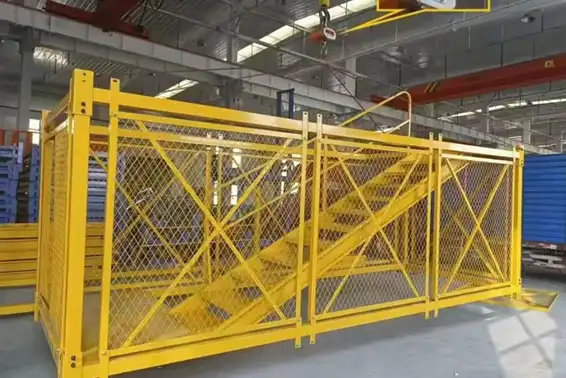
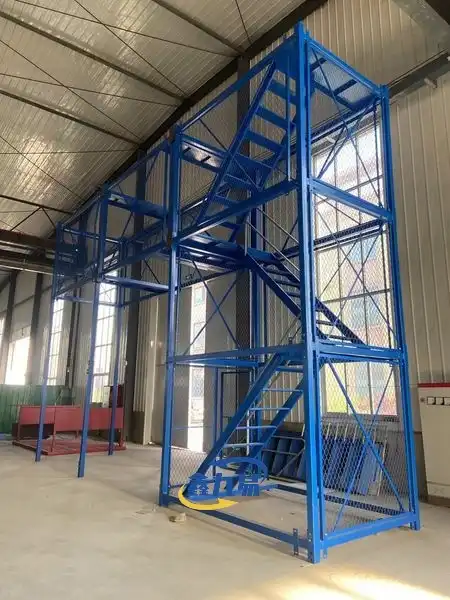
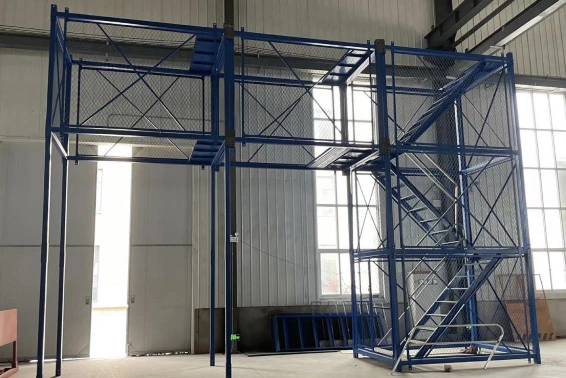
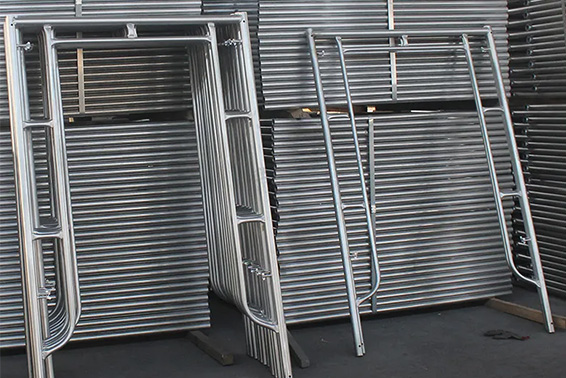
has emerged as a transformative solution for project managers overseeing complex infrastructure builds, high-rise construction, and industrial maintenance operations. This modular framework system features integrated vertical ladder rungs on both sides of each frame, paired with an unobstructed lower clearance area that allows workers to move horizontally through the structure without dismantling sections or climbing over obstacles. The dual-access design significantly reduces bottlenecks during shift changes while meeting OSHA and EN safety standards, making it an indispensable tool for contractors who refuse to compromise on worker protection or project timelines.
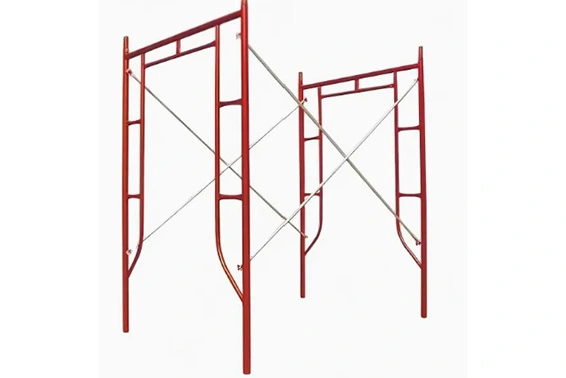
Understanding Double Ladder Walk-Through Scaffolding
The new structure of this type of scaffolding solves a problem that procurement managers and safety officers keep running into on busy job sites. Cross-braces at ground level are common in traditional brick frames. These create physical hurdles that make it necessary for workers to take apart sections or do awkward climbing moves in order to move materials horizontally. This arrangement messes up the flow of work and adds extra safety risks that aren't needed.
What Sets This System Apart?
Smart engineering has made Double Ladder Walk-Through Scaffolding systems that get rid of these problems. The framework has two sets of ladders on opposite sides of each unit, so there are two sets of vertical access points. The open lower clearance zone, on the other hand, lets material carts and other equipment pass under raised work areas without stopping. This design works especially well in places where work is being done at multiple levels at the same time, like when building a bridge, maintaining a refinery, or building a commercial facade.
The core parts are made of high-tensile Q235 or Q345 carbon steel tubing that is usually 42mm to 48mm in diameter and has walls that are 2.0mm to 3.5mm thick. The strength-to-weight ratio of this design is better than that of other options. Surface treatments include architectural-grade powder coating or hot-dip galvanisation with a minimum 60μm thickness. Both are designed to resist oxidative corrosion in harsh environments like coastal humidity and chemical exposure.
Technical Advantages for Demanding Applications
Because the structure loads are spread out evenly, this design is stable even when it's being used for heavy-duty tasks. It is possible to hold up to 75 pounds per square foot of weight when high-quality galvanised cross-locks are used correctly and are tested in both destructive and non-destructive ways. Precision-cast connectors keep joints tight and stable, so the structure stays strong even when the project lasts for a long time. Standard setups come in lengths ranging from 1800mm to 1930mm, widths from 950mm to 1250mm, and heights that can be adjusted from 1524mm to 1931mm, so they can be used in a variety of settings.
Top 5 Benefits of Double Ladder Walk-Through Scaffolding for Large Projects
Knowing the strategic benefits of this access system helps procurement teams make investment choices and make sure that the equipment they choose fits with the goals of the business. The following benefits directly address the main concerns of project managers, health and safety officers, and contractors who are in charge of multi-phase construction projects.
Enhanced Safety Compliance and Worker Protection
In order to be used in building, all tools must meet international safety standards. Double Ladder Walk-Through Scaffolding has two escape exits on each frame unit, which is very useful for when something unexpected happens on the job site. The extra access points make it easier for people to get out of the way during evacuations and shift changes, which is a big worry for OSHA when it comes to safe access to high work platforms.
The built-in ladder design gets rid of the need for separate ladder extensions on the outside, which can become pinch points or trip dangers on busy job sites. Anti-slip checkered steel planks with reinforced edges provide stable footing even when it's wet, and precision-engineered locking mechanisms keep the parts from coming apart by accident while they're being used. All of these safety features work together to cut down on accidents at work. This helps contractors keep their safety records clean and avoid the costly delays that come with investigating accidents.
Superior Workflow Efficiency and Time Savings
On any building job, time is money, and problems with the access system have a direct effect on your bottom line. The walk-through clearance design lets moving materials continue along raised platforms while work is done below at ground level at the same time. When compared to traditional support setups that need to be taken apart often to move equipment, this parallel workflow feature can cut project timelines by 15 to 25 percent.
The two ladder entry points let different crews work separately, so there are no wait times during busy work times. The quick-disassembly design lets you put it together without tools most of the time, which cuts installation time on-site by up to 40% compared to regular systems. Standardised pin spacing, usually every 4 or 2 feet, makes sure that they work with universal cross-braces and screw jacks. This makes it easy to use with existing equipment and cuts down on the need for training for field staff.
Exceptional Load-Bearing Performance for Heavy-Duty Applications
A lot of the time, big projects use heavy tools and materials that need strong support systems. The construction of high-tensile carbon steel makes it stronger than lighter-duty options when it comes to carrying weight. Steel frames made from Q235 or Q355 low-alloy high-strength steel can hold heavy loads and keep the structure stable over long distances.
The symmetrical frame design spreads the weight evenly across all connection points, which stops stress buildups that cause the frame to break before it's supposed to. When engineers use this method, they get a 4:1 safety factor that meets strict industry standards for temporary buildings. When workers are sure that the platform below them can handle the demands of their jobs without bending or becoming unstable, they can easily move materials like construction supplies, welding equipment, and power tools.
Versatility Across Diverse Project Types and Environments
Procurement managers like it when tools can be used for more than one thing on different projects. This modular access system works great in a wide range of situations, from commercial high-rise building to industrial plant maintenance. This hot-dip-galvanized finish protects against rust and is good for jobs near the coast, chemical plants, and other harsh places where painted steel would break down quickly.
The walkthrough layout is especially helpful for remodeling projects inside. Elevated work platforms that don't get in the way of people walking or business operations on the ground are needed in airport hubs, theatres, and show halls. The system acts as a stable mobile tower that lets work continue below the work zone. This keeps facility owners from losing too much money during renovations. Bridge maintenance crews like the two access points because they make it easier to work on decks that aren't very wide, and tunnel building workers like the open clearance because it makes it easier to move materials around in small spaces.
Long-Term Cost Effectiveness and ROI
The initial investment in equipment is important, but the true value is found in the total cost of ownership. The long-lasting building materials and safe surface processes make the service life much longer than cheaper options. When frames are properly maintained, they usually last between 15 and 20 years of reliable service, which spreads the cost of purchase over hundreds of projects.
Compared to complicated private systems, they still don't need much maintenance. Regular visual inspections look for things like deformed tubes, weak welds, and localised corrosion. These are easy checks that site supervisors can do without any special training. Zinc-rich repair compound spray quickly fixes small surface damage and stops rust from spreading, which would weaken the structure. Standardised component design makes keeping track of parts easier and lets fixes be done with easily available hardware instead of expensive OEM replacements.
How to Choose the Right Double Ladder Walk-Through Scaffolding for Your Project?
To choose the right access equipment, you need to carefully look at the factors that apply to your job. When making decisions about what to buy, it's important to think about both short-term operational needs and long-term fleet management issues. This way, investments in equipment can help with both current projects and opportunities in the future.
Evaluating Load Requirements and Project Specifications
To start, figure out how much weight the platforms must hold at once when workers, tools, and supplies are all added together. Building codes usually say that scaffolding has to be able to hold at least four times the planned working load. However, factors at the job site may require higher safety margins. Heavy equipment is often used in bridge construction and industrial maintenance projects compared to residential ones. This means that frames need to be able to hold more weight.
Frame choices and bracing arrangements for walk-Through Scaffolding are affected by the required height. When a building has more than three stories, it usually needs engineered designs with calculations checked by qualified structural engineers. Material choice and anchorage requirements are affected by things like wind exposure, seismic concerns, and extreme temperature changes.
Comparing Material Options and Surface Treatments
Q235 carbon steel is a basic, cost-effective material for general building uses that is strong enough for most situations. Q355 low-alloy high-strength steel works better in tough situations that need to hold a lot of weight or have long spans that aren't supported. Some makers also make frames out of 6061-T6 aircraft aluminium, which is lighter and better for moving around a lot but costs more.
Hot-dip galvanisation is still the standard way to protect against corrosion, especially for equipment that will be used outside or in chemical environments. The thick copper layer (at least 60μm) protects for decades with little upkeep. On the other hand, powder painting is better for indoor uses or projects where looks are important, but it usually needs to be touched up more often than galvanised finishes.
Assessing Supplier Reliability and Support Services
It doesn't matter how good the equipment is if shipping times get pushed back or if technical help isn't good enough. Check out possible providers' manufacturing capabilities, quality certifications, and past work on projects like yours. ISO 9001 certification means that the company has strong quality management systems, and ISO 45001 certification means that the company is committed to health and safety standards at work.
Full project support should include planning a solution that fits your site's needs, making sure the calculations are correct, helping with installation, and quick service after the sale. Suppliers who can customize products in ways that aren't standard give you a lot of options when your project needs to be unusually large or perform in a certain way. Reliable vendors keep enough stock on hand to handle large orders and tight delivery windows without lowering the quality of their products.
Installation, Maintenance, and Safety Tips for Large-Scale Projects
Installing and maintaining equipment correctly has a direct effect on both how well it works and how long it lasts. Setting clear rules and standards for training makes sure that everything is done the same way on all projects and by all work teams.
Installation Best Practices and Common Pitfalls
The flexible design makes operation faster, but there are a few important steps that need to be taken very carefully. Before putting up towers, make sure the ground can hold the weight. Base plates or mud sills can be used to spread the weight across soft areas. Use adjustable screw jacks to level the supports, because even small variations from plumb can add up over time and make the structure less safe.
Follow the manufacturer's instructions for the highest height-to-base ratios, which are usually 4:1 for OSHA standards and 3:1 for European rules without any extra support. Outriggers or wall ties must be placed at certain intervals on taller configurations to keep them from tipping over. Install these anchor points according to the engineering plans and use nails that are rated for the loads that were calculated.
Maintenance Protocols to Extend Service Life
Set up regular review times that are in line with the length of the project and the amount of use. Visual checks should be done once a week to look for things like bent tubes, cracked welds, broken locking pins, and missing parts. Fix any problems right away instead of putting them off, because weak parts can cause more problems when they're under load.
Frames should be cleaned every so often to get rid of paint overspray, concrete splatter, and other buildups of dirt and debris that can trap water against protective coats. Properly store equipment between jobs in dry, well-ventilated areas instead of leaving it outside, where it will rust faster. Apply zinc-rich repair compound to any areas where galvanisation is damaged. This will protect against rust and make the coating last a lot longer.
Safety Training and Emergency Preparedness
Comprehensive training programs make sure that workers know how to properly put things together, how much weight they can carry, and how to spot hazards. Include things like fall safety standards, the right way to climb a ladder, and rules for moving things around on elevated platforms. Appoint qualified people to check the equipment every day and give them the power to take out of service any parts that aren't working right.
Make plans for what to do in case of an emergency that cover things like building fails, worker falls, and bad weather. Hold regular drills so that crews know how to handle stress-related situations well and don't have to wing it when there is an actual emergency. Keep the lines of communication open between people on the ground and people working at heights, especially during material moves and moving of equipment.
Comparing Double Ladder Walk-Through Scaffolding with Other Scaffolding Types
Figuring out how Double Ladder Walk-Through Scaffolding stacks up against other access solutions can help you make a decision about what to buy and make sure it fits the needs of the project. Each type of support has its own benefits that make it better for different uses and goals.
Structural Stability and Load Capacity Considerations
The performance of single ladder frame scaffolding is good enough for light-duty tasks and projects with simple entry needs. The single vertical access point makes manufacturing easier and cheaper, but it could cause problems when multiple workers need to reach the platform at the same time. When frames are made of the same materials and are the same size, load capacities usually match up between double ladder configurations.
When it comes to irregular building profiles and complicated geometries, traditional tube-and-coupler systems give you the most options. Skilled crews can make custom configurations that solve almost any access problem, but installation labor requirements are much higher than those for modular frames. The design with lots of connections also adds more places where things could go wrong, which means that checking processes needs to be very careful.
For repair work and projects that need to be moved around a lot, mobile scaffolding towers are very useful. Built-in wheels let you move things around quickly without taking them apart, but they aren't as flexible as fixed frame systems when it comes to height and support. For cell phone towers, the walk-through design isn't as important because ground-level objects rarely get in the way of short-distance moves.
Operational Efficiency and Application Suitability
The dual-ladder walk-through configuration works best for big business jobs where many trades are working at the same time at different heights. Because there is no obstruction, material can flow continuously without stopping operations at higher levels. This directly leads to shorter schedules and lower costs. This simplified entry method is very helpful for projects that need to do the same thing over long distances, like building bridge decks or installing industrial pipes.
For smaller renovations and new homes, the dual access and walk-through features might not be fully utilized. In these cases, simpler frame systems would be more cost-effective options. In the end, the choice is based on the size of the workforce, the length of the project, and the complexity of the operations, not on absolute success measures.
Conclusion
Buying Double Ladder Walk-Through Scaffolding is a big decision that will affect the safety of your workers, the efficiency of your operations, and the profits you make from all of your construction projects. The two-way design with clear ground clearance eliminates persistent work flow problems and provides two separate emergency exits that meet strict safety standards. Its high load-bearing capacity, resistance to rust, and ability to work with standard tools make it a good investment that will last for decades. This modular access system gives you the strong performance and operational freedom needed on today's complicated job sites, whether you're working on high-rise construction, industrial repair, or building new infrastructure.
FAQ
What is the highest arrangement of walk-through scaffolding poles that can be used?
Freestanding towers can only have a height-to-base ratio of 4:1 under OSHA rules or 3:1 under European rules if they don't have any other stabilisation measures. For taller setups, outriggers, guy wires, or wall ties must be placed at regular distances. Engineered designs that have been checked by qualified structural professionals can go above and beyond these baseline ratios if the site conditions and anchorage methods allow for enough stability margins.
How does the double-ladder configuration improve safety compared to single-access frames?
Redundant ladder access gives each Double Ladder Walk-Through Scaffolding unit two separate ways to get out. This cuts down on the time needed to evacuate in an emergency and keeps things from getting too crowded during normal shift changes. This design meets OSHA standards for safe vertical access and gets rid of the need for separate external ladder attachments that can be hard to use on busy job sites and create extra places to trip.
Are customized dimensions available for specialized project requirements?
Reliable makers let you customise a lot more than just the measurements shown in their catalogues. Custom setups can handle unusually spaced bays, ceiling heights that aren't standard, or load needs that are unique to your project. By giving detailed site drawings and performance specifications, you let engineering teams make custom solutions that work with the equipment you already have and meet all safety standards.
What maintenance schedule should be followed for galvanized scaffolding frames?
During busy project stages, do eye checks once a week to look for things like deformed tubes, cracked welds, broken locking pins, and spots of corrosion. Every so often, clean the frames to get rid of the concrete dust and other things that can trap water against the protective coats. Equipment should be stored in dry, well-ventilated areas between projects, and zinc-rich repair compound should be used on any areas where galvanisation has been compromised. This will stop rust from spreading and weakening the structure.
Partner with Xinjiuyi for Your Scaffolding Solutions
Hebei Xinjiuyi Construction Technology Co., Ltd. makes high-quality double-ladder walk-through scaffolding that is designed to handle the needs of big projects. The high-strength Q235/Q355 steel used to make our modular systems is hot-dip-galvanized over μm thick, which makes them more resistant to corrosion and ensures they last longer than other options. We help procurement teams from the beginning of the design process all the way through the end of the project by providing customized solution planning, load verification calculations, and full expert advice. We offer consistent quality and dependable delivery schedules for contractors all over the world as a reputable Double Ladder Walk-Through Scaffolding supplier with ISO 9001, ISO 45001, and ISO 14001 certifications. Email our team at global@xjy8.com to talk about your unique project needs and get thorough specifications that are made to fit your business.
References
1. American National Standards Institute. (2020). Safety Requirements for Scaffolding: ANSI A10.8-2020. Washington, DC: American National Standards Institute.
2. Occupational Safety and Health Administration. (2019). Scaffolding in Construction: OSHA Standards and Compliance Guidelines. U.S. Department of Labor Publication Series.
3. European Committee for Standardization. (2018). Temporary Works Equipment - Part 1: Scaffolds - Performance Requirements and General Design: EN 12811-1:2018. Brussels: CEN Publications.
4. Construction Industry Institute. (2021). Best Practices for Modular Scaffolding Systems in Large-Scale Infrastructure Projects. Research Report 341-2, University of Texas at Austin.
5. National Institute for Occupational Safety and Health. (2017). Engineering Controls for Fall Protection in Construction: Evidence-Based Recommendations. NIOSH Publication No. 2017-145.
6. International Organization for Standardization. (2019). Steel Tubes for Scaffolding: Technical Specifications and Quality Requirements: ISO 1129:2019. Geneva: ISO Standards Catalogue.
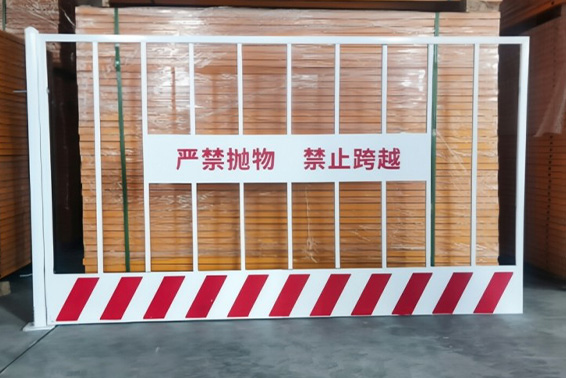
Keep Construction Workers Safe with an Excavation Guardrail System
There are risks on every construction site, but falls from the edges of excavations are still one of the easiest ways to avoid getting hurt or killed. An excavation guardrail system is a very important physical barrier that keeps people from falling into ditches, foundation holes, and open digs by mistake. This flexible safety system keeps vehicles out of dangerous areas, separates them, and directs safe traffic around work zones that are in use. These guardrail systems are designed to meet international safety standards. They are more than just legal requirements; they show a dedication to saving lives and lowering practical risks on building sites around the world.
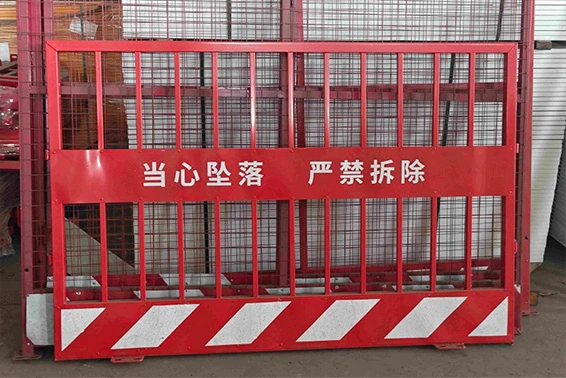
Understanding Excavation Guardrail Systems: Definition, Types, and Benefits
An excavation guardrail system is very different from regular site fencing. Specialized safety systems like these are made to handle certain horizontal loads and make it easy to see where the dangerous areas are. Professionally designed pit edge protection stays strong even when it's hit or stressed by the environment, unlike makeshift timber hoarding or rope barriers.
What Makes Excavation Barriers Different From Standard Fencing
The building business has had trouble for a long time with perimeter security that isn't always constant. Pressure often breaks down traditional walls, giving people a false sense of security. With careful planning, modern excavation walls fill this gap. In Xinjiuyi, our national standard modular safety guardrail is made of square and rectangular tubes that are welded together to very exacting standards. When compared to other options, the structure is more resistant to impact and stays stable even when workers lean against the barrier by accident during operations.
When you look at load-bearing capacity, the difference becomes clear. Our systems can withstand horizontal forces that would break down regular fencing. This keeps workers safe from both accidental contact and pressure that is meant to hurt them. The built-in toe-board design keeps tools, equipment, and other trash from falling into areas that have been dug up, which is something that basic border solutions don't do.
Core Types: Temporary vs. Permanent Protection Systems
It's a big decision for project managers to decide whether to use temporary rollout or permanent installation. Temporary methods work best in settings that change quickly, like when the edges of an excavation are constantly moving. These modular units have quick-connect parts that let you move them around without special tools. This cuts down on setup time by up to 60% compared to the old way of doing things.
Permanent systems work well for long-term projects with stable edges of the trench. These systems anchor deeper into the surfaces around them, making them more resistant to wind and vandalism. The Excavation Guardrail System, for example, follows the same durable approach, with a standard width of 2000 mm and a height of 1200 mm, but these dimensions can be changed to fit the needs of each project, whether they are protecting shallow utility trenches or deep foundation excavations for tall buildings.
Choosing the right materials makes system types even more different. For heavy industrial uses, steel construction is the most durable, while aluminum alternatives save money on transportation costs for outlying sites. Our high-temperature baking paint process makes sure that both choices are resistant to weather, so they will keep looking good and working well even after being outside for a long time.
Key Safety and Compliance Benefits
Protecting excavations properly is good for business in more ways than one. OSHA rules require specific fall protection measures to be used. If these aren't followed, there are big fines that are much higher than the cost of buying the equipment. Not only do good barriers keep people from getting fined, they also lower the number of accidents that raise insurance rates and hurt a company's image.
Accident prevention saves money right away. The direct costs of a building worker getting hurt by falling usually go over $50,000, and the secondary costs are often three times that amount. When compared to the cost of installing a barrier device, the return on safety infrastructure is clear right away. Up to 75% fewer accidents happen at edges on projects that use appropriate fence systems.
The benefits of operational efficiency are often not seen. Clear, stable barriers get rid of the need for constant supervision around the edges of excavations. Workers can move easily near protected areas without having to be on high alert all the time. This keeps them productive while ensuring their safety. The bright yellow or orange safety finishes make it easy to see any dangers around the clock, protecting both day- and night-shift workers.
Excavation Guardrail System Safety Standards and Regulatory Compliance
There are regulatory systems in place to make sure that everyone is safe in a variety of building sites. By understanding these requirements, you can turn compliance from a burden to a competitive advantage, showing clients and regulatory authorities that you are a professional excavation guardrail system.
OSHA and International Standards Overview
The OSHA 1926.502 standard sets specific rules for fall protection systems used in construction. The rule says that the height of the top rail must be between 39 and 45 inches. Our normal 42-inch design is perfectly within these ranges. Mid-rails need to be placed about halfway between the top rail and the work area. This is to make sure that there is enough space between them so that workers don't slip through the gaps.
When you trade internationally, there are more rules and regulations to follow. According to European EN 13374 standards, temporary edge protection is divided into Classes A, B, and C based on what it will be used for and how much weight it can hold. Our engineering team creates systems that meet at least Class A standards and can keep people from falling from heights of up to three meters, which includes most excavation situations that happen in the world of construction.
When these standards are built into the design of a product, procurement professionals don't have to guess. When you ask Xinjiuyi to deliver a compliant system, the solution you get is ready for regulatory inspection right away, without any changes or additions. This guarantee is especially helpful for workers who are in charge of several jobs at once in different states.
Critical Design Specifications: Height, Spacing, and Load Capacity
The right barrier function depends on the exact relationships between the dimensions. The distance between grilles is set by safety rules that balance how clear things are with how well they protect. Openings must keep people from getting through by chance while still letting you see what's going on in the work areas. Our design strikes this balance by using carefully thought-out mesh sizes.
The load capacity may be the most important specification for an excavation guardrail system. Systems must be able to withstand point loads that are put on the weakest parts of the structure without permanently changing shape. Guardrails can handle 200 pounds of force acting in any way along the top rail, according to the rules for testing. This capacity takes into account workers who are carrying tools or materials and might trip over the barrier. This makes sure that the excavation guardrail system stops falls instead of making them worse.
Adding a toe board completes the safety design. Small objects can't roll or be kicked into excavations because the minimum height is at least 3.5 inches. This protects workers below and keeps work areas clean. All joints are ground down to get rid of burrs and sharp edges. This keeps people from getting hurt when they touch the barrier itself.
Inspection and Maintenance Requirements
Putting something in place is only the start of the safety process. System security is maintained throughout the project by following regular inspection procedures. Every day, visual checks look for damage or movement that is easy to see. Once a week, more in-depth checks look at connection points, anchor stability, and the condition of the coating.
Physical checks must be accompanied by certain paperwork. Safety officers have to keep records that show they followed inspection schedules. This creates audit trails that meet legal standards and protect against liability claims. Our systems make this process easier by using numbered parts and standard inspection checklists that are matched to the product specs.
When systems are installed correctly the first time, they don't need much maintenance. The powder-coated or galvanized finishes don't rust and don't need to be treated often, so they stay protected even in bad weather. When damage does happen, modular design lets you change parts instead of the whole system, which saves money and time.
Choosing the Right Excavation Guardrail System: A Decision Support Framework
Choices about selection have an effect on safety, project costs, and how well operations run. The best protection solutions are found by systematically comparing the needs of the project with the capabilities of the excavation guardrail system.
Evaluating Project-Specific Requirements
The depth of the excavation has a direct effect on the barrier specs. For utility trenches that are less than two meters deep, lighter protection systems may work, but for deep foundation excavations, heavy-duty barriers with better stability features are needed. The type of soil affects the choice of anchor. Stable clay lets you drive posts in, but rocky or sandy soil may need a different mounting method.
Accessibility of a site affects how operations are planned. Compact modular systems that come in manageable pieces are helpful for urban projects with limited staging areas. When building infrastructure in remote areas, lighter materials that take up less space might be given more attention, even if they cost a little more per unit.
Project duration influences buy-versus-rent analysis. For short-term excavations, rental agreements are best because they avoid having to commit capital and take responsibility for return. Buying systems is the most cost-effective way to handle long-term projects that need to cover excavations over and over again. This is especially true when the systems are used at multiple sites at the same time for a contractor.
Comparing Material Options and Durability
Steel is mostly used in heavy industrial settings where durability and resistance to pressure make the slightly heavier weight worth it. The welded square tube framework is very rigid and keeps its exact dimensions even when it's under a lot of stress. Our automatic high-temperature paint process fuses the coating to the substrate at the molecular level. This stops flaking or peeling, which hurts both the look and the protection against corrosion.
Material selection affects the cost over the whole life of the product. Systems designed to last 20 years spread costs over many projects, lowering the cost of safety for each project to a minimum. Being able to fix up and use old parts again increases their value, turning hurdles from costs that are used up quickly into capital assets. The Excavation Guardrail System exemplifies this principle, as its durable components can be reused across multiple excavation sites, further extending the cost-saving benefits and reinforcing the shift from consumable expense to long-term asset value.
Procurement Considerations: Certifications and Support
Choosing a supplier has effects that go beyond just delivering the product. By following ISO 9001, ISO 45001, and ISO 14001, certified manufacturers show that they have consistent quality management. These certificates show that the company has strong quality control systems, health and safety rules at work, and cares about the environment. These are all qualities that are in line with smart procurement policies.
Long-term satisfaction is affected by the provision of technical help. Suppliers who offer pre-sales engineering consultation can help you get the best specifications before you commit to buying. After delivery, installation instructions make sure it's set up correctly, and care teams are easy to reach in case problems arise during use. At Xinjiuyi, our professional team helps clients with everything from the initial design to the final finishing of a project. We do this by giving them detailed models and technical documentation that make the approval process go more quickly.
Installation Guide and Best Practices for Excavation Guardrail Systems
When installed correctly, engineered protection turns into useful safety infrastructure. Systematic distribution processes make sure that the excavation guardrail systems work the way they were meant to.
Pre-Installation Site Assessment
Preparing the site starts before the parts arrive. Check the edges of the excavation to find the best places for the anchor points, making sure to take into account underground utilities, overhead barriers, and entry paths. Record the soil conditions that affect the security of the foundation. For example, anchoring loose fill is different from anchoring native material that has not been disturbed.
Risk assessment finds dangers that are unique to building work. Putting up barriers near active excavations makes people temporarily vulnerable, so installation crews need to be protected from falls in the meantime. Planning installation routines that limit this exposure shields workers and sets up protection for later operations.
Step-by-Step Installation Process
Start installing at corners or clearly marked starting points to set the reference line for the next parts. Place base plates on areas that have been prepared, making sure they are level to avoid stress on the structure from uneven loading. Use the right tools to keep bases in place, like driven stakes for dirt, drill-and-epoxy bolts for concrete, or weighted ballast if you can't go through the surface.
As you put the vertical posts of the Excavation Guardrail System into their bases, make sure they are level and plumb before tightening the hardware that connects them. Our ear-plate-free design gets rid of the need for removable mounting parts that can become weak spots, making the structure more reliable. Install horizontal rails through built-in connection points, making sure that the locking mechanisms are fully engaged to avoid unintentional disassembly.
As directed, add the toe-boards and mid-rails, making sure to keep the right distance between them throughout the installation. Finish the assembly by adding any warning signs or improvements to visibility that are needed. The laser-cut edges and smooth, burr-free sides make it impossible to get hurt while installing, so you can handle it safely without any extra safety gear.
Common Installation Mistakes to Avoid
The most common mounting mistake is not using enough anchors. Barrier systems depend on stable foundations; skimping on base preparation can damage the whole system. A lot of people don't realize how important the weather is during installation. When systems are installed when it's raining or freezing, the concrete anchors don't cure as quickly, and the soil around the driven posts gets compacted.
If you don't follow the manufacturer's instructions, you could be held responsible. Custom changes may seem useful at the time, but they often invalidate approvals and lower the load capacity below what is safe. If the project needs non-standard setups, it's better to get help from engineering to make sure that planned changes are correct than to try to figure things out on the spot.
Procurement and Partnering with Trusted Excavation Guardrail System Suppliers
Dependability in the supply chain has a direct effect on the safety and on-time completion of a project. Strategic ties with suppliers provide value beyond just providing goods for the excavation guardrail system.
Selecting Certified Manufacturers
Manufacturer approval is an objective way to show that a product is reliable and works as expected. Certification of a quality management system shows that there are written procedures that control every step of the production process. Certification in environmental management means that you are responsible for more than just the performance of your product. You are also responsible for the environment as a whole, which is becoming more and more important as companies report on their sustainability efforts.
When projects need to quickly set up large barrier systems, production capacity is important. Manufacturers with well-established production facilities and supply lines can meet tight delivery dates that smaller businesses can't. At Xinjiuyi, our modern factories in Cangzhou, Hebei, use cutting-edge production technology and well-organized logistics networks to serve building markets around the world.
Customization Capabilities and Technical Support
While standard goods can be used for many tasks, complicated projects often need solutions that are made just for them. Manufacturers that offer full customization can change barrier systems to fit the needs of each site without affecting their safety. Changes to the sizes, colors, and built-in sign choices can turn generic security into solutions that are perfect for a particular project.
Technical help starts while the specifications are being made. Suppliers with a lot of experience look over project drawings and make design suggestions that maximize protection while keeping costs low. Having access to detailed renderings during the planning stages helps everyone see how suggested solutions would work, which speeds up the approval process and cuts down on change orders during delivery.
Evaluating Total Cost of Ownership
The purchase price is only one part of the real cost of the system. Total ownership economics takes into account things like installation labor, upkeep needs, and service life. When systems need specialized installation crews or regular maintenance, they cost a lot to run, which cancels out any initial savings from lower purchase prices.
Long-term investment value is protected by warranties and service after the sale. Comprehensive warranties show that the maker is confident in the product's durability and give customers a way to get their money back if it breaks down too soon. Responding service networks keep projects on schedule and keep safety going even when problems happen.
Conclusion
For construction sites to be safe, safety steps must be taken before problems happen. An excavation guardrail system is designed to protect workers while also meeting safety standards and lowering the risk to the business. Putting money into good perimeter security pays off by preventing accidents, making sure that regulations are followed, and improving operational efficiency. As safety standards change and building projects get more complicated, working with dependable makers becomes a smart move. Choosing systems that are built to last, come with full support, and are provided by certified providers sets the stage for long-term safety excellence across all of your projects.
FAQ
1. What safety requirements do dikes need to meet?
In the United States, compliant systems follow OSHA 1926.502 rules, which set minimum heights, load capacities, and building standards. For European markets, international projects may need to follow EN 13374 or similar local rules. Certified manufacturers make products that meet multiple sets of standards at the same time. This makes it easier for global contractors managing different projects to buy these products.
2. Can guardrails be adjusted to handle rough ground?
Modern barrier systems can handle changes in grade thanks to swivel connections and adjustable base parts. These features keep the vertical alignment of the posts and the right heights of the rails even when the surface is sloped or not level. Extreme terrain may need custom base solutions; talk to technical support to figure out the best ways to deal with difficult site conditions.
3. How often should dikes, walls, or levees be checked?
Visual checks done every day find damage or displacement that needs quick attention. Every week, thorough checks are done to make sure the connections are solid, the anchors are stable, and the whole system is in good shape. Before starting up activities again near protected places after an impact event or severe weather, do more checks. Maintain written records of inspections that show ongoing compliance and care.
Partner With Xinjiuyi for Comprehensive Excavation Safety Solutions
To keep your workers safe, you need more than just tools. You need to work with excavation guardrail system suppliers who know how complicated building sites are around the world. Xinjiuyi combines excellent manufacturing that is ISO-certified with the ability to make changes that fit the needs of your project. Our modular safety guardrails have a 20-year warranty and come with full professional support, from the first plan drawings to on-site installation help. Email our team at global@xjy8.com to talk about your excavation protection needs and get specific information for the projects you have coming up. We offer trustworthy and legal options that turn safety from a legal hassle into a competitive edge.
References
1. National Safety Council. (2023). "Workplace Safety Statistics: Construction Industry Falls and Prevention Methods." Annual Report on Occupational Injuries.
2. American Society of Safety Professionals. (2022). "Best Practices for Excavation Safety in Commercial Construction Projects." Professional Development Series, Volume 34.
3. Construction Industry Research and Policy Center. (2023). "Cost-Benefit Analysis of Fall Protection Systems in Deep Excavation Projects." Journal of Construction Safety Management, Issue 18.
4. International Organization for Standardization. (2021). "ISO 45001 Implementation in Construction: Quality Management Systems for Safety Equipment." Technical Guidance Document.
5. Occupational Safety and Health Administration. (2023). "OSHA 1926 Subpart P: Excavations Standards and Compliance Guidelines." U.S. Department of Labor Official Publication.
6. European Committee for Standardization. (2022). "EN 13374 Temporary Edge Protection Systems: Performance Requirements and Test Methods." CEN Technical Standard Documentation.
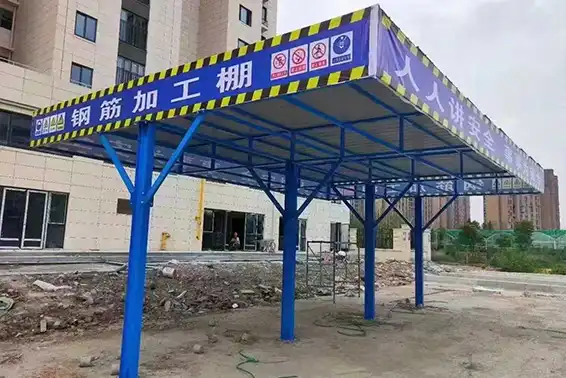
Rebar Processing Shed: A Complete Guide for Construction Sites
Managing steel reinforcement on construction sites demands more than open-air improvisation. A rebar processing shed stands as a dedicated protective structure where your team centralizes cutting, bending, and shaping operations under one weather-resistant roof. This specialized facility transforms chaotic material handling into a streamlined workflow, safeguarding workers from falling debris while protecting expensive machinery from rain and UV damage. The standardized design addresses four urgent challenges that procurement managers face daily: preventing rust-induced bond failures between steel and concrete, isolating high-risk welding activities from general site traffic, minimizing scrap waste through organized inventory control, and meeting OSHA's civilized construction site requirements. When you integrate this solution into your project planning, you're not purchasing a temporary shelter—you're investing in a mobile production hub that relocates across multiple phases without losing structural integrity.

What Is a Rebar Processing Shed and How Does It Work?
At its core, this Rebar Processing Shed is an industrial-grade canopy designed to cover areas where steel bars are made. When the raw rebar coils or straight bars get to the job site, they go straight into the covered workspace, where the normal work starts. Inside, your crew uses cutting machines, hydraulic benders, and spot welders without having to worry about sudden rainstorms ruining freshly cut edges or summer heat making them tired.
Purpose-Built Protection for High-Risk Tasks
The structure keeps your general workers away from dangerous activities like sparks from welding flames, metal shavings from cutting saws, and noise from hydraulic equipment. This physical split cuts down on accidents by a huge amount and makes a clear safety zone that inspectors can see right away during compliance checks.
Material Handling Efficiency Through Centralization
When operations are centralised under one roof, materials don't have to be moved back and forth between different workstations over and over again. Your team cuts, bends, and arranges all the supports so that they can be put in place right away. This cuts down on the time it takes to handle the materials by about 30% compared to open-yard setups. Organised trash cans under the roof make it easier to deal with trash, and recyclers can get rid of metal scraps without having to look all over the site.
Weather Resistance as a Quality Control Measure
When processing is done in the rain, the surface oxidises, which breaks the bond between the rebar and the poured concrete. The waterproof top layer of the shed keeps things dry while it's being built, making sure that the surfaces are clean and meet structural engineering standards for finished concrete members that won't pull apart.
Types and Designs of Rebar Processing Sheds: Choosing the Right One
The right configuration is chosen based on the size of the project, the amount of data to be processed, and the limitations of the site. Knowing the differences between the Rebar Processing Shed systems that are available helps procurement teams avoid buying too much capacity or not enough structure.
Pre-Engineered Modular Systems
These standard units come in kits that are already put together and have parts that can be easily connected. Hebei Xinjiuyi Construction Technology and other companies make sheds that are 6,000 mm to 9,000 mm long, 4,000 mm to 6,000 mm wide, and 3,700 mm tall. The 18# I-beam steel poles hold up main beams that are 50 mm x 50 mm x 2.0 mm thick, which means they can hold the weight of overhead hoists. Once the base footings are ready, putting it together usually takes three to five days. The modular design makes it possible to take the modules apart and move them up to five times during different project phases without damaging the structure. This is a great feature for contractors who are in charge of managing sequential infrastructure builds.
Custom-Engineered Solutions for Complex Sites
When you don't have enough room or your machines have strange footprints, you need custom fabrication. Customised plans allow for gantry crane integration, with strong shafts that have corbels and rail beams that support lifting systems that weigh three to ten tonnes. Coastal projects in areas with a lot of salt get anti-corrosion paint systems in the C4 or C5-M group. These last much longer than regular coats and don't break down when exposed to salt spray. Longer lead times are the price to pay—custom units usually take ten to twelve days to make, while standard configurations only take seven days—but the perfect fit means no expensive changes have to be made on-site.
Comparing Steel Frame Versus Lighter Alternatives
Frames made of Q235B and Q345B grade structural steel for Construction Rebar Protection Shed are very strong against wind. They can handle ten- to twelve-grade typhoons and snow loads of more than 0.5 kN/m². Lighter frames made of aluminium or composite materials cost less to buy at first, but they need to be maintained more often and aren't as strong as frames made of steel or steel composite. When looking at the long-term value of various projects, procurement managers always choose galvanised steel, even though it costs more up front.
Advantages of Using a Rebar Processing Shed vs Open Yard Setup
Moving from scattered open-air workstations to a dedicated covered Rebar Processing Shed leads to measurable improvements in safety, material use, and following the rules. Knowing about these benefits helps make the case for spending money on capital during discussions about approving the budget.
Workflow Optimization Through Spatial Organization
Sheds with walls make sure that materials move in a reasonable way. The raw material comes in through marked areas, goes through cutting and bending stations in a certain order, and then comes out as staged groups that are ready to be picked up by a crane. This straight line layout cuts down on the need to go back and on accidents that happen when workers have to move between randomly placed pieces of equipment in open yards. Time-motion studies show that teams are 25% more productive when they work in designated processing zones instead of making do with improvised outdoor setups.
Environmental Protection Beyond Weather Shielding
In addition to keeping sensitive equipment safe from rain and UV light, the shed also keeps dust from getting on it. Automated stirrup benders and mesh welding lines have high-voltage electrical parts that can get dirty. Circuit failures that stop work for hours while techs clean or repair broken parts can't happen in a covered area. This dust barrier is especially helpful for coastal and desert projects because it extends the time between service visits for machinery by 40% compared to installations that are exposed to the elements.
Compliance Advantages During Safety Audits
Civilised construction standards are judged by government inspectors and third-party auditors who look at well-organised facilities with clear safety markings. Sheds with standard two-color kick plates in red-white or yellow-black combinations, along with safety words and reflective warning strips, show that they are serious about managing hazards. Projects that don't have these obvious controls will be told to stop working and will have to pay fines. A compliant shed turns audit visits from confrontational meetings into simple confirmations of a list.
Return on Investment Through Reduced Material Waste
Crews can separate useful offcuts from real trash in the shed thanks to organised scrap management. When working on big projects that use 200 tonnes of rebar every month, even reusing 5% of the offcuts saves a lot of money on materials. A controlled environment also stops rust damage that happens by accident. If pre-cut reinforcements are left out in the rain overnight, just one storm can ruin thousands of dollars worth of them.
How to Select and Procure the Best Rebar Processing Shed for Your Project
To make the right purchasing choice for a Rebar Processing Shed, you need to weigh technical requirements against budget limits and assess the dependability of the seller. This process has several important evaluation steps that separate good installs from mistakes that cost a lot of money.
Defining Processing Capacity Requirements
Reviewing project schedules will help you figure out your peak daily rebar throughput. In the base phase of a high-rise building, 15 tonnes of material might need to be processed every day, while in the bridge pier phase, 25 tonnes are needed every day. Make sure the shed's dimensions are right for both your cutting tools and the places where you'll be putting together finished bundles. When buildings are too small, they cause jams, and when they are too big, they waste money on capacity that isn't being used.
Evaluating Manufacturer Credentials and Certifications
Check to see if your providers follow the ISO 9001 quality management system, the ISO 45001 health and safety routine at work, and the ISO 14001 environmental standard. Hebei Xinjiuyi Construction Technology has certifications in all three frameworks, which shows that their manufacturing processes are well-developed and their products are always of high quality. Ask for inspection reports that include testing of the weld's integrity using ultrasonic or magnetic particle methods. Also, ask for data on the thickness of the coating; for long-term corrosion resistance, galvanised layers should be at least 60 μm to 80 μm thick.
Comparing Pre-Engineered and Custom Options
Pre-engineered solutions can be delivered faster and cost less, but they are less flexible. Custom solutions can work with site limitations like sloped ground or being close to existing buildings, but they take longer and cost more. Contractors who are in charge of standard project portfolios at multiple sites can get the most out of pre-engineered inventory that can be moved from job to job. When developers work on one-of-a-kind landmark projects with unusual needs, they can explain the costs of custom building by making the best use of the site.
Assessing After-Sales Support and Installation Assistance
Technical teams that help with assembly on-site check the torque specs for high-strength bolts and make sure that electrical safety is maintained by testing integrated grounding systems. This support stops mistakes during installation that can cancel warranties or reveal secret structural flaws. Ask your suppliers if they offer repair training for your staff and if they keep replacement parts in stock locally. Delays in sending critical parts from overseas can stop operations for weeks.
Maintenance Tips and Best Practices to Maximize Your Rebar Processing Shed's Efficiency
The Rebar Processing Shed will work at its best for 20 years if it gets regular preventative maintenance and is aware of problems before they happen. If you don't do regular inspections, sudden failures can happen and stop production during important project stages.
Establishing Quarterly Structural Inspections
Every three months, check all bolt connections to make sure they are still holding their pressure. Machine vibrations slowly loosen screws. Check the weld joints for cracks that can be seen, especially where the column meets the beam and is supporting a lot of weight. Check galvanised coats for chips or scratches that leave bare steel showing. Touch-up paint should be applied right away to stop rust from spreading. Keep a maintenance log of what was found during inspections to show that you did your job properly during safety checks.
Protecting Surface Treatments in Harsh Environments
Coastal projects require protective coatings reapplied every six months to keep salt spray corrosion from happening. Industrial sites close to chemical plants need to be rinsed every three months to get rid of airborne pollutants that damage paint finishes. Set aside money for maintenance that is in line with how bad the environment is. For example, preventative coating work costs a lot less than emergency structural repairs or replacement before it's time.
Monitoring Equipment Alignment and Foundation Integrity
When the ground moves under equipment footings, it throws off the position of the machinery and shed beams. This creates stress points that speed up structural wear. Do levelling checks once a year and shimming the bases of tools as needed to keep the right geometry. After it rains a lot, check the drainage systems around the foundations. Soil that isn't getting enough water weakens and steel beams can rust at the base.
Integrating Predictive Maintenance Technologies
IoT vibration sensors are put on key structure parts in advanced facilities. These sensors send real-time data to cloud platforms. Machine learning algorithms can find strange sound patterns that point to problems that are about to happen, like a bolt coming loose, a fatigue crack, or the floor sinking. These patterns set off maintenance alerts before the problems happen. The initial cost of the sensors is higher, but the technology stops huge collapses that put workers in danger and damage expensive equipment.
Conclusion
Choosing the right steel Rebar Processing Shed changes the safety and efficiency of a construction site from improvising to planning ahead. The covered area protects both your workers and your expensive equipment. It also controls the manufacturing process to ensure uniform quality of the rebar. The modular design can be changed to fit your needs and can be moved from one part to the next without affecting the structure. This is useful whether you're in charge of building projects in remote areas or urban developments with limited space. Paying close attention to source certifications, accurate capacity planning, and focused preventative maintenance will make sure that this investment pays off for the next twenty years. Depending on the projects you have, you can choose between pre-engineered and custom designs. Standardised contractors gain from having inventory that can be moved, while landmark developers explain bespoke engineering by making the best use of the site.
FAQ
How long does a typical rebar processing shelter last under continuous use?
In moderate conditions, well-built Rebar Processing Sheds made of Q235B or Q345B grade steel and covered by hot-dip galvanising and powder coating will last for 15 to 20 years. Coastal sites with improved C5-M anti-corrosion treatments last just as long, even in harsher conditions, as long as maintenance teams update the protective covering every two years.
Can we relocate the shed between different project sites?
The flexible bolt-together design makes it possible to move the structure three to five times without it getting worn out. To keep connection points and galvanised surfaces from getting damaged, removal must be done by certified experts. Each move requires preparing the foundations at the new location, which can add three to five days to the time it takes to put things back together again, depending on how ready the site is.
What impact does machinery vibration have on structural integrity?
Professional installations use separate foundation footings from shed columns to keep equipment from vibrating. There are flexible link details in the steel frame that take in secondary movements without passing stress to the main load-bearing parts. Every year, levelling surveys find any settlement that needs to be fixed by shimming.
Is overhead crane integration feasible within standard dimensions?
Of course. Crane-load capacity columns include corbels and rail beams that hold up gantry systems that weigh three to ten tonnes. This needs stronger column design when the shed is first built, because adding a crane to a standard shed could cause structural members that weren't designed for suspended loads to become overloaded.
Partner with Xinjiuyi for Your Rebar Processing Shed Requirements
When your project needs a dependable Rebar Processing Shed maker who knows how global building sites work, Hebei Xinjiuyi Construction Technology offers business-level solutions made for tough conditions. Our team combines manufacturing methods that are ISO-certified with hands-on installation help to make sure that your facility meets both government standards and daily output goals. We are experts at making sure that the sizes, anti-corrosion treatments and crane integration exactly meet your needs, whether you are building a deep foundation in a tropical climate or a bridge in a coastal area. Get in touch with our technical experts at global@xjy8.com to talk about your processing capacity needs and get clear lead times along with detailed engineering drawings. Explore our complete portfolio of standardized and custom steel reinforcement protection solutions designed to elevate site productivity while safeguarding your workforce across every phase of construction.
References
1. American Concrete Institute. (2019). Guide to Formwork for Concrete (ACI 347-04). Farmington Hills: ACI Committee 347.
2. Occupational Safety and Health Administration. (2021). Steel Erection Standards and Compliance Guidelines. Washington: U.S. Department of Labor.
3. British Standards Institution. (2018). BS EN 10025: Hot Rolled Products of Structural Steels – Technical Delivery Conditions. London: BSI Standards Publication.
4. National Institute for Occupational Safety and Health. (2020). Preventing Worker Injuries and Deaths in Construction: A Practical Guide. Cincinnati: NIOSH Publications.
5. International Organization for Standardization. (2017). ISO 12944: Paints and Varnishes – Corrosion Protection of Steel Structures by Protective Paint Systems. Geneva: ISO Central Secretariat.
6. Construction Industry Research and Information Association. (2022). Temporary Works Toolkit: Safe Design and Management of Construction Site Structures. London: CIRIA Publications.

What Is an Excavation Guardrail System and Why Is It Essential?
An excavation guardrail system is a special kind of movable safety barrier that is made to keep workers from falling into open holes, ditches, and foundation pits. Unlike temporary fences or regular construction barriers, these systems are made to meet strict safety standards like OSHA 1926.502 and EN 13374. They provide reliable edge protection that keeps people and equipment from entering dangerous areas by mistake. At its core, this system solves important problems in the industry, such as following the rules, lowering liability, and stopping accidents that happen when tools or materials fall into excavation areas and cause more damage.
Understanding Excavation Guardrail Systems
What Defines a Professional Excavation Safety Barrier
Traditional wooden barriers or rope perimeters have come a long way since professional pit-edge security systems. These modern solutions offer construction sites a standardized way to keep their perimeters safe. They combine engineering precision with useful functionality. The basic design has vertical posts, horizontal rails, and toe boards that are built in. All of these parts work together to make a complete barrier for safety.
Modern systems are made from national standard square and rectangular tubes that are bonded together to make structures that can withstand impact forces and last for a long time. The standard design has a width of 2000 mm and a height of 1200 mm, but these can be changed to fit the needs of a particular project. Because the system is flexible, builders can change it to fit different job sites without lowering safety standards.
Material Excellence and Manufacturing Process
The quality of how safety barriers are built has a direct effect on how well they protect lives. Our manufacturing process starts with high-quality steel tubes that are laser-cut to get precise edges that are flat and free of burrs so there is no chance of injury during installation. Advanced techniques are used to weld each joint, and then the edges are ground smooth to get rid of any sharp points that could be dangerous.
A fully automatic high-temperature baking paint process is used for surface cleaning, which has many benefits. The layer is very resistant to weather, especially rain, rust, and damage from the environment, even after being outside for a long time. The barriers are always easy to see because they are bright colors—usually safety yellow or orange—that stand out in any light. They protect people physically and serve as a visual warning. The Excavation Guardrail System, in particular, leverages these same durable coatings and high-visibility finishes to ensure that trench and excavation perimeters remain clearly marked and structurally secure, further enhancing onsite safety through both physical protection and conspicuous alertness.
The distance between the grilles is carefully measured to make sure that the spacing is safe and allows for clear visibility for site control while also providing full fall protection. This design consideration makes sure that supervisors can keep an eye on the digging work without affecting the effectiveness of the isolation, which keeps people from entering dangerous areas by accident.
Types and Configurations for Different Applications
There are different types of safety barrier systems to fit different types of construction situations. Temporary installations work well for short-term projects that need to be flexible and set up quickly. These systems have quick-connect features that make it easy for crews to put up and take down barriers as the digging work goes on.
Permanent systems, on the other hand, are designed for long-term edge safety or projects that last a long time. These arrangements put a lot of emphasis on making sure the structure is strong and resistant to weather. They often include strengthened support systems that can handle harsh conditions outside. The ear-plate-free design we came up with gets rid of frequent failure points that come with removable mounting plates. This makes the structure much more stable and increases safety on-site.
The Essential Benefits of Excavation Guardrail Systems
Enhanced Worker Safety and Regulatory Compliance
Professional edge protection is most useful because it has been shown to stop falls, which are one of the main reasons people die on the job. These systems protect workers reliably by building a wall that is at least 42 inches high, which is the minimum height required by OSHA. This keeps them safe even in areas with a lot of foot traffic.
Regulatory compliance is more than just not getting tickets. Meeting foreign standards like OSHA, EN, and ISO rules shows that a company cares about worker safety, which has a growing effect on insurance rates and contract wins. Before accepting project bids, government procurement offices and large contractors now always need written proof that the safety systems meet the requirements.
Besides keeping people from falling, integrated toe boards (usually 3.5 inches or higher) hold loose materials, tools, and other things that could fall into holes and hurt workers below. This extra layer of safety covers a risk that is often forgotten but still causes injuries at work.
Cost Efficiency Through Risk Reduction
Some safety gear costs money up front, but the money lost in accidents is much greater than this. Accidents at work lead to direct costs like medical care, workers' compensation claims, and possible legal obligations. There are often indirect costs that are several times as much as the direct costs. These include project delays, research time, training for new workers, and damage to the company's image.
High-quality barrier systems, including the Excavation Guardrail System, are very long-lasting. If you keep them in good shape, they can work reliably for up to 20 years. Because they last longer, they have better cost-per-use rates than throwaway or short-lifespan options. The strong construction can handle the rough conditions of active construction sites, withstanding hits, weather, and repeated assembly cycles without breaking down.
Less maintenance is needed, which saves even more money. Instead of rotting, warping, or splintering like wooden walls do, steel systems stay strong with little work. Regular checks and touch-up painting are the main upkeep tasks that need to be done. This takes a lot less time and money than replacing inferior products all the time.
Operational Productivity and Site Management
Standardized safety systems make managing a construction site easier by getting rid of the guesswork about how well the site is protected. Instead of constantly checking to see if homemade barriers meet safety standards, project managers can focus on the progress of the work. Modular systems make safety inspections easier because they are always the same. Inspectors can quickly check for compliance without having to look at custom solutions.
The speed of installation has a direct effect on project plans. Our systems have easy-to-use assembly methods that don't need any special tools or a lot of training. Because crews can quickly set up surrounding protection, mining work can begin without having to wait for long periods of time for safety to be set up. As soon as a project phase is over, the next step is removal, which frees up tools that can be used somewhere else.
Professional barrier systems make the site look more professional because they are all the same. This has real benefits. Organizational and standard safety equipment on construction sites shows competence and attention to detail, which reassures clients, impresses potential customers, and calms community members who are worried about construction activities nearby.
Excavation Guardrail Systems vs Alternative Safety Methods
Comparing Fall Protection Approaches
Procurement professionals can make better decisions when they know the differences between the different excavation safety methods. Trench shoring systems do something very different: they hold structures so that dirt doesn't fall apart, not keep people from going into dangerous places. These systems protect workers inside of holes, while perimeter barriers protect workers near the edges of holes.
Trench boxes make safe shelters that move with the digging, keeping workers from falling into the hole. Even though they are necessary for working in deep trenches, they don't protect people working near the edges of excavations from falling. For complete excavation safety, workers inside the excavation often need trench protection, and workers nearby need perimeter barriers.
One more option is safety netting, which is more of a secondary fall protection than a primary one. Nets catch workers who have already fallen, but hurdles keep workers from falling in the first place. Prevention is always more important than mitigation in regulatory systems, so physical barriers are the best way to keep people safe, with nets as a backup in some scenarios.
Temporary vs Permanent System Considerations
Depending on the needs of the project, temporary or permanent barrier placements may be better. When excavation sites change often, temporary methods work best in settings that are always changing. Because they are portable, crews can change how they protect themselves as the work goes on, so they can adapt to changing conditions on the job site without having to build permanent structures.
For long-term projects with stable excavation edges, permanent installations are the most cost-effective option. The higher initial cost of these systems is justified by the fact that they last longer and require less maintenance over long deployment periods. Permanent barrier designs are often helpful for big infrastructure projects, deep base work for high-rise buildings, and big utility installations.
Hybrid approaches, which use both types together, are used to handle complicated projects with different needs. Permanent systems might be used in core excavation areas, while temporary walls that can be moved as needed are used in outer zones. This strategic mix makes both protection work better and costs less efficiently at different stages of a project.
Compliance and Installation: Ensuring Safety and Reliability
Meeting International Safety Standards
Professional excavation barriers have to follow a number of different rules, which depend on the location of the project and the needs of the client. In the United States, OSHA guidelines set minimum requirements for shape, height, and power. European EN 13374 standards set performance classes based on the types of loads that are expected and the ways that they will be installed. ISO standards show that production processes are governed by thorough quality management systems.
Our business keeps its ISO9001, ISO45001, and ISO14001 certifications up to date. This makes sure that our systems for quality management, health and safety at work, and protecting the environment meet international standards. These certifications give purchasing managers confidence that products always meet specifications and that strict quality controls are built into the manufacturing process.
Load testing is an important way to make sure that compliance is met. Systems have to be able to withstand certain horizontal forces, which are usually 0.3 kN point loads, without breaking or deflecting too much. Ultrasound or close-eye analysis is used to make sure that the weld is solid and that there are no flaws. Protective finishes won't peel in rough site conditions, according to coating adhesion tests that follow ISO 2409 guidelines.
Installation Best Practices and Common Challenges
How well a well-designed system works as safety depends on how well it is installed. The first step is to carefully check the site, looking at the ground conditions, how close the edges of the excavation are, and any obstacles that might make it hard to place the barrier. Uneven ground is especially hard to work with because you need base plates that can be adjusted or special mounting systems that can keep the vertical position even when the grade changes.
Different substrates require different ways of securing the excavation guardrail system. Drill-in anchors, which have a very high holding strength, are usually used on concrete surfaces. For placement in the ground, ground spikes are pushed deep enough to be stable. For situations where drilling isn't possible, like on top of existing structures or where underground utilities make it impossible to drill, use weighted ballast bases that rely on mass instead of anchoring for the excavation guardrail system.
Installation teams should make sure that all of the connections are fully made and that the locking mechanisms are in the right place. Even small mistakes in the building process can cause the system to fail when it's under load. Installation teams get regular training to make sure they know the right way to do things and can spot problems before they become dangerous.
Maintenance for Long-Term Performance
Regular maintenance keeps the protective features that made the initial investment worthwhile. Structures should be checked for damage, such as broken parts, weak connections, and damaged areas that need to be fixed, on a regular basis. These checks should be done at set times, like once a week for sites with a lot of activity and once a month for stable installations. They should also be done right after any impact or unusual stress event.
The condition of the surface coating needs to be checked often, especially in places that are corrosive or have a lot of traffic. Small scratches in the paint can be fixed with touch-ups before they turn into rust. If the covering wears away more, it might need to be refinished by a professional to get full rust protection back.
Keeping records of maintenance and inspections is a good way to show that safety management is being done right. These records are especially useful during investigations into accidents or regulatory audits because they show that the company took good care of its equipment and fixed problems quickly when they were found.
How to Choose the Right Excavation Guardrail System for Your Project
Evaluating Site-Specific Requirements
A full risk estimate is the first step in choosing the right edge safety. Deep excavations are more likely to cause falls than shallow trenches, so better barrier arrangements may be needed. In places with a lot of traffic and a lot of car movement, systems need to be stronger so they can handle impact forces that would damage smaller options.
Environmental factors have a big effect on the choice of materials and the design of systems. Hot-dip galvanization or high-quality powder coating is required for places near the coast where salt air is present to ensure superior corrosion resistance. Chemically-rich industrial places need special coats that don't react with certain corrosive agents. Extreme temperature ranges change the qualities of materials. For example, some plastics become weak when it's cold, but metal systems stay strong over a bigger temperature range.
The length of the project affects the choice of whether to buy or rent. Rental agreements may be more cost-effective for short-term projects because they avoid buying expensive tools that will only be used once. Long-term projects and companies that manage more than one site at the same time often benefit from buying systems that can be used over and over again for different projects, which ends up being cheaper per use than ongoing rental fees.
Comparing Quality Indicators and Supplier Capabilities
Material specifications are objective ways to measure quality. The strength of load-bearing parts is directly related to their wall thickness. For professional-grade systems, the width must be at least 2 mm in high-tensile steel. Premium products can be told apart from cheaper ones by the quality of their welds. Full-penetration welds and smooth finishing are signs of superior craftsmanship.
The manufacturing capacity of a supplier tells you if they can meet the deadlines for large orders. Companies that are working on several projects at once need partners who can safely deliver large amounts, including specialized products like the Excavation Guardrail System. Production facilities with a wide range of tools, such as laser cutting, automatic welding, and controlled finishing processes, can make a lot of things with the same level of quality, ensuring that even complex items such as the Excavation Guardrail System are produced reliably and on schedule.
Service and Support Considerations
Customization lets you meet the specific needs of a project that standard configurations can't. Customized solutions from suppliers are helpful for sites with odd measurements, mounting problems, or aesthetic needs. Our full customization services include changing the size, changing the color, and adding warning signs that make the site look more professional while still meeting all safety requirements.
Technical assistance throughout the lifespan of a product adds a lot of value on top of the hardware itself. Pre-sales consultation helps procurement teams choose the right systems for their needs, so they don't make mistakes that cost a lot of money because the specifications are too low or too high. Clear visual previews are given by detailed drawings and renderings, which make sure that ordered systems will work well with the conditions on the site.
Project plans are directly affected by how reliable deliveries are. If a supplier has a well-established logistics network and inventory management system, you can be sure that the equipment you need will arrive when it's supposed to. This keeps expensive delays from happening while excavation contractors wait for safety gear. Our good management of the supply chain means that we always meet delivery deadlines, even for big foreign orders.
After the sale, help such as installation, training on upkeep, and quick answers to technical questions increases the value. Warranty coverage shows that the company that made the product is confident in its quality and protects customers from bad materials or work. We stand behind our products for as long as they are in use because we want our customers to be happy. If they have any questions or concerns, we are here to help.
Conclusion
Professional edge protection systems are an important part of responsible excavation work because they keep workers safe, make sure that regulations are followed, and improve operational efficiency. Putting up quality barriers is an investment that pays off by preventing accidents, lowering the risk of damage, and making the job look more professional. Procurement professionals can make decisions that are good for both workers and the company if they know the technical requirements, compliance requirements, and selection criteria. As safety standards for building change over time, working with experienced makers who care about quality and service will give you access to solutions that meet current needs and can be changed to fit new rules in the future, and the Excavation Guardrail System is a prime example of such a solution, offering specialized fall protection and perimeter control that directly addresses the unique hazards of excavated sites.
FAQ
1. What height requirements must excavation barriers meet?
In order to meet standard safety standards, the top rails must be 42 inches above the work area, with a 3-inch variance allowed. This height keeps most adults from accidentally falling over the barrier and lets site supervisors see what's going on. Our normal 1200 mm (about 47 inches) configuration goes above and beyond what is required, providing better security with a large safety margin.
2. Can these systems be installed on sloped or uneven ground?
Mounting systems that can be adjusted can work on uneven ground and moderate slopes. Base plates that can be placed in different ways let workers keep the vertical line even if the grade changes. Specialized swivel couplers give you more adjustment range for difficult setups on very uneven ground. This keeps the structure stable in a wide range of site conditions without reducing its defensive effectiveness.
3. How do I determine whether to purchase or rent safety barriers?
This choice is based on the project's length and how often it will be used. For projects that will only last a few weeks or months, renting is a good option because you don't have to spend a lot of money up front. Companies that are in charge of ongoing building projects on various sites usually save more money by buying systems instead of renting them, especially since good systems last 20 years or more. Find the most cost-effective way to handle your situation by adding up the total rental costs over the time you plan to use the space and comparing them to the cost of buying something.
4. What maintenance do these systems require?
The main type of maintenance is regular visual checks, which look for damage to the structure, loose connections, or coating wear. Weekly checks are good for sites with a lot of action, while monthly inspections are enough for installations that are stable. Touch-up painting fixes small flaws in the coating before they turn into rust. Clean the toe boards of any dirt or debris and make sure that all of the locking systems work properly. Detailed documentation of maintenance shows that you did your job right and supports long-term performance.
Partner with Xinjiuyi for Superior Excavation Protection Solutions
Work with Xinjiuyi for the best solutions for protecting excavations. As a reliable manufacturer of Excavation Guardrail Systems, Hebei Xinjiuyi Construction Technology Co., Ltd. is ready to help you with your excavation safety needs. Our Cangzhou factories are ISO-certified and make modular safety barriers that are reliable, last a long time, and meet international standards. Our systems give your places the safety they need with sizes that can be changed, designs that don't use ear plates, and a proven 20-year service life. Whether you're in charge of deep foundation projects, installing utilities, or building new infrastructure, our technical team can help you with everything from the planning stages to the final installation. They can provide advice, make custom design renderings, and answer all of your questions. Get in touch with us at global@xjy8.com to talk about your project needs and find out how Xinjiuyi's dedication to safety can improve your site security plan.
References
1. American Society of Safety Professionals. (2022). Construction Safety Standards and Fall Protection Requirements. ASSP Press.
2. Occupational Safety and Health Administration. (2021). Safety and Health Regulations for Construction: Subpart M - Fall Protection. U.S. Department of Labor.
3. British Standards Institution. (2020). BS EN 13374:2013 - Temporary Edge Protection Systems: Product Specification and Test Methods. BSI Standards Publication.
4. National Institute for Occupational Safety and Health. (2019). Preventing Falls in Construction: A Comprehensive Approach. NIOSH Publication Series.
5. International Organization for Standardization. (2018). ISO 9001:2015 Quality Management Systems: Requirements and Implementation Guidelines. ISO Standards Catalogue.
6. Construction Industry Institute. (2021). Best Practices for Excavation Safety Management on Large-Scale Infrastructure Projects. CII Research Report.

Construction Ladder Cage: Complete Buyer's Guide
Safety managers and procurement teams need to know what a construction ladder cage is and how it works when they are looking for vertical access solutions for high-risk construction sites. As you work on deep excavations, bridge piers, and high-rise buildings, these movable safety shelters protect you from falling and give you safe ways to move up and down and get out in case of an emergency. This guide tells you about important selection factors, such as meeting safety standards and regulations, as well as how to use the equipment and keep it in good shape over time. This way, you can make choices that protect your workers and keep up with strict safety rules.
What is a construction ladder cage? Understanding the Basics
A construction ladder cage surrounds vertical stairs to keep workers safe and stops them from falling backwards while going up or down. Unlike regular open ladders, these safety structures have horizontal hoops and vertical bars that make a confined climbing zone. This makes them a good way to deal with fall hazards in deep foundation pits, tunnel shafts, and bridge construction sites.
Types of Ladder Cage Systems
Large-scale infrastructure projects use modular fixed cages because parts can be connected with strong bolts that let the height be changed easily. Portable cages are good for short-term installations that need to be put together and taken down quickly. Custom-engineered units are used when there are special design limitations, like irregular shaft shapes or harsh weather conditions.
Material and Structural Design
High-strength galvanized steel is still the standard because it doesn't rust and can hold a lot of weight. Xinjiuyi's Construction Ladder Cage systems are made from thickened rectangular tubes (80 mm × 80 mm with 3.0 mm wall thickness) and angle steel frames that are welded together to form strong structures capable of handling wind loads and everyday wear and tear. The modular design features 3000 mm standard sections that can be customized to fit a wide range of project heights and spatial arrangements. Hot-dip galvanizing ensures durability exceeding 20 years, even in seaside or environmentally harsh areas.
Key Dimensional Parameters
When it comes to standard section sizes, each unit is 3000 mm long, 2000 mm wide, and 2000 mm high. The platform connecting tubes are 90 mm x 90 mm and 4.0 mm thick, which makes them stable even when a lot of workers are using them at once. Anti-slip treads with 2.0 mm checkered plates and welded wire mesh (75 mm opening) protect against both slipping and falling things.
Ladder Cage Safety Standards and Regulations
Following the rules keeps your business from getting sued and protects workers. In the US, OSHA 1910.28 says that fixed ladders longer than 24 feet must have personal fall arrest systems or Construction Ladder Cage systems built in. In the past, cages alone were allowed in some sites, but now the best practice is to use cages along with other control systems to provide extra safety.
International Standards Framework
ANSI A14.3 lists the minimum structural requirements, such as the distance between hoops and the cage's diameter. European EN ISO 14122-4 sets the rules for safe access design on industrial platforms, with a focus on material certification and load testing. Multinational companies working in Southeast Asia, the Middle East, or Africa need to make sure that their suppliers follow regional versions of these models. This will keep projects from being held up during expensive safety checks.
Structural Integrity and Load Testing
Procurement managers should request non-destructive testing (NDT) reports that confirm the integrity of the weld for the construction ladder cage. Xinjiuyi places more than 200 pounds of weight on each construction ladder cage at a time, and this proves that there is no permanent deformation. Measurements of coating thickness make sure that galvanization layers are thicker than 85 microns, which is important for keeping things from rusting over time in humid or marine environments.
Maintenance Protocols for Compliance
Every six months, regular checks find rust, loose bolts, or broken mesh sections. Fixing problems right away, like reapplying zinc-rich coats or removing broken parts, keeps the structure reliable. Keeping records of repair logs and inspection plans shows that regulations are being followed during third-party checks, which lowers operational risk.
Comparing Ladder Cage Solutions: Choosing the Best Fit for Your Needs
When choosing the right vertical entry system, you should think about how safe it is, how long it will last in the environment, and the total cost of ownership for a construction ladder cage. Procurement teams can better use their funds and meet project-specific needs when they know how different options compare.
Ladder Cages vs. Alternative Fall Protection Systems
Harness-based systems work best for short-term tasks because they need active user participation and proper training. Passive security is provided by ladder cages, which eliminates the risk of mistakes that can happen during repeated rises. Cages are helpful for projects where workers are rotated often, like building tunnels or maintaining bridges, because they don't depend on each person following harness rules.
Material Comparisons: Steel vs. Aluminum
Galvanized steel cages can hold more weight and are more resistant to impact, making them perfect for industrial areas with a lot of foot traffic. Aluminum units are easier to move by hand and weigh less, but their higher material costs and lower tensile strength mean they can only be used in lighter-duty situations. For applications requiring vertical access safety, the construction ladder cage is an essential component, and Xinjiuyi's steel cages are both cheap and have been shown to last a long time, which makes them a good choice for medium to large businesses that are working on several projects at once.
Evaluating Manufacturer Credentials
Top providers have ISO9001, ISO45001, and ISO14001 certifications, which show that they have strong quality control, workplace health systems, and care for the environment. Look for manufacturers that offer detailed technical drawings and information on how much weight they can hold. Xinjiuyi gives you customized design drawings before they start production. This makes sure that the product fits your site's needs and lowers the chance of installation mistakes.
Load Capacity and Customization
Standard cages can hold up to three workers at once, but bigger platforms or more handrails can be added to special designs to make them more accessible for a lot of people. Modular sections let projects add height in small steps, so equipment doesn't become outdated too quickly. Because it is flexible, it can be used more often on different job sites, which lowers long-term capital costs.
How to Procure and Install Construction Ladder Cages
Evaluation of seller dependability, wait times, and after-sales help are key to efficient procurement of a construction ladder cage. Strategic choices about sources keep project delays to a minimum while maintaining safety standards.
Supplier Selection Criteria
When buying from international companies, make sure you know how much they can make by checking their facilities or getting inspection reports from a third party. The Cangzhou plant of Xinjiuyi has well-developed supply chains that can meet the needs of big orders on time. To see how well the product works in the real world, ask for sample units or case studies that show how it has been used successfully in similar situations, like deep excavation projects or high-pier bridges.
Customization and Technical Support
Non-typical projects need answers that are made just for them. If a supplier offers pre-sales engineering consultations, they can use your architectural drawings to find the best cage sizes, platform layouts, and anchor point locations. Xinjiuyi's team provides detailed technical specifications and CAD models that make it easy to connect to existing formwork or scaffolding systems. This proactive approach cuts down on the costs of making changes on-site and speeds up the installation schedules.
Installation Best Practices
Professional installation services make sure that the job is done according to the manufacturer's instructions and all applicable laws. When providers give clear assembly instructions and step-by-step video guides, trained site teams can still install things themselves, including the Construction Ladder Cage. Bolt-on modular designs make field assembly easier because they only need basic hand tools and very little welding, and this simplicity extends to attaching the construction ladder cage as well. After the structure is built, safety checks are done to make sure it is stable and to see if any changes need to be made before workers can start entering, and these checks specifically verify the secure installation of the construction ladder cage.
Shipping and Handling Logistics
When shipping, large or special cages need to be carefully packed to keep them from getting damaged. Talk to your suppliers about using stronger pallets and protective wrapping for shipments to other countries. Buying from within the country cuts down on lead times and makes it easier to file warranty claims, but buying from well-known companies abroad, like Xinjiuyi, often offers better value through lower prices and more advanced engineering skills.
Maximizing Value and Safety: Best Practices and Tips
Preventative maintenance, worker training, and using new safety technologies are all ways to make a construction ladder cage last longer.
Integrating Complementary Safety Systems
Adding guardrails, safety nets, and warning signs to ladder cages makes them safer all around. Adding chemical-resistant coats to cage surfaces keeps them from breaking down too quickly at sites that handle dangerous materials. Regular training sessions help people remember how to do things like keep three-point contact and not overload their gear.
Routine Maintenance Strategies
Problems with the environment, like salt spray along the coast or acidic conditions in factories, make things wear out faster. Plan checkups every six months to check the thickness of the coating, grease the bolt joints, and replace any mesh panels that are worn out. Cleaning protocols get rid of buildups of debris that could make it hard to see where you're walking or weaken structural joints. These steps keep the cage's integrity and stop failures from happening at crucial times.
Future-Oriented Trends
Advanced materials, such as fiber-reinforced polymers (FRP), are lighter and more resistant to corrosion than older materials. However, their higher costs make them less popular right now. Smart sensor interfaces keep an eye on the stress on structures and let managers know about problems before they get worse. Using recycled steel and low-emission coatings in industrial processes that are good for the environment helps companies meet their environmental goals and gets them green building approvals.
Conclusion
To choose the best construction ladder cage system, you need to think about how much it will cost to own, how safe it is, and how long the materials will last. It has been shown that modular galvanized steel cages work well in a wide range of tough construction sites, from deep excavations to high-rise building projects. Your investment will be worth it in the long run thanks to strict supplier evaluation, customized engineering support, and proactive maintenance protocols. Procurement teams can lower risk and improve working efficiency across global infrastructure portfolios by putting a high priority on following regulations and protecting workers.
FAQ
1. What height requires a ladder cage installation?
Fixed ladders longer than 24 feet are required by OSHA to have fall protection. Modern safety standards say that cages should be used with personal fall arrest systems to make them safer, especially on installations above 30 feet, where the effects of a fall are much worse for a construction ladder cage.
2. Can ladder cages be customized for unusual site conditions?
When it comes to narrow shafts or odd shapes, modular systems let you change the sizes to fit. Custom engineering takes into account harsh environmental factors like high wind zones or exposure to chemicals that break down structures, making sure that their integrity is not compromised.
3. How often should ladder cages be inspected?
Normal settings only need to be inspected every two years, but places with a lot of traffic or chemicals should be inspected every three months. Inspection logs that are written down show that rules are being followed and show what repairs need to be done before small problems become safety risks.
4. What is the expected service life?
Good hot-dip galvanized cages don't need much maintenance and last 20 to 50 years. The best way to get the most out of your investment and keep workers safe during long project timelines is to do regular upkeep, such as treating rust and replacing parts when they break.
Partner with Xinjiuyi for Certified Ladder Cage Solutions
Hebei Xinjiuyi Construction Technology Co., Ltd. has modular construction ladder cage systems that are built to meet or exceed international safety standards and are ready to meet your vertical access safety needs. Our ISO-certified manufacturing processes and guarantee that products will last for 20 years give general contractors, infrastructure developers, and safety equipment distributors around the world unbeatable value. Whether you need standard 3000 mm sections or cages that are specially made for your site's shape, our technical team can help you with everything, from the initial CAD drawings to helping you set up the equipment on-site. Get in touch with us at global@xjy8.com to talk about the details of your project and get a personalized price from a reliable construction ladder cage maker that cares about keeping your workers safe.
References
1. American National Standards Institute. (2020). ANSI A14.3: Safety Requirements for Fixed Ladders. Washington, DC: ANSI Publications.
2. Occupational Safety and Health Administration. (2018). OSHA 1910. 28: Duty to Have Fall Protection and Falling Object Protection. U.S. Department of Labor.
3. European Committee for Standardization. (2016). EN ISO 14122-4: Safety of Machinery – Permanent Means of Access to Machinery – Part 4: Fixed Ladders. Brussels: CEN Publications.
4. Construction Industry Institute. (2019). Best Practices for Vertical Access Safety Systems in Heavy Construction. Austin, TX: CII Research Reports.
5. National Safety Council. (2021). Fall Prevention in Construction: Engineering Controls and Equipment Standards. Itasca, IL: NSC Press.
6. International Organization for Standardization. (2017). ISO 1461: Hot Dip Galvanized Coatings on Fabricated Iron and Steel Articles – Specifications and Test Methods. Geneva: ISO Standards Catalogue.

Why Every Construction Site Needs a Construction Ladder Cage?
A construction ladder cage isn't just another piece of equipment; it's an important safety feature that protects against unprotected vertical access, which is one of the most overlooked risks on the job. These protected ladder systems protect workers from falling while they move from one level to another. They can be used instead of homemade ladders and other temporary solutions that aren't safe or legal. Standardized ladder cage systems are a big change from safety measures that are only used when something goes wrong to protection strategies that are used before something goes wrong and save lives.
Understanding Construction Ladder Cages and Their Importance
What Defines a Modern Ladder Cage System
Modern construction ladder cages are fully sealed vertical tunnels that keep workers safe while they climb and descend. In contrast to regular open ladders, these structures have safety mesh panels, non-slip treads, and strengthened frames that make them safe to climb. At Xinjiuyi, our systems are made with thickened, galvanized rectangular tubes and angle steel, which are bonded together to make a frame with great structural strength. Each section is 3000mm long, 2000mm wide, and 2000mm high, which are dimensions that can be changed to fit the needs of a specific project. The modular design makes assembly easy.
Why Passive Protection Outperforms Active Systems
The main benefit of ladder cage systems is that they protect you without you having to do anything. In contrast to harnesses, which need constant user engagement and proper attachment, an enclosed cage system protects workers all the time, even if they don't follow the rules. This way of thinking about design makes human error much less likely. Our fully enclosed frame design, along with the non-slip treads inside and the protective mesh outside with 75 mm welded wire holes, makes for a double safety guarantee. People falling and objects hitting people are two of the most common problems that happen during vertical access work on building sites. The construction ladder cage stops both of these problems.
Regulatory Framework and Compliance Requirements
For vertical access protection, safety rules in all international markets require certain standards. Even though OSHA standards are good to follow, modern building practices demand solutions that go above and beyond what is required. Our ladder cage systems follow the rules for construction safety that say what materials can be used, how stable the structure must be, and how well it can stand up to the weather. The column tubes are 80 mm wide and 30 mm thick, and the square and rectangular tubes are 80 mm wide and 30 mm thick. The platform connecting tubes is 90 mm wide and 40 mm thick. These requirements make sure that strict safety standards are met, and the products last a long time in a variety of operating settings.
Key Safety Standards and Compliance for Ladder Cages
Material Specifications That Determine Longevity
The choice of material has a direct effect on both how safe something is and how long it lasts. Construction ladder cages that work well are built on high-strength national standard steel. We use a surface process called "hot-dip galvanizing" at Xinjiuyi that makes the steel very resistant to corrosion, rust, and weather. Because of this treatment, our systems can keep their structural integrity even after being exposed to harsh environmental conditions for a long time. The 2.0 mm thickness of the platform's checkered plate and the 2.0 mm thickness of the stair half-treads make sure that the weight is spread out evenly and stays within an acceptable range for modular building tasks.
Structural Design Considerations for Complex Environments
In deep excavation engineering, building a high-pier bridge, putting in a building floor, and tunnel shafts are all different types of vertical access challenges. Our construction ladder cage design takes these problems into account by using standard modular sections that are joined together with strong bolts. The protected mesh frame is made of 30-degree iron that is 2.5 mm thick, and the protective mesh connecting parts are 5 mm thick. These strengthening strategies eliminate the risks of systems becoming loose or deformed, which are common problems in substandard systems. The Construction Ladder Cage is robust enough to withstand wind loads, making it suitable for open work sites where wind and weather can pose extra dangers.
Inspection Protocols and Maintenance Requirements
To stay in line, you need to follow set rules for inspections and upkeep. Weld soundness, pin tightness, surface coating condition, and mesh panel security should all be checked on a regular basis. Fully welded parts that were ground smooth during production reduce the need for upkeep while maintaining structural consistency. Long-term costs are lower because daily maintenance is still simple and easy to clean. To show ongoing compliance during safety audits and regulatory inspections, we suggest writing down inspection schedules and keeping service records.
Selecting the Right Construction Ladder Cage: A Procurement Guide
Critical Evaluation Factors for Procurement Managers
When making purchases, people should weigh the short-term costs against the long-term benefits. When looking at construction ladder cage systems, you should think about how long the materials will last, how easy they are to install, how customizable they are, and how reliable the provider is. Our modular design lets the number of sections be changed easily based on the height of the building, so it can be used over and over again on many different projects. Compared to systems that are only used once or for a few tasks, this flexibility saves a lot of money. The bolt connection method makes it easy to put together and take apart parts quickly and efficiently, which cuts down on labor costs and project delays.
Customization Options for Specialized Applications
Standard options don't always meet all of the unique needs of a place. For deep foundation pit work, the height may need to be stretched, while for bridge pier work, the width may need to be narrowed. Because we can make things very precisely, we can fully customize every product in our line, including the construction ladder cage. Professional pre-sales technical services offer design solutions on demand, such as thorough models that make it easy to see how the project will look before it starts. Customization makes sure that everything works perfectly, whether you need non-standard dimensions, unique access points, or integration with the infrastructure of an existing site.
Evaluating Total Cost of Ownership
The costs of the initial purchase are only one part of the total investment. Think about how much it will cost to maintain, how long it should last, how it could be used again, and any costs linked to safety. Xinjiuyi ladder cage systems are made to last up to 20 years, which is a lot longer than most equipment lasts. The surface treatment of high-temperature baking paint or hot-dip galvanizing keeps the look and strength of the structure for a long time. The visually appealing yellow and black warning colors make building sites look much more civilized while still being easy to see. Because of these things, the return on investment is higher than with lower-quality options.
Installation, Maintenance, and Best Practices for Ladder Cages
Strategic Installation Planning
A thorough site assessment and planning is the first step to a successful installation. Find entry places, check the state of the ground, figure out the required height, and look at environmental exposure factors. Our modular bolt connection system makes installation easier than welded-in-place systems, but it's still very important to do it right. Ground-level base parts need to be securely anchored so they don't move or fall over. Each new section must perfectly line up with the ones that came before it to keep the structure stable and make sure everything works smoothly. Accuracy and safety are guaranteed when using professional installation services for construction ladder cages.
Preventive Maintenance Programs
Setting up a schedule for preventative maintenance will protect your investment and make sure that safety rules are always followed. Visual checks should be done once a month to look for damage to the surface covering, loose bolts, broken mesh panels, and worn treads. Structure alignment, weld integrity, and overall stability should be checked with detailed inspections every three months. Professional evaluations done once a year give thorough reports that find potential problems before they become dangerous or need expensive repairs.
The Business Case: Benefits of Investing in Quality Ladder Cages
Quantifiable Safety Improvements
Data from building projects shows that good vertical access control has a big effect. When standard stairs were replaced with enclosed construction ladder cages, the number of falls and close calls went down. These changes directly led to lower costs for workers' compensation, lower insurance rates, and less risk of being sued. Beyond the numbers, it's impossible to overstate the emotional cost of injuries at work, both for the workers who are hurt and for the morale of the team as a whole.
Operational Efficiency and Project Timeline Benefits
People don't always want to use safety equipment that makes things more difficult. Our ladder cage systems improve workflow efficiency instead of slowing it down. With a sealed design, workers can carry tools and materials while going up and down, which is dangerous or impossible with support systems. The modular parts can be quickly changed to fit the needs of the site, so there are no more delays that come with temporary entry solutions. Quick assembly and disassembly cut down on the time needed to move equipment, so work can continue without long breaks.
Enhanced Site Image and Stakeholder Confidence
Regulatory bodies, clients, and members of the public are paying more attention to modern building sites. Safety infrastructure that can be seen shows that you are professional and care about the well-being of your workers. Our ladder cage systems' bright yellow and black warning colors make the construction site look more professional while still being easy to see. This visual effect reassures customers, pleases government inspectors, and shows that the company cares about its community partners.
Conclusion
If you want to know if your building site has the right vertical access safety, ask yourself if you can afford the problems that will happen if the systems aren't up to par. Enclosed construction ladder cage systems are tried-and-true technologies that solve basic safety problems and provide operational and financial benefits. Because these systems offer passive security, follow regulations, can be customized, and last a long time, they are necessary for safe building operations. Investing in high-quality ladder cage systems will set your organization up for long-term success as safety rules change and stakeholder expectations rise.
FAQ
1. What makes steel ladder cages superior to aluminum alternatives for construction sites?
Compared to aluminum options, steel construction ladder cage systems are more stable and don't get damaged by wind. The thickened galvanized rectangular tubes and angle steel construction make it very durable for harsh construction sites. Steel can hold more weight and doesn't bend when it's under stress because it has a higher tensile strength. The hot-dip galvanizing surface process makes sure that steel systems keep their structural integrity and resistance to rust over a long period of time. Even though aluminum is lighter, steel systems are stronger and better suited for heavy tasks like deep excavation, building high-pier bridges, and other situations where a weak structure could have serious consequences.
2. How frequently should ladder cage systems undergo professional inspection?
Visual inspections should be done once a month by site staff to look for obvious damage, loose connections, and coating wear. Structure alignment, bolt tightness, and mesh panel security should be checked every three months with thorough checks. Professional evaluations done once a year include full evaluations that include load testing and checking the structure's stability. Sites that work in harsh environments, like coastal areas with salt air, industrial settings with chemical air, or places where temperatures change a lot, should have their inspections done more often. Keeping thorough records of inspections shows that you are following the rules and lets you know about possible problems early on, before they become dangerous or need expensive emergency fixes.
3. Can ladder cage systems be customized for non-standard height requirements?
The modular design lets you make a lot of changes to meet different height needs. Standard pieces that are 3000 mm long can be put together to make almost any vertical entry distance. The bolt connection system lets you change the layout easily without affecting the strength of the structure. Custom sizes are made to fit specific site conditions, like small footprints or blending in with other buildings. Professional technical services offer design solutions with accurate drawings, making sure that the suggested arrangements meet both safety standards and operational needs. Because they can be changed to fit different needs, ladder cage systems can be used for a wide range of tasks, from shallow excavations to high-rise construction and bridge piers.
Partner with Xinjiuyi for Comprehensive Ladder Cage Solutions
Xinjiuyi can help you meet your vertical access safety needs with designed construction ladder cage systems that are made to meet international standards. As a manufacturer with a lot of experience, we offer solutions that protect workers and make operations run more smoothly by combining advanced production skills with customer-focused service. Our ISO-certified production methods guarantee consistent quality, and our ability to customize means that we can meet the special needs of any project. This includes deep excavation engineering, high pier bridge construction, building floor construction, and tunnel shaft applications.Contact our technical team at global@xjy8.com to talk about your specific needs and get detailed project proposals. We offer full support from the initial design phase through installation guidance, and we are dedicated to ensuring the highest level of safety on construction sites.
References
1. American Society of Safety Professionals. (2021). Construction Industry Safety Standards: Vertical Access Protection Systems. ASSP Publishing.
2. International Labour Organization. (2020). Safety and Health in Construction: Guidelines for Managing Fall Protection Equipment. ILO Publications.
3. National Institute for Occupational Safety and Health. (2022). Preventing Falls from Heights in Construction: Engineering Controls and Best Practices. NIOSH Research Report Series.
4. Construction Safety Association. (2021). Ladder Cage Systems: Design, Installation, and Maintenance Standards for Industrial Applications. CSA Technical Manual.
5. Occupational Safety Research Institute. (2023). Comparative Analysis of Fall Protection Systems in Deep Excavation and High-Rise Construction. Journal of Construction Safety Engineering.
6. Global Construction Equipment Standards Council. (2022). Modular Safety Systems for Temporary Vertical Access: Specifications and Performance Criteria. GCESC Guidelines Publication.
- 1
- 17
- 18
- 19
- 20


