How Cantilever Material Unloading Platforms Improve Construction Efficiency
When managing a high-rise construction project, getting materials to the right floor at the right time is one of the biggest logistical challenges on site. A cantilever material unloading platform solves this directly. By projecting from the floor edge and connecting with tower crane operations, these steel platforms create a dedicated vertical transfer station that keeps rebar, formwork, curtain wall panels, and other heavy loads moving efficiently. The result is fewer bottlenecks, reduced manual handling risk, and a measurably faster construction cycle — exactly what project managers running multiple concurrent high-rise jobs need.


Understanding Cantilever Material Unloading Platforms and Their Role in Construction
What These Platforms Actually Do?
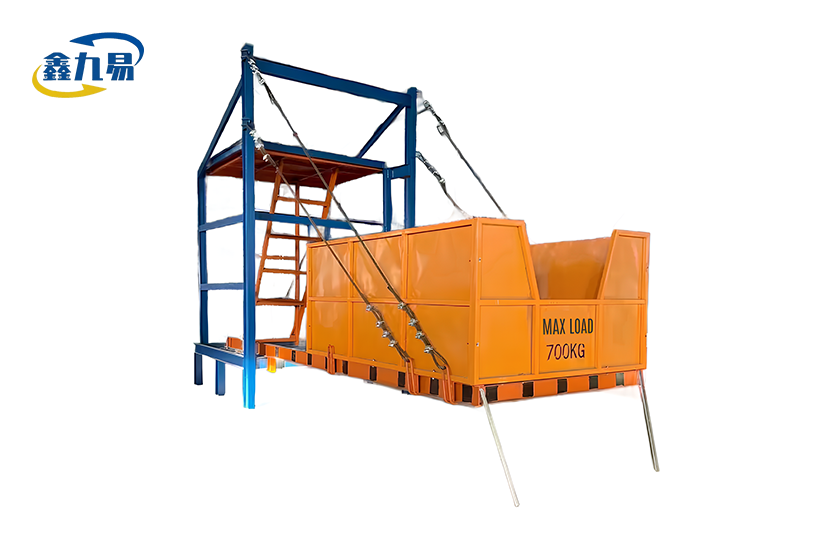
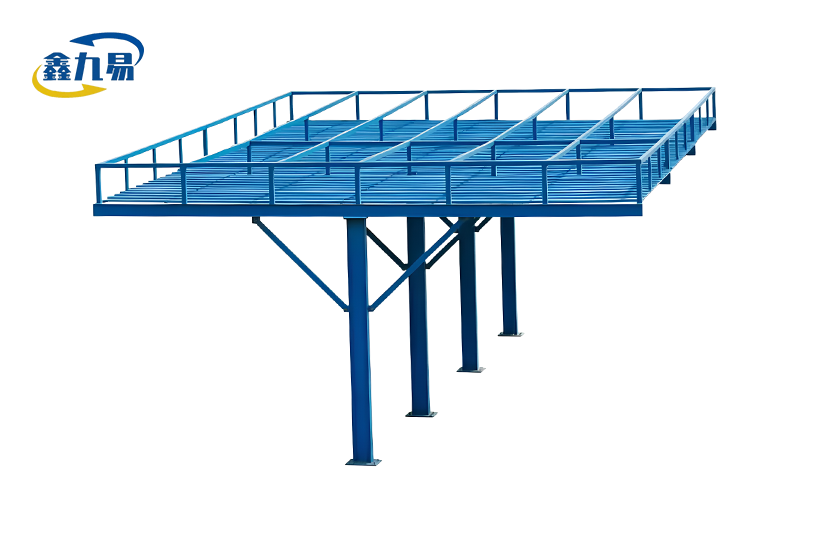
A floor-edge unloading platform acts as a hub for moving materials from the ground to the work floor. Loads are dropped off directly by tower crane operators onto the overhanging deck, where work crews move the materials to the work area. This means that building lifts don't have to carry heavy loads of materials, so they can carry people and smaller tools instead.
Where They Fit Into Site Logistics?
These platforms are put in place at the edges of high-rise floors, inside the areas that tower cranes can reach, and on floors that building hoists can't get to directly. The cantilevered form uses air space instead of ground footprint in busy urban sites with almost no staging room on the ground. This is a realistic necessity for projects in the city center.
Why Traditional Methods Fall Short?
Forklifts and platforms on the ground work well at low levels, but they can't be used above three or four stories. Sending things by hand through stairwells is very dangerous and slows down the flow of things a lot. Both problems are solved at the same time by a specialized high unloading station.

Design Principles and Safety Features That Enhance Construction Operations
Structural Engineering Behind the Platform
People in Hebei Xinjiuyi use 180# I-beam main beams with 4.6 mm wall thickness that are made of Q235B or Q345B structural steel for their cantilever material unloading platform. 5# channel steel is used to spread the weight of secondary beams. Every link node gets full penetration welding, and the seams are all the same. This gets rid of gap or fusion flaws, which are the main reason why field-welded structures fail.
Surface and Fall Protection Design
The deck surface is made of patterned steel plate that is 50 mm thick. This makes it truly non-slip, even when it's wet outside. Built-in guardrails that are 1,200 mm high and toe boards that are fully welded are normal features that can't be added as an extra. Because these parts are part of the structural assembly, they can't come loose while the structure is being lifted or loaded.
Anchoring and Load Transfer Systems
Two grounding methods work in a range of site situations. High-strength rods are run through the concrete slab by the through-wall tie rod method. Backing plates spread the loads over a larger bearing area. A telescopic jack system is used to create reliable compression load paths between upper and lower floor slabs when slab penetrations are not possible. This is done without making any permanent changes to the structure.
Comparing Cantilever Platforms with Alternative Material Handling Solutions
A lot of the time, purchasing managers want to know how raised unloading decks stack up against forklifts, fixed ground platforms, and mobile dock options. When you look at real site limits, the variations become clear.
Here's how the choices stack up in four useful areas:
- Site footprint: Forklifts require ground-level maneuvering lanes and turning radius. Cantilever systems use only the floor edge projection and crane airspace, leaving ground areas clear for other operations.
- Load capacity: Standard cantilevered platforms handle 1,500 kg to 3,000 kg per load cycle, with heavy-duty configurations reaching 5,000 kg. Forklifts at height face tipping stability limits that restrict usable capacity significantly.
- Relocation flexibility: Fixed ground platforms cannot move as work floors progress upward. Modular unloading decks disassemble and reinstall on the next floor within hours, following the construction cycle.
- Maintenance cost over time: Hot-dip galvanized surface treatment combined with anti-corrosion coating gives these platforms years of service life across multiple projects, spreading the initial procurement cost across many use cycles.
Over time, the cost of maintenance is: The hot-dip zinc surface treatment and anti-corrosion finish on these platforms make them last for years and can be used on many projects, spreading the cost of buying them out over many use cycles.
Procurement Considerations for B2B Buyers: How to Select and Source the Best Cantilever Platforms?
Structural Verification Documentation
When it comes to high-rise general contractors, the decision to buy the cantilever material unloading platform always needs a structural calculation report. Make sure the seller gives you proof of the load capacity, steel mill certificates that say the grade and thickness, and records of the welding inspections. In most places, these are needed for a professional plan expert review, and skipping this step slows down the approval process.
Customization Capacity Matters
As a general rule, Xinjiuyi sizes are between 3,000 mm and 4,000 mm long, 2,000 mm wide, and 6,000 mm or 7,000 mm tall. But projects with non-standard floor plans, slab thicknesses that aren't the norm, or specific requirements for crane coverage may need to change the sizes. If a supplier can confirm that they can do both fabrication and assembly in-house, they can meet non-standard requests without having to wait longer for lead times.
Delivery Timing and Project Coordination
Material staging platforms need to get to the floor they'll be used on before work can begin on that floor. Crane cycle efficiency is lost because of late deliveries, just when it's most important. Before placing an order, make sure that the lead times match up with the milestones on your project schedule. This is especially important when purchasing in bulk for multiple buildings at the same time.
Real-World Applications and Case Studies Demonstrating Efficiency Gains
High-Rise Commercial Construction
On projects for very tall business towers, building crews use more than one unloading deck at the same time, located on different floors. This means that formwork systems can move from floor to floor without going through the building's internal hoist system. A 2019 study by McKinsey & Company on building productivity says that projects that use dedicated vertical material transfer systems see a clear drop in the amount of time that cranes are not working. This directly saves money on projects with tight schedules.
Urban Infill and Space-Constrained Sites
When the building footprint of a downtown project meets the property line, there is no room for material staging on the ground floor. At active work floors, elevated unloading stations let delivery trucks unload their goods to a collection point on the ground. Loads are then moved directly to the elevated deck by crane transfer. This model for logistics keeps operations on the street clean and eases traffic around the site's edges.
Curtain Wall and Building Envelope Work
Before installation crews can start working, heavy glass panels and aluminum framing parts need to be carefully and steadily placed. Upper-floor wind loads make loads on hanging cranes less stable. A cantilevered staging deck placed right next to the installation zone lets glass teams get to materials right away without having to wait for the crane to hook up for a long time. This cuts down on both schedule risk and accidents caused by wind.
Conclusion
A well-designed floor-edge dumping platform does more than just move things; the cantilever material unloading platform gets rid of the problems that slow down whole building floors. These platforms work well for many project cycles because they are built with the right structural engineering, certified steel grades, full-penetration welding, and anchoring systems that are right for the slab type. For procurement teams that have to deal with tight deadlines and large amounts of equipment, choosing a supplier whose fabrication quality has been checked and who can make changes quickly has a direct effect on the results of the project.
FAQ
What load capacity should I specify for a high-rise project?
Standard platforms can hold between 1,500 kg and 3,000 kg per cycle, which is enough for most loads of rebar bundles, formwork panels, and curtain wall parts. For lifts that are unusually heavy, heavy-duty versions can be made to hold up to 5,000 kg with the right structure recalculation.
How often should these platforms be inspected during use?
Welds, anchor points, and guardrail connections should always be inspected visually every day before they are used.
Can platforms be customized for non-standard floor configurations?
Yes. The length, width, height, beam size, and method of anchoring can all be changed to fit different slab thicknesses, edge distances, and crane coverage areas. Any setup that isn't normal comes with full fabrication drawings and load estimates.
What anchoring method works best for post-tensioned slabs?
Most of the time, the telescopic jack bracing system is better for post-tensioned floors because it doesn't require drilling through the stressed tendons.
How many project cycles can one platform typically serve?
With hot-dip galvanizing, an anti-corrosion coating, and the right way to store the platform between projects, a well-made one can reliably be used for five or more projects before it needs to be replaced.
Get Your Cantilever Material Unloading Platform Quote from Xinjiuyi
Xinjiuyi makes cantilever material dumping platforms that meet national standards and come with all the necessary paperwork, such as structural formulas, mill certificates, and records of welding inspections. Our platforms come with a hot-dip galvanized finish and can be made in standard or unique sizes to fit your project's plan. As a reliable provider of cantilever material unloading platforms to building teams in a number of markets, we offer quick expert support from the time you call us until the platform is installed. You can get a quote from us by emailing global@xjy8.com.
References
1. McKinsey Global Institute. Reinventing Construction: A Route to Higher Productivity. McKinsey & Company, 2017.
2. Shapira, A., & Goldfinger, D. "Equipment Selection for High-Rise Building Construction." Journal of Construction Engineering and Management, ASCE, 2001.
3. Holt, G. D. "Applying the Analytical Hierarchy Process to Contractor Selection." Construction Management and Economics, Taylor & Francis, 1995.
4. Occupational Safety and Health Administration (OSHA). Construction Industry Standards: Scaffolding and Material Handling. U.S. Department of Labor, 2020.
5. Proverbs, D. G., Holt, G. D., & Olomolaiye, P. O. "Factors in Formwork Solution Selection by French, German and UK Construction Contractors." Engineering, Construction and Architectural Management, Emerald Publishing, 1999.
6. Tam, C. M., & Fung, I. W. H. "Effectiveness of Safety Management Strategies on Safety Performance in Hong Kong." Construction Management and Economics, Taylor & Francis, 1998.