BLOG List
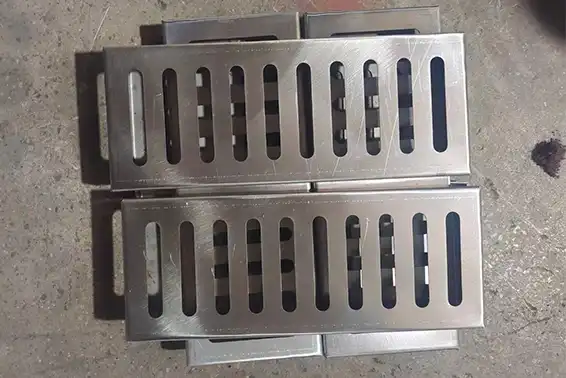
304 vs. 316 Stainless Steel Trench Drain Grate: Which One Should You Choose?
You have to be careful when choosing a stainless steel trench drain grate for your project, as the wrong one could rust quickly, cause the project to be delayed, or need to be replaced on-site at a high cost. In short, Grade 304 is good for most draining jobs in businesses and cities. On the other hand, Grade 316 is better when there is chloride contact, salt spray from the coast, or harsh cleaning chemicals. Neither grade is weak or wrong when it comes to size and weight, but where each does best in the long run depends on the chemicals that make them up.


Understanding 304 and 316 Stainless Steel Trench Drain Grates
You should know what the differences are between the two grades before you put them next to each other. They are both austenitic stainless steels, but the metals that make them work in different ways.
Chemical Composition: What Makes Them Different?
About 18% of Grade 304 is chrome, and about 8% is nickel. 2–3% molybdenum is added to that base to make Grade 316. Adding molybdenum makes it much less likely to pit because of chloride, which is a common way for things to break near the coast or in areas with acidic drainage. According to ASTM A240, these two kinds are the ones that are most often used for sewage parts in homes and businesses.
Corrosion Resistance: Where Each Grade Stands?
Most of the time, 304 forms a thick layer of chromium oxide that doesn't rust. But this layer might come off over time in places that are near salt water, pool chemicals, or cleaners used in factories. Because 316 has a lot of molybdenum, it doesn't passivate. This is why this grade is best for chemical plants, food processing plants, and coastal public areas.
Load-Bearing and Structural Properties
As per ASTM standards, the tensile strengths of 316 and 304 are about the same. 316 has a strength of 485 MPa and 304 has a strength of at least 515 MPa. Either grade (A15 through C250) of EN 1433 trench grate can meet structural needs as long as the shape of the grate and the space between the bars are planned correctly. When the rated loads are put on Xinjiuyi's grates, they sit level and don't bend because they are cut with a range of ±0.5 mm.

Key Factors to Consider When Choosing Between 304 and 316 Grates
Things should be picked out based on the page, no matter what it looks like. When you buy from a business to business, you always base this choice on a few things.
When procurement engineers hire someone, these are the main things they look at:
- Exposure to the environment: 316 is needed for sites that are less than 1 km from the ocean or that use cleaning products that are chlorine or acidic. 304 works well for general city sidewalks, parking structures and drainage in homes.
- Compliance with regulations: Facilities that work with food and drugs often need 316 to meet NSF/ANSI 51 or similar cleanliness standards. In the U.S., municipal projects can check the load class against ASTM A778 or EN 1433.
- Total cost of ownership: 316 costs more up front, but in corrosive environments it lasts much longer and doesn't need to be replaced as often. This difference is more important than the initial price over a 20-year service life.
For places that are less than 1 km from the ocean or clean with acids or chlorine-based products, 316 is needed for a stainless steel trench drain grate. The 304 number works well for city streets, parking garages, and drains in homes.
Budget Alignment Without Cutting Corners
Buying 316 when 304 will do will be a waste of money. It's risky to say 304 when you should say 316. The most important thing is to make sure the grade is right for the job. Based on that, talk about the total price. You can get both grades at Xinjiuyi. If you ask, you can also get the paperwork and certificates for the EN 1433 load class.
Standards Alignment for Cross-Border Projects
When wholesalers work on projects in both the US and Europe, they can make sure that the materials they need meet both ASTM and EN standards. Our production team can help you with paperwork for dual licensing. This makes it easy for clients to tell us what they need.

Installation, Maintenance, and Longevity: Practical Insights
There is a linear drainage grate that will last as long as it was put in well. Most of the time, setting up 304 and 316 grates is the same. However, in harsher environments, they need different care.
Installation Best Practices
This should be done to check the channel body against the space between the grate bars, but not when the channel is being shipped. When Xinjiuyi ships a grate, it is already matched to its channel body. You can't mix up the end caps and entry points because they come in the same clearly marked package. This keeps things moving quickly on-site.
Maintenance Intervals by Grade
304 grates only need to be rinsed every so often and checked once a year in places where chlorine levels are low. 316 grates still need to be cleaned when they are near chemicals or water, but they don't need to be deep-cleaned as often. Both types of skin don't have pores, so germs can't stick to them. If you work in a hospital or food service, this is important for draining.
Real-World Longevity Data
More than 95% of the tensile strength of 316 stainless steel was still there after 10 years of being buried in fake seawater. Only 82% of the strength of 304 stainless steel was still there. In 2019, the study came out in the journal Corrosion Science. This space is important as long as the stainless steel trench drain grate drainage parts are made to last at least 20 years.
Comparing 304 and 316 Grates with Other Drainage Materials
It is possible to remove with plastic, cast iron, aluminium, or steel that has been coated. Stainless steel is the only one that doesn't rust or break.
Plastic channel grates are cheaper at first, but they break down when they are exposed to UV light or heavy loads. Cast iron can hold a lot of weight, but it rusts quickly when it gets wet or is near salt, so it needs coats that wear off over time. Alum can pit if you live near water. It's also lighter than steel, but 316 is better at resisting salt.
No matter if they are made of 304 or 316 stainless steel, grates are unique in the properties they offer. These qualities include being strong, not rusting, having a clean surface, and being able to be recycled completely when they're no longer needed. Business-to-business buyers who need drainage parts for projects that will last more than a year should always buy stainless steel, even though it costs more to buy.
Procurement Strategies and Trusted Suppliers for Stainless Steel Trench Drain Grates
To do good sourcing, you need to do more than just look through a catalogue to find a maker. For project owners and inspectors to be happy, the seller should be able to send complete drainage systems with grate bodies, channel sections, end caps, and access points that match.
What to Verify Before Placing an Order?
You should ask for load test reports for the EN 1433 class that you want along with material test certificates (MTCs) that are in line with EN 10204 3.1 or ASTM A240. Check to see if the supplier sends complete drainage system kits with well-marked parts. There are a lot of problems that can happen when you buy something across borders because packages often come broken or mixed up.
Customization Capabilities That Matter
Long pieces of 100, 150, 200, or 300 mm can be used for most jobs. Landscape and hospitality projects, on the other hand, often need cross-sections that aren't straight, laser-etched surface designs, or channels that are curved. These shapes can be made by a manufacturer who knows how to use CNC laser cutting instead of traditional stamping. The sizes will still be accurate.
Evaluating Supplier Reliability for Bulk Orders
They should have standard sizes in stock and be able to tell you how long it will take to make a custom order. If you order 40HQ containers, you should write down how long it will really take from when the order is approved to when the containers leave FOB. You can get prices from Xinjiuyi either FOB or CIF, and all of its paperwork is easy to understand. For example, the packing lists match the project bill of materials.
Conclusion
For your stainless steel trench drain grate job, you can pick between 304 and 316 depending on what the grates will be used for and where they will be put. Most places of work, home, and public life should choose 304. When chloride, salt, or chemicals are present at work, the right specification to use is 316. Both types work best when bought as part of a drainage system that fits perfectly and has all the paperwork it needs. This choice made during the design phase will help save time, money, and trouble during the job.
FAQ
Is 304 stainless steel enough for projects that handle drainage along the coast?
In most cases, no. When 304 surfaces are close to salt water, the quantity of chloride makes pitting corrosion happen faster. Grade 316 is the standard for drainage systems near the coast, the ocean, or swimming pools where long-term resistance to corrosion is needed.
How often should you clean trench grates made of stainless steel?
In most industrial settings, 304 grates only need to be rinsed down once a month and inspected every three months. When working with chemicals or food, it's best to clean more often with approved products. Even in harsh conditions, 316 grates still need to be cleaned regularly, but they can handle longer gaps between cleanings.
Can forklifts go through these grates?
It is possible as long as the grate meets the requirements of EN 1433 Class C250 (25-tonne loading) or higher and has a strong support frame that matches the channel body. Before placing an order, you should always write down the load class.
What kind of paperwork should I ask a source for?
To name a few: material test certificates (MTC) according to ASTM A240 or EN 10204 3.1, a static load test report according to EN 1433, records of dimensional inspections, and a full packing list that matches the parts of the project.
Are custom slot widths possible for heel-safe needs?
Yes. The ADA and EN both say that slots with a width of less than 8 mm are heel-safe for areas where people walk. With CNC laser cutting, you can precisely control the open-area ratios to find the right balance between safety and hydraulic capacity.
Partner with Xinjiuyi for Your Next Drainage Project
Full sewage systems are sold by Xinjiuyi. These systems include grates, tube bodies, end caps, and entry points. These are sold in labeled sets that fit together properly and come with all the information you need to load them. When you need a dependable source for stainless steel trench drain grate for a 40HQ container order or a personalized drainage plan for your yard, our team gets back to you quickly and ships on time. You can get samples, load test results, or a price right away by emailing us at global@xjy8.com or visiting xjy8.com.
References
1. ASTM International. ASTM A240/A240M: Standard Specification for Chromium and Chromium-Nickel Stainless Steel Plate, Sheet, and Strip for Pressure Vessels and for General Applications. ASTM International, 2023.
2. European Committee for Standardization. EN 1433: Drainage Channels for Vehicular and Pedestrian Areas. CEN, 2002 (revised 2020).
3. Sedriks, A. J. Corrosion of Stainless Steels. 2nd ed. John Wiley & Sons, 1996.
4. Outokumpu Stainless. Corrosion Handbook: Stainless Steel Grades 304 and 316. Outokumpu, 2021.
5. Shreir, L. L., R. A. Jarman, and G. T. Burstein, eds. Corrosion: Metal/Environment Reactions. 3rd ed. Butterworth-Heinemann, 1994.
6. Baddoo, N. R. "Stainless Steel in Construction: A Review of Research, Applications and Challenges." Journal of Constructional Steel Research, vol. 64, no. 11, 2008, pp. 1199–1206.
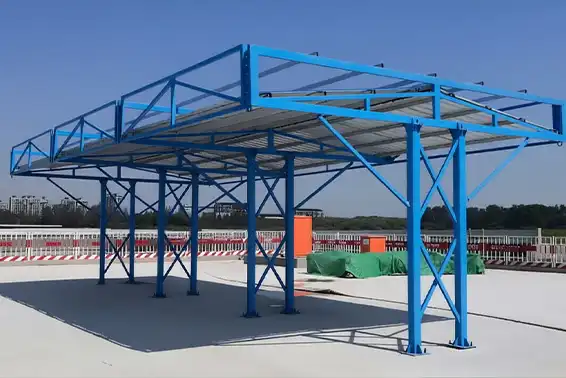
How to Choose a Central Double Column Processing Shed Manufacturer
Before you can choose the right central double column processing shed manufacturer, you need to know what makes a supplier structurally sound and one that cuts corners. A good manufacturer should be able to give you structural calculations that have been checked, steel materials that have been approved, big clear-span configurations (15 m without any middle columns), and anti-impact roof ratings that work with your production line. Before you buy a shed, make sure it meets the safety standards for the job site, your equipment plan, and the height of the gantry crane. This is very important if you run a plant that makes pre-made parts, a center that processes rebar, or a yard that works with bridge girders.

Understanding Central Double Column Processing Sheds
You need to know how to spot a risky company before you can choose the right main double column processing shed builder. A good manufacturer should be able to give you checked structural figures, steel materials that have been approved, large clear-span configurations (>15 m without any middle columns), and anti-impact roof grades that can work with your production line. Before you buy a shed, make sure it has enough space for your gantry crane, your tools, and the safety rules for the job site. This is very important if you run a center that works with rebar, a yard that works with bridge girders or a plant that makes parts that have already been made.--- Talk to a seller before you call. Know what you want to buy and why it's important how the building is made.
What Makes the Double-Column Design Different?
One processing shed is in the middle and has two main columns that are spread out evenly across the span. These posts hold up the main part of the house. This means that the middle of the span doesn't need any supports. Big beams, rebar sections, and sheetrock panels that have already been made can move under the roof without getting stuck because the floor plan is open. Most businesses have clear-span lengths of 4,000 mm to 6,000 mm or even longer. It's 3,700 mm high on the inside, which is good for most construction sites that need to move a lot of stuff.
Structural Materials That Matter
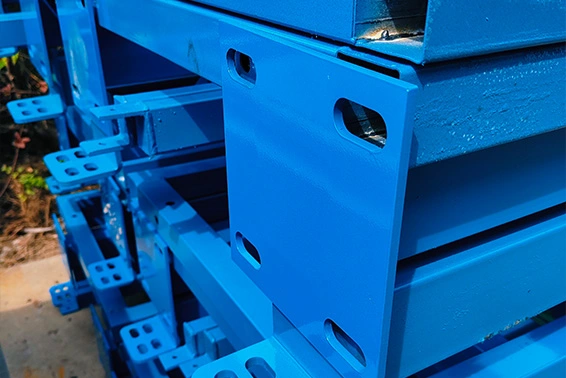
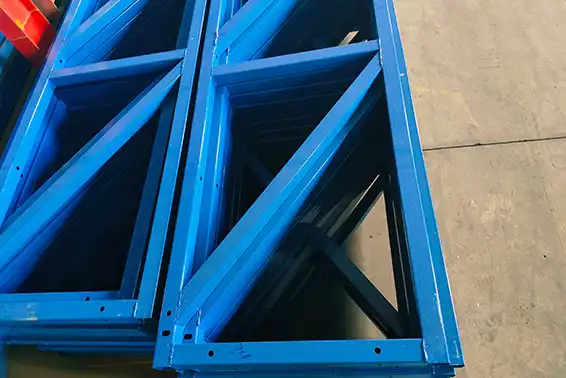
Hebei Xinjiuyi Construction Technology Co., Ltd. builds processing shed frames out of I-beams and rectangular steel tubes that are welded together to meet national standards. The walls are 100 mm wide and 2 mm thick. The main beams all have 50 mm thick walls, which makes them 50 mm square. There is less space between each side beam until they hit 1.5 mm. Between 450°C and 600°C, each part is hot-dip galvanised. After that, an electrostatic powder coat or risk baking paint is used to finish it. If you leave this two-step process outside for years, it will protect against rust for years.
Key Applications Across Industries
The central double column processing shed can be used for a lot of heavy-duty tasks. Anything that falls off the double-layer anti-smash roof stays away from the steel bars that are cut and bent. You can change the sizes, so it's great for places where people work with wood. The roof keeps the rain out, too. The shed is easy to move as the project goes on because the pieces are bolted together. This is done for city projects that improve the infrastructure and build roads and bridges.
Core Criteria for Selecting a Manufacturer
It's not always safe to trust a company that sells "double-column" sheds to build strong ones. What brands are safe and what brands aren't? These are the main things that make them unique.
- Structural documentation: Before you sign any contract, make sure you get a full structural calculation report. A reliable manufacturer gives you information about load analysis, wind resistance ratings, and foundation anchor specs. A lot of the time, buyers whose sheds are turned down by managers or design institutes find out that the supplier used a single-column cantilever truss that was misrepresented as a double-column frame.
- Tracking the materials: Ask for mill records for the steel that was used. Material that meets national standards, like Q235B or Q355B, always has the same yield strength. Stay away from suppliers who can't write down the steel grades they offer.
- Certifications: ISO 9001, ISO 45001, and ISO 14001 certifications that have been confirmed show that a manufacturer has a system for managing quality, safety at work, and the environment. Xinjiuyi has all three of these credentials.
- Customisation: The size of your shed is determined by the equipment standard and crane clearance. A good supplier will change the column heights, beam spans, and roof panel ratings to perfectly fit your layout, rather than forcing standard sizes onto sites that aren't standard.
- After-sales support: Ask about how to install the product, the availability of spare parts, and instruction packages. With every order, Xinjiuyi includes construction drawings, foundation requirements, and care instructions.
Structures: Before you sign any papers, make sure you have a full report on the calculations for the structure. If you can trust the maker, they will tell you about the load test, wind resistance scores, and base anchor specifications. Most of the time, buyers whose sheds are turned down by managers or design institutes find out that the seller used a single-column cantilever truss that was lied about as a double-column frame.
Comparing Manufacturers — Key Metrics and Market Solutions
Once you have a shortlist, structured comparison makes the final decision clearer.
Structural Integrity and Safety Ratings
The roof panel impact resistance rating of a central double column processing shed is one area where manufacturers diverge sharply. A roof with a rating of at least 5 kJ/m² protects against dropped tools and other debris at high-rise construction sites and factories that make prefabricated parts. Make sure that the supplier tests the panels on its own, not just depending on what the manufacturer says.
Pricing Transparency and Total Cost of Ownership
Instead of looking for the cheapest unit price, you should figure out the total cost of the project over several cycles. Xinjiuyi's modular bolt-together method makes it possible to take everything apart and use the parts on other sites. The hot-dip galvanised finish keeps the shed's structure strong through multiple assembly processes without the need to be painted again. This lowers the shed's lifecycle costs by a large amount compared to sheds that only use spray paint on bare steel.
Sustainability and Environmental Compliance
When you hot-dip galvanise steel, a zinc-iron alloy layer is formed that is bonded to the steel itself. This method gets rid of the need for regular paint maintenance and increases the useful life to 20 years under normal site conditions. Suppliers who are ISO 14001 qualified treat surfaces with documented environmental controls. This is important for procurement teams working with project owners who are connected to the government or who care about ESG issues.
Practical Steps to Finalize Your Manufacturer Choice
If you follow the right steps in the right order, you won't make mistakes that will cost you a lot in the long run.
Match Specifications to Your Production Line
First, think about where you'll put your tools. You should write down how high your rebar bending machine can go, how far your steel bar bundles can turn, and how much space your moving tools need. Then, match those numbers up with the shed's inside sizes before putting out an official bid request.
Conduct a Factory Audit or Request Verified Documentation
If you can't make it to the site, you can ask for video of the galvanize tanks, powder coating ovens, and welding lines for the central double column processing shed. Don't be afraid to ask for proof that the steel mill certificates are real and a copy of the report with the structural numbers. If a manufacturer is following the law, they will gladly do what you ask.
Clarify Contract Terms and Lead Times
From Xinjiuyi, most sets are made in lengths of 6,000 mm or 9,000 mm. Changing the width and height of something makes it take longer to make. In the contract, you should write down the shipping date, the bolt grade (grade 8.8 is normal), and the paperwork that needs to be sent with the goods.
Case Studies and Success Stories
Procurement teams like to see how something works in real life before they buy it.
A nearby factory that makes rebar has processing sheds. This factory makes concrete parts that are already put together. For the plant's robotic stirrup bending line, the inside had to be 5,000 mm wide. He changed the length of the beam and built a shed that was the right height. Signs and pictures of core anchors were already on the shed when it was arrived. With only hand tools and a small mobile crane, the job was done in less than two days. The shed was approved by the engineer in charge the first time he looked at it.
A city infrastructure builder bought it so that it could be moved from one busy job site to another as different parts were finished. At the same time, the worker widened three roads. After six hours, the frame that was held together with bolts was put back together in the next place. It was taken apart in one shift. They said the copper surface wouldn't rust, and it still hasn't after three full project rounds. It does keep rust away, as this showed.
Conclusion
It's not enough to just look at prices when choosing a processing shed builder. You won't have to change your mind about the choice you made if you have structural paperwork, approved materials, proven impact resistance ratings, and a supplier who is willing to change the sizes to fit your equipment. Hebei Xinjiuyi Construction Technology Co., Ltd. can meet these needs because they use steel that meets national standards, treat the surface in two layers, and say their products will last up to twenty years. It has all the technical details and paperwork that teams need to find a good central double column processing shed in Xinjiuyi. In this way, they can stick to their production schedules and get by the review by their bosses.
FAQ
What standard dimensions does the shed come in?
Standard lengths are 6,000 mm and 9,000 mm. Standard widths run from 4,000 mm to 6,000 mm. Standard height is 3,700 mm. All three dimensions accept customization when your site or equipment layout requires different measurements.
How many workers does installation require?
A typical installation needs four to six workers with basic hand tools. The process follows anchor point layout, base plate positioning, column erection, and beam assembly. No field welding is required because all joints use grade 8.8 bolts.
What documentation comes with the shed?
Every order includes assembly instructions, foundation anchor drawings, maintenance guidelines, and steel mill certificates. Structural calculation reports are available on request and are especially important for projects subject to design institute or supervising engineer review.
How long does the surface treatment last?
Under normal construction site conditions, hot-dip galvanizing combined with powder coating or baking paint provides corrosion protection for up to 20 years. The zinc alloy layer continues to protect the steel substrate even when minor surface scratches occur.
Can the shed be reused across multiple projects?
Yes. The bolt-together modular design allows full disassembly and reassembly without damaging the structural components. The galvanized and painted surfaces hold up through several project cycles, reducing your per-project expenditure.
Get a Custom Quote from Xinjiuyi — Trusted Processing Shed Supplier
Based on the ISO 9001, ISO 45001, and ISO 14001 quality systems, Xinjiuyi builds processing sheds that are approved and built to order. This is true whether you need a single shed for a rebar processing center or a lot of sheds at once for a multi-phase prefabricated component plant. Our engineering team can help you with making plans, filling out forms for the structure, and installing everything. You can email us at global@xjy8.com or go to xjy8.com right now to find out more and start your question.
References
1. American Institute of Steel Construction (AISC). Steel Construction Manual, 16th Edition. AISC, 2023.
2. International Organization for Standardization. ISO 9001:2015 Quality Management Systems — Requirements. ISO, 2015.
3. International Organization for Standardization. ISO 45001:2018 Occupational Health and Safety Management Systems. ISO, 2018.
4. Building Research Establishment (BRE). Structural Steel in Construction: Corrosion Protection and Surface Treatments. BRE Press, 2021.
5. Construction Industry Institute (CII). Modular and Industrialized Construction: Performance and Benchmarking Report. CII, 2022.
6. American Society of Civil Engineers (ASCE). ASCE 7-22: Minimum Design Loads and Associated Criteria for Buildings and Other Structures. ASCE, 2022.
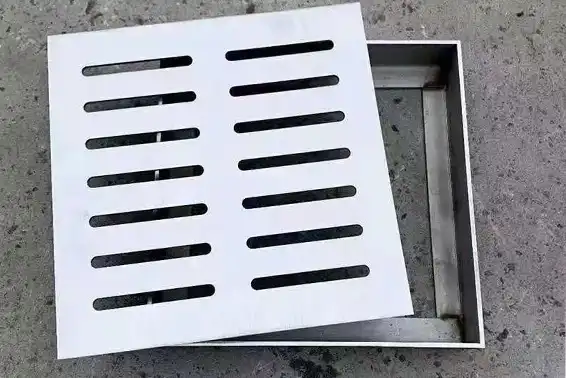
Stainless Steel Trench Drain Grate vs. Cast Iron Grate: Key Differences Explained
When selecting drainage grates for commercial, municipal, or industrial projects, the choice between a stainless steel trench drain grate and a cast iron grate significantly affects long-term performance, maintenance costs, and compliance outcomes. Stainless steel trench drain grates—typically manufactured from Grade 304 or 316 alloy—offer superior corrosion resistance, hygienic surfaces, and precise dimensional tolerances. Cast iron grates, by contrast, deliver proven mechanical strength at a lower entry price. Understanding where each material excels helps procurement professionals make confident, specification-driven decisions from day one.

Understanding Stainless Steel and Cast Iron Trench Drain Grates
Material Properties and Grades
Stainless steel linear drain covers last a long time because they have chromium in them (at least 10.5%), which makes a self-repairing passivation layer. Grade 304 is good for most commercial settings. Grade 316, on the other hand, has molybdenum added to it to make it resistant to chlorides. This makes it good for use near the coast, around pools, and on chemical processing floors. Compressive strength of different kinds of cast iron, like gray iron and ductile iron, comes from the amount of carbon in them. But they don't naturally stop rusting, so they need to be painted or coated with something protective every so often to keep them from oxidizing.
Manufacturing Processes
When making stainless steel grates, they are precision welded, cut with a CNC machine, and finished in several steps. It is possible to get measurements that are within ±0.5 mm with this method. This means that each cover fits snugly into its channel frame without moving or needing to be trimmed on the job site. To make cast iron grates, molten metal is poured into sand molds. It is then time to grind and treat the teeth. When you cast something, you can make complicated shapes, but the mold tolerances are bigger, and the surface finish changes more between runs of production.
Typical Application Environments
Stainless steel channel grates, including the stainless steel trench drain grate, are frequently used in locations where cleanliness and aesthetics are crucial, such as food and drink processing, pharmacies, high-end hotel projects, and public art along the coast. Cast iron grates are still the most popular choice for heavy city streets, freight yards, and industrial areas where the most important thing is getting the most load for the least amount of money. If you fit the material to the area from the start, you won't have to make costly changes in the middle of a job.

Key Performance Differences Between Stainless Steel and Cast Iron Grates
Corrosion Resistance and Service Life
Independent tests done by ASTM International have shown that Grade 316 stainless steel stays strong even after being exposed to salt spray for over 1,000 hours. If you leave unfinished cast iron out in water for a few weeks, the top will begin to rust. Iron that has been coated with epoxy needs to be re-coated every five to ten years in places that get wet. When marine markets in the Middle East or North America buy from wholesalers, they need to make sure that the drainage grate is made of stainless steel. This keeps guaranty claims and product returns from being caused by corrosion.
Load Capacity Under EN 1433 and AASHTO Standards
If they are made correctly, both materials can hold a lot of weight. As per EN 1433, grates made of stainless steel can hold up to Class C250 (25 kN wheel load) when the bar spacing and frame supports are strengthened. When used on normal city roads, cast iron grates can handle up to 40 kN of Class D400 traffic. It doesn't matter what kind of material it is as long as it meets the AASHTO H-20 standards for North American car loads. When buying something, teams should always ask for a static load report, more specifically a 1.5 kN/m² deflection certificate, before they confirm the specs.
Maintenance Cost Comparison
A lifecycle cost study published in the Journal of Infrastructure Systems (ASCE, 2019) found that over 20 years, maintenance costs were 30–45% lower for drainage parts that were not coated with iron. Stainless steel grates only need to be flushed once in a while, but cast iron grates need to be painted, treated for rust, and finally replaced when parts break off. Customers will complain less in the field, and distributors like landscape building materials resellers who have to keep track of large project inventories will get more repeat business.
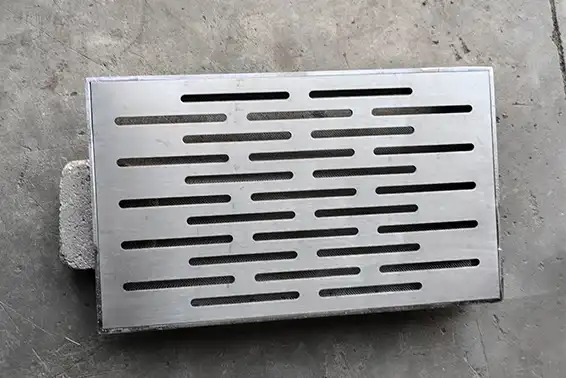
Design and Customization Options
Surface Finish Choices
A stainless steel trench drain grate can be brushed, polished, satin, or laser cut, among other styles. People expect things to look clean and professional in places like industrial kitchens and car wash bays. Brushed finishes look good in these places. The halls of hotels and high-end shops look great with polished floors. Most cast iron grates are painted a standard gray color. It takes longer and costs more to powder-coat them twice so they look more expensive.
Slot Design and Drainage Efficiency
How much water can flow and how the debris is handled are directly affected by the shape of the slots. Stainless steel lets CNC-cut slot widths be as small as 8 mm, which meets ADA heel-safe requirements for pedestrian areas and keeps the open-area ratios high for water flow. There are 10 mm to 30 mm of space between each bar, which can be changed based on the project. When cast iron blocks are made, the shapes of the slots are set. This means that changes made after the planning stage are not as easy to make. The accuracy of laser-cut stainless covers is always liked by architects and yard engineers who are making plans for outdoor drains.
Compliance with Safety Regulations
The ADA says that slots can't be more than 13 mm wide when measured in a straight line from the main direction of movement. The manufacturing of stainless steel always meets this level across all production runs. The level of slip resistance you can get from the surface texture ranges from R10 to R13. Cast iron grates can also meet slip-resistance standards. However, to meet specific ADA slot specs, mold control has to be tightened, which makes the cost of each cast good go up.
Cost Analysis and Procurement Considerations
Initial Cost vs. Total Cost of Ownership
When compared to cast iron grates of the same size and shape, stainless steel grates cost more per unit. When you look at the total cost of ownership over 20 years, stainless steel usually comes out on top. This is because it doesn't need as much coating maintenance, needs to be replaced more often, and the project could be held responsible for failures caused by corrosion. When distributors buy whole trench drain systems that include the body, cover, end caps, and access points, it's easier to keep track of the materials and make sure the quality is good when they only have one material bill of materials.
Supply Chain and Compliance Documentation
The biggest risk for business-to-business buyers who buy from foreign suppliers is always said to be missing certification papers. You need EN 1433 load class certificates, ASTM material test results, SUS 304/316 mill certificates, and NSF/food-grade safety letters for kitchens or processing areas for most projects that are based on standards. This will save you time and trouble at the client site if you choose a stainless steel trench drain grate provider who gives you these papers before the shipment. Distributors have to make sure that the quality of their goods stays high during many handling steps. One way they do this is by using film that doesn't scratch and corner protection.
Installation and Maintenance Best Practices
Proper Installation Techniques
Before steel linear drainage covers are put on, the channel frames need to be clean, level, and free of mortar dust. Because grates are made to fit with a tolerance of ±0.5 mm, if the frame is skewed, the grates will not look right. Do not use a steel hammer to set the grate in place. Make use of a rubber mallet this time. At the frame contact points of cast iron covers, put anti-seize powder to keep them from bonding with concrete support over time.
Routine Maintenance Protocols
To keep both types of grates in good shape and make them last longer, do these things:
- Stainless steel covers: Rinse with clean water weekly in high-use environments; inspect welds annually for signs of crevice corrosion; apply passivation treatment every three to five years in chloride-heavy zones.
- Cast iron covers: Inspect coating integrity every 12 months; re-paint or re-coat any exposed bare metal immediately; check frame seating for uneven wear that may indicate subsidence.
Repair plans that are done on a regular basis lower the chance of structural failure and make things last longer than the 20 years that they are supposed to.
Troubleshooting and Replacement Guidelines
Oxalic acid is a good way to treat stainless steel grates that have a tea-staining color on the surface. This is not structural rust, just a color problem. The cross-section of cast iron grates that have rust pits going all the way through the wall needs to be replaced because it is no longer strong. Do not say that the issue is with the grate itself until you have checked to see if the channel body has settled. A stainless steel cover should clearly bend under the rated load.
Conclusion
You should pick either a cast iron or stainless steel drainage cover based on your needs, your budget, and the setting where you will be working. Because it doesn't rust, is simpler to clean, has a better finish, and requires less maintenance over time, a stainless steel trench drain grate is superior. Most of the time, cast iron has a higher raw load capability per unit cost for neighborhood roads. Companies that sell, build, or own projects in the hospitality, food processing, coastal infrastructure, or high-end business areas have found that stainless steel is the only material that regularly passes inspection and gets fewer complaints after installation.
FAQ
Which stainless steel grade should I specify for a coastal installation?
Grad 316 is the best choice for places with salt spray, seawater, or a lot of chloride. Due to the molybdenum in it, it is much safer than Grade 304.
Can stainless steel grates handle forklift or vehicle traffic?
Yes. When made to AASHTO H-20 loading standards or Class C250 under EN 1433 specs, stainless steel trench covers can support a lot of weight. You should always ask for a static load test report that says the item can handle 1.5 kN/m² deflection over a span of 1 m or more before you buy it.
Why is stainless steel more expensive upfront than cast iron?
It costs more to get raw materials and make fine things out of stainless steel. But because it doesn't need to be re-coated or changed as often and there is less chance of it being turned down at the site because of missing paperwork, the cost over its lifetime is the same as or less than cast iron in most business settings.
What certifications should a supplier provide?
At the very least, ask for EN 1433 load class certificates, SUS 304 or 316 mill certificates, and dimensional inspection reports. There should be NSF compliance paperwork with projects that are about food or medicine.
Are custom slot widths available for ADA compliance?
You can make slots that are 8 mm to 30 mm wide with CNC laser cutting. This meets ADA safety standards for pedestrians and keeps the hydraulic open area that your drainage design needs.
Get a Quote from Xinjiuyi — Trusted Stainless Steel Trench Drain Grate Manufacturer
The trench drain grates that Xinjiuyi makes are bought by distributors and project workers in North America, Europe, and the Middle East. We offer complete trench drainage system sets that come with the channel body, cover, end caps, and entry units. There is all the paperwork you need for EN 1433, ASTM, and material certification in these packages. As soon as possible, get in touch with our expert team to talk about your project or ask for a sample. Send your question to global@xjy8.com or visit xjy8.com to begin.
References
1. ASTM International. ASTM A240/A240M: Standard Specification for Chromium and Chromium-Nickel Stainless Steel Plate, Sheet, and Strip. ASTM International, 2023.
2. European Committee for Standardization. EN 1433: Drainage Channels for Vehicular and Pedestrian Areas. CEN, 2002 (revised 2023).
3. American Society of Civil Engineers. Journal of Infrastructure Systems — "Lifecycle Cost Analysis of Drainage Infrastructure Materials." ASCE, 2019.
4. American Association of State Highway and Transportation Officials. AASHTO LRFD Bridge Design Specifications. AASHTO, 2020.
5. U.S. Access Board. ADA Standards for Accessible Design: Surface and Grating Requirements. United States Access Board, 2010 (amended 2016).
6. ASM International. Stainless Steels for Design Engineers. ASM International, 2008.
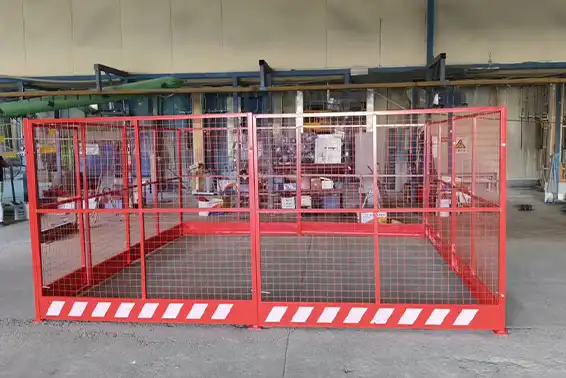
How to Choose the Right Tower Crane Base Enclosure for Construction Projects
Choosing the right tower crane base enclosure starts with understanding what your project actually demands. A quality crane foundation barrier must meet local safety acceptance standards, resist daily wear across multiple job sites, and protect workers from unauthorized access and falling objects. At Hebei Xinjiuyi Construction Technology Co., Ltd., we manufacture modular steel enclosure systems built with thickened galvanized frames, perforated mesh panels, and yellow-black warning coatings. Whether you manage one site or fifty, the right foundation protection barrier saves time, reduces liability, and passes inspection on the first attempt.
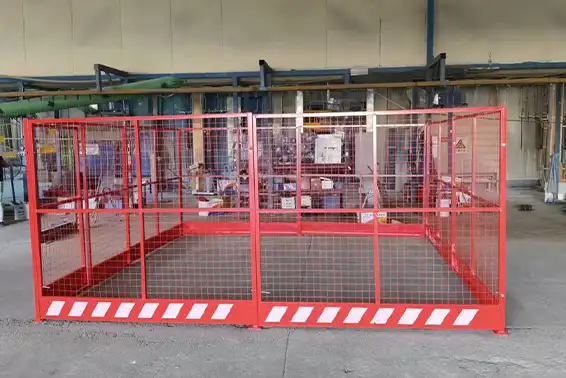
Understanding Tower Crane Base Enclosures: What They Are and Why They Matter
Know exactly what this product does and why safety teams put it at the top of their list before you buy it.
What Is a Tower Crane Base Enclosure?
A tower crane base cage is a flexible barrier device that goes around the base of the crane and the lower mast. It literally separates the high-risk area from the rest of the work area, keeping people from getting into the high-risk area by mistake, stealing tools, or coming into touch with rotating parts at ground level.
Why the Foundation Zone Is High-Risk?
A lot of dangers are close to the base of a crane: copper wire, control panels, anchor bolts, and spinning slewing gear are all within a few meters of each other. OSHA 1926 Subpart CC says that site managers and crane operators must keep limited entry zones around crane bases open while the cranes are in use.
How Enclosures Improve Site Compliance?
There are warning signs, anti-climbing dividers, and toe boards that come with a properly placed crane foundation guard. These features directly meet the requirements of standard safety inspection lists. Sites that skip or adapt this security often get stop-work orders and have to pay a lot of money to fix the problem.

Core Criteria for Selecting the Right Tower Crane Base Enclosure
Every place needs a different kind of protection. Before you place an order, you should carefully look at these things.
Material and Surface Treatment
The material of the frame affects how long it will last. Rectangular steel tubes that have been galvanized naturally don't rust, and a hot-dip galvanizing layer protects them even more from rain, UV light, and salt air. Adding a yellow-black baked warning paint finish on top of galvanizing makes the surface resistant to both color change and impact. This is the performance feature of the tower crane base enclosure.
Size and Modular Compatibility
Wide panels of 2000 mm and 1500 mm, along with panels that are 1800 mm tall, can be used for most tower crane foundation layouts. Adjustable connection hardware helps sites with non-standard footprints because it lets crews change the layout of the perimeter without having to cut or weld.
Ease of Assembly and Reuse
Your work crew can put together and take apart the system using standard hand tools because it is made of bolt-together modules. This is most important for contractors who are working on more than one site at the same time. Replacing only the damaged parts instead of the whole system saves money in the long run and makes it easy to keep track of supplies.
Comparing Different Types of Tower Crane Base Enclosures
The market has a number of different arrangements. Knowing about each one helps you choose the right product for your site.
Modular Bolt-Together Systems
Modular systems are the best option for contractors who move equipment from one job to another. Standard hardware is used to connect the panels, and the configurations can be changed to fit any type of base. Damaged parts can be replaced one at a time. This is how Xinjiuyi's modular crane outer fence is made, so it can be put together many times without deforming.
Custom-Fabricated Fixed Enclosures
For long-term jobs where the crane will stay in one place for months at a time, custom shelters are best. They fit very well and often have a higher level of structural rigidity. On the other hand, they are more difficult to move and cost more for short-term projects.
Open vs. Enclosed Configurations
Although open-top designs offer basic perimeter security at a low cost, they leave the inside open to falling objects. Fully enclosed systems with perforated plate mesh walls keep wind-blown garbage out and keep people from getting through the holes. Most of the time, a fully sealed steel mesh barrier is safer for building sites.
Procurement Guide: How to Source and Purchase Tower Crane Base Enclosures?
To quickly find the right product, you need to pay attention to things like certification, wait times, and the quality of seller support.
Verify Certifications and Standards Compliance
Suppliers who are ISO 9001 qualified meet written standards for quality management. For projects that span international borders, the tower crane base enclosure should come with OSHA 1926 and EN standard compliance documents. Xinjiuyi is certified by ISO 9001, ISO 45001, and ISO 14001, and they can provide English warning signs for projects that are being done in other countries.
Before placing an order, you should make sure of the following key purchasing factors with any supplier:
- Certification documentation: Request ISO certificates and any product test reports covering salt spray resistance and impact load capacity.
- Customization capability: Confirm whether the supplier can adjust panel width, height, and surface color to match your site layout or local safety code.
- Spare parts availability: Ask whether individual components — panels, connectors, toe boards — are available as replacements without purchasing full sets.
- Delivery and shipping options: For international buyers, clarify whether the supplier supports consolidated container shipping and can provide packing lists for customs clearance.
If you check these four things before you place an order, there won't be any shocks during delivery or site review.
Evaluate Total Cost of Ownership, Not Unit Price
A cheaper barrier that bends after two uses costs more over three years than a galvanized system that can be used ten times or more. Instead of cost per unit, figure out cost per project cycle. This math always works out better for higher-quality modular systems for rental companies and workers who work on more than one spot.
Ensuring Long-Term Value: Maintenance, Troubleshooting, and Upgrades
Getting good gear is only one part of the issue. How many jobs it can handle depends on how well it is maintained.
Routine Inspection Schedule
After each time you take something apart and put it back together, check the connection bolts and panel joints. At cut edges and bolt holes, where bare steel is most visible, look for damage to the coating. Fix any scratches on the surface right away with touch-up paint to stop rust from spreading in wet or seaside areas.
Identifying and Addressing Common Damage
The most common problem after many shipping rounds is paint chipping at impact points. Before putting panels back up after being hit by a vehicle or piece of equipment, the frames should be checked for frame distortion. When a panel is warped and no longer lines up with adjacent sections, gaps appear that fail safety inspection. Instead of waiting for the whole system to break, replace individual panels as needed.
When to Upgrade Your Existing System
If the bolts on your current crane base barriers keep breaking, the surface starts to rust after less than a year, or they don't meet the new safety codes in your area, it's time to look for a new one. If you upgrade to a hot-dip galvanized system with a tested 500-hour salt spray resistance rating, you can do a lot less upkeep and pay less for work in the field.
Conclusion
Choosing the right crane foundation protection system comes down to three practical choices: picking materials that work with the site, making sure the design meets the safety inspection standards in your area, and choosing a modular format that lets your team move quickly between projects. A good tower crane base enclosure keeps workers safe, stops equipment theft, and makes sure checks happen on time. If you think of it as an asset that you will keep for a long time instead of something you will buy once, it will pay for itself many times over.
FAQ
Does the enclosure fit different crane brands?
Yes. The modular panel system has adjustable links that work with mast parts from well-known brands like Potain, Liebherr, and Zoomlion. Standard lengths of 2000 mm and 1500 mm are enough to cover most base footprints, and custom sizes can be made upon request.
Can the system handle high winds on an open site?
The perforated plate mesh design keeps a measured void ratio that lowers the wind load on the panels. This keeps the sail effect from happening, which is what makes solid shields tip or shift.
How long does installation take?
Using standard hand tools, a trained crew of two workers can set up the perimeter of a single crane base in about two to four hours. There's no need for welding or big tools.
Is the product suitable for international projects?
Yes, Xinjiuyi does sell English warning signs and can treat the surface with hot-dip galvanization that is rated for 500 hours or more of salt spray resistance. This helps with projects in coastal, tropical, and high-humidity areas.
What happens when individual panels get damaged?
You can buy replacement panels, connectors, toe boards, and other parts one at a time. You don't have to buy a whole new system to get back to full compliance after damage in one area.
Get Your Tower Crane Base Enclosure Quote from Xinjiuyi Today
Xinjiuyi makes modular crane foundation enclosure systems for contractors who need reliable safety at more than one site. Our team of tower crane base enclosure suppliers offers custom sizes, quality that is ISO-certified, and prices that come straight from the factory. To get a detailed estimate, email global@xjy8.com with the size of your site and the details of your project. When a buyer asks for something, we help them all the way through delivery, offering paperwork, different packing choices, and parts after the sale.
References
1. Occupational Safety and Health Administration. OSHA 1926 Subpart CC – Cranes and Derricks in Construction. U.S. Department of Labor, 2010.
2. International Organization for Standardization. ISO 13857: Safety of Machinery – Safety Distances to Prevent Hazard Zones Being Reached by Upper and Lower Limbs. ISO, 2019.
3. ASTM International. ASTM B117: Standard Practice for Operating Salt Spray (Fog) Apparatus. ASTM, 2019.
4. European Committee for Standardization. EN 13374: Temporary Edge Protection Systems – Product Specification and Test Methods. CEN, 2018.
5. Construction Industry Institute. Safety Performance Report: Perimeter and Equipment Guarding on High-Rise Job Sites. CII, 2020.
6. National Institute for Occupational Safety and Health. NIOSH Publication No. 2015-101: Preventing Worker Deaths from Uncontrolled Release of Electrical, Mechanical, and Other Types of Hazardous Energy. NIOSH, 2015.
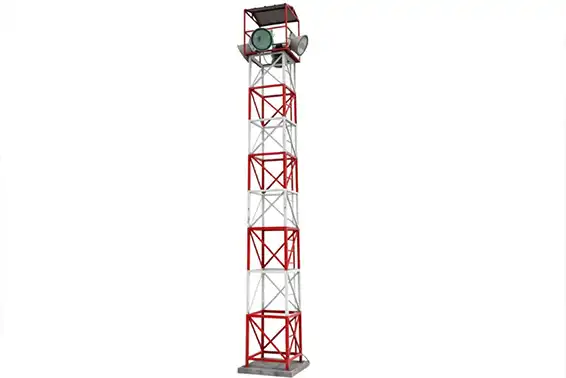
How to Choose the Right Light Tower for Construction Sites
Four factors determine which light tower is best for a building site: deployment speed, power configuration, structural durability, and coverage height. In addition to meeting OSHA's standards for visibility, a well-matched transportable lighting unit can withstand wind, rain, and frequent movement while keeping your nite crew operating safely. To ensure that your next purchase adds genuine value on the work site, this guide guides you through every decision point, from light type and mast height to supplier assessment and long-term maintenance.

Understanding Light Towers and Their Key Features
A portable light tower is not just a stick with a bulb on top of it. It is a load-bearing structure that was made to stay stable at high elevation, light up a large area, and last in weather conditions that would kill regular fixtures. Before you can compare models, you need to know what makes one unit different from another.
Portable vs. Fixed Units
Portable units can be moved around a job site by moving the bases that hold them on wheels or trailers. Fixed towers are built to last and can be used in long-term places like highway interchanges or fixed staging yards. Portable towers are a better investment for most construction projects where the work area changes often.
Lamp Technology: LED vs. Metal Halide
The bases that support portable units on wheels or trailers may be moved throughout a construction site. Long-term locations like highway interchanges or permanent staging yards may use fixed towers since they are durable. For the majority of construction projects where the work area is constantly changing, portable towers are a superior investment.
Power Sources
Diesel generators are still the most common choice for remote sites that can't connect to the power grid. Electric light tower work well for projects in cities where shore power is available because they don't produce any pollution and are quieter. Hybrid and solar-assisted types can run for longer periods of time without needing to be refueled and use less fuel, which makes them good for long-term projects in places with enough sunshine.

Core Criteria to Evaluate When Choosing a Light Tower
Being able to choose more accurately starts when you understand the basic groups. The right specification is based on your project schedule, the conditions of the site, and the size of the crew. Before making a buy order, every project manager should think about these main things.
- Mast height and coverage area: For example, a 6-meter mast (normal 6,000 mm height for Xinjiuyi’s units) may often cover a working radius of 15 to 25 meters depending on the wattage of the light and the beam angle. Taller masts minimize the number of units required, but increase the wind strain on the structure.
- Structural stability: The sway at height caused by wind is a real safety threat. Look for towers made of heavy galvanized rectangular tubes braced with angle steel. Column cross section is important A 40 mm x 40 mm column with a uniform thickness wall can hold its own in windy situations while thinner profiles would not.
- Anti-corrosion treatment: Hot-dip galvanization + high-temperature baking paint, giving steel components a double-layer barrier against moisture and oxidation. This is important for coastal locations, high humidity conditions, and any project operating during rainy seasons.
- Full unit configuration: Check precisely what the seller provides—lamp heads, wire harness, generator or power connection and mounting hardware. Ordering a mast without a matching electrical package is a waste of time and increases additional expense.
Height of the mast and area it covers: A 6-meter mast, like the standard 6,000 mm height on Xinjiuyi's units, can usually reach 15 to 25 meters, but this depends on the lamp's wattage and beam angle. Taller masts cut down on the number of units needed, but they make the structure more vulnerable to wind.
Regulatory Compliance
When procurement processes are rushed, two things that are often forgotten are the structure's durability and its full design. If you get these right from the start, you won't have to make expensive changes to the field later on.
Energy Efficiency
OSHA 1926.56 says that construction work in the US must have at least five foot-candles of light in general areas and higher levels for certain tasks. In your active work zones, any tower you buy should help you meet or beat those standards.
Comparing Market Options: Brands and Models Overview
Several familiar brands are serving the North American building lighting industry. Generac and Allmand are noted for their mobile gasoline powered towers with built-in generator frames. Caterpillar’s heavy-duty machines are built to withstand the vibrations and lengthy periods of continuous usage that are common in mining. Terex and Magnum Products are focused on designs that perform effectively on city job sites, using less fuel and creating minimum noise.
Hebei Xinjiuyi Construction Technology Co., Ltd. is a manufacturer of industrial steel tower frames for construction, mining and emergency response. Buyers may make project expenses low by buying direct from the producers. The Xinjiuyi light tower is composed of national standard steel, with a foundation of 600 mm x 600 mm, and a working height of 6,000 mm. The all-steel column design uses 40 mm x 40 mm tubes with a 0.8 mm wall thickness to offer the column the lateral stiffness needed to prevent high-altitude wobble, the No. 1 issue project managers have with cheaper options on the market.
Consider the length of the project if you are deciding between purchasing and renting. Rentals are a suitable choice for one-time assignments of less than four weeks. Contractors that work many overnight shifts on various projects throughout the year, particularly if the equipment is kept in excellent repair throughout these high usage cycles, have a quicker return on ownership.
Practical Tips for Buying and Maintaining Your Light Tower
The purchase order is not the end of the procurement process. How you buy, set up, and take care of your lighting equipment affects how well it works for its whole life.
Sourcing a Trustworthy Supplier
Ask for certifications of the materials, not just pictures of the products. A good light tower maker will give you proof of the steel grade, the thickness of the galvanization, and the standards for the surface finish. For example, Xinjiuyi has ISO 9001, ISO 45001, and ISO 14001 certifications, which means that their production and quality management meet standards that are checked by people all over the world.
Deployment and Positioning
Put towers around the edges of active work areas and angle the lamp heads inward at an angle of about 60 degrees to keep workers from getting too much glare and increase ground-level lux. With wheeled base frames, one person can move a unit in less than ten minutes without any tools on places where work fronts change often.
Ongoing Maintenance
Regular maintenance cuts down on downtime. Check the following things on a daily basis:
- Inspect lifting cables and telescopic sections for wear before each shift
- Grease mast joints monthly to prevent binding during height adjustment
- Examine electrical connections and weatherproof seals after heavy rain
- Check base frame welds for stress cracking after transport over rough terrain
If you follow these easy steps, a well-built tower will last for years. The two-layer anti-corrosion finish used by Xinjiuyi—hot-dip galvanization followed by high-temperature baking paint—makes servicing a lot easier than on units with only one coat.
Conclusion
Choosing the right mobile light tower can affect the safety of the crew, the speed of the project, and the total cost of ownership. Pay attention to the mast height, structural rigidity, anti-corrosion treatment, and full electrical setup. Before you agree, make sure that the claims you've heard are backed up by proof. For teams that work regular night shifts or in tough outdoor conditions, an appropriately sized steel tower from a reputable manufacturer pays for itself many times over.
FAQ
What mast height works best for most construction sites?
A 6-meter mast can reach most general construction tasks, such as paving roads, building shells, and staging areas for materials. Taller masts work best in open mines or on large bridge decks, where they can cover more area and lower the total number of units needed.
Are LED towers worth the higher upfront cost?
Most of the time, yes. Metal halide lights only last 6,000 hours, but LED lamps can last up to 50,000 hours. They also turn on right away, don't need to warm up, and use a lot less power per light. The difference in operating costs more than makes up for the price difference at the start of the project.
Can one tower power multiple lamp heads?
Yes, a lot of professional tower systems can handle two to four lamp heads per mast that are all wired to the same electric source. This setup makes coverage better per unit and cuts down on the number of towers that are needed for a big spot.
How do I prevent rust on an outdoor lighting tower?
You can choose between hot-dip galvanization and a baked enamel or powder-coat finish. Stay away from units that only use spray paint, because that protection wears off after one wet season. Every year, check the welds and cut edges and put touch-up paint on any metal that is showing.
What certifications should a supplier hold?
Quality management is covered by ISO 9001. ISO 45001 talks about health and safety at work in the production plant. For goods that will be exported, ask for proof that the unit meets European safety standards by asking for CE marking paperwork. This is something that many owners of foreign projects also want.
Get a Custom Quote from Xinjiuyi — Trusted Light Tower Manufacturer
Xinjiuyi makes industrial-grade lighting towers that are made to withstand the harsh conditions of real construction sites. These towers are resistant to wind and rust and can be adjusted to fit the exact height and lamp needs of your project. Our team answers quickly with accurate information about your needs and when they will be delivered, whether you need two units for a city road job or a large order to grow your rental fleet. Get a custom price today by emailing us at global@xjy8.com.
References
1. Construction Industry Institute – Safety Performance Report, 2022.
2. Occupational Safety and Health Administration (OSHA) – Construction Industry Standards: 29 CFR 1926.56, 2021.
3. Illuminating Engineering Society (IES) – The Lighting Handbook, 10th Edition, 2011.
4. International Energy Agency (IEA) – Energy Efficiency in Industrial Lighting Systems, 2020.
5. American National Standards Institute (ANSI) – ANSI/IES RP-7: Lighting for Industrial Facilities, 2017.
6. Construction Equipment Magazine – Annual Equipment Buyers' Guide, 2023.
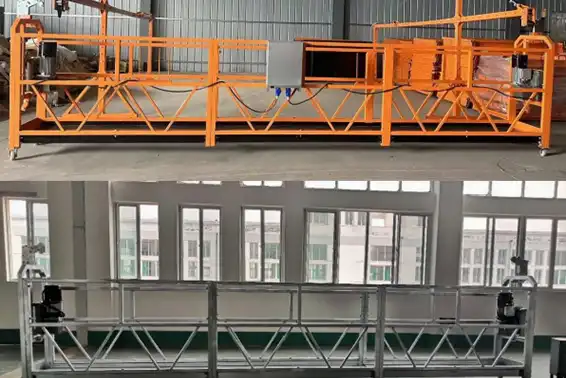
ZLP500 Temporary Cradle Specifications for Exterior Wall Work
The ZLP500 temporary cradle is a light-duty suspended access platform built for exterior wall operations at height. Rated at 500 kg and powered by a dual 1.1 kW × 2 motor system, it delivers a lifting speed of 9–11 m/min across a 5-meter standard platform. Manufactured by Hebei Xinjiuyi Construction Technology Co., Ltd., this suspended work platform addresses the real limitations of conventional scaffolding — slow assembly, large ground footprint, and poor adaptability to irregular facades. For B2B procurement teams managing multi-story facade projects, it offers a practical, compliance-ready solution.

Understanding the ZLP500 Temporary Cradle: Specifications & Core Features
Procurement managers need exact technical data on any suspended access equipment they want to buy before they commit to it. Here is what the ZLP500 temporary cradle does in its most important areas.
Full Technical Specifications at a Glance
| Parameter | Value |
|---|---|
| Rated Load | 500 kg |
| Lifting Speed | 9–11 m/min |
| Rated Power | 1.1 kW × 2 |
| Hoist Model | LTD50 |
| Safety Lock Model | LSA30 / LSA20 |
| Platform Dimension (L × W × H) | 5000 mm × 690 mm × 1180 mm |
| Suspension Mechanism Weight | 250 kg |
| Counterweight | 750 kg |
| Steel Platform Weight | 400 kg |
| Aluminum Platform Weight | 290 kg |
Safety Systems Built Into the Platform
The LTD50 hoist has an electromagnetic stopping motor and a manual lowering feature. This means that if the power goes out, workers can safely lower the ZLP500 temporary cradle without using any extra tools. When the tilt angle is between 3° and 8°, the LSA30/LSA20 safety lock goes off. This stops the platform from moving before it reaches a dangerous lean angle. The control system has built-in overload safety that stops it from working when the rated capacity of 500 kg is reached.
Material and Surface Treatment Options
The platform comes in two different types of structural materials. The steel version is 400 kg heavy and works well in normal construction sites. The aluminum version is 110 kg lighter than the steel version, which makes it much easier for smaller teams to move and place. As standard, both versions are treated with hot-dip galvanizing, which has been shown to be resistant to corrosion when used outside. As an add-on, electrostatic spray coating can be used to protect and improve the look of the surface.

Operational Insights: How the ZLP500 Temporary Cradle Works?
Being aware of how this ZLP500 temporary cradle works on a daily basis helps project managers plan rollout correctly and avoid downtime.
Installation Process and Personnel Requirements
A modular sequence is used for assembly. The 750 kg counterweight system is set up to keep the whole rig stable, and the suspension system is attached to the roof of the building. There is an 8.3 mm diameter steel wire rope that runs between the hoist units and the platform. Two or three trained workers can do the installation without any heavy lifting tools. The 2.5-meter pieces that make up the platform make it easy to quickly get to its usual 5-meter shape.
Workflow During Facade Operations
The platform moves vertically at 9–11 m/min once it is set up, so workers can cover building floors without having to stop and rerig. The 690 mm platform width gives workers enough room to move along the wall and handle tools and materials. Stepless lifting control lets you precisely set the height, which is very important for jobs like installing insulation panels and aligning curtain walls.
Routine Inspection and Maintenance Practices
Safety rules say that the safety lock needs to be professionally re-calibrated every 6 to 12 months, but this depends on how often it is used and the rules in the area. Before every shift, wire ropes should be checked to see if they are breaking or kinking. Periodically, the LTD50 hoist should be checked to see if it stays stable at high temperatures when it's fully loaded. These steps in care protect both the workers and the equipment that was bought.
Comparing the ZLP500 to Other Temporary Cradles and Scaffolding Solutions
Before making a purchase, procurement teams often look at more than one access solution. This comparison looks at the most common options to help you make a smart choice.
ZLP500 vs. ZLP630: Capacity and Use Case Differences
With a maximum load of 630 kg and more powerful motor units, the ZLP630 is perfect for heavy exterior jobs like installing thick composite panels or marble cladding. When working on mid-rise domestic buildings to paint, clean windows, or insulate, the ZLP500 temporary cradle is the best choice because it is lighter and can be set up faster, which saves money and time. The ZLP500's lighter weight makes it easier for teams that are in charge of several smaller buildings at the same time to move between them.
ZLP500 vs. Traditional Scaffolding
Traditional tube-and-coupler scaffolding needs a lot of room on the ground, a long time to set up, and a lot of materials. Scaffolding makes things more difficult to do on urban job sites where entry from the ground is limited. The ZLP500 temporary cradle doesn't leave any marks on the ground and can be used in hours instead of days. The Construction Industry Institute says that on buildings over eight stories, suspended access equipment cuts by 40–60% the amount of work needed to set up the façade compared to standard scaffolding.
ZLP500 vs. Bosun Chairs
A bosun chair can only support one user at a time and can't hold many tools. A team of workers can work at the same time on the ZLP500's 5-meter platform, which directly improves output per shift. The ZLP500 temporary cradle is much more productive per hour of work for any commercial project that needs to cover large areas of the facade consistently.
Procurement Guide: How to Buy and Source ZLP500 Temporary Cradles?
It is very dangerous to get suspended access platforms through channels that haven't been checked out. The quality of the products isn't always consistent, and they might not have all the necessary safety licenses, which can put you at risk on controlled job sites.
Evaluating Supplier Credibility
Check that the manufacturer of the ZLP500 temporary cradle has ISO 9001 quality management certification and that the product meets EN 1808 for European markets or GB/T 19155 for international construction projects before you choose a supplier. Hebei Xinjiuyi Construction Technology Co., Ltd. is certified by ISO 9001, ISO 45001, and ISO 14001, and its factories are in the Xian County Development Zone of Cangzhou, Hebei.
Bulk Order and Logistics Considerations
Bulk ordering lowers the cost per unit and guaranties consistent delivery dates for procurement managers who are working on multiple projects at once. Xinjiuyi can handle big orders because it has a stable supply chain system that can handle shipments of multiple units with clear lead times. For smooth service after the sale, spare parts for the LTD50 hoist and LSA safety lock series are kept on hand.
Leasing vs. Purchase for Project-Based Needs
Leasing may be a better option than buying for short-term jobs, like painting the outside of a single apartment building. For businesses that do regular work on facades at several sites every year, ownership lowers the long-term cost per deployment. Talk to the supplier about your project cycle to find the model that fits your budget for buying things.
Benefits and Value Proposition of Choosing the ZLP500 Temporary Cradle
There are three main points that support the business case for this suspended work platform: safety, operational efficiency, and total cost of ownership.
Here are the main benefits that buying teams always list:
- Ready for regulatory compliance: The platform is approved by EN 1808 and GB/T 19155, and can hold a static test load of 1,500 kg (3 times the rated load). This means it can pass inspections in most international markets.
- Faster deployment: Modular assembly lets a small crew get the platform up and running in just a few hours, saving a lot of money on idle labor costs compared to setting up scaffolding.
- Adaptable to irregular facades: The wire rope support system can be moved to work around building features like bay windows, setbacks, and canopies that make it impossible to use fixed scaffolds.
- Long service life: Hot-dip galvanized parts can withstand 1,000 hours of salt spray tests, which is important for seaside or high-humidity project sites.
These benefits directly lead to fewer delays on the job site, a lower risk of accidents, and less regulatory exposure, all of which are important to both HSE officers and project managers. When companies work in places where site inspections are very important, using a recognized, well-documented platform like this one protects both the workers and the project timeline.
Conclusion
The ZLP500 temporary cradle is a useful and well-designed platform for working on the outside walls of business and mid-rise buildings. Its modular 5-meter deck, dual-motor drive, and 500 kg maximum load make it suitable for painting, insulation, curtain wall installation, and window cleaning. Plus, it doesn't take up as much ground room or as long to set up as traditional scaffolding. This platform directly meets the needs of B2B procurement teams that put safety compliance, operational efficiency, and supply reliability at the top of their list of priorities. The manufacturing and after-sales service at Xinjiuyi are both ISO-certified, which gives buying managers a reliable source for current projects.
FAQ
What is the maximum safe wind speed for operating the ZLP500?
When the wind speed goes over 10.8 m/s, which is Level 6 on the Beaufort Scale, work has to stop. This is the normal safety procedure for all platforms that hang in the air.
How difficult is installation for crews with limited experience?
The pieces are easy to put together, and you don't need any heavy lifting tools. By following the normal setup procedure, a trained crew of two to three workers can finish the installation. Xinjiuyi gives expert documentation and help with advice on-site.
What wire rope specification does the ZLP500 use?
The platform is made with 8.3 mm high-strength steel wire rope that is specifically made to work with the LTD50 unit and traction hoists.
Can the ZLP500 operate in coastal environments?
Yes. You can choose the platform made of aluminum alloy or hot-dip galvanizing steel. In seaside areas, both choices don't rust when exposed to salt water. Tests show that galvanized parts can handle being exposed to salt spray for 1,000 hours.
Is leasing available for short-term projects?
There are leasing choices for needs that are project-based. Get in touch with Xinjiuyi directly to talk about availability and the terms for your project's length and location.
Request a Quote from Xinjiuyi — Trusted ZLP500 Temporary Cradle Manufacturer
Construction crews in Southeast Asia, the Middle East, Africa, and other places buy approved hanging access platforms from Xinjiuyi. We are a direct manufacturer of ZLP500 temporary cradles and have ISO 9001, ISO 45001, and ISO 14001 certifications. We offer big discounts, custom configurations, and on-time delivery. To get a specs sheet, product information, or project quote, email our team at global@xjy8.com.
References
1. Construction Industry Institute. Suspended Access Equipment Productivity Study. Construction Industry Institute, 2019.
2. European Committee for Standardization. EN 1808: Safety Requirements for Suspended Access Equipment. CEN, 2015.
3. Standardization Administration of China. GB/T 19155: Suspended Access Equipment — General Safety Requirements. SAC, 2017.
4. International Organization for Standardization. ISO 9001: Quality Management Systems — Requirements. ISO, 2015.
5. Occupational Safety and Health Administration. OSHA 1926 Subpart R: Steel Erection and Suspended Scaffolds. U.S. Department of Labor, 2021.
6. Health and Safety Executive. Safe Use of Suspended Access Equipment: Guidance for Managers and Operators. HSE Books, 2018.
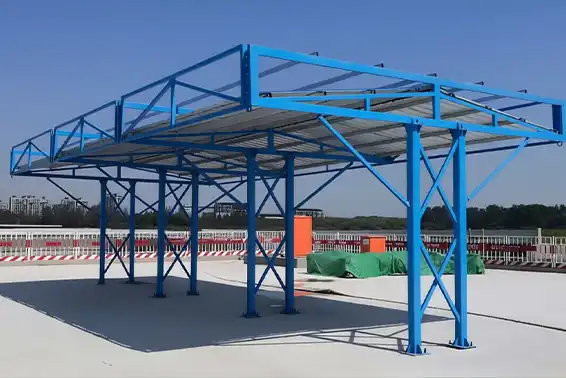
Steel Canopies Built for Strength, Style & Speed
When a job site demands overhead protection that can handle heavy loads, wide spans, and daily wear, a steel structure processing canopy delivers where other shelter systems fall short. At Hebei Xinjiuyi Construction Technology Co., Ltd., we design and manufacture heavy-duty canopy systems built around a central double-column frame — giving contractors the structural coverage they need for rebar processing, woodworking zones, and material staging areas. This guide walks through everything procurement managers, HSE officers, and project managers need to know before sourcing a canopy system.

Understanding Steel Structure Processing Canopies
To handle steel, a dome is more than just a roof. It's a protective structure made from high-grade structural steel that was designed to go over busy work areas on construction sites, in industrial yards, and in logistics operations. These systems are made from standard parts and put together with great accuracy, unlike temporary plastic sheets or wooden frames.
Common Types and Applications
There are three main types of steel canopy systems: fixed canopies, which provide constant or semi-permanent coverage; modular canopies, which can be taken apart and moved between stages of a project; and wide-span canopies, which are built around central column systems for areas that will be under a lot of weight. Each type is used for a different purpose on the site, like keeping equipment storage areas safe or covering busy fabrication yards.
Alignment with Structural Standards
Reliable roof systems are made to meet international building standards, such as ASTM A36 for materials and ISO 1461 for hot-dip galvanizing. The American Institute of Steel Construction (AISC) says that properly built steel structures keep their load integrity under both static and dynamic stress situations. This makes them the best choice for protecting construction workers from the elements.
Fabrication Process Overview
The first step in making a good steel structure processing canopy is checking the materials. Mill test papers show the steel type, which is usually Q235B or Q345B. After that, CNC machines are used to cut the parts, they are welded at controlled temperatures, and protection coatings are applied to end the job. Before parts are packed up and sent to the site, measurement tolerance checks are done on each step.

Advantages of Steel Structure Canopies: Strength Meets Style
Steel always does better than other building materials in terms of both technical and economic factors. According to a report from the Steel Construction Institute, structural steel has a strength-to-weight ratio that is about three times higher than reinforced concrete. This means that it can support large spans without having too much material mass.
Steel vs. Alternative Materials
When B2B buyers working in tough environments look at steel compared to aluminum, plastic, and wood, the differences become clear. Here are the main differences that you should know about:
- Steel vs. Aluminum: Steel carries higher load capacity at a lower material cost per unit area. For heavy fabrication zones, aluminum lacks the structural mass to resist impact from falling debris or crane loads.
- Steel vs. Plastic or Fabric: Plastic shelter systems degrade rapidly under UV exposure and offer no fire resistance. Steel, finished with intumescent coatings, achieves fire ratings of R60 or R90.
- Steel vs. Wood: Wood deteriorates in wet environments and presents fire risk in processing zones. Hot-dip galvanized steel withstands C3 to C5 corrosive classifications.
Because of these benefits, workers who are in charge of long-term jobs that require moving the canopy many times choose galvanized steel.
Design Versatility and Site Aesthetics
In addition to being strong, modern steel canopy systems can be powder-coated in warning yellow, safety red, or colors that are specific to the brand. When electrostatic powder coating is put on top of hot-dip galvanizing, the surface finish doesn't chip or fade for years. On the surfaces of columns, you can put both safety directions and company names. This supports good building practices and helps the site's branding at the same time.

Steel Canopy Processing Methods: Ensuring Strength & Speed
On busy job sites, the speed of deployment is important. Delays in putting up shelters can stop the processing of materials, which creates a risk to the schedule. Modern ways of making things directly deal with this.
CNC Cutting and Robotic Welding
CNC plasma or laser cutting makes sure that the holes for bolts and the plates that join them are lined up to within a few millimeters. The crew bolts the parts together without grinding or making any other changes on the job site. When robots weld the main beam links, they make uniform weld seams that are then checked with ultrasonic testing (UT) to make sure there are no internal flaws. This is the precise fabrication process of the steel structure processing canopy.
Modular Assembly Workflow
Each cover unit comes as a kit that has already been put together and has parts that are clearly marked. The steps for putting it together are simple: anchoring the base plate, putting up the column, installing the main beam, attaching the side beams, and placing the purlins. Standard modular construction benchmarks say that this method cuts the time needed to put together structures on-site by about 40–60% compared to traditional field-welded structures.
Quality Assurance Before Dispatch
The following checks are done on every unit before it leaves the plant. Anti-corrosion layers meet or go beyond 85 μm, as shown by Dry Film Thickness (DFT) tests. Load simulations are used to make sure that the bending limits meet the local standards for snow and wind loads. There are records that connect each batch of steel to its mill certificate. These steps keep B2B buyers from getting goods that don't pass safety checks at the job site.
Maintenance and Longevity Tips for Steel Structure Canopies
A galvanized steel canopy is meant to last more than 20 years if it is well taken care of. ISO 12944 divides corrosion environments into five groups, ranging from C1 (mild indoor) to C5 (severe coastal or industrial). The frequency of maintenance should be based on the site's classification.
Routine Inspection Schedule
For inland sites, inspections every two to three years are usually enough. Checks should be done once a year in coastal areas or places with a lot of humidity. During each check, the crew looks for harm to the coating, loose joints, and any signs of surface rust at weld spots or bolt connections.
Corrosion Prevention Protocols
Fix any damage to the finish right away with a zinc-rich primer, before rust gets below the coated layer. Adding an extra fluorocarbon topcoat during fabrication greatly extends the time between coatings for sites in tropical areas, which includes Southeast Asia, the Middle East, and coastal Africa.
Handling Common Structural Issues
Joint failures at bolted connections are usually caused by mistakes in the installation torque, not weak materials. During installation, make sure that all of the nuts are tightened to the recommended levels. Then, do another check after the first heavy rain. If the steel below keeps its cross-sectional dimensions, surface dents caused by machine contact do not weaken the structure.
How to Choose and Source the Best Steel Structure Processing Canopy
Finding the right provider for a canopy system affects more than just price. It also affects the schedule, compliance, and long-term safety of the site. Here are the things that buying managers with a lot of knowledge put first:
Supplier Certification and Capacity
Make sure that any company that makes a steel structure processing canopy has the ISO 9001 quality management certification, the ISO 45001 workplace health certification, and the ISO 14001 environmental certification. These credentials show that the factory uses quality systems that have been checked out instead of less formal ways of making things. All three certificates are held by Xinjiuyi, which also runs a production plant in the Xian County Development Zone of Cangzhou, Hebei.
Customization and Technical Support
A good provider should be able to change normal canopy sizes to fit different site plans without making lead times longer. You can choose any size column, span width (up to 9000 mm × 6000 mm), height, and surface finish from Xinjiuyi. Before production starts, pre-sales technical teams make detailed renderings of the designs. This gives procurement managers a visual reference for project approvals.
Procurement Criteria Checklist
Before choosing a seller, B2B buyers should think about the things below:
- Verified mill test certificates for all steel grades used in production
- Evidence of non-destructive testing on primary weld seams
- Documented project references from comparable construction environments
- Confirmed lead times and shipping capacity for large-volume orders
- After-sales technical support availability and response protocols
By using these criteria to judge suppliers, you can lower the chances of inconsistent quality and delivery delays, which are two of the biggest problems that construction procurement teams around the world say they have.
Conclusion
Construction crews can count on steel covers built around a central double-column frame to protect them from the elements in the toughest and most dangerous work areas. In areas where rebar is processed, wood is worked on, heavy equipment is stored, and materials are staged, the right steel structure processing canopy keeps workers, equipment, and materials safe without slowing down site operations. The fastest way to get a canopy that meets project requirements and international safety standards is to work with a certified manufacturer who has a history of making quality products and offers full customization services.
FAQ
What span width can a steel structure processing canopy cover?
The center double-column roof supports at Xinjiuyi can normally hold up to 9000 mm x 6000 mm of weight. Based on estimates from structural engineering, custom sizes can be made for sites with wider or less regular plans.
How long does installation take?
On-site building of a basic unit usually takes two to four days because the parts are pre-fabricated, CNC-cut, and connected with precision bolts. Larger setups with more than one bay may take longer.
What steel grade is used in the main frame?
The main frame is made of either Q235B or Q345B high-strength steel, which are both approved by national standards for use in building overhead protection.
Is the canopy reusable across multiple project sites?
Yes. The bolted connection system makes it possible to take the whole thing apart without having to cut or weld. Moving and putting together parts at the next project site increases the value of the investment over multiple operations.
What surface treatment options are available?
There are three levels of finish: basic hot-dip galvanizing for basic corrosion protection, galvanized with spray paint for more color options, and powder coating with baking finish for the best durability in harsh environments.
Get Your Steel Structure Processing Canopy Quote from Xinjiuyi
Heavy-duty overhead protection systems are sold by Xinjiuyi to construction crews in South America, Africa, Southeast Asia, and the Middle East. We are a certified steel structure processing canopy maker with ISO 9001, ISO 45001, and ISO 14001 approvals. For every order, we provide full technical paperwork, help with custom design, and on-time delivery. Email our team at global@xjy8.com right now to get project details and a price quote.
References
1. American Institute of Steel Construction (AISC). Steel Construction Manual, 16th Edition. AISC, 2022.
2. Steel Construction Institute (SCI). Design of Steel Structures for Durability and Corrosion Resistance. SCI Publication P290, 2019.
3. International Organization for Standardization. ISO 1461: Hot Dip Galvanized Coatings on Fabricated Iron and Steel Articles. ISO, 2022.
4. International Organization for Standardization. ISO 12944: Paints and Varnishes — Corrosion Protection of Steel Structures by Protective Paint Systems. ISO, 2018.
5. American Society for Testing and Materials. ASTM A36/A36M: Standard Specification for Carbon Structural Steel. ASTM International, 2019.
6. Occupational Safety and Health Administration (OSHA). Construction Industry Standards: Fall Protection and Overhead Hazard Controls. U.S. Department of Labor, 2021.
Are Composite Manhole Covers and Frames Safer Than Cast Iron Covers?
Yes — composite covers are generally safer for green space applications. A recessed composite round manhole cover for grass eliminates the corrosion, weight hazards, and theft risks that plague cast iron. Made from FRP or SMC resin, these covers meet pedestrian load ratings (EN 124 A15–C250), resist fertilizers and UV exposure, and sit flush with turf so the surface remains visually unbroken and physically safe. For landscaping contractors, golf courses, and municipal project teams, the safety argument for composite is not theoretical — it is measurable and field-proven.

Understanding Manhole Covers: Composite vs. Cast Iron
Before reviewing safety scores, it's helpful to know what really makes these two types of products different.
What Is a Composite Manhole Cover?
Fiber Reinforced Polymer (FRP) or Sheet Molding Compound (SMC) are used to make composite covers. The grass-type cover in Hebei Xinjiuyi has a tray that is recessed and usually 50 mm to 100 mm deep. This tray holds soil and live turf right on top of the cover. The diameters can be changed from 300 mm to 1000 mm, and the color, wall thickness, and diameter can all be changed completely. It's not conductive, doesn't attract static electricity, and doesn't catch fire.
What Is a Cast Iron Manhole Cover?
Cast iron manhole covers have served as the municipal standard for over a century. They boast high load-bearing capacity and easy availability. Nevertheless, prolonged contact with soil leads to rusting; they absorb heat rapidly and damage grass roots underneath. In addition, their high scrap value creates a persistent, widely recognized theft problem in both urban and suburban areas. This is where the recessed composite round manhole cover for grass stands out.
Why Landscaping Projects Need a Different Approach
Standard solid-top covers, whether they are made of iron or concrete, leave holes in the grass and reflect heat that hurts the roots. For green infrastructure projects like golf course grounds and gardens for homes, the cover needs to blend in with the grass. In that particular situation, hybrid grass covers work better than any other type of grass cover.
Safety and Performance Comparison: Composite vs. Cast Iron Covers
Safety isn't just one number. It includes structural strength, resistance to slip, fitting danger, and how the material will behave over time.
Structural Integrity and Load Performance
Composite covers that meet EN 124 standards can handle A15 loads from pedestrians and B125 loads from light vehicles without permanently deforming. The single-piece FRP structure spreads stress evenly, which stops the cracking that happens in cast iron after years of freeze-thaw cycles. Independent hydraulic pressure testing shows that the structure won't break under estimated loads. This is something that Xinjiuyi makes sure of with every production batch.
Slip Resistance and Pedestrian Safety
Cast iron covers are very dangerous to walk on when they're wet. Grass-type covers have a textured composite surface that keeps the friction going even after watering or raining. Lack of sharp metal edges further lowers liability in public parks, school grounds, and hospital landscaping where people walk around a lot and come from a variety of backgrounds.
Weight, Corrosion, and Environmental Safety
These are the main differences in performance that have an immediate effect on the safety of the job site and in the long term:
- Weight: Composite covers weigh 70% less than cast iron equivalents. A single worker can handle installation without lifting equipment, reducing musculoskeletal injury risk during placement and routine inspection.
- Corrosion resistance: FRP/SMC resists acids, alkalis, fertilizers, and pesticides — chemicals routinely present in maintained turf environments. Cast iron corrodes under these conditions, creating structural weakness and surface deterioration over time.
- Thermal conductivity: Metal covers transfer heat directly into the soil, killing grass root systems. Composite material's significantly lower thermal conductivity protects the turf infill, keeping the cover functional and visually integrated year-round.
- Anti-theft: Zero scrap value means no financial incentive for removal. A missing manhole cover is one of the most documented urban safety hazards — composite material eliminates that risk entirely.
Thanks to these advantages, composite materials serve as the superior choice for all green space applications where public accessibility and landscape aesthetics are priorities. This applies to our recessed composite round manhole cover for grass.
Installation and Maintenance Best Practices for Recessed Composite Manhole Covers
Whether the cover works safely for its whole life depends on how well it was installed.
Site Assessment and Product Selection
Before you place your order, make sure you know what load rating is needed for the area. For example, A15 is for areas with only foot traffic, and B125 is for paths where light cars or ride-on mowers can go. Carefully measure the opening in the frame that is already there, because even small errors in measurement can affect the seal. Xinjiuyi has diameters ranging from 300 mm to 1000 mm, and they can also make sizes to fit installations that aren't standard.
Frame Setting and Flush Alignment
The frame has to be level with the ground around it. Any change in height makes it possible to trip and lets water pool in the recessed tray, which can soak the turf infill. Xinjiuyi has built-in drainage holes that keep water from building up, but the best way to protect it is to grade it correctly when it is installed. Spread mortar evenly around the frame's edges to stop it from settling in the future.
Ongoing Maintenance and Inspection Schedule
Composite grass covers don't need much upkeep, but checking them every so often is good for safety and the look of the landscape. Every six months, make sure the lifting key points are still free of roots and packed-down soil. Make sure the covering structure is still in place so that dirt doesn't get into the well below. Under normal circumstances, the product should not need to be painted, treated for rust, or fixed structurally at any point during its service life.
Procurement Insights: Choosing the Right Manhole Cover for Grass and Landscaping Projects
When sourcing green infrastructure products, buyers need to look beyond unit price. Project outcomes are impacted by load ratings, certifications, lead times and supplier reliability. These considerations are vital when selecting the recessed composite round manhole cover for grass.
Key Selection Criteria
When choosing grass-type manhole covers for a city or landscaping project, keep these things in mind:
- Load classification: Confirm EN 124 compliance and request the specific test report — not a general claim.
- Tray depth: Match the recessed depth (50–100 mm) to your turf type. Natural sod with deeper root systems needs 80–100 mm; artificial grass installations work with shallower trays.
- Diameter range and customization: Projects with non-standard utility opening sizes need a supplier with genuine custom manufacturing capability, not just catalog SKUs.
- UV stability certification: Request accelerated weathering test data (ISO 4892-2) to verify that the resin formulation resists brittleness under sustained solar exposure.
If you make sure these specs are correct before you place an order, you can avoid expensive repairs in the field and delays in proof during project handover.
Evaluating Supplier Reliability
A reliable provider of composite grass cover should give you load test results, physical samples that you can check out in the field, and proof that they can make both small-lot and project-scale orders. Xinjiuyi has a production plant in Cangzhou, Hebei, and an established supply chain that serves customers in China and around the world. The company is certified by ISO 9001, ISO 45001, and ISO 14001, and its products are sold all over the world.
Total Lifecycle Cost vs. Unit Price
At the point of sale, cast iron plates look like they are a good deal. Over ten years, however, the total cost of fixing rust, replacing items stolen, restoring grass around areas hurt by heat, and hiring more people to do the work often goes over the total cost of the composite option. Lifecycle cost analysis always favors composite when buying teams look at the long-term economics of a project.
Why Recessed Composite Manhole Covers Are the Preferred Choice for Grass Areas?
The use of grass-compatible composite covers has slowly increased in public parks, high-end housing projects, and golf course management. The reason for this is practical, not esthetic.
Documented Field Performance
When golf courses replaced metal utility covers with composite covers made of grass and other materials, the turf started growing over the tray surface within two to four weeks, as long as the growing conditions were normal. Municipal park projects in green belt areas have had no thefts since the replacements, while cast iron projects had frequent loses. These are consistent results that are caused by the properties of the material, not problems with the installation.
Forward Compatibility With Green Standards
More and more, urban drainage standards in many markets call for green zones to have permeable or low-impact surface solutions. Sustainable urban drainage system (SuDS) ideas are supported by composite grass covers, which keep the soil's surface permeable and stop metals from leaching into the soil. As cities make it harder for landscapers to meet the rules, Xinjiuyi's products will be ready to meet these new standards.
Long-Term Value for B2B Clients
The recessed composite round manhole cover for grass has a clear benefit for contractors, property managers, and procurement teams: it lowers the cost of installation labor, eliminates the risk of theft, doesn't require rust upkeep, and results in a final landscape that looks good enough to pass an eye inspection. These results directly help with signing off on the job and making sure the client is happy.
Conclusion
Composite manhole covers deliver superior safety, longer service life and lower maintenance costs compared to cast iron alternatives in green space environments. Their reduced weight alone greatly cuts installation risks. Coupled with rust resistance, anti-theft properties and grass-friendly design, recessed composite round manhole cover for grass addresses all practical limitations of cast iron products. For landscape crews, property managers and municipal procurement teams seeking convenient utility access within green areas, composite covers represent the optimal long-term solution.
FAQ
How does grass survive inside the recessed tray?
The hybrid material keeps heat from getting to the roots, saving them from heat stress. Built-in drainage holes keep the soil from getting too wet, keeping it at the same level of moisture as the grass around it. Within two to four weeks of being installed, most types of natural grass are fully established.
Can a ride-on lawnmower pass over the cover safely?
Yes, as long as the cover can handle at least a B125 load grade. It is made so that the composite structure can take the point-load impact of commercial lawnmowers without the surface deforming.
Will fertilizers or pesticides damage the material?
No, FRP and SMC materials are not affected by chemicals and can stand up to all typical yard chemicals, such as acidic and alkaline fertilizer mixtures.
Are custom diameters available for non-standard installations?
Yes, Xinjiuyi can change the width all the way from 300 mm to 1000 mm, and the tray depth and wall thickness can be changed to fit the needs of each project.
How long does the cover last compared to cast iron?
In normal weather situations, composite grass covers last a lot longer than cast iron in places where it rusts. UV-stabilized glue and a chemically resistant mixture stop the breakdown processes that make cast iron less useful over time.
Get a Sample From Xinjiuyi — Composite Grass Cover Supplier
Landscapers, property developers, and municipal procurement teams all over the world buy composite grass manhole covers from Xinjiuyi. Our recessed composite round manhole cover for grass manufacturer can make any changes you need, test the cover for load safety, and deliver it quickly. To get a product sample and technical data sheet, email global@xjy8.com with the details of your project. When people ask about projects, our team quickly answers both standard and unusual questions.
References
1. British Standards Institution. BS EN 124: Gully Tops and Manhole Tops for Vehicular and Pedestrian Areas. BSI, 2015.
2. American Society of Civil Engineers. Infrastructure Report Card: Stormwater and Green Infrastructure. ASCE, 2021.
3. Concrete Society. Composites in Construction: Fiber Reinforced Polymer Products for Civil Infrastructure. The Concrete Society, 2020.
4. Urban Land Institute. Green Infrastructure and Stormwater Management: Best Practices for Urban Development. ULI, 2019.
5. International Organisation for Standardisation. ISO 4892-2: Plastics — Methods of Exposure to Laboratory Light Sources. ISO, 2013.
6. ASTM International. ASTM D570: Standard Test Method for Water Absorption of Plastics. ASTM, 2022.
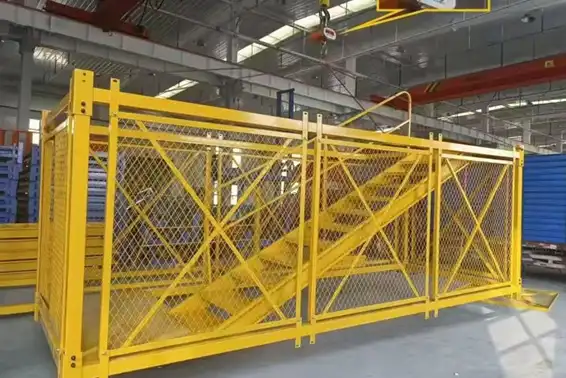
At what height do ladders need a cage?
If you manage construction sites or handle safety procurement, this question comes up constantly — and getting the answer wrong can cost lives. Under OSHA 29 CFR 1926.1053, fixed ladders installed before November 19, 2018, required a construction ladder cage when the climb exceeded 20 feet (approximately 6 meters). For ladders installed after that date, OSHA mandates a personal fall arrest system or ladder safety system for any fixed ladder over 24 feet. Cage systems remain widely used as secondary protection and are still required under many international standards, making them a standard fixture on modern job sites worldwide.

Understanding Ladder Cage Requirements and Safety Standards
What Exactly Is a Ladder Cage?
Ladder cages, which are also known as safety cages or hoop guards, are built around a fixed vertical ladder to protect people from falling. It's made up of vertical bars and horizontal hoops that fit together to make a narrow rising path that keeps workers from falling backward. It depends on the site's conditions whether these systems are made of hot-dip galvanized steel, stainless steel, aluminum alloy, or fiber-reinforced plastic.
OSHA and International Standards You Must Know
General industry is governed by OSHA 1910.28, and construction sites are governed by 29 CFR 1926.1053. To keep the structure rigid, ANSI A14.3 says that horizontal hoops should not be more than 48 inches apart. Similar rules are set by EN ISO 14122-4 for fixed access ladders on industrial structures and machinery in Europe. Any cage's bottom must be 7 to 8 feet above the base floor so that people can get in and out of it freely.
Key Dimensions and Load Capacity
Standard cage dimensions range from 27 to 30 inches in width. Most engineered systems feature a minimum lateral load capacity, delivering sufficient strength to withstand accidental worker impact. Per ANSI A14.3 requirements, the cage structure must extend a minimum of 42 inches above the top step. Understanding these specifications prior to procurement helps prevent costly retrofits and failed safety inspections — two common issues frequently observed on active job sites by HSE officers and project managers. This is essential when selecting a construction ladder cage.

Comparing Ladder Cage Types and Alternatives for Construction Sites
Ladder Cages vs. Ladder Safety Rails
A moving sleeve slides along a wire or rail and connects directly to a worker's harness on ladder safety rails. They can stop you from falling more actively, but you have to do something every time you climb. Cage systems, on the other hand, protect workers without them having to do anything. For high-frequency entry points on building sites, cages make it less important for workers to follow the rules, which is a big operational benefit in places where crews change often.
Material Choices: Steel vs. Aluminum
Galvanized steel is the preferred material for permanent construction applications. A hot-dip galvanized cage is expected to last 25 to 50 years in a standard C3 industrial setting with little maintenance. Aluminum is good for temporary or moveable structures because it is lighter, but it can't hold as much weight. Deep excavation pits, bridge piers, and tunnel shafts are all places where wind loads and vibrations are constant. Galvanized steel frames are more reliable than aluminum frames in these situations.
Modular vs. Fixed Designs and Self-Closing Gates
Modular cage systems let parts be bolted together instead of welding them together on-site. This makes installation go faster and lets parts be used in different stages of the job. With a fixed welded cage, the access point won't move, so the structure will last. Self-closing safety gates at cage entry points keep people from accidentally getting in. This is a specific detail that OSHA inspectors look at when they visit a site. Adding a self-closing gate to each station level is best practice in the business, no matter where it is used.
Installation, Inspection, and Maintenance of Construction Ladder Cages
Installation Best Practices
To do a proper fitting, you must first accurately measure the full climb height before placing your order for parts. Each piece must line up straight—even small differences in angle add up over many pieces and cause stress points in the structure. The base anchor bolts must be tightened to the right level, and after assembly, all connection points must be checked. When parts are sorted and put out in a way that makes sense before the climb, two trained workers can usually finish one modular construction ladder cage section in less than 30 minutes.
Regular Inspection Checklist
Safety compliance is not a one-time event. Inspection protocols should be followed at the following intervals and cover the items listed below:
- Weekly visual check: Look for rust, warping, or loose bolts at connection points that you can see.
- Monthly structural check: Verify hoop spacing remains within 48 inches, confirm weld integrity at all joints, and inspect anti-slip tread surfaces for wear.
- After severe weather: Re-check anchor bolt torque and assess any paint or coating damage that may expose base steel.
- Post-incident inspection: Following any fall event or significant equipment impact, conduct a full load review before returning the system to service.
Maintaining a written inspection log protects your organization during regulatory audits and demonstrates due diligence in your safety management program.
Maintenance and Corrosion Prevention
It is easy to do regular upkeep on galvanized steel cage systems. Use a stiff brush and clean water to get rid of the dust and debris that has built up on the concrete. Fix any damage to the coating right away by painting over it with zinc-rich touch-up paint. Once every three months, check the link nuts and tighten them again if necessary. A system that is well taken care of can easily last the 20 years that good manufacturers build into their products.
Procurement Considerations for Construction Ladder Cages
Matching Specifications to Your Project Requirements
To choose the right vertical access method, you must first know the total climb height, the site's load conditions, and the amount of environmental exposure. For projects that involve deep excavation in humid areas, the galvanizing needs to be thicker; the ISO 1461 recommends coatings that are more than 85 microns thick. When building a high-pier bridge, you need parts that can be stacked to fit different pier heights without having to wait for special fabrication to finish. For most building projects, modular solutions with standard section lengths of 3,000 mm give you the freedom you need.
Evaluating Supplier Certifications and Lead Times
As a minimum, B2B buying teams should make sure that any construction ladder cage provider has ISO 9001 quality management certification. Extra certifications like ISO 45001 (for health and safety at work) and ISO 14001 (for environmental management) show that a company has organized rules over its production. Before committing to a purchase order, get written confirmation of lead times. Supply problems with safety equipment can cause project delays and compliance gaps. Standard orders from reputable manufacturers that sell to international markets are usually filled within 15 working days.
Bulk Order Advantages and Total Cost Analysis
Buying modular cage parts in bulk can help companies that handle multiple busy sites save a lot of money on each unit and make controlling their inventory easier. Because modular parts can be used on different projects, the value of your tools grows over time instead of going down as single-use assets. To show budget decision-makers that the initial investment was worth it, you should figure out the total cost of ownership over five years. This includes the time it takes to install, check, maintain, and resell the item.
Enhancing On-Site Safety and Compliance Through Vertical Access Systems
Reducing Injuries and Regulatory Penalties
The U.S. Bureau of Labor Statistics says that falls are still the main reason why construction workers die, killing nearly 36% of all construction workers each year. This figure can be immediately fixed by installing compliant vertical access solutions. Sites that fail OSHA ladder safety checks can be fined more than $15,625 per willful violation, according to the current list of penalties. Proper fixed ladder enclosures get rid of both this financial and human risk at the same time.
Common Mistakes to Avoid
In the field, safety professionals often make the same mistakes that can be avoided. The most common problems are installing cage sections with hoop spacing that is more than 48 inches apart, using anchor bolts that are too small and can't handle lateral cage loads, and not teaching workers enough about the right way to enter and exit the cage. If the width of the cage is wrong, especially if it is less than 27 inches, workers can't move around as easily and are more likely to get trapped during an emergency fall.
Digital Safety Monitoring Integration
HSE managers who are looking to the future are now adding IoT-based sensors to fixed ladder systems to track the load on structures, find people who aren't supposed to be there, and set automatic inspection alerts. Although this technology is still new to most builders, using it with tried-and-true structural systems makes a safety record that is backed up by data and meets the needs of both internal auditing and regulatory scrutiny from outside the building.
Conclusion
Fixed ladder fall protection is not optional — it is a legal obligation and fundamental safety necessity. The core requirement is consistent under OSHA, ANSI and EN ISO standards: when the height of a fixed ladder exceeds the regulated limit, an enclosed safety system must be installed. Modular galvanized construction ladder cage systems are fabricated in accordance with national standards, offering reliable structural integrity, extended service life and complete compliance documentation for your projects. Choosing a verified system from a certified manufacturer improves on-site safety for your workforce, controls project expenses and safeguards your company’s safety record on every worksite.
Frequently Asked Questions
At what height does OSHA require a cage on a fixed ladder?
Before November 19, 2018, OSHA said that bars starting at 20 feet had to be used for ladders. OSHA now requires a personal fall stop system or ladder safety system for all new installations that are taller than 24 feet. A lot of places are still using bars as extra safety.
Can a cage be added to an existing ladder?
Yes. For retrofitting, modular bolt-on cage kits are available, but only if the current ladder construction can handle the extra weight and the forces needed to pull the fasteners out.
What is the standard hoop spacing for a ladder cage?
ANSI A14.3 says that horizontal hoops should be no more than 48 inches apart so that the structure of the cage stays straight during the whole climb height.
How long does a galvanized cage last?
If you take care of your hot-dip galvanized cage system, it should last between 25 and 50 years in a normal C3 industry setting.
What materials work best in corrosive environments?
ISO 1461 says that hot-dip galvanized steel coated to at least 85 microns is the best choice. For areas near the coast or where chemicals are present, cage systems made of stainless steel grade 316 or FRP are recommended.
Get Compliant Vertical Access Systems From Xinjiuyi — Your Trusted Construction Ladder Cage Manufacturer
From our factory in Cangzhou, Hebei, Xinjiuyi sends construction ladder cage systems that meet national and foreign standards. Our hot-dip galvanized, modular parts are approved by ISO 9001, ISO 45001, and ISO 14001, and they have a service life of 20 years. They can also be fully customized to fit any project height or climate. Contact our team today at global@xjy8.com to request specifications, project drawings, or a bulk procurement quote.
References
1. Occupational Safety and Health Administration (OSHA). Fixed Ladders: Safety Requirements Under 29 CFR 1910.28 and 1926.1053. U.S. Department of Labor, 2018.
2. American National Standards Institute (ANSI). ANSI A14.3: Safety Requirements for Fixed Ladders. American Ladder Institute, 2008.
3. International Organization for Standardization. EN ISO 14122-4: Safety of Machinery — Permanent Means of Access — Fixed Ladders. ISO, 2016.
4. International Organization for Standardization. ISO 1461: Hot Dip Galvanized Coatings on Fabricated Iron and Steel Articles. ISO, 2009.
5. U.S. Bureau of Labor Statistics. National Census of Fatal Occupational Injuries in Construction. U.S. Department of Labor, 2022.
6. National Institute for Occupational Safety and Health (NIOSH). Falls in Construction: Leading Cause of Death and Injury. Centers for Disease Control and Prevention, 2020.
- 1
- 2
- 3
- 4
- 18


