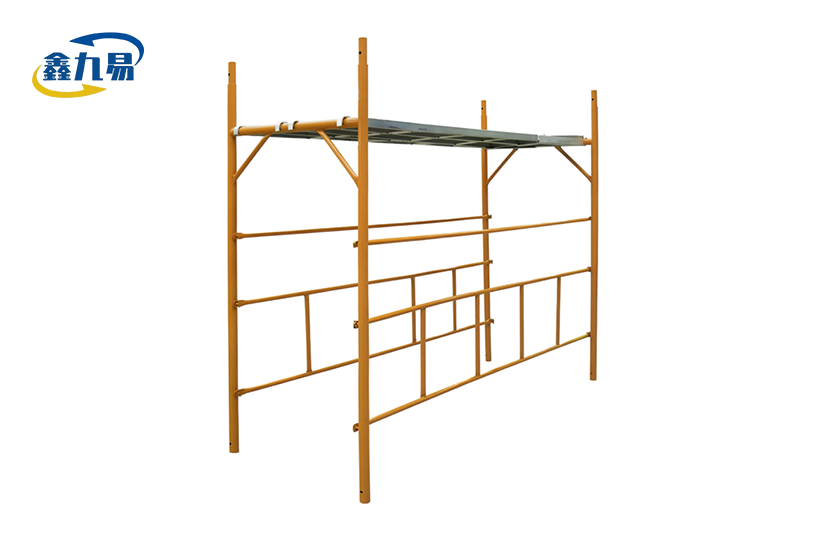
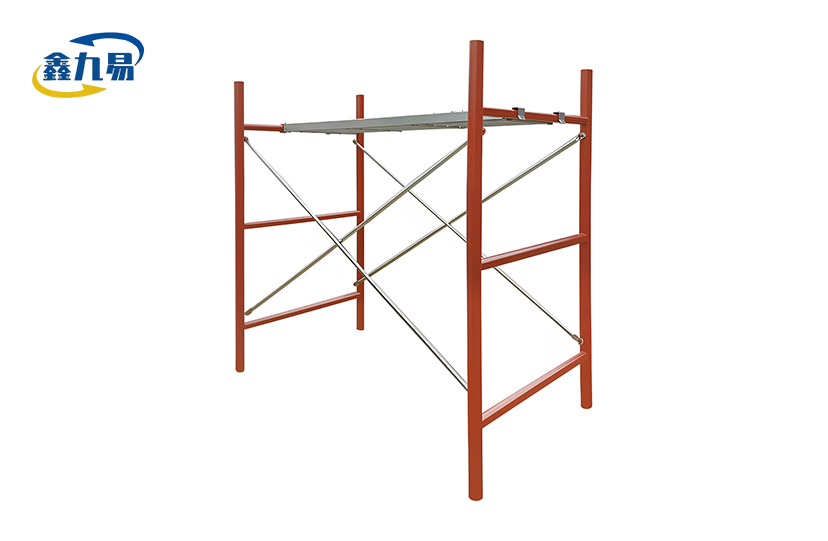
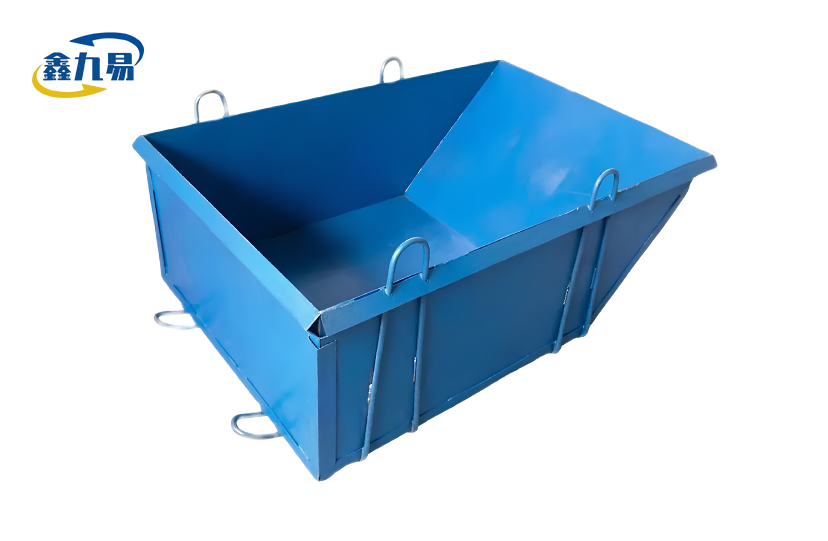
From the Workshop to the Construction Site: The Journey of a Standardized Scaffolding System
Today, the scaffolding on construction sites has long bid farewell to its old appearance of being rusty and shaky. Inside this modern factory in Hebei, a clean and orderly production line is continuously outputting high-quality standardized scaffolding. The factory roof is covered with solar panels to provide clean energy for production. Welding fumes are treated by a purification system to meet emission standards, and edge materials are sorted, recycled, and reused. From the selection of raw materials to the finished products rolling off the line, every process is deeply infused with the concept of green and low-carbon manufacturing. Forged under strict environmental standards, this scaffolding not only builds a solid safety defense for construction sites but also silently protects the blue sky and white clouds above.
Material Selection: Using the Best Steel Where It Matters Most
The first thing that catches the eye in the workshop is the neatly stacked pipe yard. Every steel pipe undergoes rigorous inspection; the surface must be free of cracks, rust, or deformation. Inspectors use vernier calipers to measure the pipe diameter and wall thickness, ensuring that every pipe meets national standards. Those seemingly inconspicuous fasteners, base plates, and U-head jacks actually bear the stability of the entire system. We insist on using high-quality steel to guarantee the load-bearing capacity and durability of our products from the source, ensuring that every set of scaffolding can withstand the tests of the construction site.
Manufacturing: A Contest of Precision
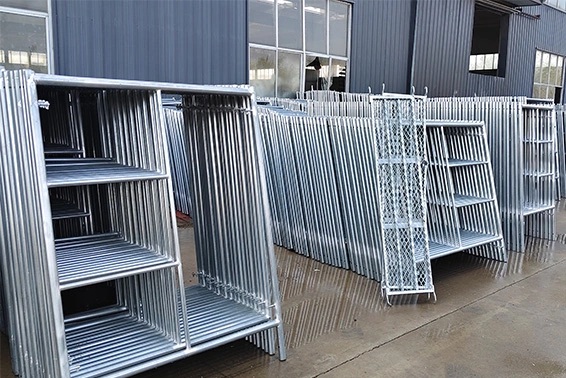
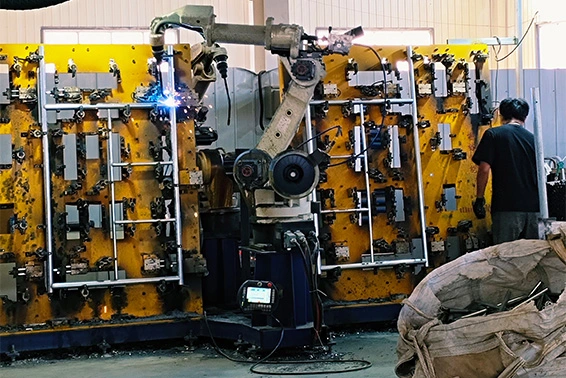
Once the steel pipes enter the production line, CNC cutting machines cut them with precision, and hydraulic presses stamp steel plates into standard connecting parts. In the most technically demanding welding stage, fully automatic welding robots have replaced traditional manual labor, tirelessly weaving their mechanical arms among the steel pipes. Relying on high-precision trajectory control and intelligent sensing technology, these robots not only achieve 24-hour uninterrupted high-efficiency operations but also ensure that every node is welded with full, uniform seams free of porosity and slag inclusions. This greatly enhances the overall structural strength and safety of the scaffolding. The final step is hot-dip galvanizing. After being immersed in a zinc bath, the steel pipes form a dense anti-corrosion film on the surface. This makes the scaffolding sturdy and durable even when exposed to wind and sun outdoors, with a service life far exceeding that of ordinary steel pipes, significantly reducing replacement costs for contractors.
Assembly and Testing: Strict Quality Control for Safe Delivery
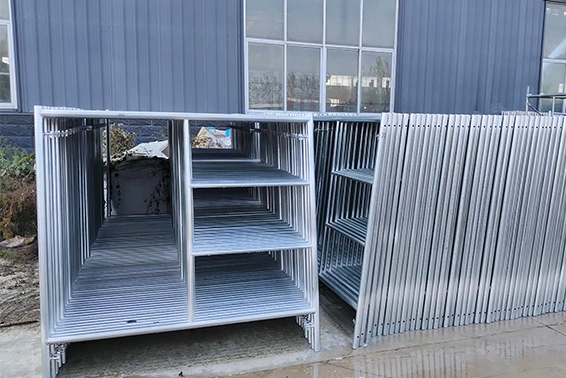
Finished components are transported to the assembly area, where workers pre-assemble them according to design drawings. The entire system undergoes pressure tests and anti-tipping tests to verify overall stability, ensuring that every set of scaffolding is safe and reliable in actual use. The advantages of standardized design are also reflected here—all components are universally interchangeable, allowing for fast and efficient on-site erection, which greatly shortens the construction schedule. Quality control runs through the entire production process, including random sampling upon raw material warehousing, self-inspection at each process, and 100% full inspection of finished products before leaving the factory, with key processes fully covered. Qualified scaffolding is disassembled into standard modules, wrapped in moisture-proof film, reinforced in wooden crates, and checked one by one before transportation to ensure secure fixing, guaranteeing that the products arrive at the site in perfect condition.
From individual steel pipes to a complete scaffolding system, the process goes through over a dozen stages, including procurement, processing, assembly, testing, quality inspection, and transportation. The advantages of standardized scaffolding lie in its safety, reliability, high erection efficiency, and durability. It is this dedication to quality that makes it the most trustworthy safety guarantee on construction sites. Next time you see the dense scaffolding on a construction site, you might want to think about the long journey behind it from the workshop to the site—a journey defined by craftsmanship and safety.
Frequently Asked Questions:
Q1: Scaffolding on the market looks similar. How does the product quality from a source factory differ?
A: The difference in quality is mainly reflected in the control of core components. Distributors mostly adopt an outsourced assembly model, whereas a source factory relies on its own production line to achieve full-process quality control from steel cutting and frame welding to whole-machine assembly. For example, we use fully automatic welding robots to replace traditional manual labor, which not only achieves 24-hour uninterrupted operation but also ensures that every node is welded with full, uniform seams free of porosity and slag inclusions, fundamentally guaranteeing the structural strength and construction safety of the scaffolding.
Q2: What are the advantages of choosing a source factory in terms of procurement costs?
A: The direct supply model from the source factory eliminates the markups of multi-tier distribution channels, making procurement costs more reasonable while ensuring solid material quality. In addition, due to the high level of automation at the production end, our production efficiency is greatly improved. We not only have sufficient spot inventory for regular specifications but can also effectively shorten the delivery cycle for custom orders, significantly reducing the comprehensive waiting and replacement costs for contractors.
Q3: Can a source factory provide customization services to meet the complex needs of different projects?
A: Absolutely. While distributors can often only provide fixed standard parts, a source factory has stronger R&D and customization capabilities. We can flexibly adjust the platform size, protective structures, and supporting accessories of the scaffolding according to the actual usage requirements of our customers. Whether it is non-standard sizes for special terrains or upgraded anti-corrosion and anti-rust processes for special climatic environments such as extreme cold or high humidity, we can precisely adapt to various engineering sites.
Q4: Is the after-sales service and parts supply from a source factory more guaranteed?
A: Yes. Distributors often have inconsistent batches of goods, which can easily lead to uneven quality and poor after-sales connection. A source factory, on the other hand, can establish a regular communication mechanism, providing complete factory inspection data and technical support. Our parts supply is more stable, ensuring timely maintenance responses during the long-term use of the equipment, providing long-lasting safety support for contractors.