Hygienic Stainless Trench Covers for Food Prep Areas
Hygienic stainless trench covers for food prep areas are removable or fixed panels that sit over floor channels, let washdown water pass, and keep food scraps out of the pipes. A stainless steel trench cover for kitchen use needs a smooth, non-porous surface, a verified material grade, enough plate thickness for daily traffic, and edges that are easy to clean. These four points decide whether a cover passes inspection and stays in service. In this guide, I explain how to judge each point, how grades 201, 304, and 316 differ, and how to avoid costly purchasing mistakes.
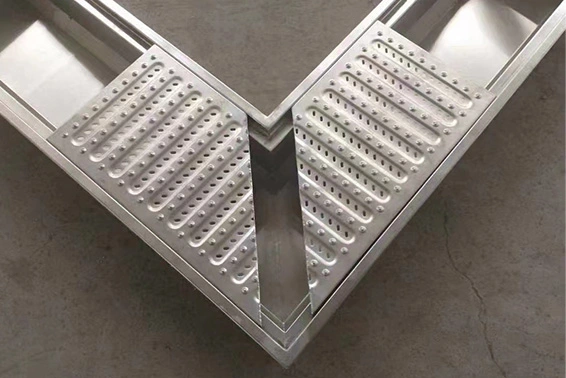
What Is a Stainless Steel Trench Cover for a Kitchen?
How the Cover Works Inside a Drainage Channel
The trench cover is the top of a canal system. The whole thing is made up of the channel body, the support frame, the cover, the outlet, and the sewer pipe. Water is used to cook, wash dishes, and clean homes. There are holes in the cover that let this water get into the drain. As people, carts, and cleaning tools walk along the cover, their weight is spread out along the sides. This makes the path lighter. Because our item is empty, water can move fast and food scraps don't get stuck in the lines. At the source, this keeps the pipes from getting clogged. When a trench cover is used instead of a small floor drain grate, it's easy for staff to clean and check.
Where Kitchens and Food Plants Use Them
These covers are used in hotel kitchens, places that process food, school and hospital cafeterias, and places where pots are washed. Every time, something different is needed. A lot of people walk by and splash water and grease on the line at the restaurant. A public kitchen is cleaned every day, and carts use it a lot. A machine that makes things is fed cleaner chemicals and changes in temperature. These places also care about how things look because people who work and run them see the kitchen floor every day. Builders should write down what kind of zone it is, how often people will walk on it, and how it will be cleaned before they choose a grade or thickness.
Why Stainless Steel Beats Other Materials
Stainless steel doesn't rust because it has chromium in it. Steel must have at least 10.5% chromium in it to be called stainless steel. A thin layer of chromium on top keeps it safe. Germs and grease have fewer places to hide on a clean surface that doesn't have holes in it. Because it's lighter than cast iron, stainless steel is easier to clean and move. This choice doesn't break apart in hot water like paper or plastic ones do. This is why most ideas for industrial kitchen drainage use it. I will now go into more detail about why grades are still important.
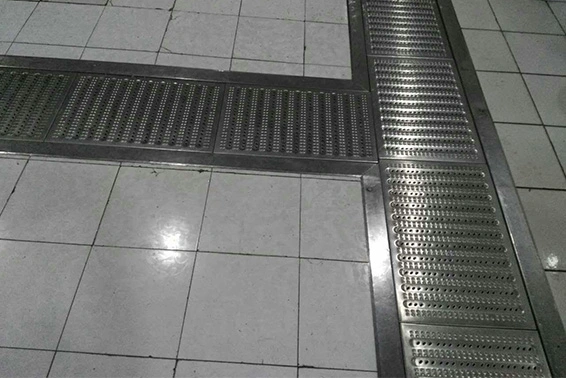
Hygienic Design and Material Choice for Food Prep Zones
Smooth Surfaces, Rounded Edges, and Clean Welds
A lot of health departments in the US start with the FDA Food Code. You can finish floors so that they don't slip as a safety measure. They need to be smooth and simple to clean. For a stainless steel trench cover for kitchen, it should be the same. The edges shouldn't have any burrs or flat welds, and there shouldn't be any tight spots where grease can get stuck. People can get cut on rough welds and sharp edges when you clean, and food can get stuck in dead spots. When you process the sides of our covers, you can pick a finished finish for a softer face. The edges are no longer sharp. Before you buy a lot, ask the seller to show you a picture or two of the edges and welds.
Anti-Slip Texture and Drainage Openings
The walking-working surfaces rule from OSHA says that floors should be kept clean and, if possible, dry. Make sure there is enough air flow in wet ways if you use them. A good cover helps that goal in two ways. The holes in the soles let water drain quickly, so your feet won't slip even if your shoes are wet or oily. Shapes with slots and holes look good and keep the flow going in one direction. There are holes in the top that let water run off. These holes could hold more small trash. Make sure that teams can scrub it clean; it shouldn't hold on to grease. If you want our standard surface to have a smooth finish, you can ask for it. The way the treads are set up keeps it from moving.
Choosing 201, 304, or 316 Grade
The grade tells you how long the cover won't rust. Grade 304 has 18–20% chromium and 8–10.5% nickel, according to ASTM A240. But Grade 201 has 3.5% to 5.5% less nickel and more manganese. There is 2–3% molybdenum in Grade 316, which makes it stronger against chlorides. 304 does work well in most kitchens and other wet places inside. Grade 316 works well in places with lots of salt and chlorine, like fish farms and places near the coast. Grade 201 is dry and light-duty, but it doesn't stop rust as well. You can ask for 316 if you want it when we have 201 and 304. Before you turn it in, use a spectrometer or PMI test to make sure the number you wrote down is correct.
Load Rating, Plate Thickness, and Safety
Match the Load Rating to Real Traffic
Load rate isn't just about how heavy the plates are. It needs to check out how busy the site is too. A cover can hold people, items for cleaning, food carts, pallet trucks, or rolling bins. The cover is under more stress when you roll something than when you move. This is because the wheels putting the weight on it. The type of floor under the machine, the width of the channels, and the way the frames are built can all affect how well it works. Class A15 of the European standard EN 1433 is 15 kN and is good for places where people will walk on it. In places where lots of people have cars, it costs more. There are covers that are strong enough to hold big things and covers that are light enough to hold people and tools. That way, we can build it right. Let us know how wide the path is and how much your biggest wheeled item weighs.
Plate Thickness and How to Verify It
If people and carts walk on thin plates over and over, they can bend. All of this fills in holes and rocks. There are two different sizes of plain plates: 1 mm and 2 mm. We can also make plates with different sizes if you ask. Pick the thicker one for cart paths and lines with a lot of people. Do not believe the number you were given. Use calipers or a micrometer in more than one place to get a good reading. To explain, rough spots can read in a different way than smooth spots. Do you need good term papers? When they get there, make sure the papers match. In case you're having trouble getting in, the grade and the width will help.
Safe Edges and Stable Fit
It is bad to have a cover that moves around. When you take the panels off, they should stay in place and not move around in the frame. Also, the top should always be level with the ground so that people don't trip over it. You get rid of the sharp edges that could hurt someone while they clean or lift something when you edge process it. You should measure it first if you don't know what size cover you need. If you cut it on-site, the rough edges and non-slip side could get damaged. The widths are 200, 250, 300, and 350 mm, and the lengths are 580 mm. They stand 25 mm tall. We can make them to fit your trench if these sizes don't work. This means that your crew won't have to cut panels on the job site.
Xinjiuyi Trench Covers and Custom Orders
Standard Specifications at a Glance
The stainless steel trench cover for kitchen usually comes in 580 mm length, 200–350 mm width, and 25 mm height sizes. They are made in Cangzhou, Hebei, by Xinjiuyi. You can get 201, 304, and 316 stainless steel. Plates are either 2 mm or 1 mm thick. The holes let water drain quickly and keep dirt out. The surface doesn't slip, so you can hold on to it better. People can take the cover off of a hole to clean it, check it, or clear it. Each panel stays stable when it's full because it was pressed together. Our company cares about quality, safety, and the environment, as shown by the ISO 9001, ISO 45001, and ISO 14001 marks.
Custom Length, Width, and Opening Patterns
A lot of projects don't come in standard sizes. Because everything is made to order, you can tell us about the plate's length, width, height, and surface style. To make a good quote, we need to know how many, what size, what grade, how thick, how much weight, what finish, what opening style, and where the goods need to be shipped. Drawing is very helpful. Also, our skilled staff can help you choose the right grade based on chlorine, salt, or strong cleaning chemicals. The covers are ready to use as soon as they get to you because they were made just for you. The teams can finish on time since the non-slip face won't get cut.
Production and Delivery Capacity
The Xian County Development Zone in Cangzhou is where our factory is located. Because its plants are fully stocked and its supply chain is well-established, it can ship both normal and one-of-a-kind orders on time and to the same high standard. To keep all of their jobs going, builders need a steady flow of work. If one package is late, it can stop the whole kitchen fit-out. Tell us when you're ready to start. After that, we'll make sure that the dates on your images are correct. People hire us to cut stainless steel trench cover for kitchen units that fit their needs from all over the world. People who work in food service, wholesalers, and processing plants are some of these clients.
Selecting, Installing, and Maintaining Kitchen Trench Covers
A Simple Selection Process
There is water, oil, salt, acids, cleaners, heat, and more outside. Next, you need to find the outlet, the open channel, the slope, and the level of the water. Then pick the type of hole you want based on how dirty your kitchen is. The big moving tools should weigh the same as the load limit. As the last step, choose the size (normal or special), thickness, grade, and finish of the stainless steel trench cover for kitchen. Check out more than just how someone looks. You should also be able to look at models, lists of materials, production strengths, and shipping times. A lot of people find that the cover they chose doesn't fit the pit or the traffic after they've picked it out. This way, you won't make that mistake.
Installation, Cleaning, and Care
Before you put it together, make sure you check the floor's tilt, the frame's height, the direction of the channels, and the support from the build around it. To lift the panel, you should use tools if it is long or heavy. To begin, scrape off any food that is stuck on it. After, you can clean it with a soap that is safe for stainless steel. Finally, wash it well. Lift the covers every so often to check out the holes, welds, sides, and tunnel itself. When you clean with chlorine, don't leave it on for too long. Also, don't use steel wool or tools made of carbon steel on the surface. They could leave behind metal pieces that rust and leave marks on the surface. The crew can clean the hole faster since our covers are removable.
Common Purchasing Mistakes
Things that are cheap now might not be cheap in the future. There are some things that can't be fixed with a thin plate. You will have to buy a new one, clean it up, and do more work. A lot of people mess up when they put on a 201 cover in a kitchen that is wet and full of strong cleaners. People who don't check the sizes before they're made pick a walking cover for cart routes with holes that are too big for the food waste you make. Someone else agrees with a big claim that has no proof. First, look at your plans to see where the holes are and how big the ditch is. After that, make sure you have written proof of the thickness and grade. To make sure the inspection doesn't run late, check for a short time.
Conclusion
In a food prep area, a clean stainless steel trench cover for kitchen that doesn't slip and has holes that drain fast and stop debris is best. It should also have a smooth, easy-to-clean surface, be the right thickness and load grade for real traffic, and not slip. So it doesn't have to be cut on-site, it also needs to be the right size for the trench. In most rooms, Grade 304 should be used. Outside in salty places, Grade 316 should be used, and Grade 201 should only be used in light-duty dry rooms. When someone buys something and then tries to measure the width or look at the material papers, they often get it wrong. You can clean the hole better if you can take off the covers. Putting them in the right order will make it faster to go over, fix, and clean up.
FAQ
1. Is 304 or 316 better for a kitchen trench cover?
Grade 304 is good for most kitchens inside and most dirty places. Pick 316 if you work with fish, are near water, or are in a salty place.
2. What plate thickness do you offer?
As always, they are between 1 and 2 mm thick. If you need different thicknesses, you can ask for them. For cart routes and lines with a lot of people, thick plates work better.
3. Can the covers be made to custom sizes?
They do, yes. They are between 580 mm and 350 mm long and 200 mm to 350 mm wide. You can change the trench's shape, length, width, and height to suit your needs.
4. What information do you need for a quote?
Feel free to send us the length, width, grade, thickness, load standards, finish, opening pattern, number, shipping address, and any plans you have for the channel.
Request a Stainless Steel Trench Cover for Kitchen Quote from Xinjiuyi
In Cangzhou, a business called Xinjiuyi produces stainless steel trench covers for kitchens. They have grades 201, 304, and 316 if you ask. They also have surfaces that don't slip, pieces that can be taken off, and custom shapes that can be made. Our team will help you choose the right cover by looking at your drawings, channel sizes, grade, thickness, load needs, and delivery location. Email them to global@xjy8.com. Visit xjy8.com to learn more about the goods.
References
1. U.S. Food and Drug Administration, Food Code, 2022
2. Occupational Safety and Health Administration, Walking-Working Surfaces and Personal Protective Equipment (Fall Protection Systems) Final Rule, 2016
3. ASTM International, ASTM A240/A240M Standard Specification for Chromium and Chromium-Nickel Stainless Steel Plate, Sheet, and Strip, 2023
4. ASTM International, ASTM A967/A967M Standard Specification for Chemical Passivation Treatments for Stainless Steel Parts, 2017
5. European Committee for Standardization, EN 1433 Drainage Channels for Vehicular and Pedestrian Areas, 2002
6. ASM International, ASM Handbook Volume 13B: Corrosion: Materials, 2005


